Correctly sized fire sleeve can still fail to protect a hose if the ends are loose, exposed, or terminated with materials that cannot survive the environment. The end treatment keeps the sleeve in position, reduces ingress of flame or molten splash, limits fraying, and creates a controlled transition at the fitting.
There is no single best method for every assembly. Learning how to seal fire sleeve ends requires balancing temperature, splash direction, movement, maintenance access, fitting geometry, and the risk of crushing or hiding the hose.
What a Good End Seal Must Do
A suitable termination should:
- retain the sleeve during vibration and flexing;
- avoid cutting the silicone coating or fiberglass;
- avoid compressing or damaging the hose;
- resist the expected heat, flame, oil, chemicals, and weather;
- reduce pathways for hot splash or debris;
- remain inspectable;
- fit without interfering with the fitting or coupling.
End sealing cannot compensate for an undersized sleeve, damaged coating, poor routing, or an unsuitable hose.
Main End-Treatment Options
| Способ доставки | Преимущества | Основные предостережения |
|---|---|---|
| Stainless band/clamp | Strong, compact, heat resistant | Can cut sleeve or crush hose if overtightened |
| Нержавеющая проволока | Соответствует неправильным формам | Requires controlled tension and protected ends |
| Лента высокотемпературная | Seals and controls fraying | Adhesive and backing must suit exposure |
| Совместимый герметик | Fills gaps and stabilizes cut edge | Needs correct cure, thickness, and chemistry |
| Комбинированное лечение | Balances retention and sealing | More process steps and inspection points |
Follow the supplier’s approved установка противопожарного рукава method rather than substituting ordinary shop materials.
Prepare the Sleeve Before Termination
Measure the protected length in the hose’s operating position. Include the allowance required for overlap, gathering, bends, and end treatment. Cut the sleeve with a method that controls fiberglass fraying and does not contaminate the inner surface.
Inspect the cut edge. Remove only loose fibers using the approved technique; do not pull the weave apart. Keep oil, grease, dirt, and moisture away from surfaces that will receive tape or sealant.
Position the sleeve without twisting. It should not be stretched tightly or bunched heavily. Confirm that the hose maintains its minimum bend radius through all movement.
Stainless Bands and Clamps
Metal bands provide positive mechanical retention and good high-temperature capability. They are commonly placed around the sleeve near a ferrule or fitting.
Choose band width, material, edge shape, and tightening system for the sleeve. A narrow or sharp band can cut through silicone and fiberglass. Excessive tension can compress the hose cover or create a stress concentration next to the coupling.
Place the band on a supported cylindrical area. Avoid locating it on a sharp fitting step, moving swivel, hose bend, or flexible cover section unless the approved design requires it.
After tightening, inspect for coating damage, exposed fibers, uneven folds, and hose deformation. Trim or secure the band tail so it cannot injure personnel or snag nearby lines.
Stainless Wire Lacing
Wire can conform to irregular fitting transitions and withstand high temperature. It is useful when a standard band cannot seat evenly.
Use specified wire alloy and diameter. Apply consistent wraps and controlled tension. Too little tension permits sleeve movement; too much cuts the coating or compresses the assembly.
Twisted wire ends must be trimmed and turned away from the hose, adjacent cables, and hands. Cover or protect the termination if the procedure requires it. Reinspect after initial service because vibration and thermal cycling can loosen poorly installed wire.
Высокотемпературная лента
Tape can control fraying, reduce gaps, and create a smooth transition. It may be used alone in light-duty service or combined with mechanical retention.
Ordinary electrical, duct, or packaging tape is not a substitute. Verify backing material, adhesive, continuous and peak temperature, flame behavior, oil resistance, UV resistance, and compatibility with silicone coating.
Apply the specified overlap and tension. Excess stretch may cause the tape to retract during heating, while loose wraps can unravel. Do not build a bulky edge that traps molten splash or interferes with fitting movement.
Tape condition should be part of routine inspection. Hardened, charred, peeled, oil-soaked, or migrated adhesive indicates replacement is needed.
Silicone or Other Compatible Sealant
An approved high-temperature sealant can stabilize the cut edge and fill small pathways at the termination. It may also help bond tape or create a smoother surface.
Confirm cure chemistry, service temperature, flame performance, adhesion to the sleeve coating, oil resistance, and required cure time. Some sealants release by-products during curing or do not adhere well to contaminated silicone surfaces.
Apply only the required amount. Thick uncured material can trap contamination and obscure damage. Allow full cure before placing the assembly in service.
Combination End Treatments
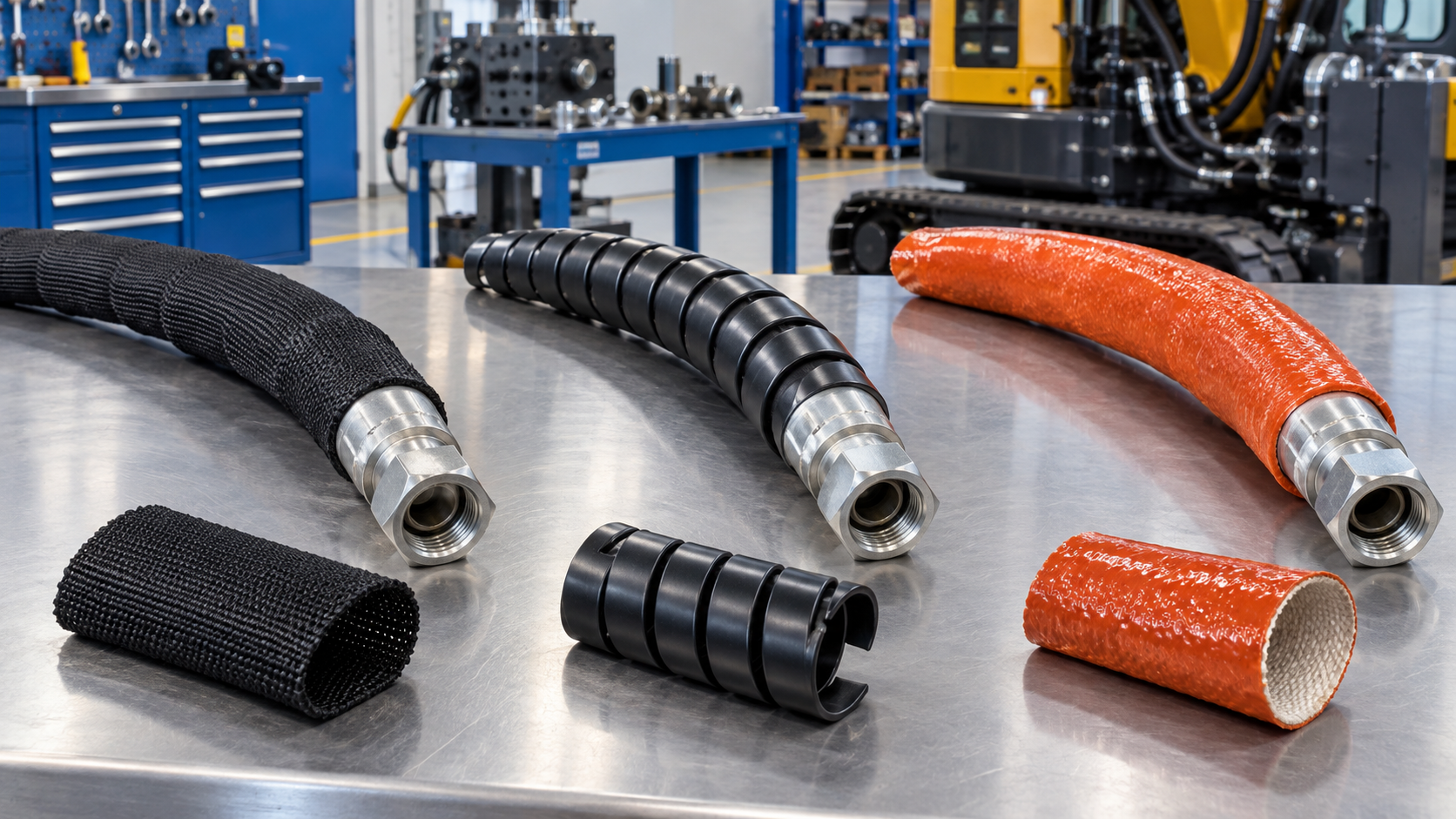
Severe service often uses more than one method—for example, compatible sealant at the cut edge, high-temperature tape for coverage, and a stainless band for mechanical retention.
The sequence matters. Follow the approved work instruction so the band does not squeeze uncured sealant into an unwanted area or cut through tape. Record the materials used for repeatability.
Combination treatments are useful on a гидравлический шланг пожарный рукав near a crimp ferrule, where vibration, oil exposure, and radiant heat may occur together.
Where to Position the Sleeve End
Extend the sleeve far enough to protect the hose-to-fitting transition, which is often a vulnerable area. Do not block swivel movement, wrench flats, inspection ports, drain holes, identification needed for maintenance, or leak-detection paths.
If the termination is placed on the hose cover, ensure it does not create damaging compression. If it is placed over a ferrule, confirm there is enough cylindrical area for secure seating.
For angled fittings, check all operating positions. A termination that clears equipment when straight may strike a bracket as the hose moves.
Sealing Against Molten Splash
Consider splash direction and gravity. An upward-facing open end can funnel molten material or hot debris beneath the sleeve. Orient the assembly and closure so material sheds rather than pools.
Minimize folds and pockets. The end treatment itself must withstand the specific molten material and expected contact duration. A metal band may survive while adjacent tape fails, so evaluate the complete system.
After any significant splash event, make the equipment safe and inspect both sleeve and hose. Hidden heat damage can exist beneath an intact-looking termination.
Sealing Retrofit and Split Sleeves
Zipper, hook-and-loop, snap, and laced sleeves require both longitudinal closure and end termination. At each end, the closure should finish without leaving a channel for flame or splash.
Use the manufacturer’s overlap, flap, zipper-stop, or snap arrangement. Do not cut through closure hardware without an approved finishing method. Where a split sleeve wraps around a bundle, gather it evenly without crushing individual hoses.
Распространенные ошибки установки
- Using ordinary tape near high heat.
- Overtightening a band onto the hose cover.
- Leaving sharp wire or band tails exposed.
- Cutting sleeve too short for termination overlap.
- Positioning the seal on a bend or moving swivel.
- Leaving an upward-facing splash pocket.
- Applying sealant to oily or wet surfaces.
- Hiding leaks or coupling movement under excessive wrapping.
Контрольный список проверок
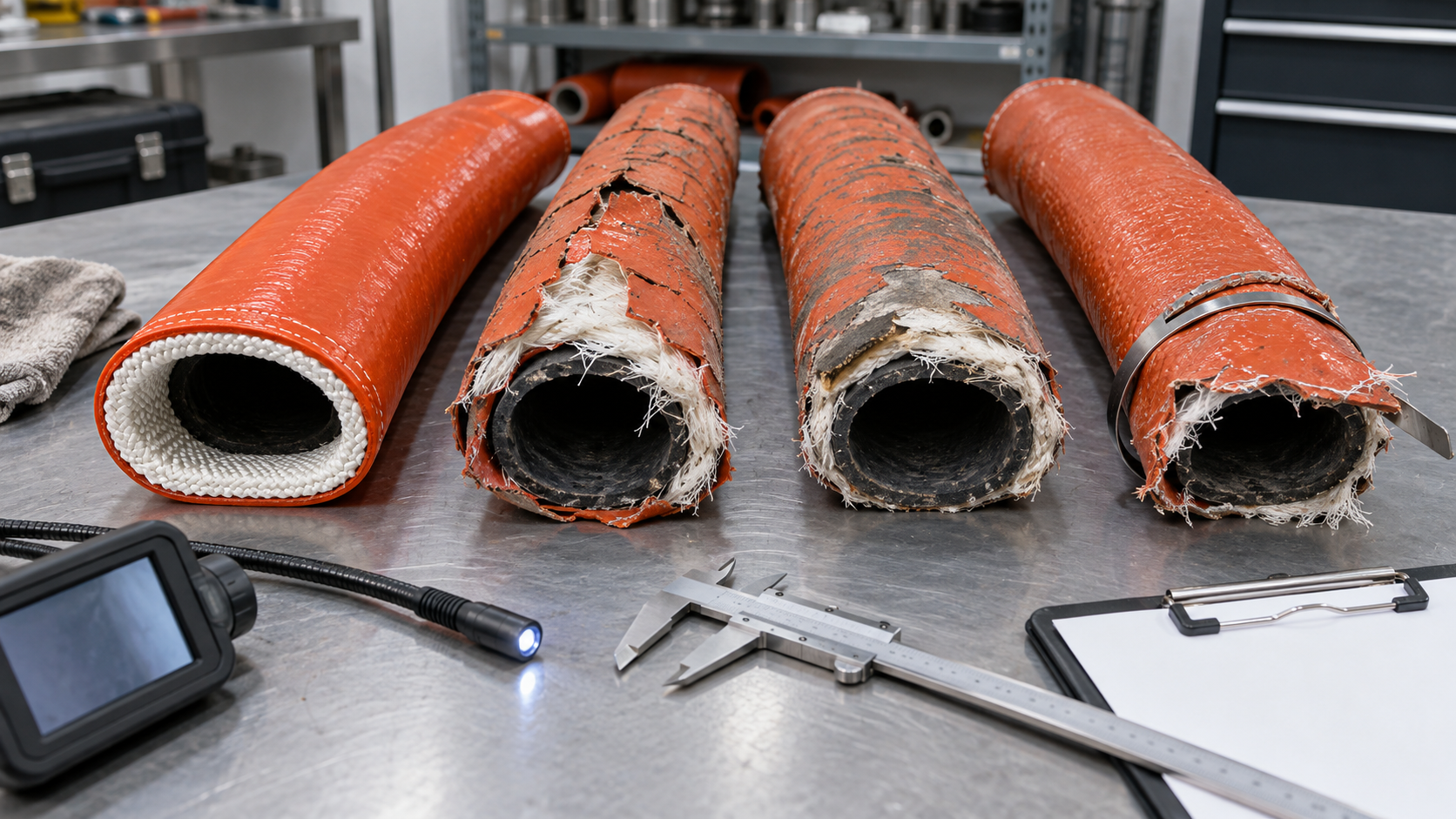
Inspect terminations for loose bands, cut coating, frayed fiberglass, peeled tape, cracked sealant, corrosion, missing wire, sleeve migration, and hose compression. Check whether heat, vibration, or repeated movement has shifted the sleeve away from the protected zone.
Also inspect the visible fire sleeve products for hardening, glazing, cuts, contamination, and exposed substrate. If the termination must be removed to inspect the hose, replace consumable tape or bands rather than reusing damaged parts.
Procurement and Work Instructions
Specify sleeve size, cut length, fitting geometry, end-treatment method, band or wire material, tape type, sealant, overlap, installation tools, inspection criteria, and required documentation.
Create a visual work instruction using an approved sample. Define tightening method or tension where practical. Consistent installation is especially important when multiple technicians assemble hoses in different locations.
Final Sealing Principle
The best fire sleeve end treatment retains the sleeve without becoming a new failure point. Mechanical clamps provide strength, tape provides coverage, sealant fills controlled gaps, and combinations can address severe exposure.
Match every material to the temperature and environment, protect the sleeve from sharp pressure, and keep the hose and fitting inspectable. A neat-looking end is only successful when it remains secure through real heat, motion, and maintenance.