
Kingdaflex manufactures rubber fuel hoses designed for gasoline, diesel, and automotive fuel systems. Our hoses are produced according to SAE J30 standards for safe and reliable fuel transfer.

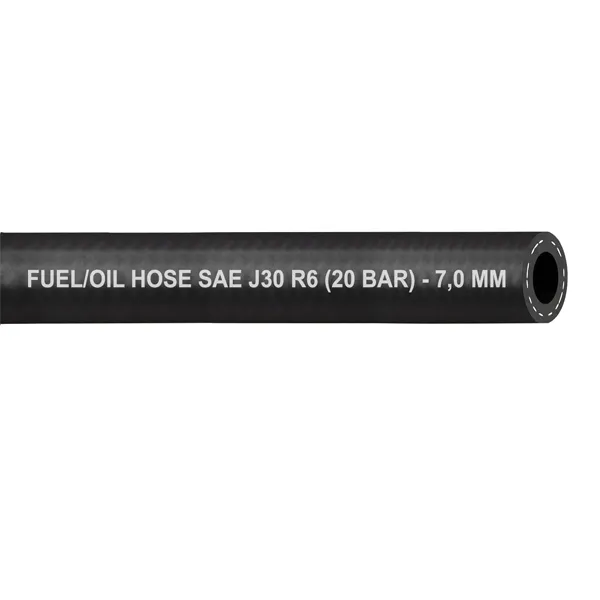
SAE J30 R6 rubber fuel hose is designed for low-pressure fuel transfer applications in carbureted automotive and small engine systems. It is commonly used for gasoline and diesel fuel delivery where pressure requirements are moderate.
The inner tube is typically made from NBR (nitrile rubber), providing good resistance to fuel, oil, and heat. Reinforced with textile braid, R6 hoses offer flexibility and durability for general automotive fuel line applications. However, compared to higher-grade fuel hoses, R6 has higher fuel permeation rates and is not recommended for modern fuel injection systems.
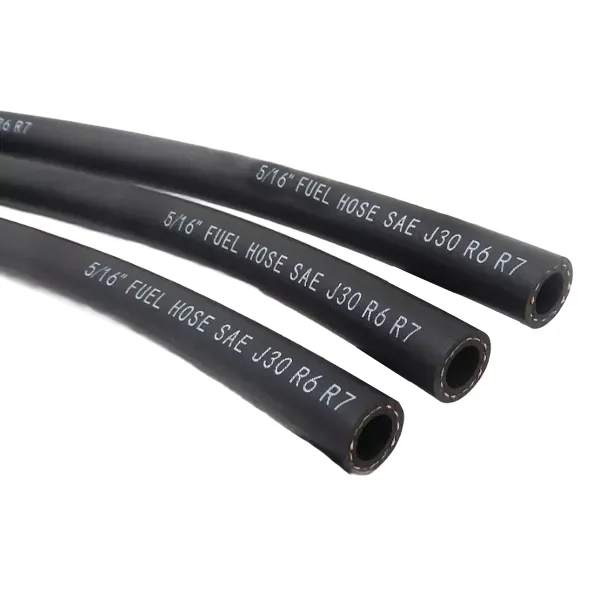
SAE J30 R7 fuel hose is suitable for low- to medium-pressure fuel systems and evaporative emission lines. It is widely used in automotive fuel return lines and carburetor systems.
The inner tube is formulated with oil-resistant synthetic rubber, while textile reinforcement provides improved pressure handling compared to R6. R7 hoses typically feature better resistance to fuel vapor permeation and are compatible with gasoline, diesel, and blended fuels. This grade is commonly selected for applications requiring improved emission control performance over basic fuel hose types.
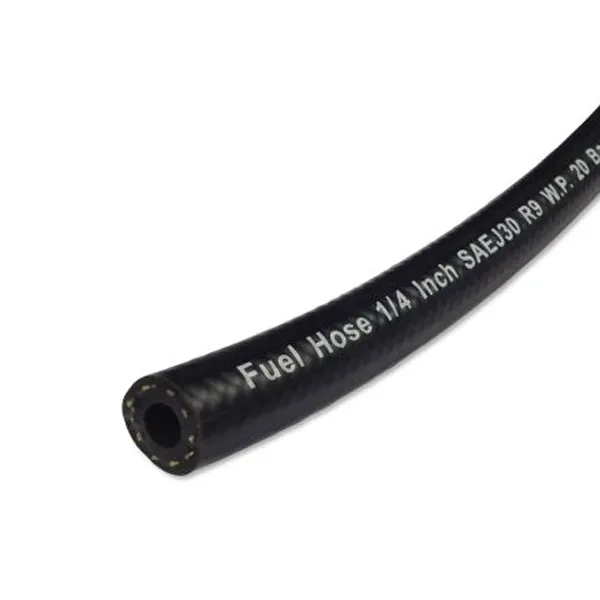
SAE J30 R9 rubber fuel hose is engineered for high-pressure fuel injection systems in modern vehicles.
It features a specialized inner liner, often incorporating FKM or advanced elastomer materials, to provide superior resistance to fuel permeation and aggressive fuel blends such as ethanol-enhanced gasoline.
Reinforced with textile braid, R9 hoses are rated for higher working pressures compared to R6 and R7. Due to their low permeation characteristics and enhanced chemical resistance, SAE J30 R9 hoses are widely used in fuel injection lines and high-performance automotive fuel systems.
| Standard | Inner Tube | Working Pressure | Temperature | Application |
|---|---|---|---|---|
| J30 R6 | NBR | 300 PSI | -40°C to +100°C | Low pressure |
| J30 R7 | NBR | 300 PSI | -40°C to +125°C | Carburetor |
| J30 R9 | FKM/NBR | 300 PSI | -40°C to +150°C | Fuel injection |
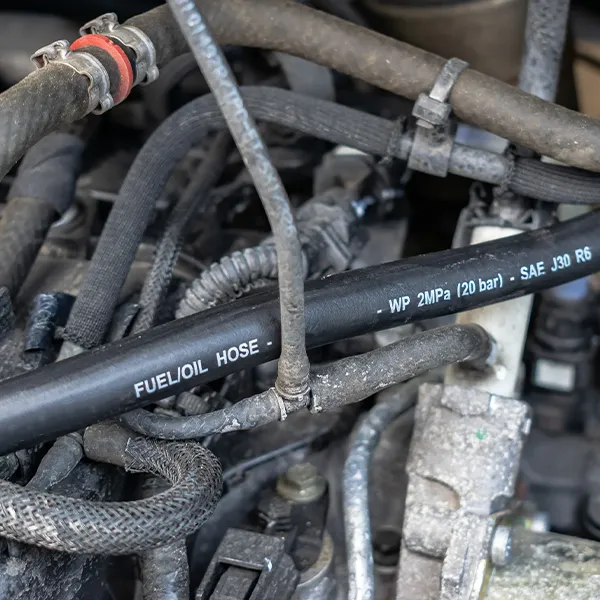
Automotive fuel line hoses are designed for gasoline and diesel transfer in passenger vehicles and light-duty engines. Manufactured with oil-resistant rubber compounds and textile reinforcement, these hoses provide reliable fuel delivery under low to medium pressure conditions. Suitable for carbureted systems and general fuel circulation lines.
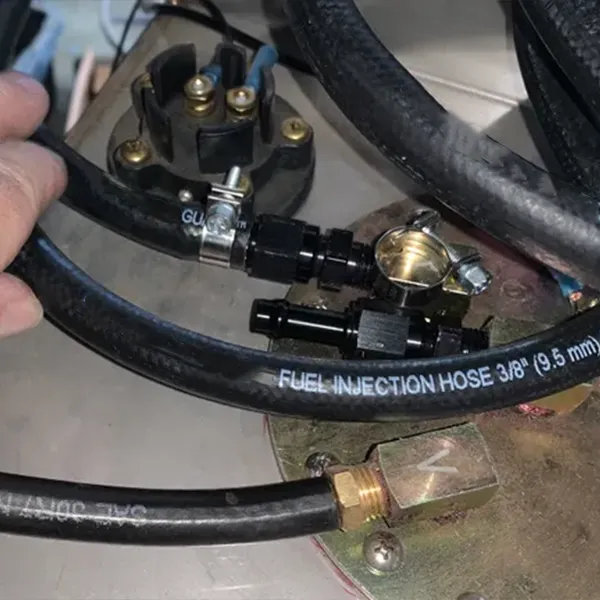
Fuel injection hoses are engineered for higher-pressure fuel systems in modern vehicles. Featuring advanced inner liner materials with low permeation characteristics, they resist ethanol-blended fuels and aggressive additives. Reinforced for improved pressure stability, these hoses are commonly used in electronic fuel injection applications.
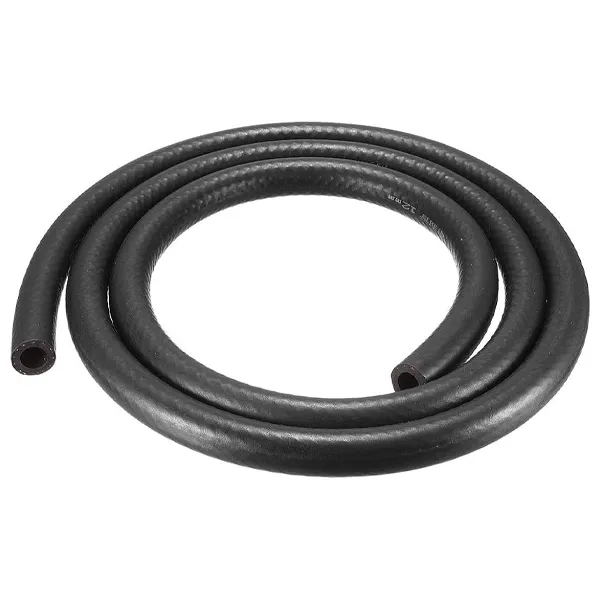
Diesel fuel hoses are formulated specifically for diesel fuel transfer in automotive and industrial engines. The inner tube provides strong resistance to diesel fuel, oil, and temperature variations. Textile reinforcement ensures flexibility and durability under vibration and continuous engine operation conditions.

Marine fuel hoses are manufactured for fuel delivery in boats and marine engines. Designed to withstand moisture exposure, salt air, and temperature fluctuations, they provide safe and reliable fuel transfer. These hoses are commonly used in inboard and outboard marine fuel systems.
In-House Rubber Compound Mixing: Controlled formulations ensure consistent fuel resistance performance.
Textile Reinforcement Production: Uniform reinforcement tension improves pressure stability.
Working Pressure Verification: Batch testing confirms rated working pressure compliance.
Burst Pressure Testing: Safety margins validated through controlled burst testing.
Leak & Permeation Inspection: Inspected for leakage resistance and vapor control.
Dimensional Quality Control: Verified tolerances ensure proper fitting compatibility.
Rubber fuel hose is a flexible hose designed to transfer gasoline, diesel, or blended fuels in automotive and industrial systems. It is manufactured with oil-resistant rubber compounds and reinforcement layers to withstand fuel exposure, temperature changes, and moderate working pressure conditions.
SAE J30 R6 is a low-pressure fuel hose typically used in carbureted systems, while SAE J30 R9 is designed for higher-pressure fuel injection systems. R9 features improved fuel permeation resistance and better compatibility with ethanol-blended fuels compared to R6.
Yes, most rubber fuel hoses are compatible with diesel fuel when manufactured using oil-resistant rubber compounds such as NBR. However, proper grade selection is important to ensure long-term durability, pressure stability, and resistance to fuel additives.
Fuel hose pressure ratings vary by SAE grade and hose construction. Low-pressure hoses such as R6 handle moderate pressure, while R9 fuel injection hoses are rated for higher working pressures required in modern automotive fuel systems.
NBR (nitrile rubber) is commonly used for fuel hose inner tubes due to strong fuel and oil resistance. For higher performance and lower permeation requirements, materials such as FKM or multi-layer constructions are preferred in fuel injection applications.