
Kingdaflex supplies SAE and EN-certified hydraulic hoses engineered for tractors, combine harvesters, planters, and all farm equipment. UV-resistant covers, wide temperature range, and flexible construction ensure maximum field uptime across every growing season.



Purpose-selected for the seasonal demands and field conditions of modern farming. Every hose in this series is flexible at low temperatures, UV and ozone resistant, and rated for the medium-to-high pressures of tractor hydraulic and power-steering circuits.
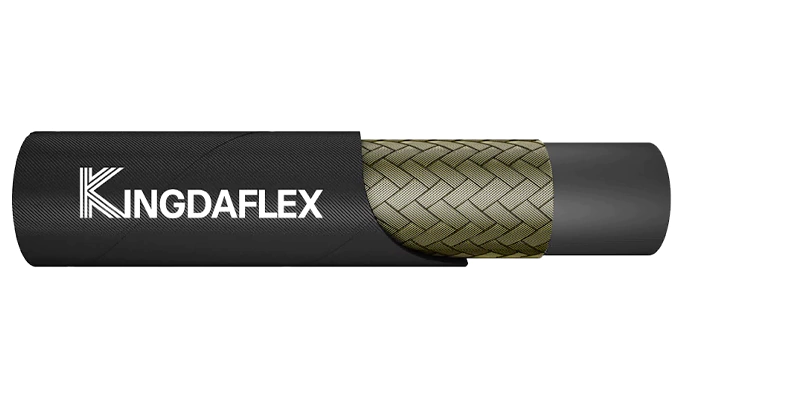
Single wire braid · up to 250 bar
DN6–DN51 · -40°C to +100°C
The most widely specified tractor hydraulic hose for implement lift circuits, front-loader arms, and remote valve lines. The single-braid construction delivers outstanding flexibility, enabling tight routing around chassis components without kinking or fatigue.
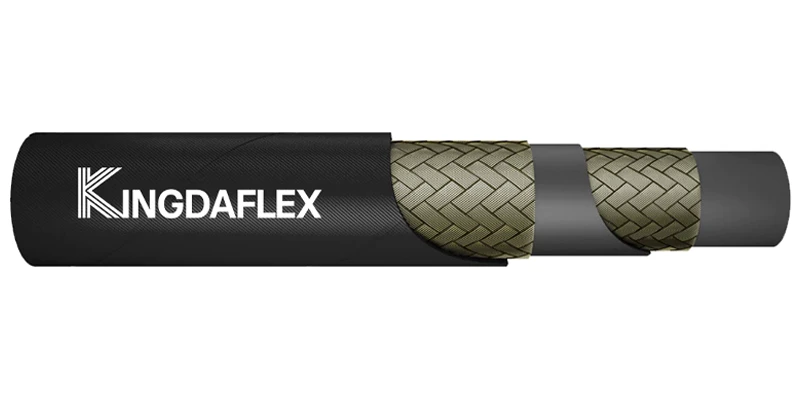
Double wire braid · up to 400 bar
DN6–DN51 · -40°C to +100°C
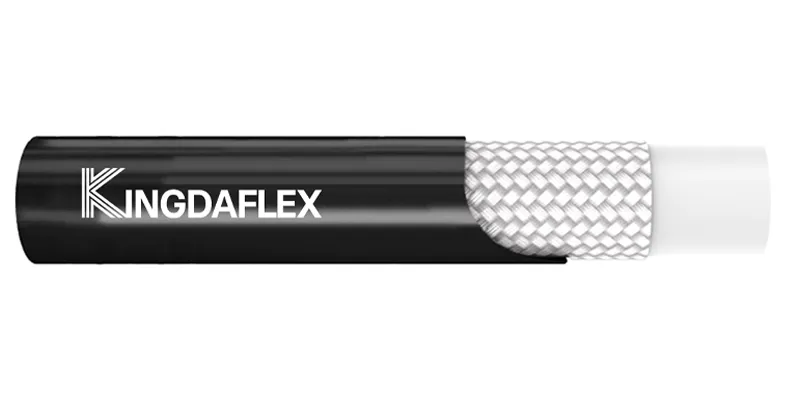
Thermoplastic · up to 280 bar
DN5–DN19 · -54°C to +149°C

Thermoplastic · up to 350 bar
DN5–DN19 · -54°C to +149°C
The high-pressure thermoplastic option for self-propelled harvesters and large-format agricultural machinery where both light weight and elevated pressure rating are required simultaneously. Compatible with a broad range of hydraulic fluids including biodegradable ester-based hydraulic oils increasingly specified on modern green-labelled equipment.
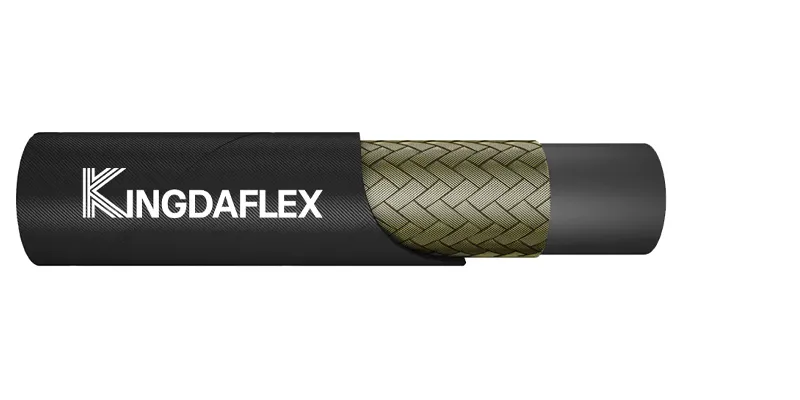
Compact single braid · up to 350 bar
DN6–DN32 · -40°C to +100°C

Helix wire + textile braid · up to 25 bar
DN19–DN76 · -40°C to +100°C
The correct solution for hydraulic suction and low-pressure return lines on tractors and agricultural equipment. The internal helix wire construction prevents collapse under vacuum, ensuring uninterrupted fluid supply to the hydraulic pump — the single most common cause of pump damage in farm machinery hydraulic systems.
Agricultural operations span the widest ambient temperature range of any industry. A tractor hydraulic system may cold-start at -30°C in a northern European winter morning and operate for 16 hours through a +35°C harvest afternoon. A hose that becomes brittle at low temperature or softens at high temperature is a liability, not a component.
Agricultural hoses live outdoors year-round. Standard hydraulic hoses degrade rapidly when exposed to continuous sunlight, ozone, and seasonal temperature cycling — leading to cracked covers, exposed wire reinforcement, and eventual burst failures mid-season.
Every implement lift, every steering input, every remote valve actuation is a pressure impulse cycle. A typical tractor accumulates 300,000 to 500,000 hydraulic impulse cycles per season across its hose circuits. Hoses that cannot sustain this fatigue load fail at the reinforcement layer — typically showing as bulging or weeping at the fitting interface.
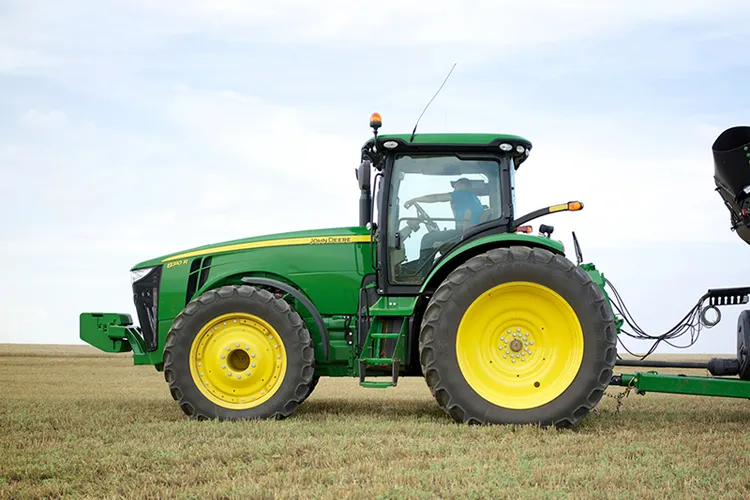
The tractor is the hydraulic workhorse of every farm. A modern row-crop tractor operates a minimum of five simultaneous hydraulic circuits: the 3-point hitch lift, independent power steering, front-loader (if equipped), and up to four remote valve outlets for implement control.
Each circuit has a distinct pressure profile and routing challenge. Lift and loader circuits run medium-to-high pressure (200–350 bar) with high impulse frequency. Steering circuits require tighter bend radius and compact OD to route through the steering column. Return and case drain lines are low pressure but large bore.
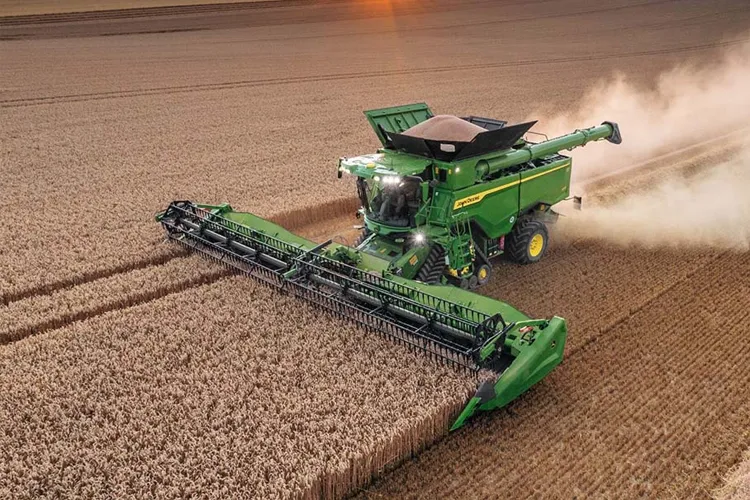
A modern combine harvester contains more than 40 individual hydraulic hose circuits operating simultaneously during harvest. The header drive and reel circuits run at high duty cycle — often 10+ hours per day at peak harvest — with frequent pressure variations as crop density changes.
Key failure modes specific to combine harvesters: flex-fatigue failures at the header pivot point (the hose flexes with every header height adjustment); UV degradation on the top-of-machine circuits exposed to direct sunlight for 16+ hours per day in summer; and biodegradable hydraulic fluid incompatibility on machines certified for organic operations.
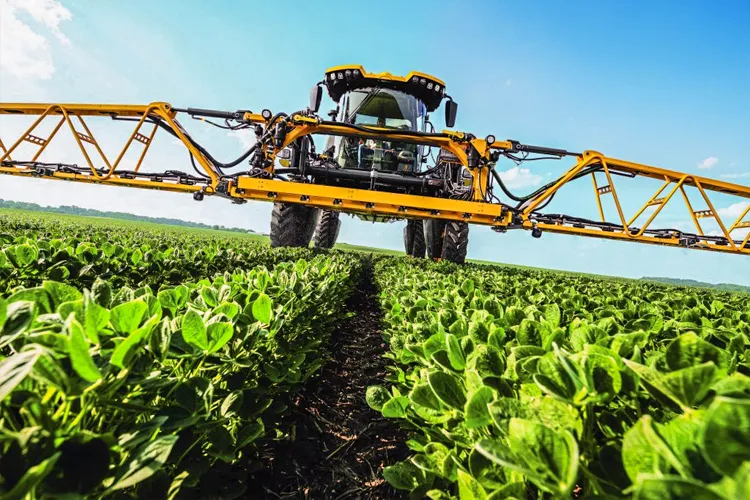
High-clearance self-propelled sprayers present unique hydraulic hose challenges: the boom fold circuit must articulate through 180°+ range of motion thousands of times per season; the active suspension system on modern models creates high-frequency low-amplitude hose movement; and the exposed position of boom hoses subjects them to chemical spray drift containing herbicides and fungicides.
Chemical resistance of the outer cover is therefore a critical selection criterion — standard neoprene covers are not compatible with all crop-protection chemicals. EPDM outer covers provide substantially better resistance to the diluted chemical concentrations encountered in spray drift scenarios.
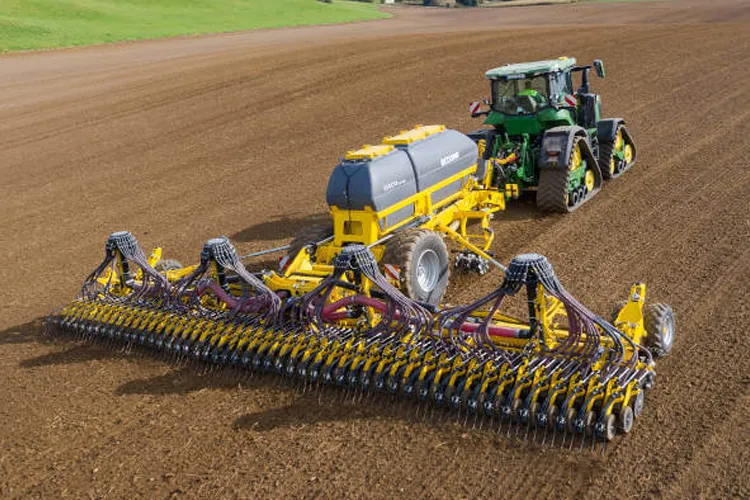
Modern precision planters and air seed drills use hydraulics for individual row-unit downforce control, section shutoff, and toolbar folding. These circuits operate at medium pressure (150–250 bar) with very high actuation cycle counts — a 48-row planter may cycle downforce adjustments thousands of times per field pass, based on variable-rate prescription maps from field sensors.
The critical requirement here is consistent small-bore hose performance (-4 and -6 dash sizes) with tight dimensional tolerances to ensure consistent flow across all row units. Variation in inner bore diameter between hoses on the same machine causes uneven section response — directly affecting planting uniformity and yield.
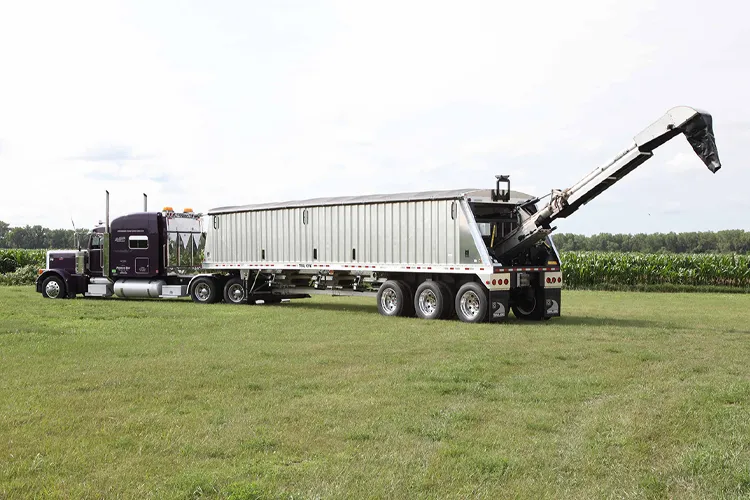
Agricultural telehandlers and rough-terrain forklifts operate hydraulic hose circuits through the widest range of physical movement of any farm machine: boom extension to full reach, full rotation (on rotary models), and carriage tilt — all simultaneously. The hose bundle at the boom pivot is subject to multi-axis flexing on every work cycle.
Hose selection here is primarily driven by minimum bend radius and torsional resistance. A hose with too large a minimum bend radius will develop internal stress fractures at the pivot point within the first season. Wire-spiral hoses should be avoided at pivot locations — braided construction with correct bend radius is mandatory.
| Hose Type | Pressure | Bore Range | Temp Range | Key Advantage | Best Agricultural Use |
| SAE 100R1AT / 1SN | 250 bar | DN6–DN51 | -40°C to +100°C | Flexibility, low cost | Tractor implements, remote valves, low-pressure circuits |
| SAE 100R2AT / 2SN | 420 bar | DN6–DN51 | -40°C to +100°C | High pressure + flex | Tractor main circuits, combine harvester, loader booms |
| EN857 1SC | 350 bar | DN6–DN32 | -40°C to +100°C | Compact OD, tight bend | Cab routing, steering lines, compact tractors |
| EN857 2SC | 420 bar | DN6–DN32 | -40°C to +100°C | High pressure, compact | Telehandler pivot points, articulated hitch |
| SAE 100R7 | 280 bar | DN5–DN19 | -54°C to +149°C | Lightweight, UV resistant | Sprayer booms, precision planters, row-unit controls |
| SAE 100R8 | 350 bar | DN5–DN19 | -54°C to +149°C | HP + lightweight | Large combine auxiliary circuits, self-propelled sprayers |
| SAE 100R4 | 25 bar | DN19–DN76 | -40°C to +100°C | Anti-collapse suction | Hydraulic pump suction lines, large bore return |
For most tractor implement lift and remote valve circuits operating at system pressures below 200 bar, SAE 100R1AT provides the ideal balance of flexibility, weight, and cost. Its single-wire braid construction offers a tighter minimum bend radius than 2-wire hose, enabling easier routing around chassis components.
For main pump circuits, high-pressure loader arms, or systems with sustained pressures above 200 bar — or where high impulse frequency is expected — SAE 100R2AT is the correct specification. When in doubt, 100R2AT is the safer choice: it meets all R1AT applications and provides additional pressure and impulse margin.
Combine harvesters accumulate extremely high hydraulic cycle counts during a compressed harvest window. The critical hose properties for combine harvester applications are: (1) impulse fatigue resistance — the hose must sustain 400,000+ cycles without reinforcement failure; (2) UV resistance — top-of-machine hoses are in direct sun for 10–16 hours per day; and (3) fluid compatibility — especially important on machines operating with biodegradable hydraulic oils.
Kingdaflex SAE 100R2AT with EPDM outer cover meets all three requirements for combine harvester main circuits. For lightweight sections on the header and reel assemblies, SAE 100R7 thermoplastic offers the best combination of flex fatigue life and reduced harness weight.
Yes — selectively. Standard NBR inner tubes are not compatible with HETG (vegetable oil-based) or HEES (synthetic ester-based) biodegradable hydraulic fluids. Prolonged exposure causes the NBR compound to swell and soften, causing inner bore restriction and eventual seal failure.
For equipment operating with biodegradable hydraulic fluids, Kingdaflex recommends: SAE 100R7 or R8 thermoplastic hose (thermoplastic inner tube is inherently compatible with ester-based fluids) or our EPDM-inner-tube specification rubber hose (available on request, confirmed compatible with HETG and HEES per ISO 15380). Request fluid compatibility data sheets with your enquiry.
Boom fold applications require the hose to flex through a large angle thousands of times per season. The three critical specifications are: minimum bend radius (must be achievable at the pivot point geometry without kinking), flex-fatigue cycle rating (must exceed the expected seasonal cycle count with margin), and outer cover flexibility at the lowest expected ambient temperature (a stiff cover at low temperature creates bending stress concentrations).
For sprayer boom pivots, SAE 100R7 thermoplastic hose is the standard industry recommendation: it has the lowest minimum bend radius of any hose in this pressure class, the highest flex-fatigue rating, and remains flexible at sub-zero temperatures due to the thermoplastic construction. Always specify the hose at one dash size larger than pressure-only calculations suggest — the additional bore area reduces velocity and heat build-up in high-cycle circuits.
Precision planter row-unit downforce circuits are among the most hydraulically demanding applications per unit of hose used: small bore (-4 or -6 dash size), high actuation frequency, and the requirement for dimensional consistency across all row units on the same machine (bore variation across the harness causes unequal downforce response).
The recommended specification is SAE 100R7 in -4 or -6 dash size — thermoplastic construction provides superior dimensional consistency compared to rubber hose (tighter inner bore tolerance), lower harness weight on large-row planters, and compatibility with the full range of hydraulic fluids used in precision agriculture. Custom-cut lengths with factory-installed fittings are available for OEM planter manufacturers.
Kingdaflex primarily supplies agricultural equipment distributors, dealership networks, and OEM manufacturers. Standard products (SAE 100R1AT, R2AT, R7, R4) are available in 50-metre and 100-metre reels from stock, with typical dispatch within 7–15 business days for standard catalogue items.
For distributors establishing a new stocking programme, we are open to discussing trial order quantities to allow quality verification. Custom specifications — including non-standard colours, special cover compounds, or private-label printing — require 20–30 business days production lead time. Contact us with your seasonal requirement forecast for priority scheduling and competitive FOB pricing.
Looking for a stable OEM partner? We provide consistent quality, precision branding, and scalable production for your supply chain.
As a leading manufacturer of hydraulic and industrial hoses, we’re expanding our global network! We invite motivated local partners worldwide to join our exclusive agent program.