
Choose smooth bore or convoluted PTFE hose, stainless steel reinforcement, and end connections to suit your equipment.
Kingdaflex supplies PTFE hoses and made-to-length assemblies for industrial and hydraulic applications. Share your fluid, pressure, temperature, and routing requirements so we can help you specify the right construction.
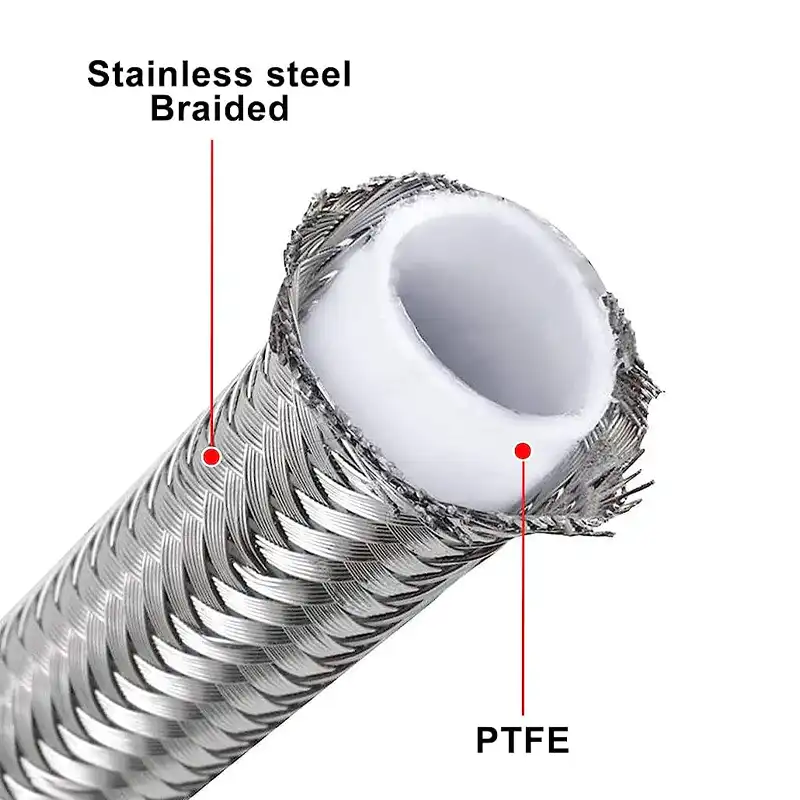
PTFE inner tube with stainless steel reinforcement.
Two bore constructions
Smooth bore and convoluted options
Bulk hose or finished assemblies
Lengths and connections to match the application
Specification Support
Selection based on fluid and service conditions
Start with the bore profile. Then confirm the reinforcement, liner, fittings, and operating limits for the complete assembly.

A smooth internal flow path suits applications where flow characteristics, flushing, or product drainage are important. Select the diameter and routing from the specific hose data.
Available as a stainless steel braided hose or a finished assembly with compatible end fittings.

A corrugated liner provides an alternative for installations that require greater flexibility. Check the model’s minimum bend radius and suitability for repeated movement.
Compare pressure, flow, and cleaning requirements with smooth bore before choosing the construction.
Specify a conductive liner when the application assessment requires static dissipation. An outer braid or cover alone does not establish the electrical properties of the inner tube.
The following common sizes are listed in Kingdaflex’s smooth bore and corrugated SAE 100R14 product tables.
| Nominal Inside Diameter (inch) | Inside Diameter (mm) | Smooth bore Working Pressure (bar) | Convoluted Working Pressure (bar) |
|---|---|---|---|
| 1/4 | 6.4 | 241 | 138 |
| 3/8 | 9.5 | 183 | 138 |
| 1/2 | 12.7 | 138 | 103 |
| 3/4 | 19.0 | 69 | 69 |
| 1 | 25.4 | 50 | 46 |
Working pressure and burst pressure serve different purposes. Use the approved working rating at operating temperature, including the limits of the fittings and assembly. For vacuum duty or repeated flexing, request application-specific confirmation.
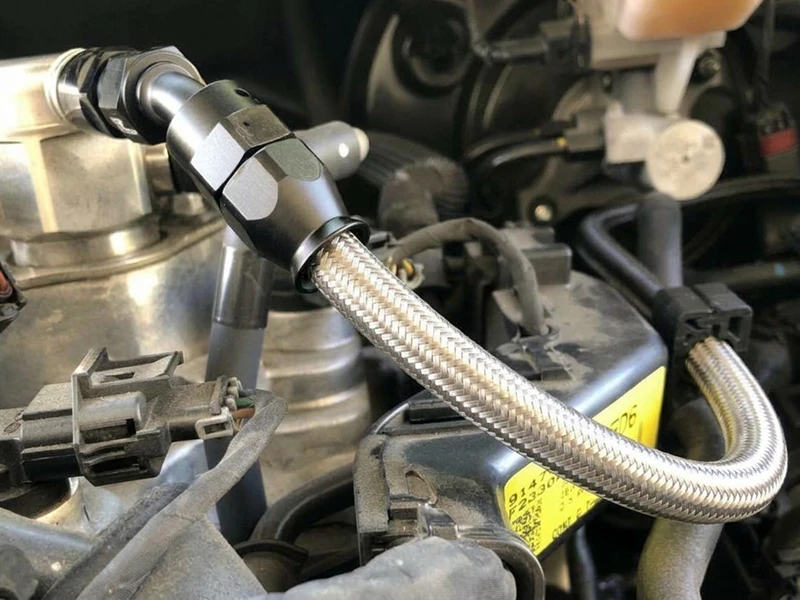
PTFE hose solutions for high-performance applications.
PTFE, or polytetrafluoroethylene, forms the fluid-contacting inner tube. Its chemical resistance and low-friction surface make it useful for many demanding fluid transfer duties.
The liner, reinforcement, and fittings work together. Material compatibility alone does not determine the pressure rating or suitability of the complete hose.
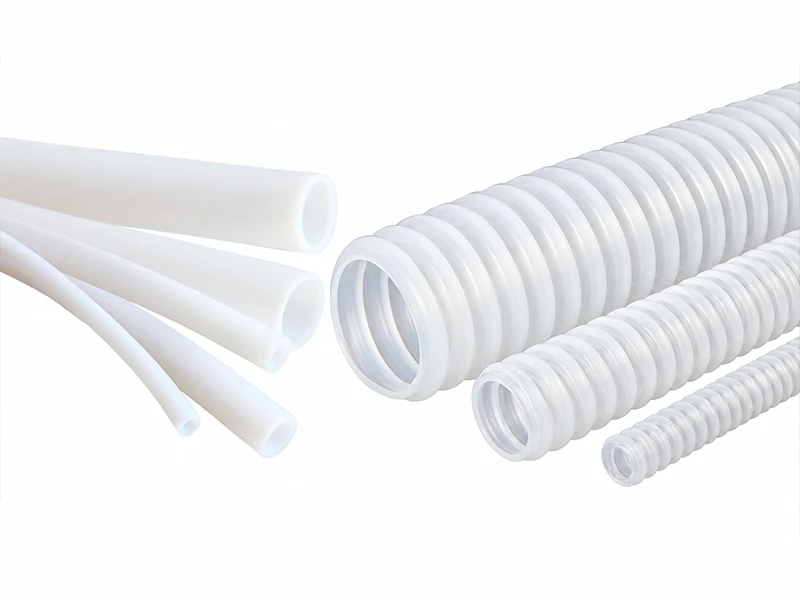
Choose smooth bore or convoluted PTFE. Confirm the exact liner grade, chemical compatibility, and any conductivity requirement.
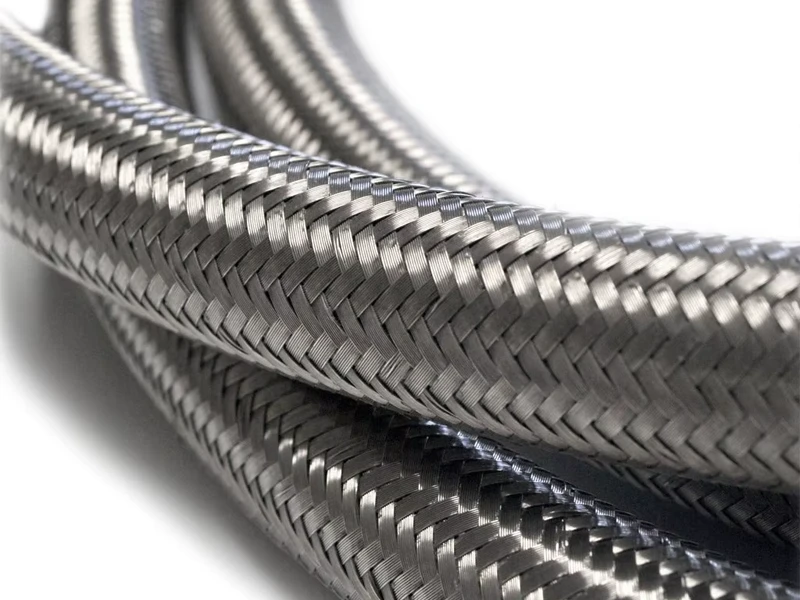
Stainless steel wire braid provides pressure reinforcement. Braid construction and material must match the selected hose specification and environment.
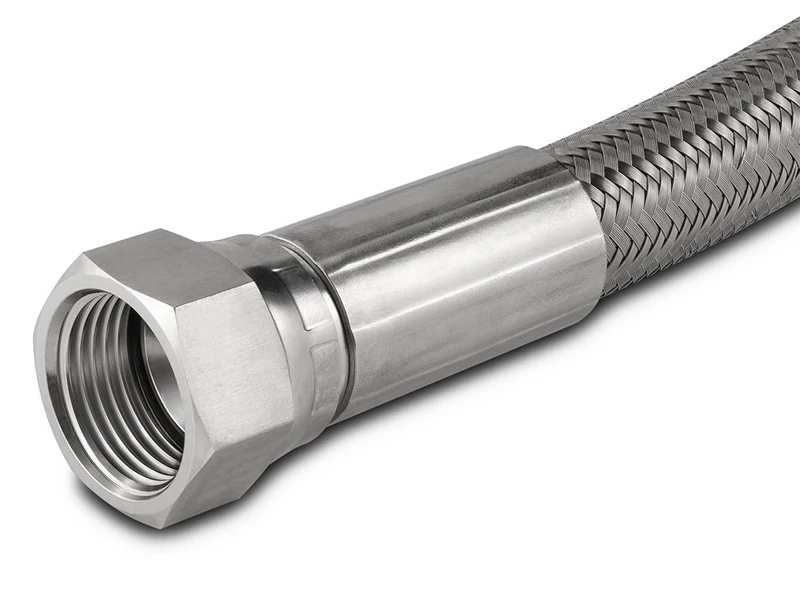
Discuss abrasion protection, identification, and end fitting options. Covers, seals, and metal connections may impose different limits from the PTFE tube.
Use the actual medium and operating conditions to assess suitability. The same PTFE material can be used in assemblies with very different service limits.
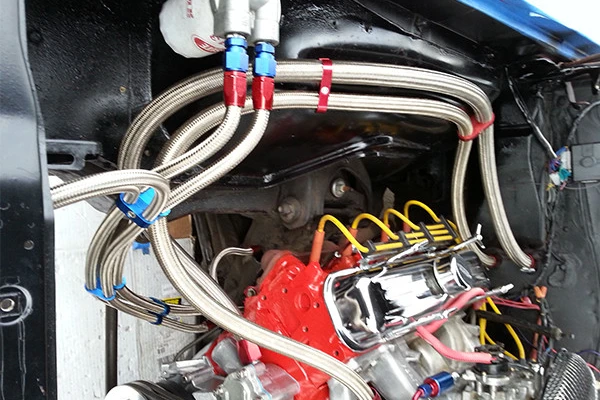
Consider PTFE hose for compatible hydraulic fluids and operating environments where the selected construction offers a useful temperature or chemical resistance advantage. Confirm pressure peaks, impulse duty, vibration, and routing. A PTFE hose is not a direct replacement for every rubber hydraulic hose.
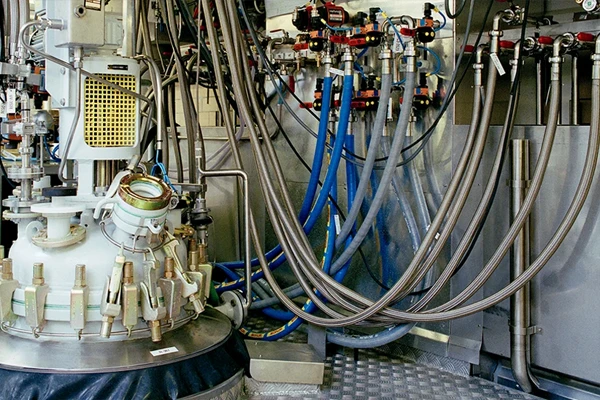
Check compatibility with the exact chemical, concentration, and temperature. Include fitting metals, seals, cleaning fluids, permeation, and any static dissipation requirement in the assessment.

Specify the fuel composition, pressure, temperature, and electrical requirements. A conductive liner may be required for some services. Fuel, brake, and power steering applications each need an assembly validated for that system.
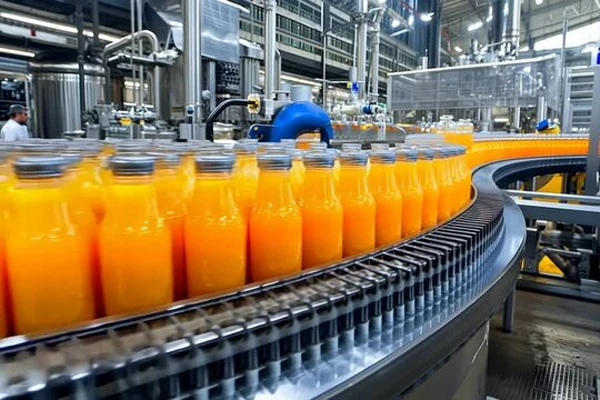
Discuss fluid contact requirements, cleaning cycles, drainage, and connection design. Request the applicable documentation for the actual liner and assembly. A PTFE liner alone does not establish food contact compliance or sanitary performance.
Source bulk hose for your own approved assembly process or request finished hoses. We work from your service conditions, dimensions, and connection requirements to define the supply.
Provide the fluid, required flow or bore size, operating pressure and peaks, temperature range, and installation environment. Include suction, gas service, or electrical requirements where relevant.
Confirm finished length, fitting type and material, thread or flange details, elbow orientation, and protective covering. JIC, BSP, NPT, and other connections must be matched to the chosen hose system.
State the quantity, required documents, inspection or test requirements, and delivery destination. MOQ, lead time, packaging, and any private label requirements are confirmed with the quotation.
PTFE is the material name. “Teflon hose” is a common search term, but Teflon™ is a Chemours trademark covering branded fluoropolymer products. Specify the liner material and grade when ordering. A generic PTFE hose description does not establish that an assembly uses a particular branded resin.
Use the rating for the exact hose construction and finished assembly. The tube, braid, cover, fittings, seals, medium, and pressure at temperature all matter. Send the continuous operating temperature, any short excursions, and cleaning conditions so the applicable limits can be confirmed.
Compare flow and cleaning requirements with the flexibility needed for installation. Smooth bore offers a smooth internal path; convoluted construction provides an alternative for tighter routing. Check the product’s bend radius, pressure rating, and dynamic service requirements before choosing.
Some fluids and transfer conditions can generate static charge. Assess whether a conductive liner and a defined bonding or grounding arrangement are required. Confirm the electrical properties of the finished assembly; stainless steel braiding alone does not establish liner conductivity.
No hose should be selected from the material name alone. Verify the exact fluid composition, concentration, temperature, pressure, and compatibility of every wetted component. Ask for application review when handling aggressive mixtures, gases, or critical process fluids.
Use fittings, ferrules, and assembly procedures validated for the selected PTFE hose. A matching nominal diameter or thread does not prove compatibility at the hose attachment. For finished assemblies, specify both the equipment connection and the hose construction.
Kingdaflex offers made-to-length PTFE hose assemblies and connection options. Send the finished assembly length, fitting identification, orientation, and operating requirements for confirmation. Drawings are useful when the connection or installation is unusual.
Include the construction, bore size, working conditions, quantity, and delivery destination. For bulk hose, state the required lengths and packaging. For assemblies, add the end connections, finished length, and any testing or documentation requirements.
Give us the service details and connection requirements. We will help define the hose construction and supply options for your project.