In hydraulic system design, people often focus on pumps, valves, and cylinders, while underestimating the importance of line selection. In reality, hydraulic hose and rigid tube are not interchangeable in every situation. Each serves a different purpose. When the right choice is made, the system becomes more stable, easier to install, and less expensive to maintain. When the wrong choice is made, the result may be frequent leakage, abrasion, vibration-related cracking, or even safety risks.
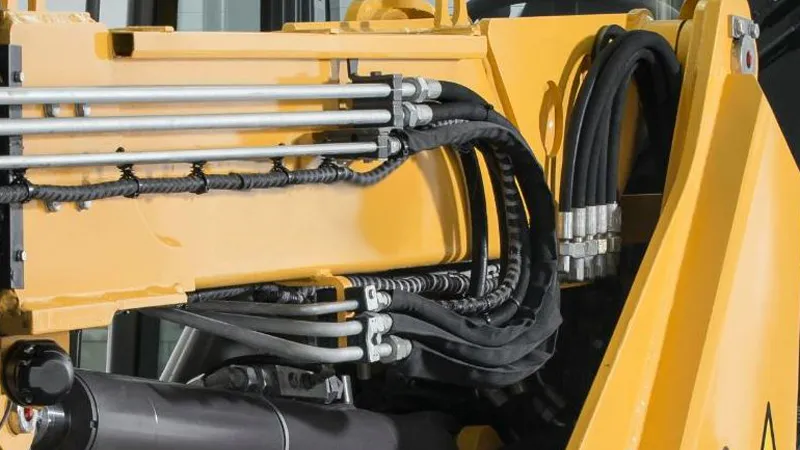
In simple terms, hydraulic hose is better for areas with movement, vibration, or installation tolerance. Rigid tube is better for fixed, straight, and stable sections of the system. In most well-designed hydraulic systems, the best solution is not all hose and not all tube, but a combination of both.
The Simple Rule: Hose Handles Movement, Tube Provides Stability
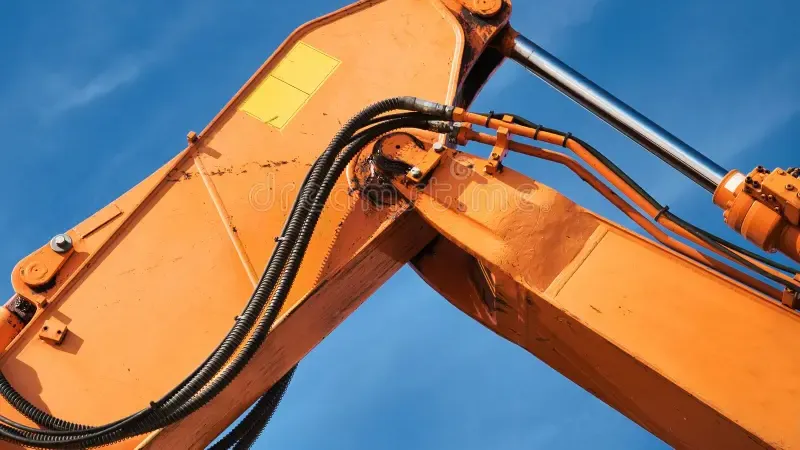
If a hydraulic line must follow moving parts, absorb vibration, or compensate for slight misalignment during assembly, hydraulic hose is usually the better option. A hose can flex, absorb shock, and adapt to movement and thermal expansion. That is why hydraulic hoses are widely used on excavator booms, loaders, agricultural machinery, engine-mounted systems, and articulated equipment.
If a hydraulic line is fixed in place, has a clear routing path, and is expected to remain stable for a long time, rigid tube is often the better choice. It is commonly used inside hydraulic power units, industrial machines, injection molding equipment, and long fixed lines between pumps, valve groups, and manifolds.
When You Should Choose Hydraulic Hose
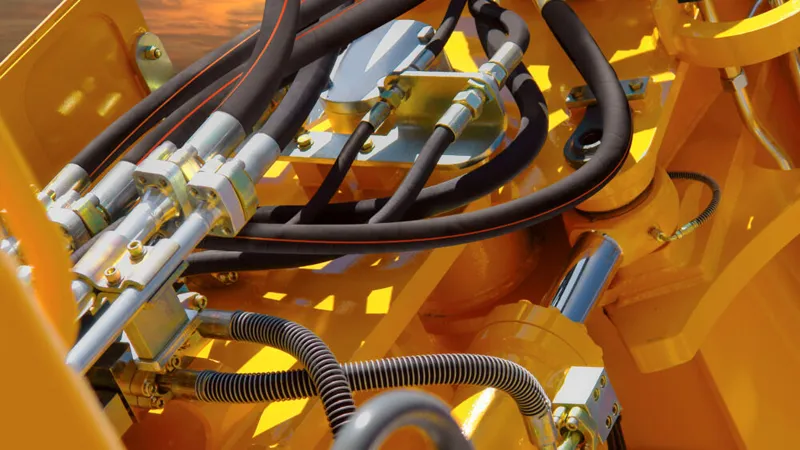
1. When the line connects moving components
This is the most common hose application. If there is relative movement between the two connection points, rigid tube is usually not the right answer. Tube does not tolerate repeated movement or constant flexing well. Over time, vibration and movement can create fatigue around fittings, brackets, or bent sections.
Examples include cylinder movement, articulating arms, swinging frames, and connections between the engine and chassis. In these positions, hose is not a compromise. It is the correct engineering solution for dynamic service.
2. When the equipment is exposed to vibration and shock
Mobile machinery, construction equipment, mining machines, agricultural equipment, and diesel-powered systems often operate under continuous vibration and pressure pulsation. In these conditions, hydraulic hose performs better because it can absorb part of the vibration energy and reduce stress on fittings and mounting points.
This is why even systems that appear to be suitable for rigid tube may still include a short hose section. That short hose is often there to protect the entire system from vibration-related fatigue.
3. When the installation space is complex
Some machines have very tight internal layouts. Hydraulic lines may need to pass around frames, guards, electrical harnesses, and other components. In these situations, hose is easier to route and faster to install. Rigid tube requires accurate planning of every bend, angle, clamp position, and fitting orientation. If the real installation conditions differ from the drawing, rework can be time-consuming and costly.
At the same time, not all hydraulic hoses offer the same flexibility. Different hose constructions behave very differently in the field. Some high-pressure hoses are stronger, but also heavier and less flexible. That means hose selection is not only about pressure rating. Bend radius and installation space matter just as much.
4. When maintenance and replacement will be frequent
If a line is likely to be replaced during the service life of the machine, hose usually offers a major advantage. It is easier to remove and reinstall, and in many cases it reduces downtime during repair.
This is especially important for export equipment and aftermarket service. End users do not want to disassemble a large section of the machine just to replace one hydraulic line. In these cases, hose improves serviceability and makes the equipment more user-friendly.
When You Should Choose Rigid Tube
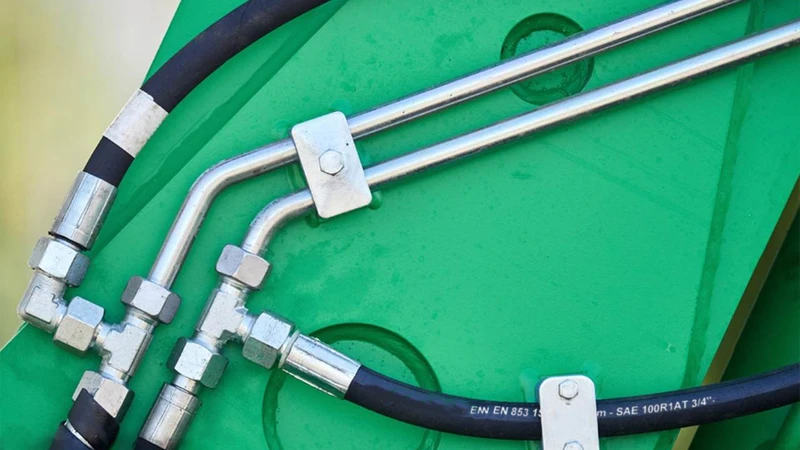
1. When the line is part of a fixed main circuit
Rigid tube is ideal for the backbone of a hydraulic system. If the line runs from pump to valve block, from valve block to manifold, or along a fixed machine frame, tube usually offers better layout control and a cleaner structure.
Compared with hose, rigid tube creates a more organized system. It helps keep routing consistent from one machine to the next, which is especially important for OEM production and standardized assembly.
2. When you need better protection against external damage
In areas where the line may rub against structures, be exposed to repeated contact, or face external mechanical impact, rigid tube often has an advantage. A hose can flex, but its outer cover is still more vulnerable to long-term abrasion, crushing, and cutting.
If the line does not need to move, converting that section to rigid tube can improve durability. Of course, if hose must be used in a demanding environment, additional protection such as nylon sleeve, fire sleeve, or abrasion guard can greatly improve service life. But when movement is not required, rigid tube is often the cleaner and more durable solution from the start.
3. When a long high-pressure line does not need flexibility
A common mistake is assuming that every high-pressure hydraulic line should automatically be a hose. In reality, large-diameter, high-pressure hose can become heavy, stiff, and difficult to route. The higher the pressure and the larger the size, the more limited the flexibility usually becomes.
For long, straight, fixed high-pressure sections, rigid tube may be easier to install, easier to support properly, and better for overall system layout. It can also help control material cost and improve the professional appearance of the machine.
4. When appearance and assembly consistency matter
Tube routing usually looks cleaner and more deliberate. Once clamped in place, it gives the hydraulic system a more organized structure. This is one reason why hydraulic power units, industrial machinery, and higher-end OEM equipment often rely heavily on rigid tube in fixed areas.
If your customers are equipment manufacturers, engineering contractors, or industrial buyers who care about assembly quality and visual neatness, rigid tube can strengthen the overall impression of precision and control.
The Best Real-World Solution: Use Both
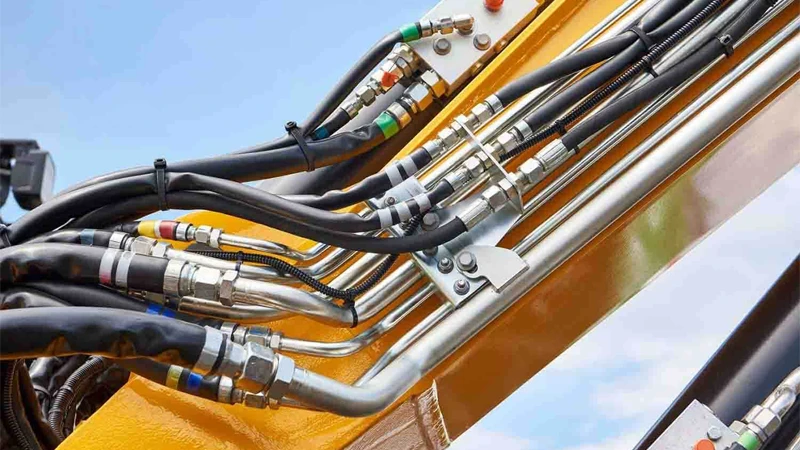
In practice, most hydraulic systems should use a combination of rigid tube and hydraulic hose.
Use rigid tube for the fixed main lines. Use hose where movement, vibration, installation tolerance, or service access make flexibility necessary. This combination is usually more professional than building the whole system with hose, and more reliable than forcing rigid tube into every position.
A practical way to think about it is this:
Keep fixed sections rigid, and leave flexibility where movement is unavoidable.
Common Selection Mistakes
One common mistake is using hose as a shortcut for poor routing. If a line does not fit properly, some installers simply add a longer hose and route it around obstacles. It may solve the installation problem in the short term, but it often creates new problems such as excessive bending, twisting, dragging, or abrasion.
Another mistake is insisting on rigid tube in moving positions. Many leakage and cracking issues are not caused by bad material. They happen because the line type was wrong for the application.
A third mistake is choosing only by pressure rating. Pressure is important, but it is not the whole story. Bend radius, vibration, heat, external abrasion, installation space, and maintenance requirements all affect long-term performance.
A Simple Way to Decide
If the line must tolerate movement, vibration, installation offset, or frequent maintenance, choose hydraulic hose first.
If the line is part of a fixed route, with a stable position and a need for neat long-term layout, choose rigid tube first.
If you are unsure, the most likely answer is that the section should be designed as a rigid tube main line with a hose transition where flexibility is needed.
Conclusion
Hydraulic hose and rigid tube are not competitors. They are tools for different jobs. Hose delivers flexibility, vibration absorption, and adaptability. Rigid tube delivers stability, structure, and a cleaner fixed layout.
The best hydraulic systems are rarely built with only one or the other. Instead, they combine both according to the actual working conditions. When that balance is done well, the result is a hydraulic system that is more reliable, easier to install, easier to service, and better suited to real industrial use.