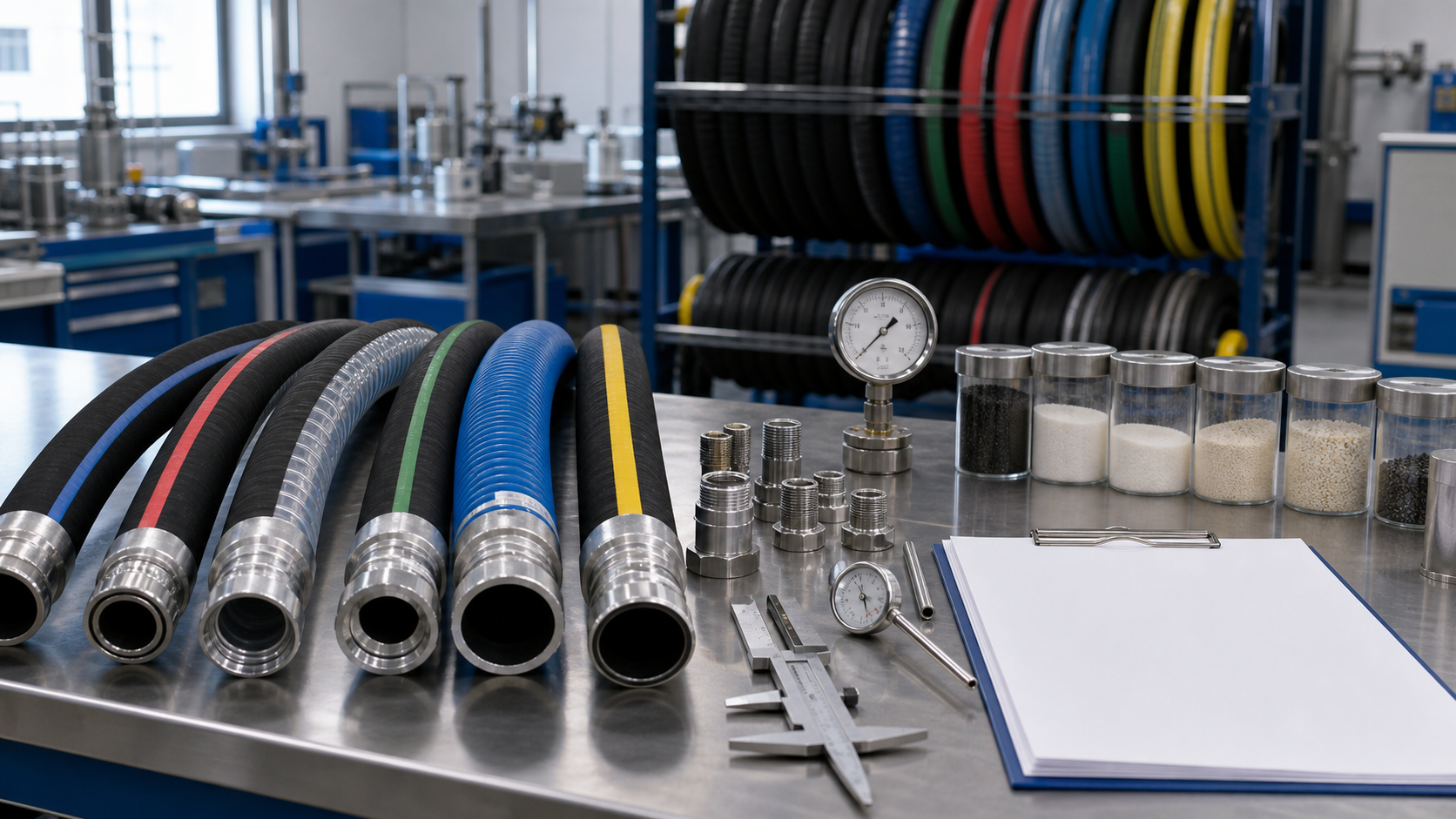
As OEMs expand their product lines across multiple models, configurations, and market variants, hydraulic hose specifications can quietly multiply into hundreds of unique part numbers — many of them differing only slightly in length, fitting angle, or hose diameter. This kind of specification sprawl adds hidden costs throughout the organization: procurement complexity, inventory carrying costs, higher risk of incorrect field replacements, and slower new product development cycles. Standardizing hydraulic hose specifications across a product platform is one of the most effective, and most underused, strategies for reducing these costs without compromising performance.
This article explains why hose specification sprawl happens, the real costs it creates, and how OEMs can approach standardization across multi-model equipment platforms without sacrificing the performance needs of individual applications.
How Hose Specification Sprawl Happens
Specification sprawl rarely happens intentionally. It typically develops gradually, as different engineering teams or product lines make independent decisions over time:
- Model-specific design decisions — Each new model or variant is designed somewhat independently, with engineers specifying hose length, routing, and fittings based on that model’s exact geometry rather than checking for compatibility with existing platform specifications.
- Regional or customer-specific customization — Equipment sold into different markets sometimes receives custom hose configurations to meet local preferences or minor design differences, even when a standardized option would perform equally well.
- Incremental product updates — As products evolve over multiple design generations, small changes to hose routing or fitting angles accumulate, often without revisiting whether the change was truly necessary.
- Lack of a centralized component library — Without a shared, actively maintained list of approved hose and fitting specifications, engineers on different teams may unknowingly create near-duplicate parts that could have been consolidated.
Over several product generations, this pattern can result in an OEM managing hundreds of unique hose part numbers across a platform that, functionally, could be served by a much smaller standardized set.
The Hidden Costs of Unstandardized Hose Specifications
Inventory and Procurement Complexity
Every unique hose specification requires its own inventory line, minimum order quantity, and supplier coordination. For OEMs and their dealer networks, this multiplies warehousing costs and increases the likelihood of stockouts on lower-volume part numbers — parts that are still needed for field service even if they’re not high-volume production items.
Increased Risk of Incorrect Field Replacements
When field technicians face dozens of visually similar hose part numbers for closely related models, the risk of installing an incorrect — and potentially underrated — replacement hose increases. This is particularly risky for pressure or impulse-critical circuits, where the outward difference between the correct part and an incorrect one may not be visually obvious.
Slower New Product Development
Without a standardized component library, engineering teams working on new models often start hose specification from scratch rather than building on proven, already-validated configurations. This adds unnecessary time to development cycles and increases the risk of specifying an unproven hose and fitting combination, rather than leveraging one with established field performance — a consideration we cover in more depth in our article on integrating hydraulic hose design into equipment lifecycle planning.
Reduced Purchasing Leverage
Splitting purchase volume across many low-quantity, unique hose specifications reduces an OEM’s ability to negotiate favorable pricing and lead times with suppliers, compared to consolidating volume behind a smaller set of standardized parts.
Benefits of a Standardized Hose Specification Strategy
Simplified Inventory Across the Product Line
A standardized set of hose and fitting specifications — covering the range of pressure classes, diameters, and lengths actually needed across the platform — allows OEMs and their dealer networks to stock fewer, higher-volume part numbers, reducing both inventory costs and stockout risk.
Faster New Model Development
When engineers can select from a pre-validated library of approved hose and fitting specifications, new product development moves faster, since hose routing and component selection can build on proven configurations rather than starting from scratch for every new model variant.
Improved Field Service Accuracy
Fewer, more clearly differentiated part numbers reduce the risk of technicians installing an incorrect replacement hose, particularly important for pressure and impulse-critical circuits where an underrated substitute could lead to premature failure — a risk explored further in our article on why hydraulic hoses fail at fittings.
Stronger Supplier Relationships and Purchasing Power
Consolidating volume behind standardized specifications gives OEMs greater leverage in supplier negotiations, often resulting in better pricing, more reliable lead times, and priority production scheduling compared to splitting volume across many low-quantity custom parts.
How to Approach Hose Standardization Without Sacrificing Performance
Start with a Platform-Wide Specification Audit
Before standardizing, OEMs need visibility into what currently exists. Auditing hose specifications across all models in a platform — including length, diameter, fitting type, pressure class, and impulse rating — often reveals more redundancy than expected, along with a smaller set of specifications that could realistically serve most applications.
Group Applications by Functional Requirement, Not Just Model
Rather than standardizing hose-by-hose across every model, it’s often more effective to group circuits by functional requirement — for example, all high-pressure lift circuits across a wheel loader lineup — and determine whether a single standardized hose and fitting specification can serve that function across multiple models, even if minor length adjustments are needed.
Preserve Flexibility Where Performance Genuinely Differs
Standardization shouldn’t mean forcing every application into an identical specification regardless of actual operating conditions. Circuits with genuinely different pressure, impulse, or environmental requirements — such as a high-shock shredder circuit versus a low-cycle access panel actuator — should retain distinct specifications where performance actually requires it. The goal is eliminating unnecessary variation, not oversimplifying legitimate technical differences.
Build and Maintain a Centralized Component Library
A centralized, actively maintained library of approved hose and fitting specifications — accessible to engineering teams across all product lines — helps prevent specification sprawl from re-emerging as new models are developed. This library should include not just part numbers, but the underlying performance data (pressure rating, impulse rating, compatible applications) that justifies each specification’s inclusion.
Involve Your Hose Supplier in the Standardization Process
An experienced hose and fitting supplier can help identify where genuine performance differences justify separate specifications versus where standardization is feasible without compromising reliability, drawing on data from similar consolidation efforts across other OEM platforms.
Standardization as an Ongoing Discipline, Not a One-Time Project
Hose specification sprawl tends to re-emerge over time if standardization is treated as a one-time cleanup rather than an ongoing engineering discipline. OEMs that maintain long-term benefits from standardization typically build specification review into their new product development process, requiring engineers to check the approved component library before creating a new hose specification, rather than defaulting to a custom configuration by default.
Partnering with a Hydraulic Hose Manufacturer on Platform Standardization
Standardizing hose specifications across a multi-model equipment platform requires both internal engineering discipline and a supplier capable of supporting a consolidated component strategy — including consistent quality across high-volume standardized parts and flexibility for the smaller number of applications that genuinely require custom specifications.
At Kingdaflex, we work with OEMs to review existing hose specifications across product platforms, identify opportunities for standardization, and support both high-volume standardized production and custom configurations where application requirements genuinely differ. Our team can help you build a hose and fitting strategy that reduces complexity without compromising performance across your product line.
Frequently Asked Questions
How many unique hydraulic hose specifications should a product platform have?
There’s no universal number — it depends on the range of pressure classes, applications, and models in the platform. The goal is eliminating unnecessary variation while preserving distinct specifications where genuine performance differences require it.
Does hose standardization reduce performance or reliability?
Done correctly, standardization shouldn’t reduce performance, since it focuses on eliminating redundant variations rather than forcing genuinely different applications into an identical specification.
How does hose standardization affect new product development timelines?
A pre-validated library of approved hose specifications allows engineers to build on proven configurations rather than specifying and testing new hose and fitting combinations from scratch for every model, generally shortening development cycles.
Who should be involved in a hose standardization initiative?
Effective standardization typically involves engineering teams across all affected product lines, procurement, field service, and the hose and fitting supplier, since each group has visibility into different aspects of specification sprawl and its costs.