Textile braided hydraulic hoses are one of the most widely used hose types across industrial, agricultural, and mobile hydraulic applications. If you are sourcing hydraulic hoses for low-to-medium pressure systems, understanding the advantages of textile braid construction will help you make the right purchasing decision — and potentially reduce costs without compromising performance.
In this guide, we break down the key benefits of textile braided hydraulic hose, explain how it compares to wire braided alternatives, and help you identify the right specifications for your application.
What Is a Textile Braided Hydraulic Hose?
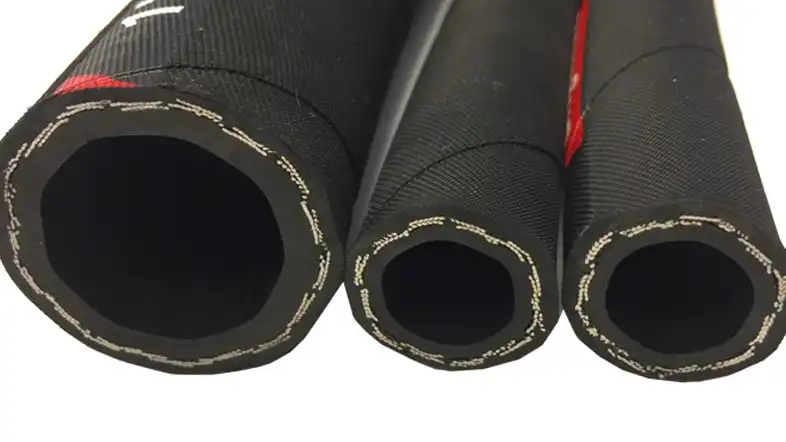
A textile braided hydraulic hose is a flexible hose reinforced with one or more layers of high-tensile synthetic yarn — typically polyester or nylon — woven in a braided pattern around an inner rubber tube. This braiding acts as the structural reinforcement that allows the hose to handle hydraulic pressure without expanding or bursting.
Common standards for textile braided hydraulic hoses include:
- SAE 100R3 — two textile braid layers, suitable for return and suction lines
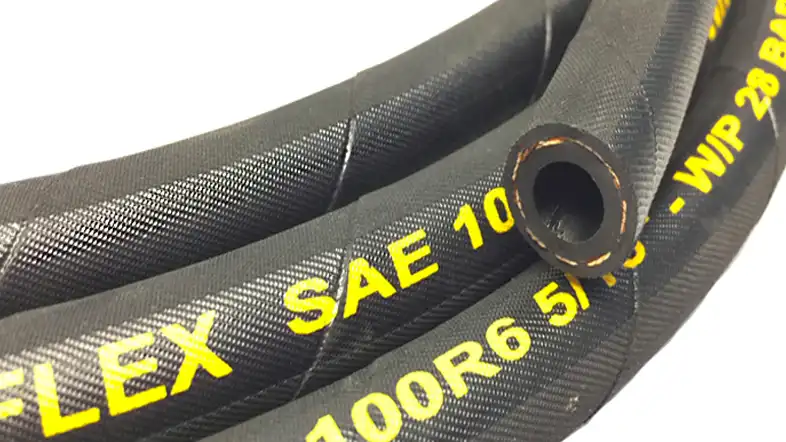
- SAE 100R6 — one textile braid layer, designed for low-pressure hydraulic and pneumatic service
- EN854 1TE / 2TE / 3TE — European standard textile-reinforced hoses for a range of pressure ratings
These hoses are commonly used in agricultural machinery, construction equipment, industrial machinery, and fluid transfer systems where pressures typically fall below 40 bar (580 PSI), though multi-braid textile constructions can handle higher pressures.
Key Benefits of Textile Braided Hydraulic Hose
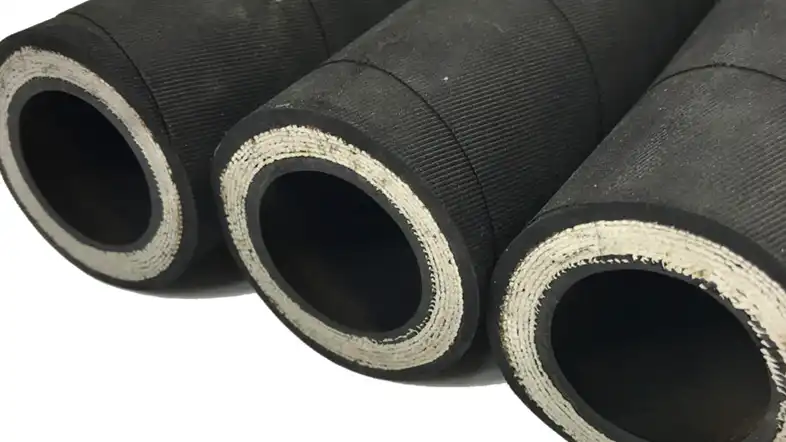
1. Lightweight and Easy to Handle
One of the most immediate advantages of textile braided hoses over steel wire braided or spiral hoses is their significantly lower weight. The synthetic yarn reinforcement is far lighter than steel wire, which translates to:
- Easier installation in tight spaces or overhead applications
- Reduced load on fittings and connection points
- Lower shipping costs for bulk orders
- Less operator fatigue during equipment maintenance
For mobile equipment manufacturers and OEMs, weight savings across an entire hydraulic system can meaningfully improve overall vehicle performance and fuel efficiency.
2. Superior Flexibility
Textile braided hoses are inherently more flexible than wire reinforced hoses of the same diameter. This flexibility provides several practical benefits:
- Easier routing around bends, corners, and complex machinery geometry
- Smaller minimum bend radius, allowing installation in confined equipment bays
- Reduced stress on end fittings, since the hose can absorb movement without transferring load to connection points
- Better performance in applications with continuous or repeated flexing
This makes textile braided hose the preferred choice for return lines, drain lines, pilot lines, and any circuit where the hose must navigate intricate routing paths.
3. Cost-Effective for Low-to-Medium Pressure Applications
Wire braided and spiral hoses are engineered for high-pressure duty — and priced accordingly. When your system operates at low or medium pressures, specifying a textile braided hose is a smart cost-saving decision that does not require any compromise on safety or reliability.
Textile braided hoses typically cost less due to:
- Lower raw material cost (synthetic yarn vs. high-tensile steel wire)
- Simpler manufacturing process
- Compatibility with standard crimp fittings, reducing assembly costs
For large fleets, OEM production lines, or bulk industrial purchases, the per-unit savings across a textile braided hose specification can be substantial.
4. Excellent Abrasion and Weather Resistance
Most textile braided hydraulic hoses are fitted with a robust outer cover made from synthetic rubber or PVC, which provides:
- Abrasion resistance against contact with machine frames, floors, or other hoses
- UV resistance for outdoor and agricultural equipment exposed to sunlight
- Oil and weather resistance to handle fluid spills and environmental exposure
- Ozone resistance to prevent cover cracking over time
Some constructions feature a wrapped outer cover finish that further enhances surface durability. This makes textile braided hoses well suited for agricultural equipment operating in dusty, wet, or rough field conditions.
5. Smooth Inner Tube for Efficient Fluid Flow
Textile braided hoses use a smooth, seamless inner tube — typically made from oil-resistant synthetic rubber — that minimises flow restriction and turbulence. Benefits include:
- Lower pressure drop across long hose runs
- Compatibility with a wide range of hydraulic fluids, including mineral oils, synthetic fluids, water-glycol solutions, and phosphate esters (depending on compound specification)
- Reduced risk of contamination from the hose inner wall
- Support for cleaner hydraulic systems with lower particle counts
In fluid power systems where contamination control is a priority, specifying the correct inner tube compound is just as important as the pressure rating.
6. Good Temperature Performance
Textile braided hydraulic hoses are designed to operate reliably across a broad temperature range. Standard constructions typically perform between -40°C and +100°C (-40°F to +212°F), which covers the majority of industrial and mobile hydraulic applications.
For higher temperature environments — such as steam service or proximity to engines — specialist inner tube compounds and outer cover materials are available. Always verify the temperature rating against your system’s maximum operating temperature when selecting a hose.
7. Wide Range of Sizes and Standards
Textile braided hoses are manufactured across a broad range of inner diameters — typically from 6mm (1/4″) up to 51mm (2″) — and are available to meet both SAE and EN/DIN international standards. This means:
- Straightforward compliance for export equipment manufacturers
- Easy interchangeability with existing hose assemblies
- Availability of matching fittings and accessories globally
Whether you are sourcing for a domestic production line or an international OEM customer, textile braided hoses can be specified to the correct standard without custom engineering.
Textile Braided vs. Wire Braided Hydraulic Hose: Which Should You Choose?
| Feature | Textile Braided | Wire Braided |
|---|---|---|
| Pressure rating | Low to medium (up to ~40 bar) | Medium to high (up to ~420 bar) |
| Weight | Light | Heavier |
| Flexibility | Excellent | Good |
| Cost | Lower | Higher |
| Typical application | Return, drain, pilot, suction lines | Pressure lines, cylinders, motors |
| Kink resistance | Moderate | Better at high pressure |
Rule of thumb: Use textile braided hose on return lines, suction lines, low-pressure pilot circuits, and drain lines. Reserve wire braided or spiral hose for high-pressure working lines where the system demands it.
Applications Where Textile Braided Hydraulic Hose Excels
- Agricultural machinery: tractors, harvesters, sprayers — return and suction circuits
- Construction equipment: low-pressure pilot and drain circuits on excavators, loaders, and cranes
- Industrial hydraulic systems: press return lines, lubrication circuits, coolant transfer
- Pressure washers and cleaning equipment: low-pressure feed and return hoses
- Mobile equipment: any circuit where weight and flexibility are priorities
How to Select the Right Textile Braided Hydraulic Hose
When specifying a textile braided hose for your application, confirm the following parameters:
- Working pressure — ensure the hose’s rated working pressure exceeds your system’s maximum operating pressure with an adequate safety factor (typically 4:1 burst-to-working pressure ratio)
- Inner diameter — match to the required flow rate to avoid excessive fluid velocity
- Temperature range — verify the inner tube compound suits the hydraulic fluid and ambient temperature
- Fluid compatibility — confirm the inner tube material is compatible with your hydraulic fluid type
- Applicable standard — specify SAE or EN standard as required by your market or OEM requirement
- Fitting type — ensure crimped or reusable fittings are available for the hose series
Source Textile Braided Hydraulic Hoses from Kingdaflex
At Kingdaflex, we manufacture a comprehensive range of textile braided hydraulic hoses — including SAE 100R3, SAE 100R6, EN854 1TE, EN854 2TE, and EN854 3TE — all produced to international quality standards and available in full reel lengths or cut-to-length for OEM supply.
Our hoses are manufactured with consistent inner tube quality, reliable braid construction, and durable outer covers to deliver long service life across demanding industrial and agricultural applications.
Contact our team to request a product datasheet, get a quotation, or discuss your specific hose requirements with our technical team.
Frequently Asked Questions
What is the maximum working pressure for textile braided hydraulic hose?
Depending on the hose series and inner diameter, textile braided hoses typically handle working pressures from 10 bar up to approximately 40 bar. Multi-braid textile constructions can handle higher pressures. Always verify the rated working pressure in the product datasheet.
Can textile braided hose be used with petroleum-based hydraulic oil?
Yes. Standard inner tube compounds in textile braided hydraulic hoses are formulated to be compatible with petroleum-based mineral hydraulic oils. Confirm fluid compatibility when using synthetic or fire-resistant fluids.
Is textile braided hydraulic hose the same as a fabric braid hose?
Yes — “textile braid,” “fabric braid,” and “yarn braid” are all terms used to describe reinforcement made from synthetic fibre such as polyester or nylon, as opposed to steel wire braid.
How do I assemble textile braided hose fittings?
Textile braided hoses are typically assembled using standard hydraulic crimp fittings with a dedicated crimp specification. Reusable field-fit fittings are also available for some hose series. Always follow the fitting manufacturer’s crimp specification to ensure a leak-free, safe assembly.