When OEMs specify hydraulic hose, pressure rating and hose diameter tend to get the most attention. But one of the most important — and most frequently overlooked — specifications is the hose’s impulse rating. Impulse testing is what actually predicts how a hose and fitting assembly will hold up under the repeated pressure cycling that real hydraulic systems experience every day. A hose with an excellent static pressure rating can still fail early in service if it wasn’t properly rated for the impulse conditions of its application.
This article explains what impulse rating means, how impulse testing works, why it matters more than working pressure alone for many applications, and what OEMs should look for when evaluating hose and fitting suppliers.
What Is Hydraulic Hose Impulse Rating?
Impulse rating refers to a hose assembly’s ability to withstand repeated pressure cycling — rapid increases and decreases in pressure — over a specified number of cycles without failure. Unlike a burst pressure test, which measures the point at which a hose fails under a single sustained pressure increase, impulse testing simulates the real-world condition most hydraulic hoses actually face: pressure that rises and falls constantly as cylinders extend and retract, valves open and close, and pumps cycle on and off.
Impulse testing is typically performed according to recognized industry standards, such as SAE J343 or ISO 6803, which define standardized test procedures, pressure cycling patterns, and minimum cycle counts a hose and fitting assembly must survive to earn a given impulse rating.
Why Impulse Rating Matters More Than Static Pressure Rating
Most hydraulic systems don’t operate at a single constant pressure. Cylinders extend and retract, directional valves shift, and pump output fluctuates with load — all of which generate continuous pressure cycling throughout the system’s operation. This is especially true in applications like excavator boom circuits, baler rams, and packer blades, where pressure can spike well above average working pressure during peak load moments.
A hose rated only for static working pressure may handle any single pressure event just fine, but the repeated cycling — thousands or even millions of cycles over a hose’s service life — is what actually drives fatigue failure at the hose-to-fitting junction. This is why the fitting connection, not the hose body, is so often where field failures actually occur, a topic we cover in more detail in our article on why hydraulic hoses fail at fittings.
For OEMs designing equipment with high-cycle hydraulic circuits, impulse rating is often a better predictor of real-world service life than working pressure or burst pressure alone.
How Impulse Testing Works
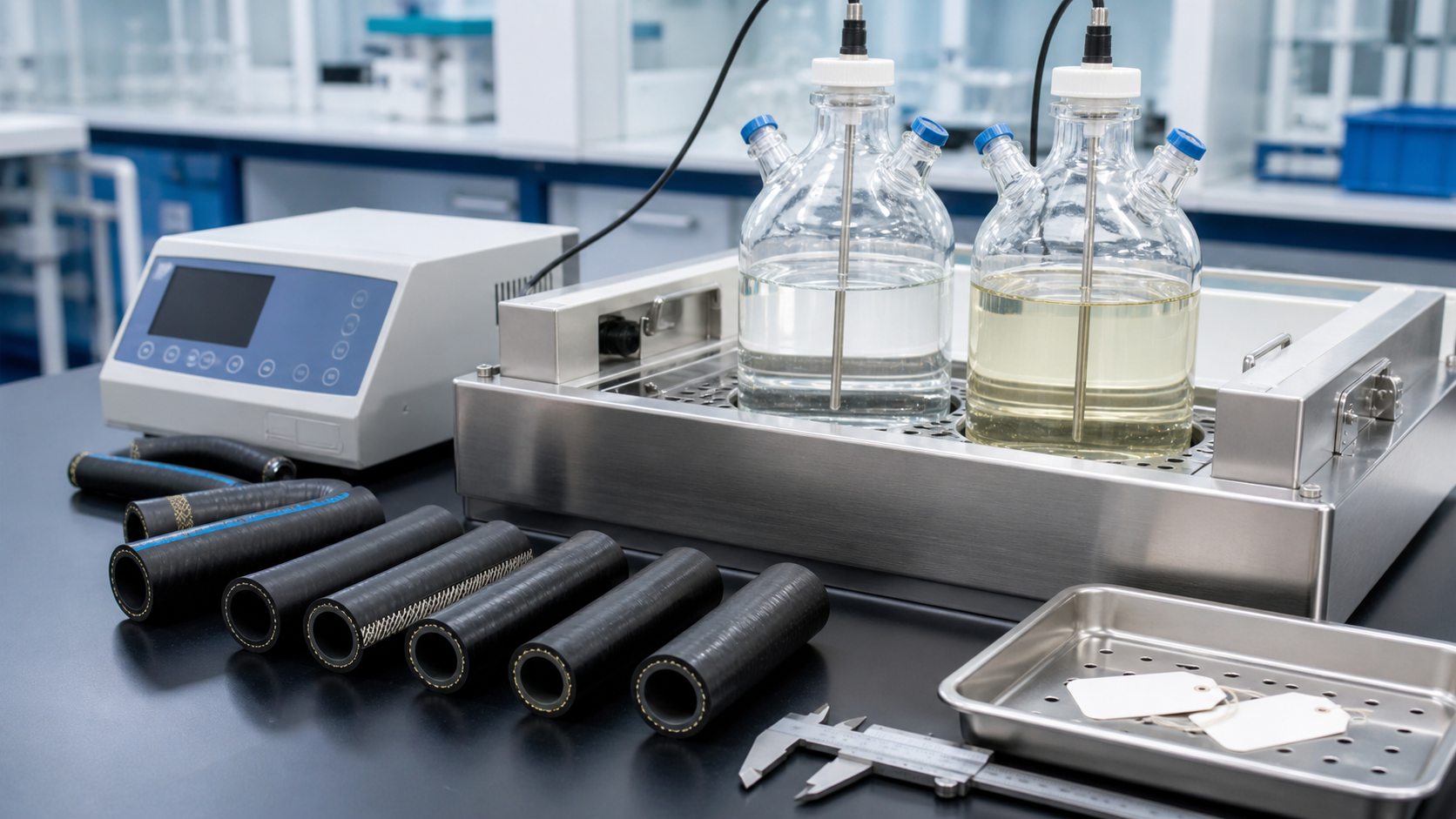
Impulse testing subjects a complete hose assembly — hose plus fittings — to repeated pressure cycles under controlled laboratory conditions, typically including:
- Cycling between a low and high pressure point, often reaching 133% of the hose’s rated working pressure at peak, to simulate real-world pressure spikes
- Elevated test temperature, since heat accelerates material fatigue and better represents actual operating conditions
- A specified bend radius, since hoses tested straight (with no bend) don’t reflect the added stress of a curved installation
- A defined minimum cycle count the assembly must survive without leakage, fitting slippage, or hose failure to meet the standard
Because impulse testing evaluates the complete assembly — not just the hose or fitting in isolation — results can vary meaningfully between different hose and fitting combinations, even when each component is individually rated for the same working pressure.
Common Impulse Testing Standards
SAE J343
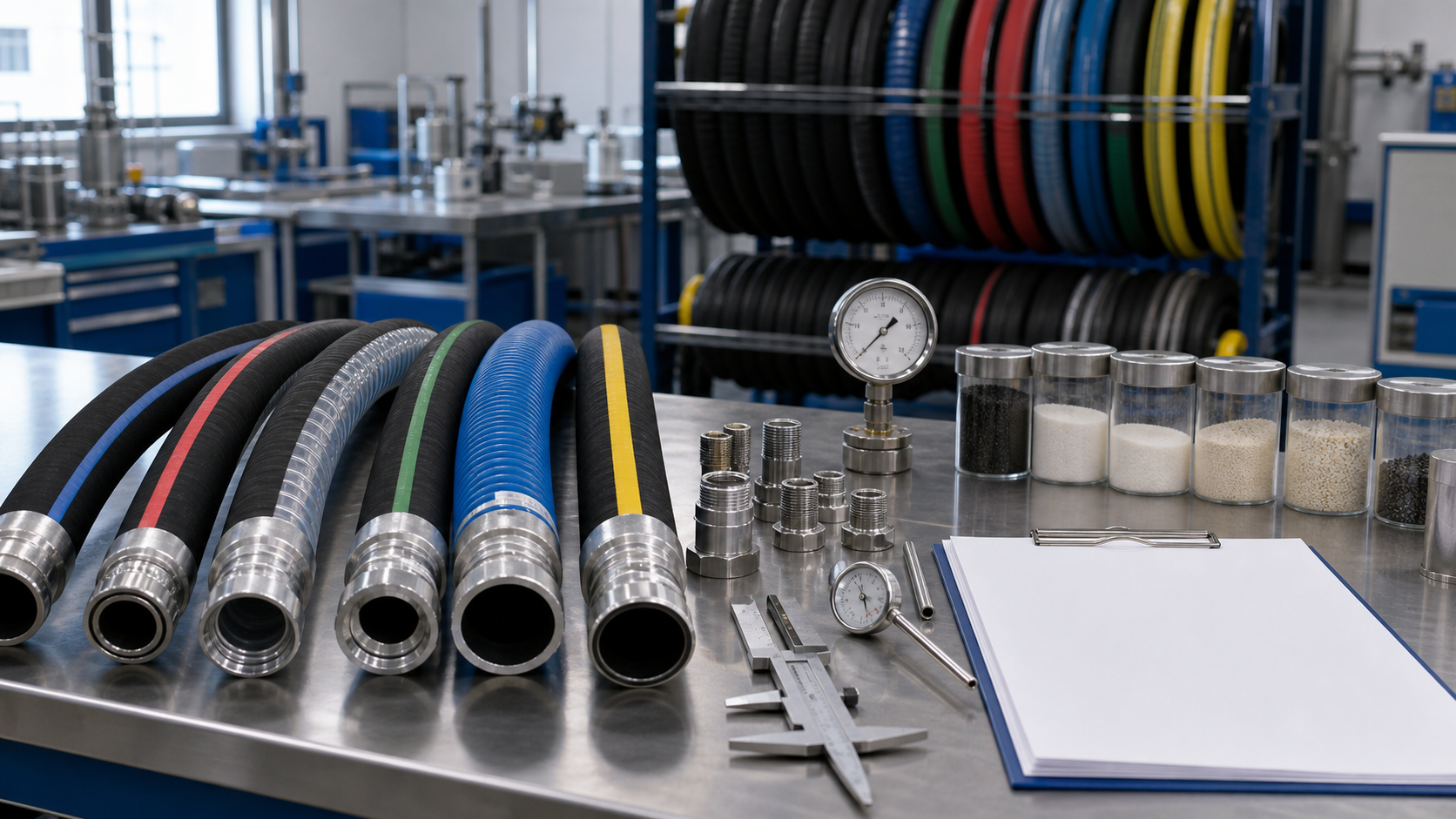
A widely used North American standard that defines impulse test procedures and minimum cycle requirements for hydraulic hose assemblies across different SAE hose classifications (such as SAE 100R1, 100R2, and others).
ISO 6803
An international standard covering impulse testing for rubber and thermoplastic hydraulic hose assemblies, commonly referenced in global OEM specifications and used alongside or in place of SAE standards depending on the target market.
EN 856 / EN 853
European hose standards that include impulse performance requirements as part of their broader construction and performance specifications, particularly relevant for OEMs supplying equipment into European markets.
OEMs sourcing hose internationally should confirm which standard a supplier’s impulse data is based on, since cycle counts and test conditions can differ between standards even for hoses with similar pressure ratings.
Applications Where Impulse Rating Is Especially Critical
Impulse rating matters to some degree in nearly every hydraulic application, but it becomes especially critical in systems with:
- High-frequency cycling, such as packer blades in waste compaction equipment or baler rams in recycling facilities
- Shock loading, such as shredders and crushers that experience sudden, irregular pressure spikes
- Precision motion control, such as amusement ride lift systems or motion simulators, where consistent hydraulic response depends on fitting and hose integrity over high cycle counts
- Mobile equipment with frequent directional changes, such as excavator boom and arm circuits or wheel loader lift systems
- Continuous-duty industrial equipment, such as injection molding machines and industrial presses that cycle constantly during production
In these applications, choosing a hose based on working pressure alone — without checking impulse performance — significantly increases the risk of premature fitting failure.
What OEMs Should Ask Hose and Fitting Suppliers
When evaluating hydraulic hose suppliers for high-cycle applications, OEMs should look beyond the basic pressure and diameter specification sheet and ask:
- What impulse standard was the hose assembly tested to, and what cycle count did it achieve at the tested pressure and temperature?
- Was the impulse test performed on the complete assembly (hose plus the specific fitting being supplied), rather than the hose alone?
- What bend radius was used during testing, and does it reflect the actual installation conditions in the application?
- Can the supplier provide test documentation or certificates for impulse performance, particularly for safety-critical or high-cycle applications?
- Is impulse performance consistent across production batches, or only demonstrated on a single sample assembly?
Suppliers who can answer these questions with documented data are generally better positioned to support demanding OEM applications than those who only provide static pressure ratings.
Impulse Rating and Fitting Selection
Impulse performance isn’t determined by the hose alone — the fitting and crimp specification play an equally important role. A high-impulse-rated hose paired with an incorrectly crimped fitting, or a fitting not designed for high-cycle applications, will still fail well short of its expected service life. This is one of the reasons OEMs increasingly request impulse test data for the complete assembly, rather than relying on hose and fitting ratings evaluated separately. For more on how crimping and fitting selection affect overall assembly reliability, see our comparison of one-piece fittings vs. crimped fittings.
Working with a Manufacturer That Understands Impulse Performance
For OEMs designing equipment with high-cycle or shock-loaded hydraulic circuits, impulse rating should be treated as a core specification alongside working pressure and hose diameter — not an afterthought. Choosing hose and fitting assemblies with documented, standards-based impulse performance reduces the risk of field failures, warranty claims, and unplanned downtime for end users.
At Kingdaflex, we manufacture hydraulic hoses tested to recognized impulse standards, with data available for OEMs designing high-cycle equipment such as construction machinery, waste processing systems, and industrial presses. Our team can help you select hose and fitting combinations with impulse performance matched to your application’s real operating conditions.
Frequently Asked Questions
What is a good impulse rating for a hydraulic hose?
It depends on the standard and application, but many industrial-grade hoses are tested to withstand several hundred thousand cycles at 133% of rated working pressure under standards like SAE J343. OEMs should compare impulse cycle counts under the same test standard and pressure conditions for a fair comparison between suppliers.
Is impulse rating the same as burst pressure?
No. Burst pressure measures the pressure at which a hose fails under a single sustained load, while impulse rating measures how many pressure cycles an assembly can withstand before failure — a better indicator of real-world fatigue performance.
Does impulse rating apply to the fitting or just the hose?
Impulse testing should be performed on the complete assembly, including the specific fitting and crimp specification used, since fitting selection and crimp quality significantly affect impulse performance.
Why do two hoses with the same working pressure have different impulse ratings?
Impulse performance depends on factors beyond working pressure, including reinforcement construction, fitting design, crimp specification, and manufacturing quality — which is why impulse test data should be compared directly rather than assumed based on pressure rating alone.