
Kingdaflex manufactures SAE and EN-certified hydraulic return hoses engineered for low-pressure return and suction circuits in mobile and industrial hydraulic systems. Large-bore construction, anti-collapse helix reinforcement, and oil-resistant inner tubes keep fluid flowing cleanly back to the reservoir — protecting your pump and extending system life.

Purpose-selected for low-pressure return, drain, and suction circuits across mobile equipment, industrial machinery, and agricultural applications.

The industry-standard hydraulic return and suction hose for mobile equipment and agricultural machinery. The internal helix steel wire provides structural rigidity that prevents collapse under vacuum — critical for pump inlet lines where even momentary restriction causes cavitation damage.
Best For: Tractor and agricultural machinery suction lines, pump inlet hoses, large-bore return lines, industrial reservoir return circuits
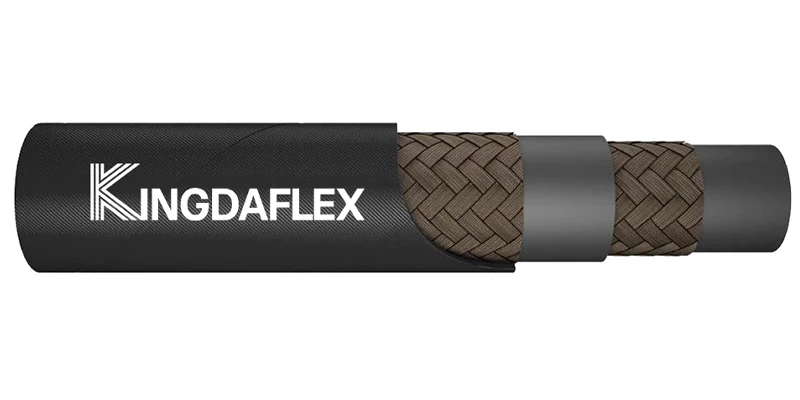
A flexible, lightweight return hose for small-bore low-pressure drain and return circuits. The all-textile reinforcement (no wire braid) gives this hose exceptional flexibility and a small minimum bend radius — making it the preferred choice for tight-routed drain lines on hydraulic motors and case drain circuits.
Best For: Hydraulic motor case drain lines, filter return lines, low-pressure drain circuits, pilot line returns
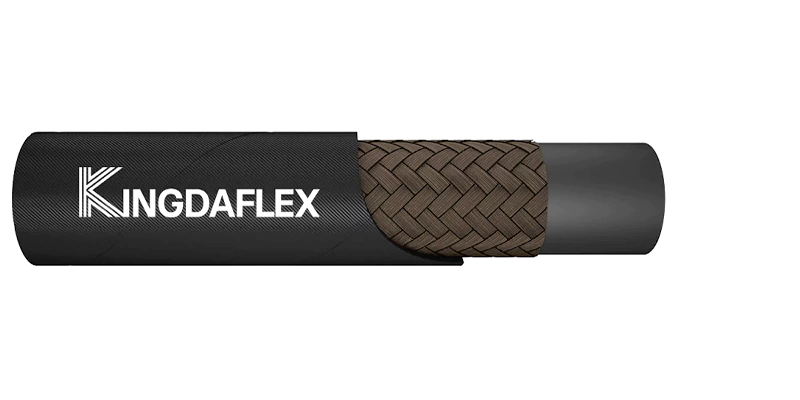
The lightest and most flexible option for very-low-pressure return and drain applications. Ideal for instrumentation drain lines, filter bypass returns, and any circuit where maximum flexibility and minimal weight are the primary requirements.
Best For: Instrument drain lines, breather and vent circuits, low-pressure pilot returns, tank fill hoses
When return line pressure exceeds the rating of standard R3/R6 hoses — common in systems with high back-pressure from coolers, filters, or long return runs — EN854 3TE provides the next step up in pressure capability while maintaining the flexibility of textile reinforcement.
Best For: Return circuits with elevated back-pressure, hydraulic cooler connections, filter head return lines, medium-pressure drain circuits
A balanced option between the ultra-flexible R3/R6 and the higher-rated 3TE. EN854 2TE covers the majority of industrial return circuit applications where pressures are moderate and flexibility through complex routing paths is required.
Best For: General industrial return lines, manifold block return ports, medium-duty mobile equipment drain circuits
The entry-level textile-reinforced return hose for applications requiring oil resistance and basic pressure capability without the weight or cost of multi-layer construction. Commonly used for return lines on light industrial machinery, small power packs, and machine tool hydraulic units.
Best For: Machine tool return lines, light-duty industrial hydraulic power packs, tool circuit drain lines
Sizing Rule of Thumb: Return lines should be sized so fluid velocity does not exceed 2–4 m/s at maximum flow rate. Suction lines should target 0.5–1.5 m/s.
When in doubt, go one dash size larger — the cost difference is small and the benefit to system temperature and pump life is significant.
| Hose Type | Max Pressure | Bore Range | Temp Range | Reinforcement | Key Feature | Best Application |
|---|---|---|---|---|---|---|
| SAE 100R4 | 21 bar | DN19–DN102 | -40°C to +100°C | Textile + helix wire | Anti-collapse suction | Pump suction, large-bore return |
| SAE 100R3 | 145 bar | DN5–DN25 | -40°C to +100°C | Double textile braid | Ultra-flexible | Motor case drain, filter return |
| SAE 100R6 | 35 bar | DN5–DN25 | -40°C to +100°C | Single textile braid | Lightest weight | Instrument drain, pilot return |
| EN854 1TE | 28 bar | DN6–DN25 | -40°C to +100°C | Single textile braid | Cost-effective | Light industrial return |
| EN854 2TE | 75 bar | DN6–DN25 | -40°C to +100°C | Double textile braid | Balanced pressure/flex | General industrial return |
| EN854 3TE | 145 bar | DN6–DN51 | -40°C to +100°C | Triple textile braid | Higher back-pressure | Cooler/filter return circuits |
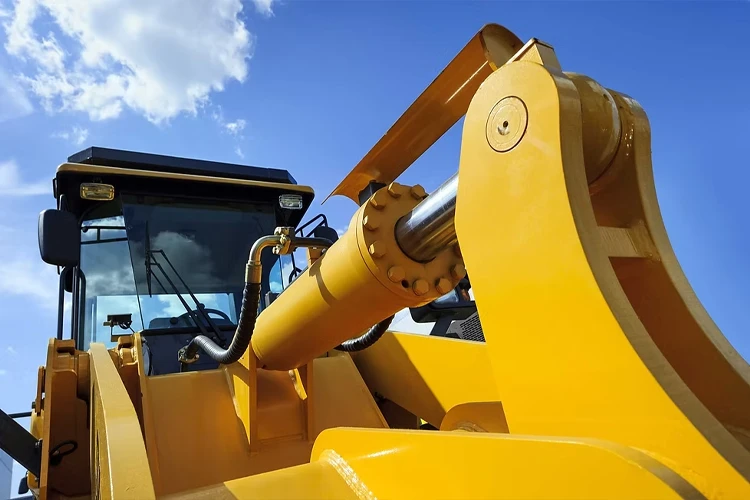
Excavators, wheel loaders, and cranes use multiple large-bore return lines to manage fluid coming back from boom, arm, and bucket cylinders simultaneously. On large excavators, return flows can exceed 200 L/min — requiring DN50 or DN63 hoses to maintain acceptable fluid velocity. SAE 100R4 is the standard specification for all suction and main return circuits on mobile construction equipment.

Underground and surface mining machinery operates hydraulic systems in the most demanding ambient conditions. Abrasion from rock dust and ore particles attacks hose outer covers. Kingdaflex offers return hoses with extra-thick abrasion-resistant covers for mining applications — extending service life in environments where standard covers would be damaged within weeks.
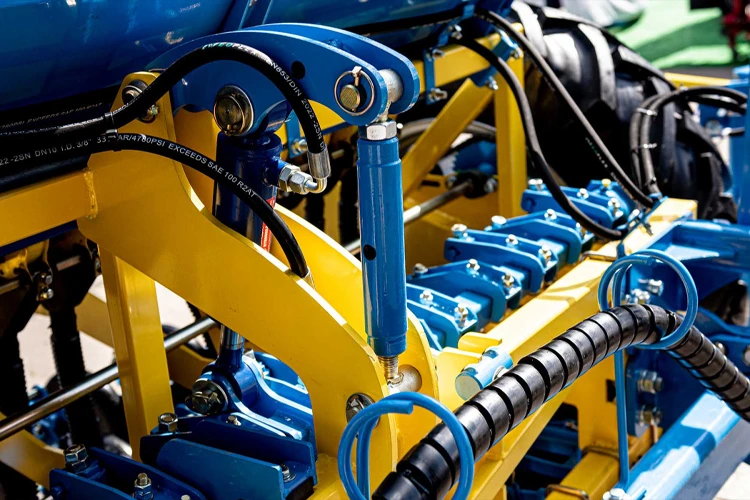
Tractors, combine harvesters, and self-propelled sprayers all rely on correctly sized return hoses to keep fluid temperatures in range during extended field operation. On high-horsepower tractors with multiple remote valve functions active, return flows through the filter and cooler circuit can generate significant back-pressure if hoses are undersized. EN854 3TE is recommended for tractor hydraulic cooler connection hoses where back-pressure may be elevated.
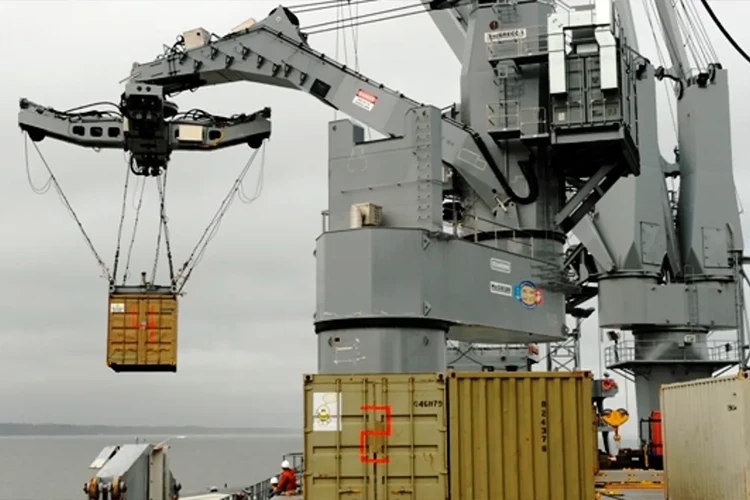
Hydraulic return lines on deck machinery, steering systems, and crane units aboard vessels face the additional challenge of saltwater exposure on the outer cover. Kingdaflex return hoses with EPDM outer covers provide substantially better saltwater resistance than standard neoprene covers and are recommended for any return hose with external deck exposure.
Four reasons leading forklift OEMs, dealerships, and fleet operators source their hydraulic hoses from Kingdaflex.
The inner bore of a return hose directly affects pressure drop across the circuit. Inconsistent bore dimensions — a common quality issue in lower-grade hose production — cause uneven pressure distribution across parallel return circuits. Kingdaflex hoses are produced to tight dimensional tolerances under SAE and EN standards, with 100% dimensional verification during production.
Kingdaflex manufactures return hoses in custom lengths and non-standard bore sizes for OEM and industrial customers. If your machine requires a specific assembly length to avoid joins, or a bore size not available in standard catalog, contact our technical team for a custom production quotation.
Return hose assemblies are only as good as their end connections. Kingdaflex supplies matched crimped fittings for all return hose series in BSP, JIC, ORFS, NPT, and DIN thread forms — ensuring a leak-free assembly from a single source, with documented compatibility between hose and fitting.
In every hydraulic circuit, fluid travels in a continuous loop. High-pressure hoses carry pressurized fluid from the pump to actuators (cylinders, motors, valves). Once that fluid has done its work, it must return to the reservoir — and that is the job of the hydraulic return hose.
Return hoses operate at low working pressures, typically between 5 and 25 bar, but they handle large fluid volumes at high flow rates. An undersized or collapsed return hose creates back-pressure that raises system temperature, accelerates seal wear, and reduces actuator speed. In severe cases, restricted return flow causes cavitation at the pump — one of the most destructive failure modes in any hydraulic system.
A correctly specified hydraulic return hose must:
Both operate at low pressure, but they serve opposite directions in the circuit. A suction hose runs from the reservoir to the pump inlet — it must resist collapse under vacuum (negative pressure). A return hose runs from actuators back to the reservoir — it carries pressurized return flow and must resist back-pressure without excessive pressure drop. SAE 100R4, with its internal helix wire, is suitable for both functions. Standard textile-braid hoses (R3, R6, EN854) are suitable for return lines only — they will collapse if used on the suction side.
This is more complex than it appears. In a simple circuit, return pressure is near zero. However, if the return line passes through a cooler, a filter, or a long plumbing run before reaching the reservoir, back-pressure builds.
Always calculate the actual worst-case return line pressure under maximum flow rate through all restrictions. For most mobile equipment, EN854 2TE or 3TE (40–50 bar rating) provides adequate margin. For circuits with load-holding valves or regenerative functions, verify with the system designer.
Technically yes — a wire-braided hose has sufficient pressure rating for any return circuit. However, it is poor engineering practice. Wire-braided hoses are significantly more expensive, heavier, and stiffer than textile-reinforced return hoses of equivalent bore.
They also have a larger minimum bend radius, making routing more difficult in large bore sizes. Use the correct tool for the job: SAE 100R4 for suction and large-bore return, EN854 or SAE 100R3/R6 for return-only circuits.
Size the bore to limit fluid velocity to 2–4 m/s at maximum flow. To calculate: Required bore area (cm²) = Flow rate (L/min) ÷ (600 × Target velocity (m/s)). For example, a system with 60 L/min maximum return flow targeting 3 m/s requires a bore area of at least 3.33 cm², corresponding to approximately a 21 mm (DN20) inner diameter. Always round up to the next available standard size, and verify the velocity is within limits at maximum flow.
Return hoses operate at low pressure and might appear to have indefinite life. In practice, the inner tube degrades due to fluid contamination and heat even when pressure is low.
Industry best practice is to inspect return hoses for cover cracking, fitting corrosion, and inner tube condition every 2 years, and to replace proactively every 4–6 years regardless of visible condition — or per the equipment manufacturer’s maintenance schedule, whichever is sooner. On suction hoses, any sign of inner collapse or deformation is grounds for immediate replacement.
Standard return hose products (SAE 100R4, SAE 100R3, SAE 100R6, EN854 series) are available in 25-metre, 50-metre, and 100-metre reels with typical dispatch within 7–15 business days. Custom lengths with factory-crimped fittings are available with 15–25 business day lead time. OEM and distributor pricing is available on request — contact us with your volume forecast for competitive FOB pricing.