The reinforcement layer is the structural backbone of any hydraulic hose — it determines working pressure, burst margin, impulse fatigue life, and how the assembly behaves under dynamic loads. The choice between wire-braided and spiral-wound construction is not arbitrary. Get it right and your hose lasts the full service interval. Get it wrong and you are dealing with premature failures in the most demanding part of your system. This guide explains the construction difference, what each handles best, and how to match the right type to your application.
Key Takeaways
- Wire-braided hoses (SAE 100R1AT, R2AT) are optimized for flexibility and moderate pressure — the right choice for general mobile hydraulic circuits with tight routing.
- Spiral hoses (SAE 100R9, R12, R13, R15, 4SP, 4SH) are engineered for high-pressure, high-impulse duty cycles — construction machinery, mining equipment, and injection molding presses.
- The critical failure mode is different for each: braided hoses fail from wire fatigue at pressure peaks; spiral hoses fail from cover damage and kinking if used outside their minimum bend radius.
How the Two Constructions Actually Differ
Wire Braiding: Interlocked for Flexibility
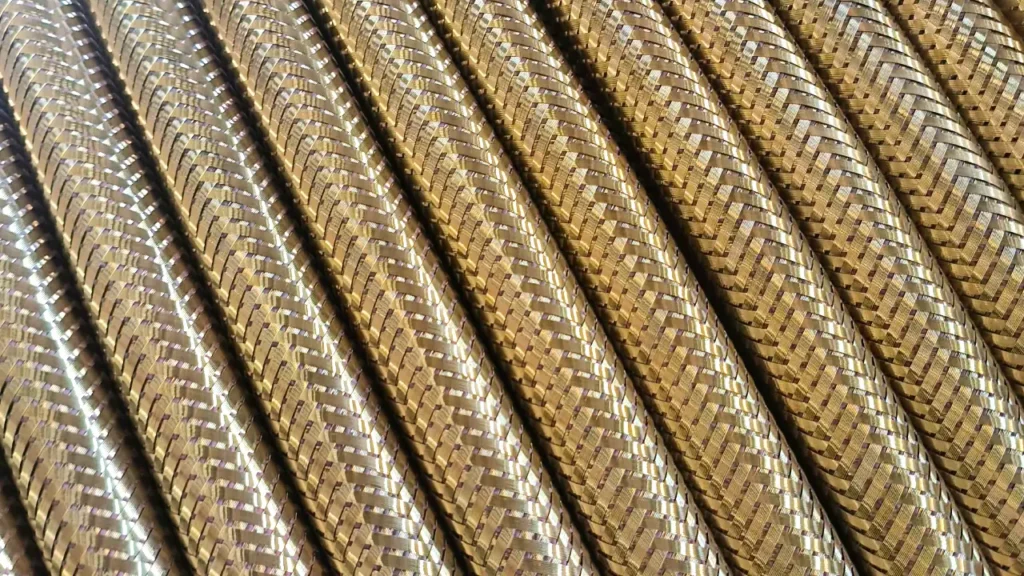
Wire-braided hoses are manufactured by passing high-tensile steel wires (or synthetic fibers for low-pressure variants) over and under each other in an interlocking diagonal pattern around the inner tube. The braiding machine runs multiple wire carriers simultaneously, typically at angles of 54.7 degrees to the hose axis — the “neutral angle” at which the construction resists both internal pressure and axial tension equally.
The interlocking nature of the braid gives the hose its characteristic flexibility. Because the wires can slide slightly relative to each other during bending, a braided hose achieves a tighter minimum bend radius than a spiral hose of the same size. SAE 100 R1AT (single-braid) handles up to 3,000 PSI in smaller sizes; SAE 100R2AT (double-braid) extends to 5,800 PSI at -4 and -6 sizes. View Kingdaflex hydraulic hose series and pressure ratings for complete pressure ratings by size and series.
Spiral Winding: Layered for Pressure
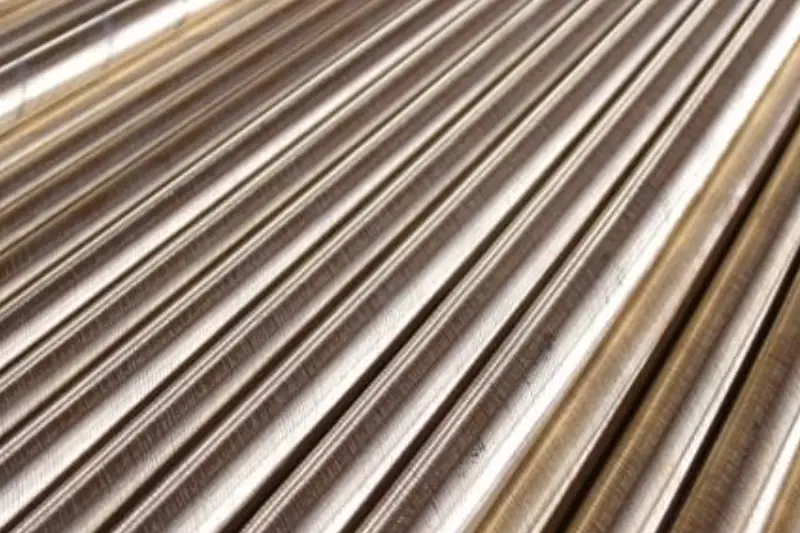
Spiral-wound hoses are manufactured by wrapping layers of high-tensile steel wire helically around the inner tube in alternating left-hand and right-hand spirals. Unlike braiding — where wires interlock — each spiral layer is distinct. Four-spiral hoses (SAE 100R9, 4SP) use four layers; six-spiral hoses (SAE 100R12, R13, 4SH) use six layers and reach working pressures exceeding 6,000 PSI in larger sizes.
The alternating spiral directions cancel torsional forces, preventing the hose from twisting under pressure. This is critical in pulsating applications: when a hydraulic actuator cycles rapidly, pressure spikes propagate through the hose assembly hundreds of times per minute. Spiral construction absorbs these impulse loads more effectively than braided wire because the layers do not rely on interlocked wire contact to maintain structural integrity. According to SAE J517, four-spiral hoses are required to pass 400,000 impulse cycles at 133% of working pressure — the same standard Kingdaflex applies to all spiral hose production with 200% proof pressure testing.
Side-by-Side Comparison: What Actually Matters in Selection
| Property | Wire Braided (R1AT/R2AT) | Spiral Wound (R9/R12/4SP/4SH) |
|---|---|---|
| Max Working Pressure | Up to ~5,800 PSI (R2AT, -4) | Up to ~6,500+ PSI (R13, -4 to -24) |
| Flexibility | High — tight minimum bend radius | Moderate — larger minimum bend radius |
| Impulse Fatigue Life | Standard (per SAE J517) | Superior — 400,000+ cycles at 133% WP |
| Weight | Lighter | Heavier (more steel per unit length) |
| Typical SAE Series | 100R1AT, 100R2AT, 100R3, 100R6 | 100R9, 100R12, 100R13, 100R15, 4SP, 4SH |
| Dominant Applications | General mobile equipment, agricultural machinery, lower-pressure circuits | Mining, construction equipment, hydraulic presses, offshore platforms |
| Primary Failure Mode | Wire fatigue at pressure cycling peaks | Cover erosion, kinking from exceeding min bend radius |
Application-Specific Selection Logic
When to Specify Wire-Braided Construction
Braided hoses are the right choice when flexibility is a constraint — tight routing through machine frames, articulated joints with high flex cycles at moderate pressure, or applications where the assembly must absorb vibration from the machine itself. Agricultural equipment (tractors, harvesters) and general mobile hydraulics running below 3,000 PSI with standard duty cycles are the core use cases for SAE 100R1AT. Systems up to 5,800 PSI with tighter routing still prefer SAE 100R2AT over a four-spiral hose because the smaller OD and tighter bend radius simplify installation without sacrificing pressure capability.
When Spiral Construction is Non-Negotiable
Spiral hoses become the correct specification when any of three conditions are present: (1) working pressure exceeds the practical ceiling of double-braid construction for the required hose size, (2) the application produces rapid pressure pulses (excavator booms, hydraulic hammers, injection molding clamp circuits), or (3) the operating environment is high-abrasion and the cover must survive contact with metal, rock, or concrete. Mining and construction equipment manufacturers — where hydraulic circuits routinely see pressures above 4,500 PSI with continuous impulse loading — standardize on four-spiral hoses across most circuits.
For applications at the high end of pressure demand, SAE 100R15 and 4SH six-spiral hoses provide working pressures to 6,000 PSI or above at large bore sizes where four-spiral hoses reach their limits. See Kingdaflex customer application case studies to see how Kingdaflex spiral hoses are deployed in heavy-equipment applications.
The Hybrid Scenario: Medium-Pressure, High-Cycle Applications
Some systems — particularly piston pump circuits in agricultural machinery and certain industrial automation applications — operate at pressures within braided hose capability (2,500–4,000 PSI) but cycle far more frequently than standard mobile equipment. In these cases, a four-spiral hose at a slightly higher material cost provides significantly longer impulse fatigue life even though pressure alone would not demand it. If your system cycles more than 100 times per minute continuously, evaluate spiral construction regardless of working pressure.
Frequently Asked Questions
Is spiral hose always better than braided hose?
No — spiral hose is better for high-pressure and high-impulse applications, but it is stiffer, heavier, and has a larger minimum bend radius. For applications where flexibility and routing geometry are constraints and working pressure is within braided capability, braided construction is the correct choice. Overspecifying spiral hose in low-pressure, tight-routing applications makes installation harder without any performance benefit.
Can I replace a braided hose with a spiral hose of the same dash size?
In most cases yes, provided the OD of the spiral hose fits the existing fittings (spiral hoses typically have larger ODs than braided hoses at the same dash size). The pressure capability and impulse life will be superior. However, the larger OD and stiffer construction may complicate routing. Always check minimum bend radius data before substituting.
What SAE standard covers four-spiral hose?
SAE 100R9 covers four-spiral construction with medium-to-high pressure ratings. SAE 100R12 and R13 cover six-spiral and extreme-pressure four-spiral constructions respectively. DIN equivalents are 4SP (four-spiral) and 4SH (six-spiral). All Kingdaflex spiral hoses are manufactured to these standards and are available with SAE J517 / DIN EN 856 compliant documentation.
Why do spiral hoses have a larger bend radius than braided hoses?
Spiral layers are rigid helical wraps — bending the hose forces each layer to compress on the inside and stretch on the outside of the bend. Beyond the minimum bend radius, the inner spiral layers can deform and kink the inner tube, creating a flow restriction and a stress concentration that will fail quickly under pressure. Braided wire can accommodate tighter bends because the interlocked wires allow limited relative movement, distributing the bend stress across more wire contact points. For routing in confined machinery bays, always check the published minimum bend radius for the specific hose size and SAE series before confirming the assembly geometry. Contact us for application-specific routing guidance if you need application-specific routing guidance.