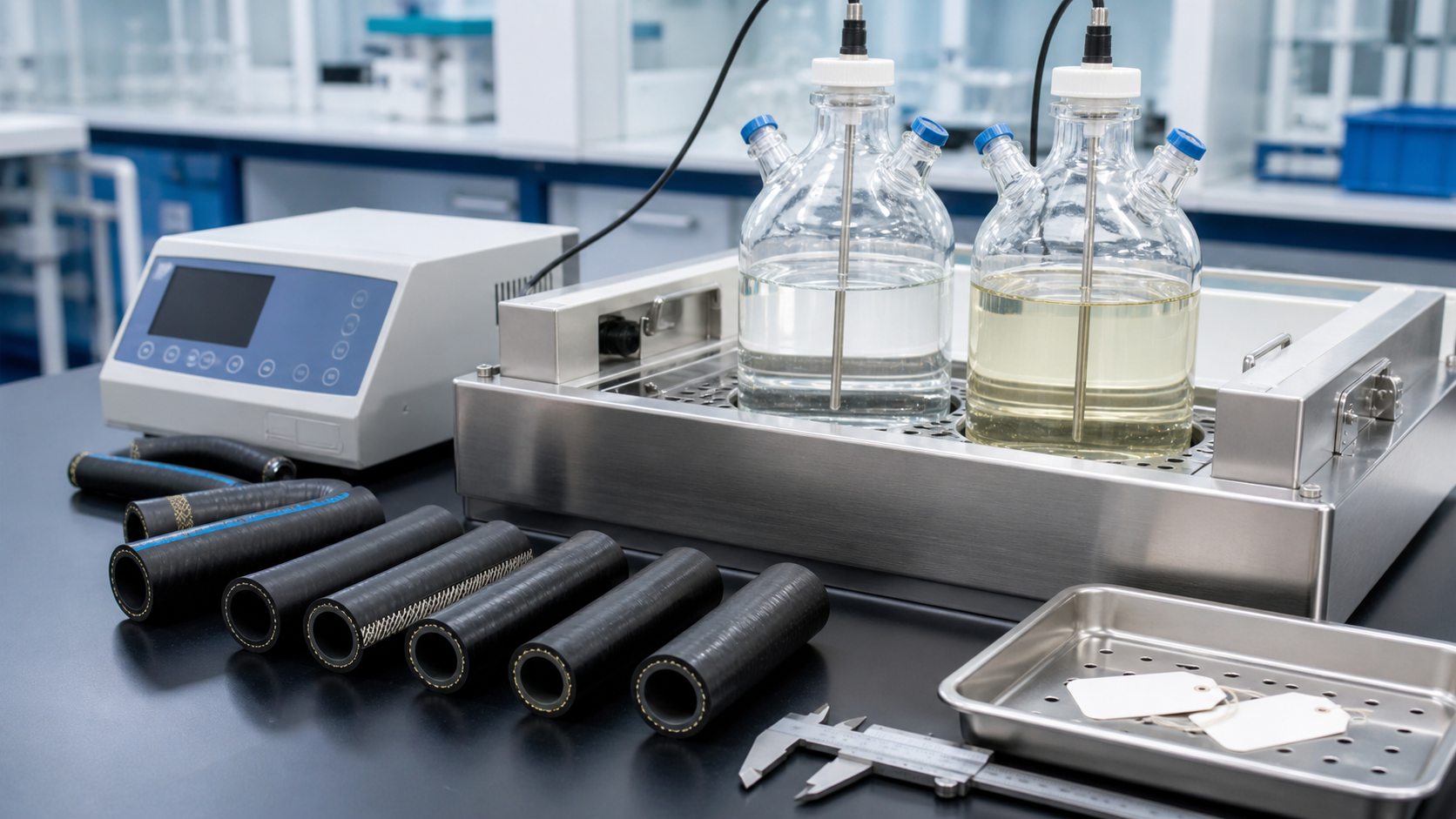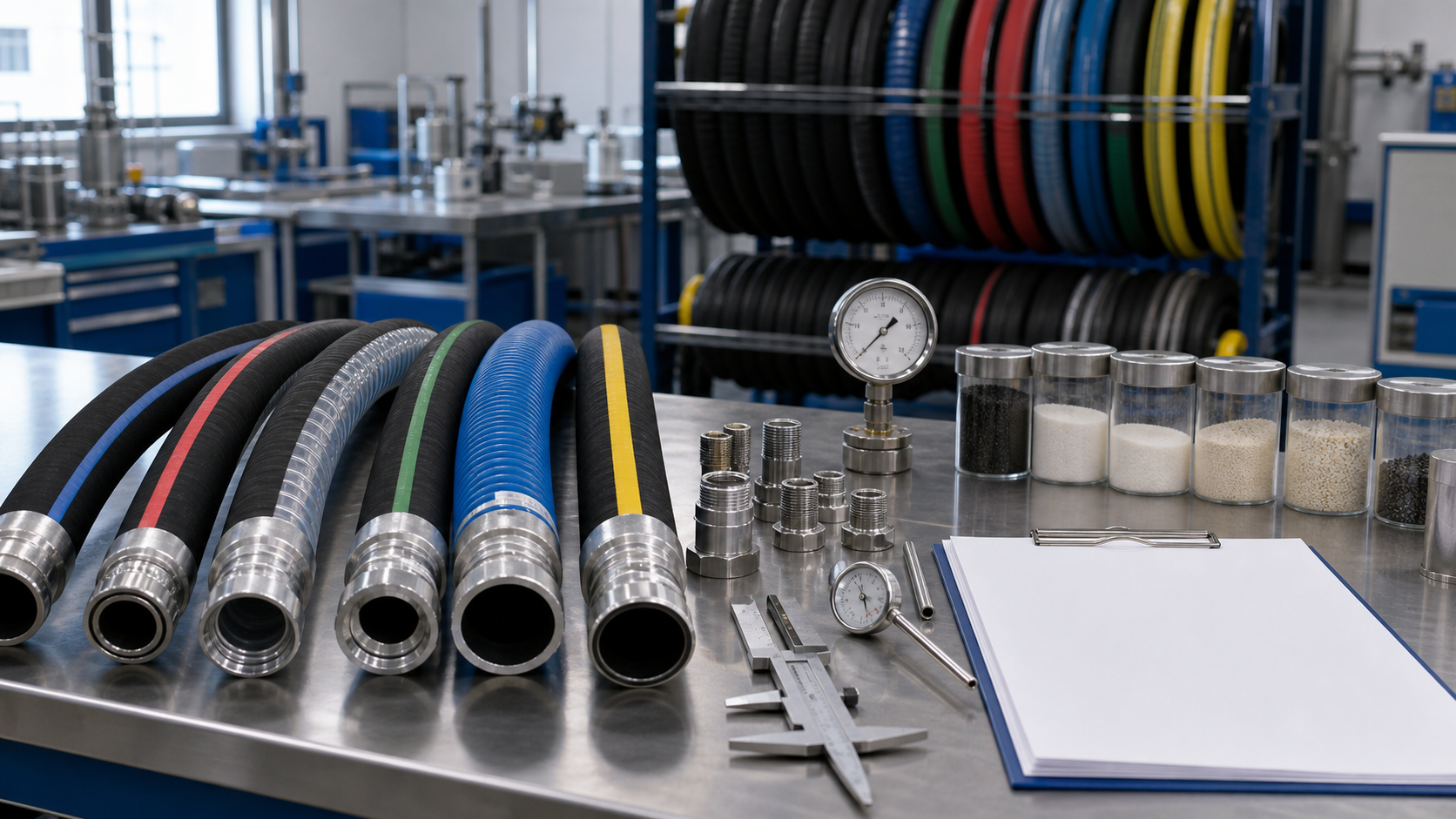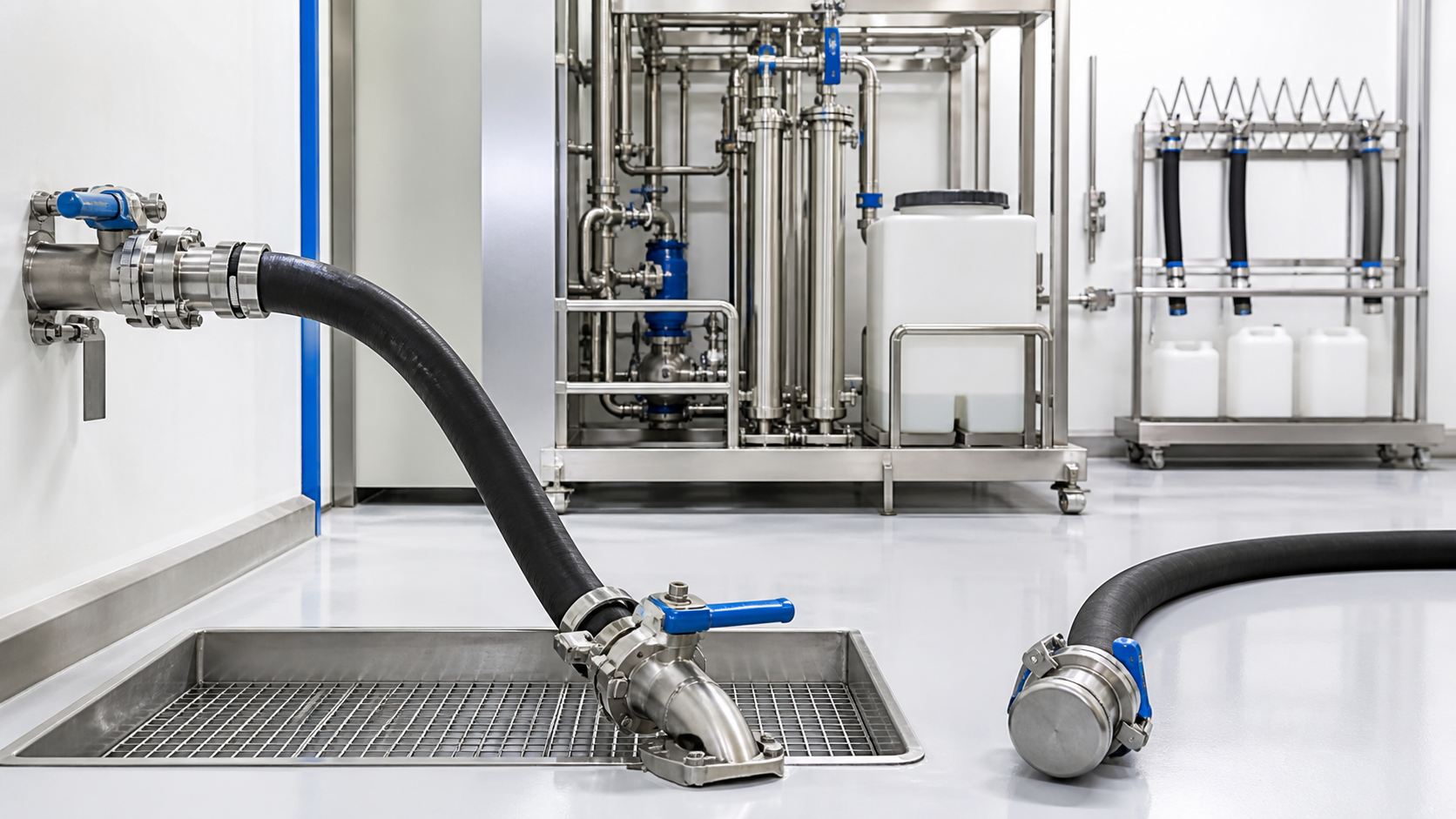
Steam is one of the most demanding media used in industrial hose systems. High temperature, pressure fluctuation, condensate, and constant thermal cycling can quickly damage a poorly selected hose. That is why understanding steam hose types is not only a technical issue, but also a safety and maintenance issue. In general, steam hoses are specialized hoses designed to transfer steam within industrial processes, and EPDM is widely used because of its resistance to heat, water, steam, ozone, and weathering. Tameson also notes that steam service is not one single condition: dry saturated steam, wet steam, and superheated steam behave differently and can affect hose choice and hose life.
For Kingdaflex, the most practical way to explain steam hose types is not by creating a long list of loosely related products, but by showing buyers how steam condition, hose construction, and reinforcement level affect real-world performance. In that context, the most important comparison is usually 1W vs 2W steam hose, followed by whether a rubber steam hose is still the right choice or whether a PTFE or metal alternative is more suitable.
What Is a Steam Hose?
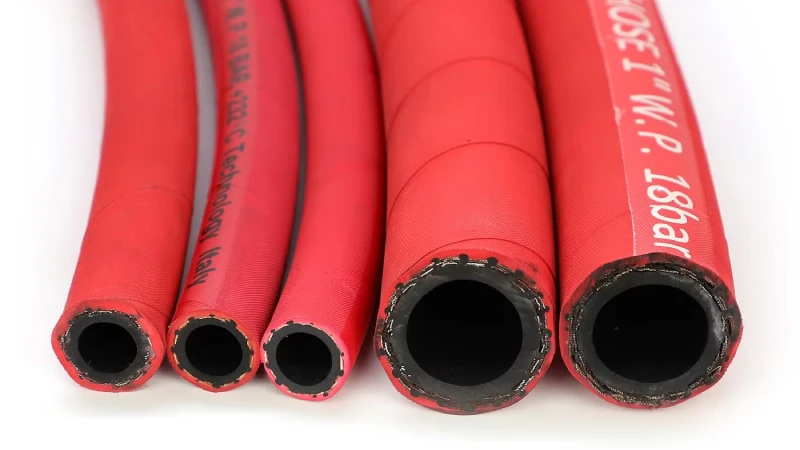
A steam hose is a flexible industrial hose designed to transfer steam and, in many systems, hot water condensate from one point to another. Unlike a general water hose, it must tolerate far higher thermal stress, pressure load, and repeated heating and cooling cycles. Because of that, steam hose selection should never be based on hose appearance alone. The internal tube, reinforcement, and cover all need to match the actual steam service conditions.
In practical terms, steam hoses are widely used in food processing, industrial cleaning, boiler rooms, petrochemical plants, molding systems, and heat-transfer processes. In these environments, the wrong hose can harden, blister, crack, or fail long before the expected replacement interval.
Before Comparing Steam Hose Types, Understand the Steam Itself
Saturated Steam
Saturated steam, often called dry steam in industrial discussions, is steam at the highest possible temperature for a given pressure. Tameson notes that it is commonly used in sterilization, food processing, heat exchange, and power-related applications. For many general industrial processes, this is the steam condition buyers are actually working with when they source a standard rubber steam hose.
Wet Steam
Wet steam contains water droplets. It generally has lower steam quality than dry saturated steam and is common in heating and humidification systems. While it may sound less aggressive than hotter steam, wet steam still creates demanding hose conditions because moisture, condensation, and temperature cycling can accelerate internal hose deterioration.
Superheated Steam
Superheated steam is steam heated above its saturation temperature. It is used in turbines, power plants, and higher-temperature industrial processes because it can transfer heat without immediately condensing. However, this type of steam can be especially damaging to ordinary rubber steam hoses if the hose is mainly designed around saturated steam service.
Why Steam Condition Changes Hose Selection
Many buyers focus first on pressure rating, but steam type is just as important. Tameson specifically points out that the type of steam, along with temperature and pressure, should determine hose selection. A hose that performs well with saturated steam may not deliver the same life under superheated steam or severe pressure fluctuation.
How a Steam Hose Is Constructed

Inner Tube Material
The inner tube is the part that directly contacts steam. EPDM is commonly used in steam hoses because it offers strong resistance to heat, water, steam, and outdoor aging. That is one reason both Tameson and Kingdaflex highlight EPDM as a preferred steam hose material. At the same time, EPDM is not a universal solution for every medium, especially where petroleum exposure becomes a factor.
Reinforcement Layer
The reinforcement layer determines how much pressure the hose can safely handle and how stable it remains during operation. Tameson explains that steam hose reinforcement is typically made from one or two layers of braided or spiral steel wire. Kingdaflex follows the same practical logic in its 1W and 2W product structure: 1W uses single-wire reinforcement for easier handling, while 2W uses double-wire reinforcement for higher strength and a greater safety margin.
Outer Cover
The outer cover protects the hose from weather, heat, mechanical damage, and surrounding contaminants. Tameson notes that covers may be made from EPDM or chlorobutyl and that cover choice matters, especially where oil exposure is possible. Oil-resistant covers are commonly preferred in chemical plants, refineries, and processing environments where contact with oil or hydrocarbons may occur.
Pin-Pricked Cover and Gas Venting Safety
One important detail in steam hose design is gas venting. Kingdaflex emphasizes that its steam hoses use a pin-pricked EPDM cover, which allows trapped gases to vent safely through tiny perforations. Without this feature, gases can become trapped under the cover and contribute to blistering and premature hose failure. This is a small design detail, but in steam service it can make a meaningful difference in safety and service life.
Main Steam Hose Types Used in Industry
1W Steam Hose
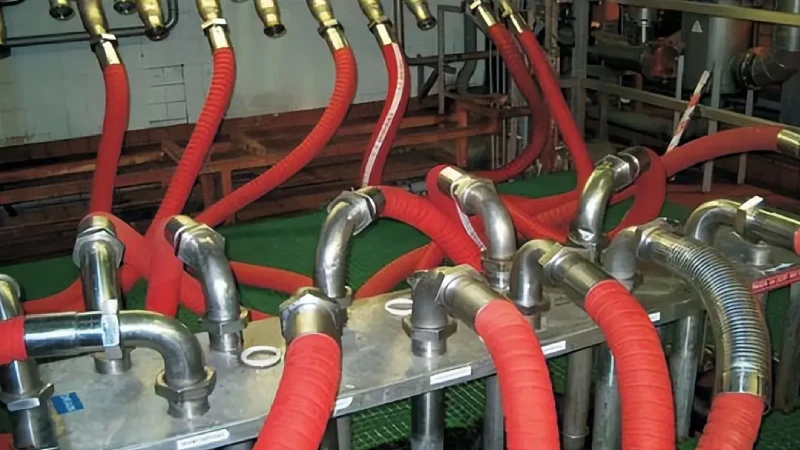
A 1W steam hose is typically the more flexible option. Kingdaflex positions its 1W hose as a practical choice for applications where maneuverability, handling ease, and installation in tighter spaces matter. This makes it suitable for industrial cleaning, heat control systems, and moderate-duty steam transfer where pressure conditions remain within safe limits.
2W Steam Hose
A 2W steam hose is designed for harsher service. Kingdaflex describes it as the higher-safety option for demanding systems because the double-wire reinforcement improves burst resistance, safety factor, and resistance to pressure surges and thermal stress. It is better suited to fixed industrial steam lines, continuous-duty transfer, chemical plants, refineries, boilers, and other more severe environments.
PTFE Steam Hose
PTFE hose is not the default answer for every steam application, but it becomes highly relevant in special cases. Kingdaflex’s SAE 100R14 pages describe PTFE hose as high-temperature, anti-corrosive, non-stick, and well suited to aggressive media and harsh industrial service. In other words, when chemical resistance, media cleanliness, or higher-performance temperature tolerance becomes a key requirement, PTFE can be a better choice than conventional rubber steam hose.
Metal or Stainless Steel Alternatives
For extreme-temperature conditions, special routing constraints, or applications where conventional rubber is no longer the best fit, Kingdaflex also notes that stainless steel solutions may be required. These alternatives are usually not the first choice for standard saturated steam transfer, but they should be considered when the operating environment becomes more severe than normal rubber hose service.
1W vs 2W Steam Hose: What Is the Real Difference?
The real difference between 1W and 2W is not branding. It is reinforcement level and the performance trade-off that comes with it. According to Kingdaflex, 1W offers better flexibility and easier installation, while 2W provides higher pressure capability, better burst resistance, improved durability under continuous use, and stronger resistance to surges and thermal stress. That means 1W is often preferred where movement and handling matter more, while 2W is preferred where risk reduction and long-term reliability matter more.
Cost also plays a role. A 1W hose is usually the more economical option upfront, but that does not automatically make it the better purchase. In high-pressure or safety-critical systems, a 2W hose may reduce replacement frequency, failure risk, and downtime cost over time. For procurement teams, the better decision is usually the one based on full operating conditions rather than the lower initial price.
How to Choose the Right Steam Hose
Confirm Actual Working Pressure
Do not base hose selection only on the nominal system rating. Kingdaflex specifically warns that real steam systems may experience pressure spikes during start-up and shut-down. Tameson similarly notes that the hose must withstand the maximum pressure it will actually see, and that the stated safety factor should not be treated as usable operating margin.
Check Maximum Temperature and Steam Type
Temperature alone is not enough; you must also identify whether the application uses saturated, wet, or superheated steam. Kingdaflex recommends confirming both the steam type and the maximum operating temperature before selection. This is especially important because superheated steam can shorten the life of a hose intended mainly for saturated steam service.
Evaluate Hose Size, Length, and Routing
Tameson lists dimensions as a main selection criterion, including required length and inside and outside diameter. Routing also matters in real installations. A hose used in a tight space, or one that is frequently moved by operators, may benefit from the flexibility of a 1W construction rather than a heavier 2W alternative.
Consider the Environment Around the Hose
External conditions can destroy a good hose just as quickly as internal media can. Buyers should check for abrasion, spilled chemicals, oil contact, weather exposure, or the chance of mechanical impact. Tameson specifically highlights surrounding site conditions as part of hose selection, and this is especially relevant in refineries, processing plants, and outdoor industrial installations.
Match the Hose with the Right Fittings and Assembly
Steam hose performance depends on the full assembly, not the hose body alone. Kingdaflex emphasizes compatibility with approved fittings and also offers factory-crimped hose assemblies. For many buyers, sourcing the hose and assembly together is the safer option because it helps reduce leakage risk and installation error.
Common Steam Hose Failure Problems You Should Not Ignore
Superheated Steam Damage
Tameson warns that superheated steam can harden the inner rubber surface of a hose, a process described as vulcanization. This reduces rubber service life and can eventually lead to hose failure, especially if the hose was originally intended for saturated steam rather than repeated superheated exposure.
Popcorning
Popcorning is one of the most important steam hose failure mechanisms to understand. Tameson explains that water vapor can penetrate the hose wall during use, then condense during cooling. When the hose is heated again, that trapped moisture expands and creates internal blisters, contaminating the steam with rubber particles and damaging the inner wall. Kingdaflex also highlights resistance to popcorning as a major performance advantage in its steam hose line.
Hidden Corrosion and Reinforcement Damage
Tameson also notes that moisture reaching steel inlays can cause hidden corrosion under the surface. That kind of damage may go unnoticed until the hose is weakened enough to crack or burst. In steam service, hidden internal damage is especially dangerous because failure can occur without much warning.
Common Industrial Applications of Steam Hoses
Food Processing and Sterilization
Steam is widely used in food factories as a heat source and for sterilization. Kingdaflex also positions EPDM-based steam hoses for sanitizing processing equipment in food and beverage environments where hygiene and safety matter.
Chemical and Petrochemical Plants
Chemical plants and refineries are typical steam hose environments, especially where steam is used for heating, cleaning, and process control. In these settings, cover resistance and safety margin become especially important because hoses may also face oil, chemicals, and rough plant conditions.
Boiler Rooms and Power Generation
Steam hose applications also include boilers, fixed industrial steam systems, and power-related facilities. Tameson links dry and superheated steam to power and turbine-related uses, while Kingdaflex directly identifies boiler systems and power-oriented industrial settings as key target applications.
Industrial Cleaning and Molding Systems
Steam remains an efficient cleaning medium in factories, refineries, and other heavy-duty environments. It is also used in rubber and plastic molding systems where stable heat transfer is essential for curing and temperature control. These are exactly the kinds of applications where the 1W vs 2W choice becomes practical rather than theoretical.
When a Standard Rubber Steam Hose Is Not the Best Choice
A standard EPDM rubber steam hose is often the right solution for saturated steam transfer, but not always. If the application involves unusually aggressive chemicals, higher cleanliness requirements, or temperature conditions beyond what a normal rubber hose can comfortably handle, PTFE or stainless steel alternatives should be evaluated. Kingdaflex’s own guidance points to EPDM for most saturated steam applications, while also noting that extreme temperatures may call for stainless steel solutions and that PTFE hose offers strong chemical resistance and high-temperature performance in more specialized service.
Why Work with a Professional Steam Hose Manufacturer
Steam hose selection is not just a catalog exercise. It requires matching steam type, pressure pattern, hose routing, safety expectations, and maintenance reality. Kingdaflex supports that process with both 1W and 2W configurations, pin-pricked EPDM covers, customization options, assembly services, and OEM or ODM capability. For buyers, that matters because the best steam hose is rarely the one with the simplest product name. It is the one built for the real operating conditions on site.
Conclusion
When evaluating steam hose types, start with the steam itself, then move to hose construction, reinforcement level, and installation conditions. For many buyers, the key decision is whether a 1W hose provides enough flexibility and performance, or whether a 2W hose is the safer choice for higher pressure, continuous duty, and more demanding service. In more specialized environments, PTFE or stainless steel alternatives may offer a better long-term solution. With the right selection process, a steam hose becomes more than a consumable part. It becomes a safety component, a maintenance decision, and a performance safeguard for the entire system.