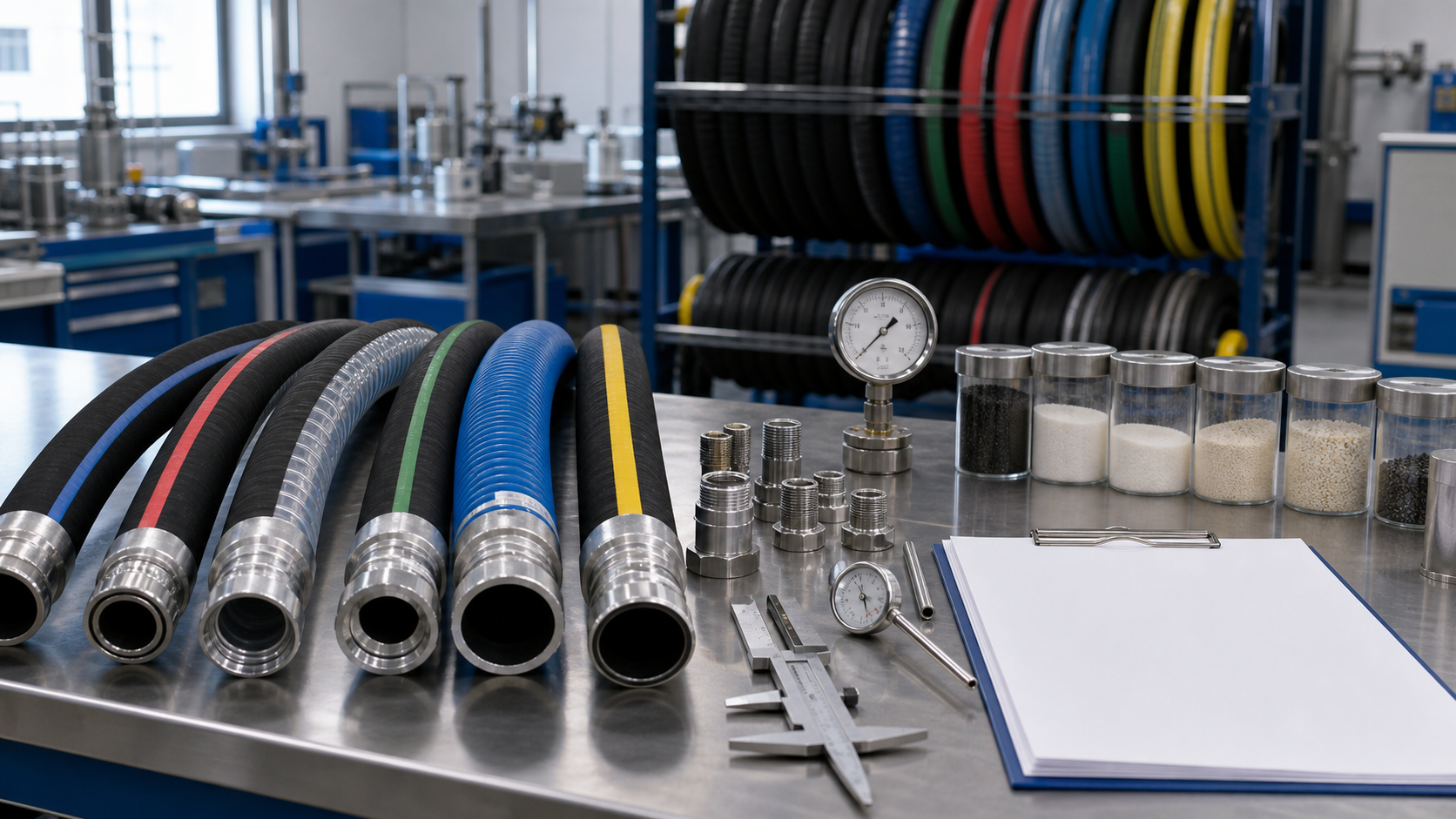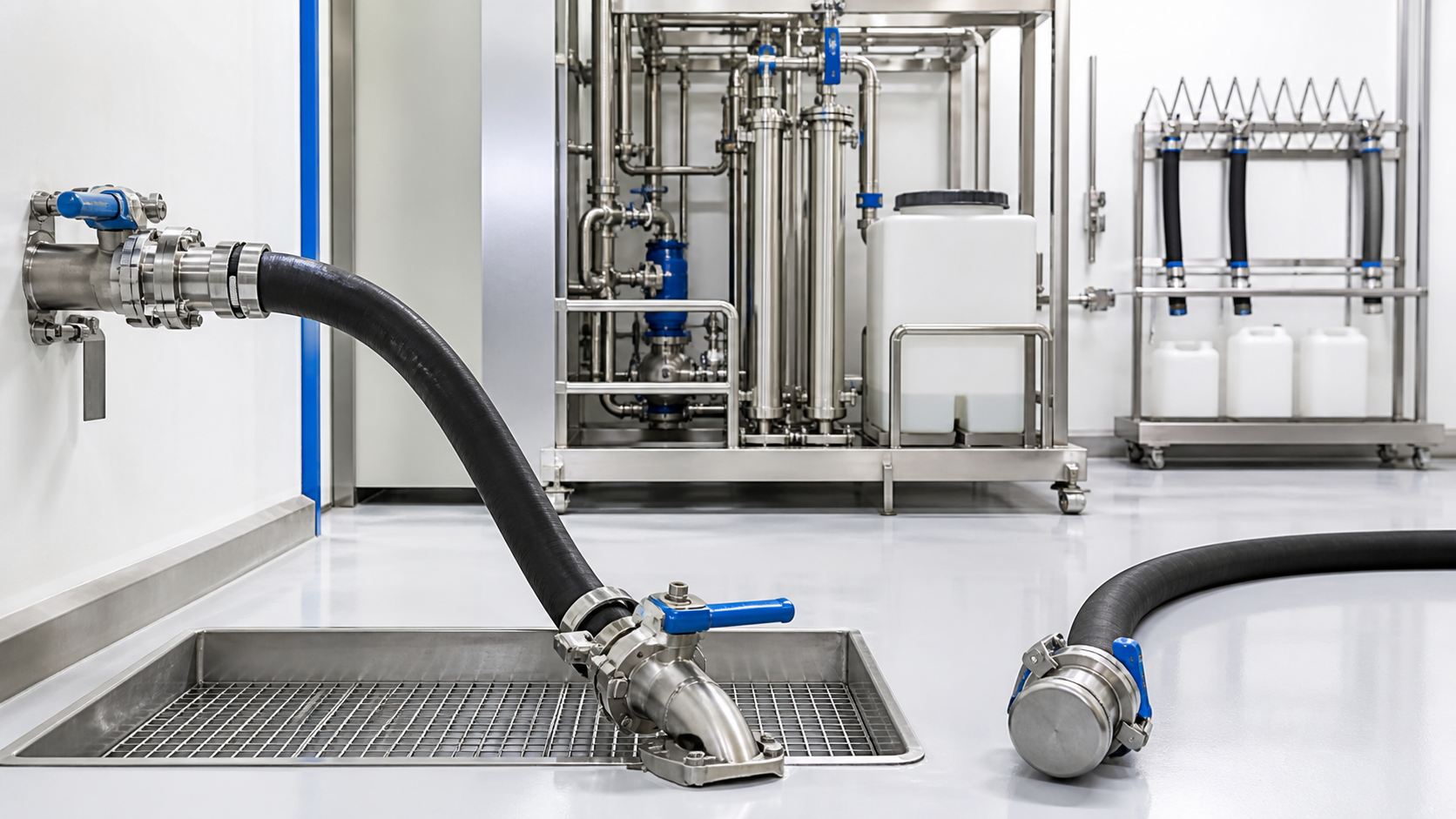
At first glance, a suction hose and a delivery hose can look nearly identical. Same diameter range, similar materials, often sold by the same manufacturer. But they are engineered for fundamentally opposite forces — and using one where the other belongs will cause the hose to fail, sometimes catastrophically.
This guide explains the real difference between suction hoses and delivery hoses, what happens structurally when each one operates, and which applications require which type.
The Core Difference: Negative Pressure vs Positive Pressure
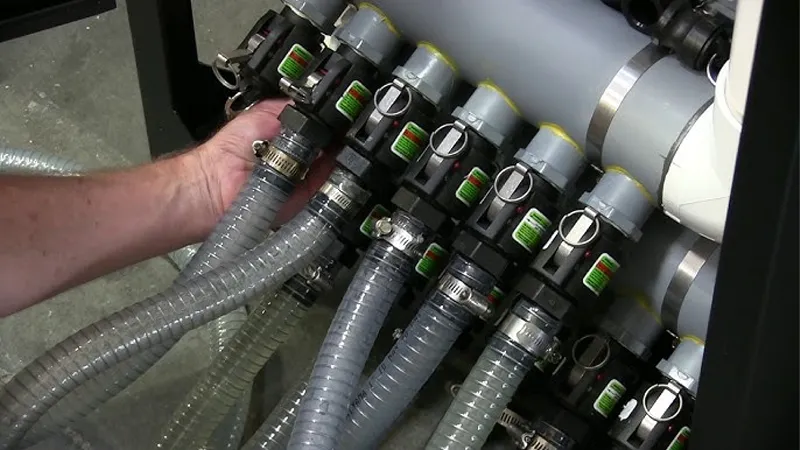
Everything about how a suction hose and a delivery hose are built comes down to one question: which direction is the force going?
A suction hose sits on the inlet side of a pump. When the pump runs, it creates a partial vacuum inside the hose — negative pressure that tries to collapse the hose wall inward. The hose must resist this crushing force without deforming or kinking. If it collapses even partially, flow drops and the pump cavitates.
A delivery hose (also called a discharge hose) sits on the outlet side of the pump. Once the pump pressurizes the fluid, the delivery hose carries it outward under positive pressure. The force now pushes outward against the hose wall. The hose must contain this pressure without bursting or leaking.
The rule is straightforward: suction for vacuum, delivery for pressure. Swapping them creates serious risk — a suction hose may burst under positive pressure, while a delivery hose will collapse under vacuum and starve the pump entirely.
Construction: Why They Look Similar but Aren’t
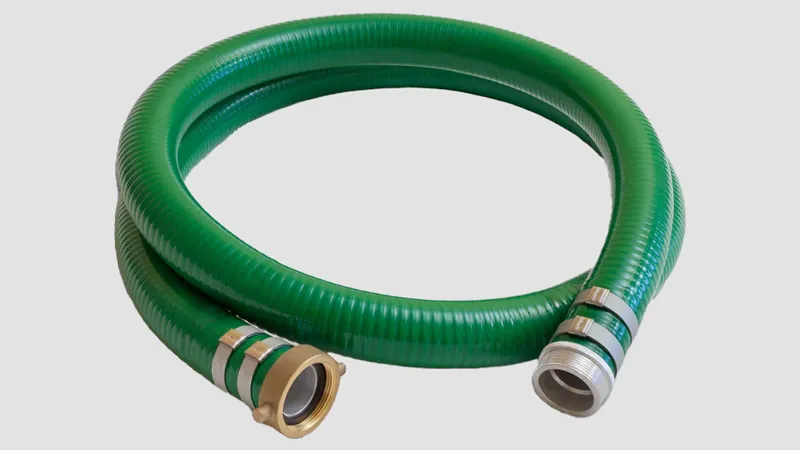
Suction Hose Construction
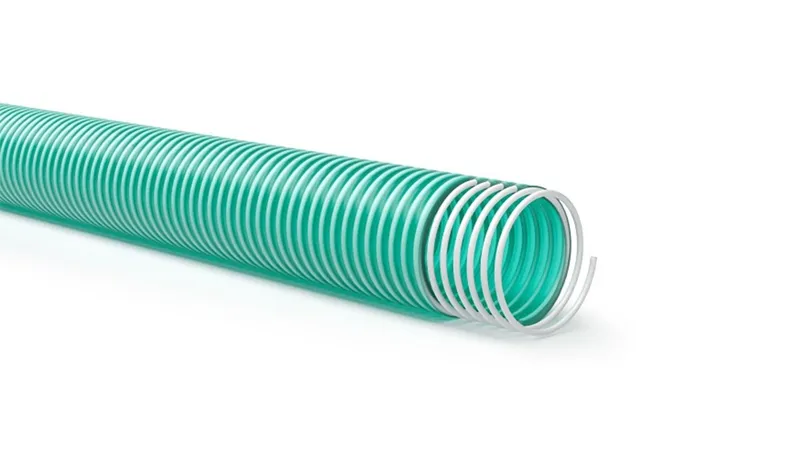
The defining feature of a suction hose is its helical wire or rigid spiral reinforcement embedded within the hose wall. This wire helix acts as a skeleton, maintaining the hose’s circular cross-section even when internal pressure drops below atmospheric. Without it, the negative pressure created by the pump would simply crush the hose flat.
Because of this reinforcement, suction hoses tend to be thicker-walled, heavier, and less flexible than delivery hoses of the same diameter. They are also typically made in larger diameters, because a wider bore reduces flow velocity and the suction losses that come with it.
Common suction hose materials include rubber (natural rubber, EPDM, or NBR depending on the fluid), PVC, and polyurethane — each chosen based on the fluid being transferred and the operating environment.
Delivery Hose Construction
Delivery hoses handle positive pressure, so they do not need a rigid wire helix. Instead, they use textile braid or synthetic cord reinforcement layered into the hose wall to resist the outward burst force. This gives them their pressure rating without the added weight and rigidity of a wire helix.
The result is a lighter, more flexible hose that is easier to handle, roll up, and store. Lay-flat delivery hoses — the kind used in firefighting, irrigation, and dewatering — take this to its logical conclusion: without internal reinforcement or rigid walls, the hose collapses flat when empty and is pressurized back to a round cross-section by the flowing fluid.
Application Scenarios: Where Each Hose Belongs
Suction Hose Applications
1. Pump Intake in Water Transfer and Dewatering Any portable pump drawing water from a pit, pond, flooded basement, or excavation site needs a suction hose on its inlet. Construction dewatering is a classic application — the pump sits at grade level, and the suction hose drops into the accumulated water below. The hose must hold its shape as the pump creates vacuum to lift the water. A delivery hose used here would simply collapse.
2. Agricultural Irrigation System Inlets Irrigation pumps that draw from open channels, ponds, or reservoirs all require suction hose on the inlet side. In these applications, the hose may need to reach several meters below the pump, making collapse resistance critical. Wire-reinforced rubber or PVC suction hoses are standard for this use case.
3. Slurry and Sludge Pumping — Inlet Side Waste management systems, septic pumping trucks, and industrial slurry transfer operations all use suction hoses to pull thick, heavy fluids into the pump. The wire helix not only prevents collapse but also maintains the bore shape needed to allow viscous material to flow freely without the hose narrowing under load.
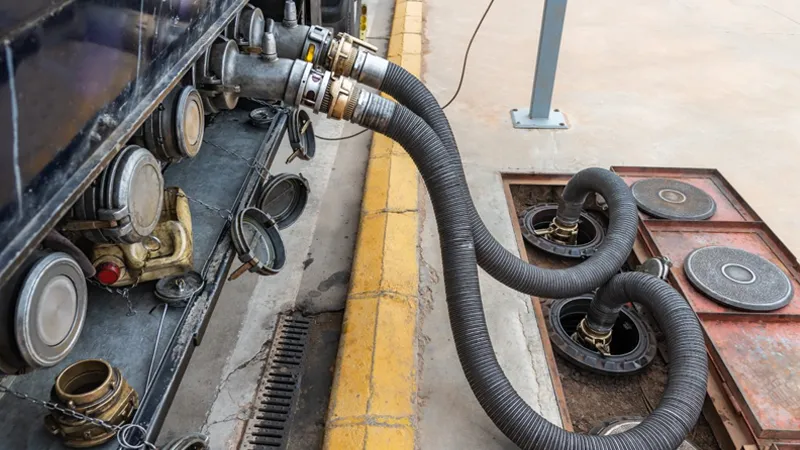
4. Tanker and Bulk Liquid Loading When loading fuel, chemicals, or food-grade liquids into a tanker truck or storage vessel from a lower source, the inlet hose operates under suction. Petroleum suction hoses must be compatible with hydrocarbons and often need static-dissipating inner tubes (a separate but related specification). Food-grade suction hoses use FDA-compliant inner tube materials for dairy, beverages, and edible oils.
5. Industrial Vacuum and Dust Extraction Industrial vacuum systems that collect dust, wood shavings, plastic granules, or wet/dry debris all rely on suction hose to carry the material from the pickup point to the collection unit. The combination of negative pressure and abrasive material makes wire-reinforced, abrasion-resistant suction hose a necessity.
Delivery Hose Applications
1. Firefighting — Attack and Supply Lines Delivery hose is the hose every firefighter carries. It connects from the pump outlet on the fire engine to the nozzle or the fire scene. The hose operates entirely under positive pressure — the pump pushes the water through, and the hose must contain it. Fire attack hoses typically operate at 8–20 bar working pressure. Because they are filled, pressurized, and then drained and rolled after every use, low weight and easy handling are as important as pressure rating.
2. Construction Site Dewatering — Discharge Side The same portable pump used in dewatering has a delivery hose on its outlet. This hose runs from the pump to whatever discharge point has been set up — a drain, a truck, a lower area of the site. Lay-flat delivery hose is common here because it can be rolled out quickly over long distances, handles the pump’s discharge pressure, and is easy to move and reposition as conditions change.
3. Agricultural Irrigation Distribution After the pump, the delivery hose carries pressurized water from the pump outlet to the irrigation area. In surface irrigation and temporary sprinkler setups, lay-flat PVC delivery hose is the standard solution. It handles the working pressure from the pump, can be extended to cover large areas, and rolls up compactly for storage between seasons.
4. Mining Dewatering Over Long Distances Underground and open-pit mines accumulate water continuously and need it moved efficiently. High-pressure polyurethane lay-flat delivery hoses are used to push water out of the mine over long distances — sometimes hundreds of meters — at pressures that lighter hoses cannot handle. The polyurethane construction provides the abrasion resistance needed when the hose is dragged across rough mine floors.
5. Chemical and Fluid Discharge In industrial processing — tank draining, chemical transfer to mixing vessels, process fluid discharge — delivery hoses carry fluid from the pump to the destination. The hose selection depends on chemical compatibility of the inner tube, the operating temperature, and the required pressure rating. Unlike suction hoses, delivery hoses can often be considerably lighter and more flexible for the same bore size, which reduces fatigue on operators and fittings.
Can One Hose Do Both?
Some hoses are manufactured and rated for combined suction and delivery service — often labeled “S&D hose.” These include the wire helix construction needed for suction use but are also pressure-rated for moderate positive pressure on the discharge side.
S&D hoses are a practical choice when a single hose is being connected across both sides of a pump or when the application alternates between drawing and discharging. However, they are typically limited to moderate pressure ratings. For high-pressure delivery or high-vacuum suction applications, dedicated hoses specified for each function will outperform a compromise design.
Quick Selection Reference
| Factor | Suction Hose | Delivery Hose |
|---|---|---|
| Operating pressure | Negative (vacuum) | Positive |
| Reinforcement | Wire helix / rigid spiral | Textile braid / cord |
| Wall construction | Thicker, more rigid | Lighter, more flexible |
| Collapse resistance | Required | Not required |
| Typical form | Round bore, semi-rigid | Round bore or lay-flat |
| Pump position | Inlet side | Outlet side |
Choosing the Right Hose for Your System
Matching the hose to the operating condition is the first specification decision — everything else (material, diameter, pressure rating, length) follows from getting this right. A system that draws fluid from a lower source needs suction hose rated for the vacuum the pump will create. The discharge side needs delivery hose rated for the maximum pump outlet pressure, including any surge or water hammer effects.
Kingdaflex supplies suction hoses and delivery hoses for water transfer, agriculture, construction, fuel handling, and industrial fluid systems. If you are specifying hose for a new pump system or replacing hose on existing equipment, contact our team with the pump specifications and fluid details — we will help you select the right construction for each side of the system.