Walk through any farm, factory, or construction site, and you’ll find PVC hoses quietly doing the heavy lifting — moving water, air, chemicals, and slurries from one place to another. Yet most buyers treat them as a commodity, only discovering the real differences after a hose collapses under vacuum, stiffens in a cold snap, or bursts unexpectedly under pressure.
This guide changes that. Whether you’re sourcing your first bulk order or optimizing an existing supply chain, you’ll leave with a clear understanding of what PVC hoses are, how they’re built, which type fits your application, and how they compare to alternatives like rubber and polyurethane.
What Is a PVC Hose?
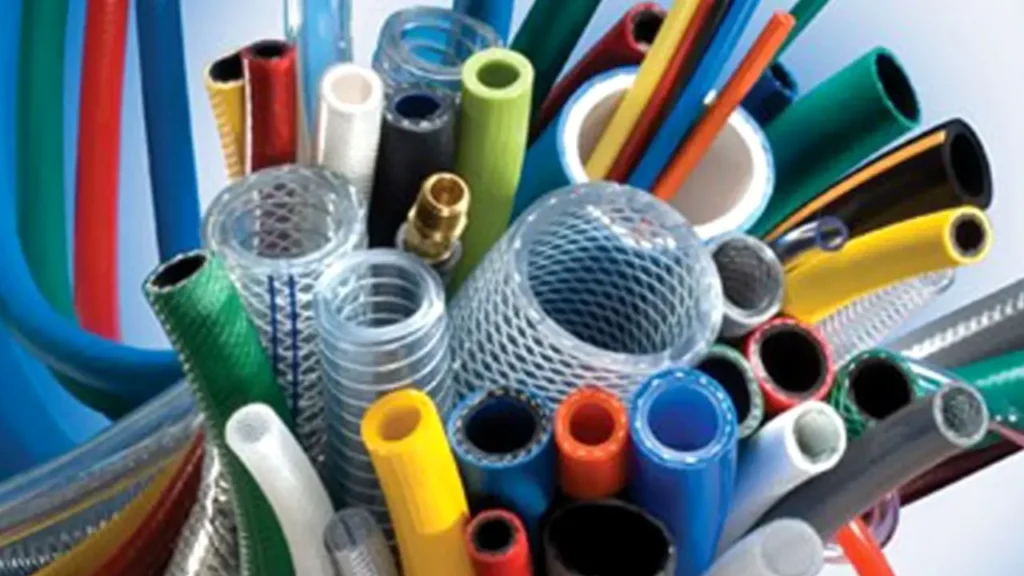
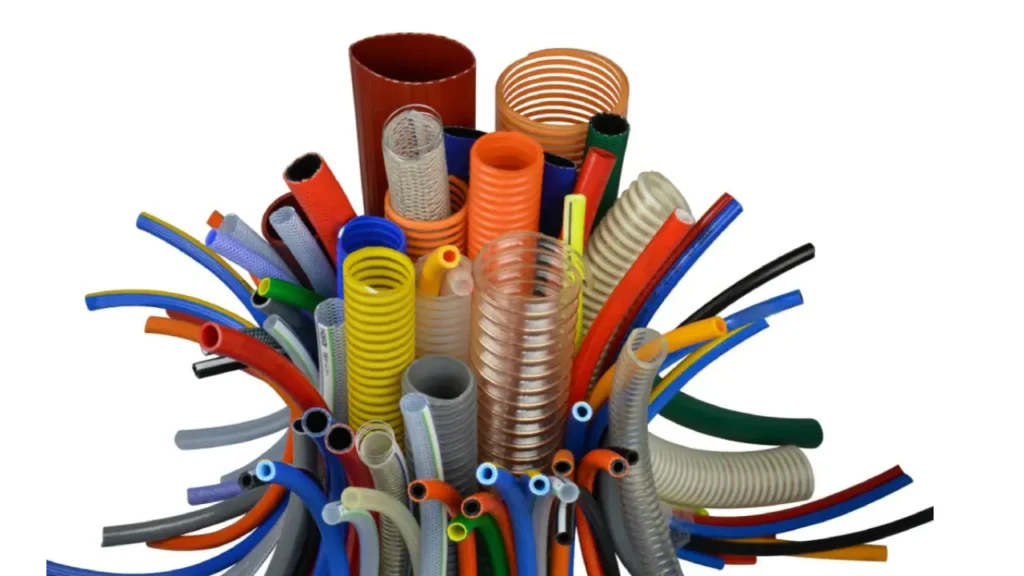
A PVC hose is a flexible tube manufactured from polyvinyl chloride (PVC), a synthetic thermoplastic polymer. In raw form, PVC is rigid and brittle — it’s the addition of plasticizers, stabilizers, and reinforcing layers that transforms it into the durable, flexible hoses you see in the field every day.
The finished product can be engineered to convey water, air, oils, chemicals, food products, and dry solid materials, all while remaining lightweight, cost-effective, and far more adaptable than alternatives like rubber or polyurethane.
Quick technical definition: A PVC hose typically consists of three functional zones — the inner tube (which contacts the fluid), the reinforcement layer (which provides structural strength against pressure or vacuum), and the outer cover (which protects against abrasion, UV, and environmental damage). The precise formulation of each layer determines where the hose performs well and where it will fail.
A Brief History of PVC
PVC’s story begins with not one, but two accidental discoveries. French chemist Henri Victor Regnault first observed the material in 1835. German chemist Eugen Baumann encountered it again in 1872 — but each time, the hard, unworkable white solid was set aside as a laboratory curiosity with no obvious practical use.
The first formal polymerization patent was filed in 1913 by Friedrich Klatte. The real turning point came in the 1920s, when Waldo Semon at B.F. Goodrich discovered how to blend PVC with plasticizers to make it flexible and processable. This single discovery unlocked the material’s vast commercial potential.
By the 1930s, plasticized PVC was being used as a waterproof coating for fabrics. By World War II, it had become an essential insulator for military ship wiring. The industrial boom of the 1950s and 1960s cemented PVC as a cornerstone material in plumbing, construction, and fluid transfer. Today, PVC is the third most widely produced synthetic plastic polymer in the world, and its use in flexible hose manufacturing continues to grow year over year, driven by expanding demand in agriculture, construction, and industrial automation.
How a PVC Hose Is Constructed
Understanding construction is the key to predicting performance in the field.
The Inner Tube
The inner bore is the hose’s first and most important line of defense. High-quality manufacturers — including Kingdaflex — use 100% virgin PVC resin for the inner tube, never recycled material. Virgin PVC delivers consistent molecular stability, uniform wall thickness, and zero risk of chemical leaching. The inner bore diameter directly determines flow capacity: an undersized ID increases turbulence, raises system pressure, and forces pumps to work harder than necessary.
The Reinforcement Layer
The reinforcement layer is what separates a hose that lasts from one that doesn’t. There are two primary architectures:
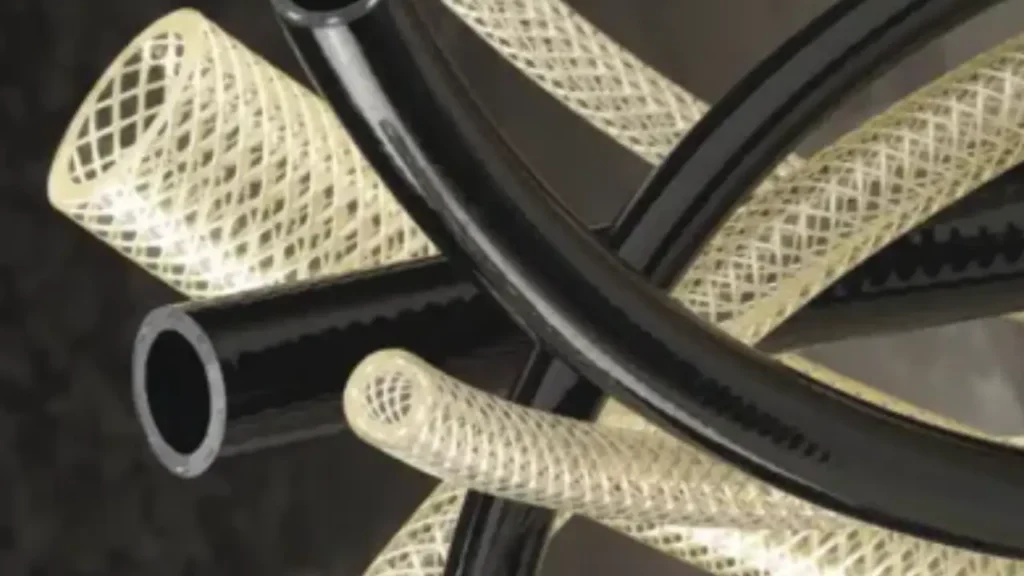
- Polyester fiber braid (textile reinforcement): Woven high-tenacity polyester yarn handles positive pressure applications — air lines, water discharge, spray systems. Lightweight and highly flexible, but will collapse under suction.
- Steel wire helix: A rigid galvanized steel spiral embedded within the PVC wall. This is the critical feature for suction applications — the coil physically prevents the hose from collapsing under vacuum. It also provides crush resistance if the hose is driven over or stepped on, and can act as a static dissipation path during dry material transfer.
The Outer Cover
The outer cover protects the inner structure from the outside world. A well-formulated cover compound includes UV stabilizers, anti-aging additives, and abrasion-resistant PVC. This layer determines how well a hose holds up over years of outdoor use, dragging across rough ground, or exposure to tropical UV intensity.
PVC Hose Types: A Practical Guide
Beyond the general category, PVC hoses divide into specialized types, each engineered for a distinct set of conditions. Choosing the wrong type is one of the most common and costly mistakes buyers make.
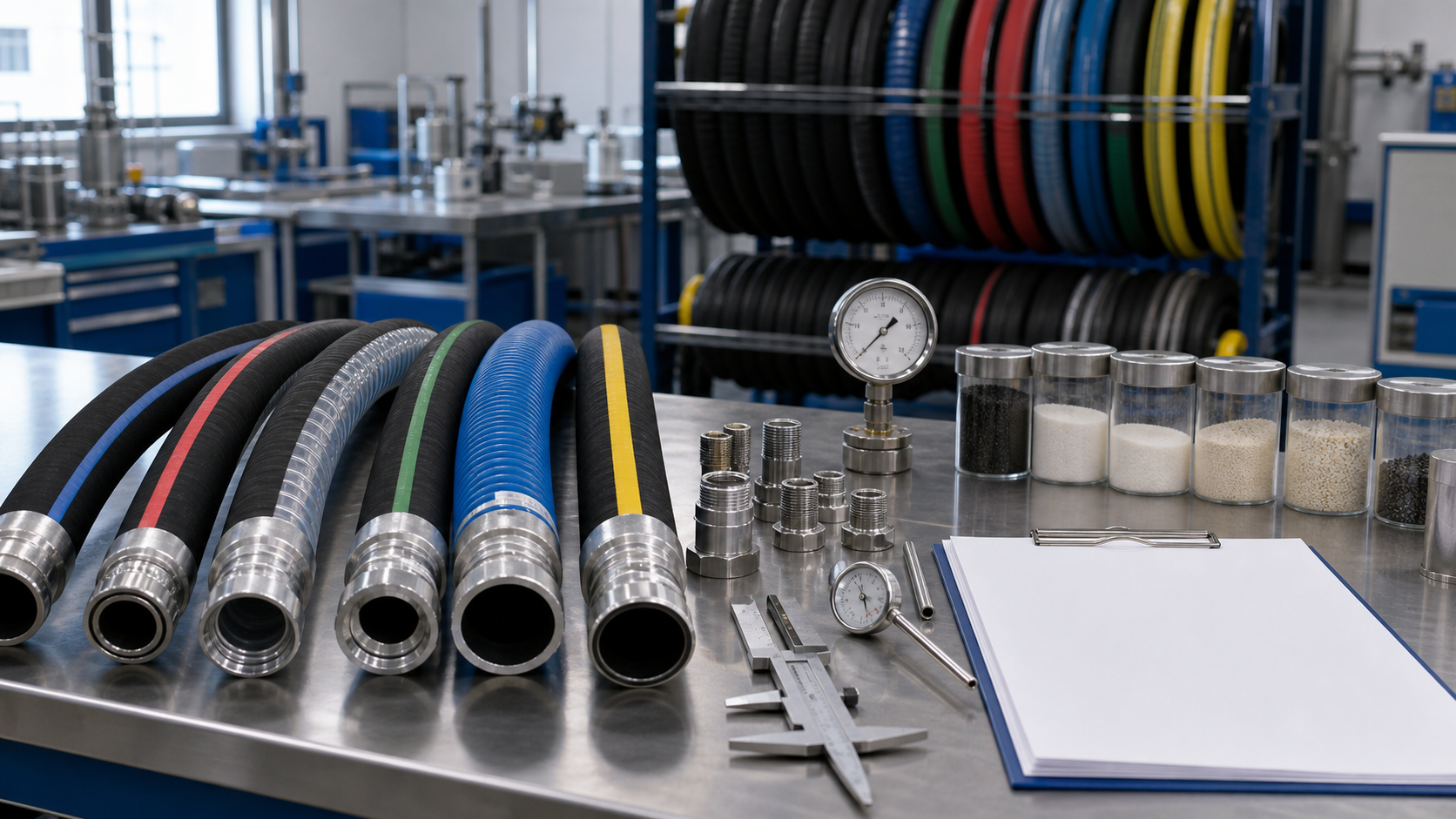
1. PVC Steel Wire Reinforced Hose
The workhorse of the PVC hose family. A galvanized steel helix embedded in the PVC wall provides exceptional kink resistance, crush proofing, and full vacuum capability. The steel coil also dissipates static electricity generated during dry material transfer — a critical safety feature in bulk handling.
Best for: Heavy-duty suction and discharge of water, oil, chemicals, slurries, and abrasive materials. Construction dewatering, industrial vacuum conveyance, and agricultural irrigation from surface water sources.
2. PVC Helix Suction Hose
A flexible, corrugated PVC hose with an embedded rigid PVC or steel spiral. Designed specifically to handle negative pressure (vacuum) without collapsing. Lighter than full steel wire hose, with excellent flexibility.
Best for: Agricultural water intake, pump inlet connections, drainage in construction, and general suction duties where full crush resistance is not required.
3. PVC Layflat Hose
The defining feature of layflat hose is exactly what the name says: it lies flat when empty, allowing it to be rolled compactly for storage and transport. Reinforced with polyester textile plies, a well-made layflat hose delivers a working pressure of 4–12 bar depending on construction. A quality layflat hose should have a burst pressure at least 3× the rated working pressure.
Best for: Agricultural irrigation discharge, construction dewatering, mining water management, firefighting water relay, and any application where rapid deployment and easy storage are priorities. Available in diameters from 1 inch up to 8 inches or more.
4. PVC Fiber Hose
A multi-layer construction with high-tenacity polyester fiber braid between inner and outer PVC layers. Offers a significant increase in burst pressure compared to unreinforced PVC tube. Available in food-grade formulations using FDA-compliant materials.
Best for: Air lines, water supply, garden and irrigation systems, and general industrial fluid transfer where a balance of flexibility and working pressure is needed. Food-grade variants for liquid food and beverage transfer.
5. PVC Transparent (Clear) Hose
Crystal-clear construction enables visual monitoring of flow — you can immediately see blockages, contamination, or color changes in the conveyed medium. Available in plain and fiber-reinforced versions. Food-grade grades are phthalate-free and FDA/RoHS compliant.
Best for: Food and beverage processing, laboratory fluid lines, level gauges, water features, and any application where visual flow inspection is necessary.
6. PVC Layflat Hose (Heavy Duty)
Heavy-duty construction with thicker PVC walls and multiple reinforcement plies for higher working pressures and greater abrasion resistance. Designed for sustained operation in demanding environments such as mining, quarrying, and construction sites where standard layflat would wear prematurely.
7. PVC Air Hose
Specifically formulated and pressure-tested for compressed air service. Premium grades are rated to 450 PSI (30 bar) and remain flexible down to -5°C. The kink-resistant design ensures stable, high-volume airflow for compressors and industrial pneumatic tools.
Best for: Workshop air lines, pneumatic tools, compressor connections, and spray equipment.
8. PVC Garden Hose
A consumer and light industrial grade hose designed for everyday watering, landscaping, and irrigation. Lightweight, UV-resistant, and easy to handle. Available with anti-kink formulations.
9. PVC Spray Hose
Engineered for high-pressure spraying applications in agriculture and industrial cleaning. Multi-layer construction with braided reinforcement to handle the pressure spikes common in spray systems.
10. PVC Welding Hose & PVC & Rubber Air Hose
Specialized configurations for welding gas delivery and hybrid air applications, combining the flexibility advantages of PVC with rubber’s temperature resilience.
What Is PVC Hose Used For?
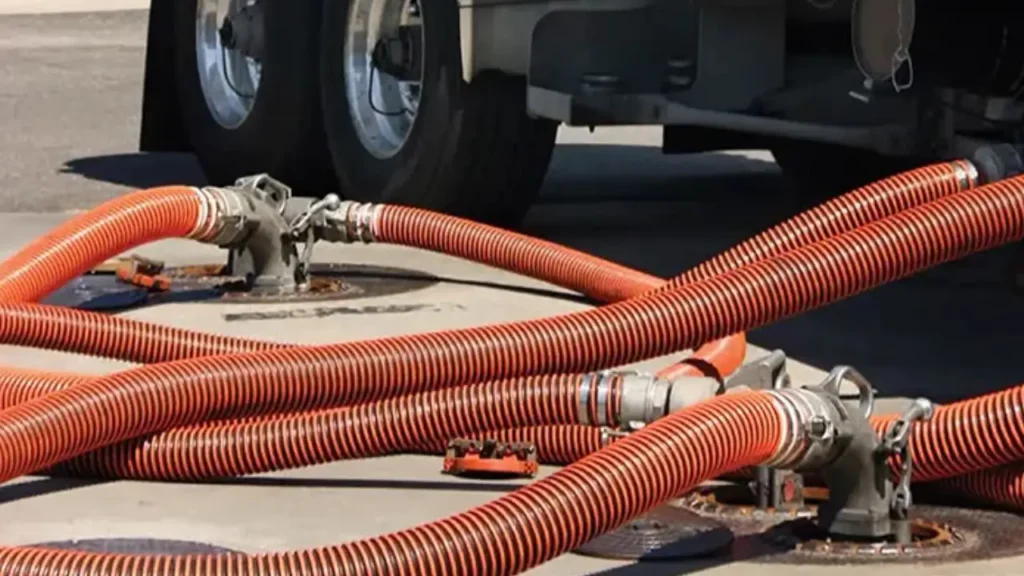
PVC hoses are not a single-purpose product. Their combination of flexibility, chemical resistance, and engineered reinforcement options makes them suitable for a remarkably wide range of applications across multiple industries.
Agricultural & Irrigation The largest single market for PVC hoses globally. Layflat and suction hoses handle water intake from rivers, ponds, and boreholes, then discharge it to fields. The key advantages here are lightweight (easy for farm workers to deploy across large areas), UV-stabilized construction for outdoor durability, and cost-effectiveness for large surface areas. Steel wire hose is preferred for pump inlet connections where vacuum collapse is a risk.
Construction & Dewatering Construction sites generate large volumes of water — from rain accumulation, concrete pouring operations, and groundwater ingress. Steel wire reinforced and heavy-duty layflat hoses are the standard tools for temporary dewatering. Their collapse-resistant construction handles the suction demands of submersible and centrifugal pumps. Heavy-duty layflat hose is also used for concrete pumping bypass and slurry discharge.
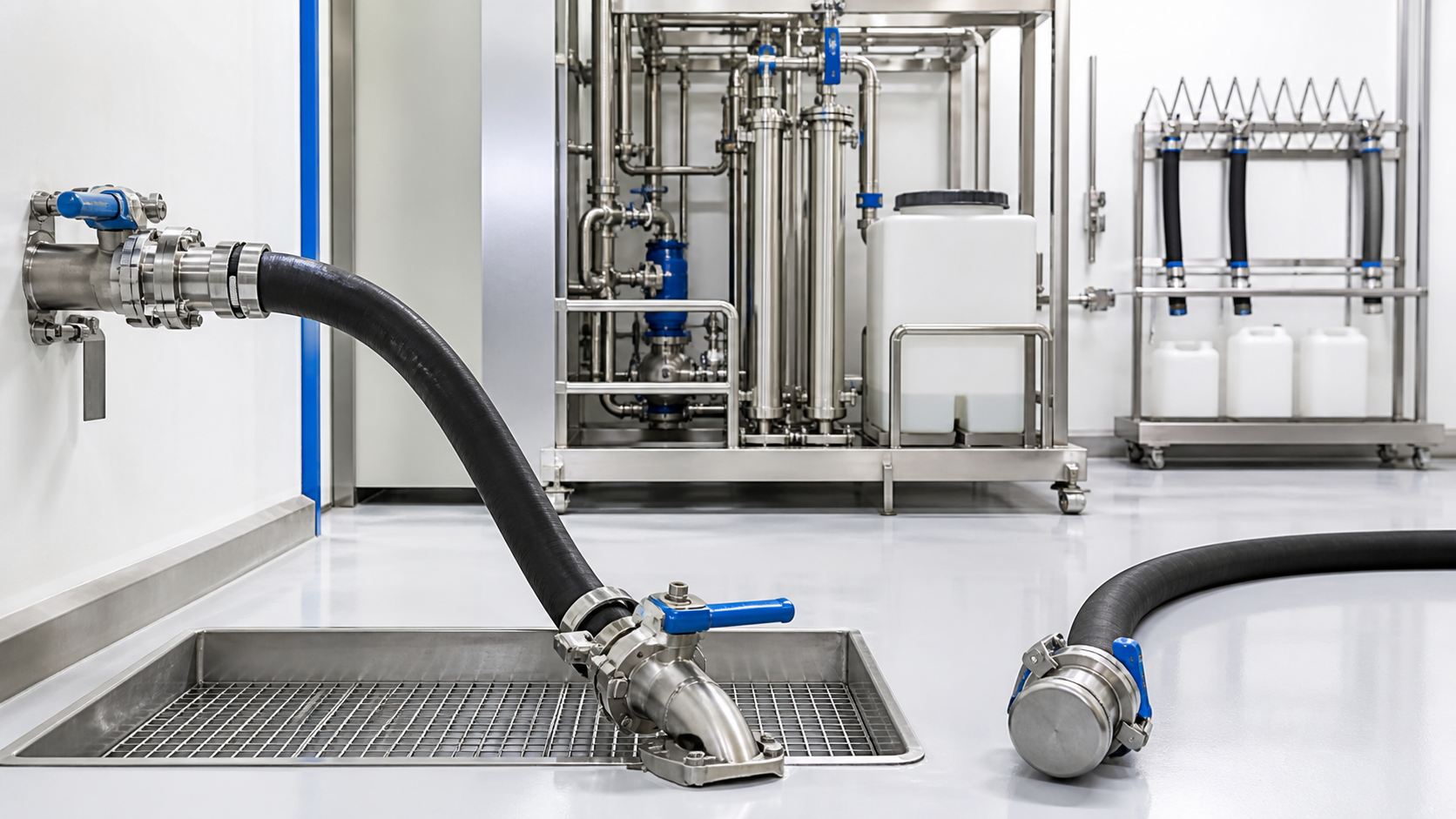
Industrial Fluid Transfer Factories use PVC hoses to convey water, coolants, oils, mild chemicals, granular materials, and powders between process stations. The fiber-reinforced and steel wire variants handle both positive pressure discharge and vacuum suction, making them versatile across production lines.
Food & Beverage Processing Food-grade clear PVC tube, manufactured from phthalate-free, FDA-compliant virgin PVC, is a standard material in food processing plants. The transparency provides a visual hygiene check — any contamination or discoloration in the fluid is immediately visible. Applications include transfer of drinking water, juices, dairy products, and dry ingredients.
Pneumatic Systems & Air Tools PVC air hoses power the compressors, impact wrenches, grinders, and spray guns found in workshops, auto body shops, and manufacturing facilities. Their lightweight compared to rubber makes them easy to handle during extended use. Note that for cold-weather environments, rubber or hybrid PVC-rubber hoses are preferable, as standard PVC stiffens below 0°C.
Mining & Quarrying Heavy-duty layflat hose is widely accepted in underground mining applications for dewatering, with MSHA-accepted grades available for below-ground use. Steel wire hose handles slurry discharge and abrasive material conveyance in surface mining operations.
Firefighting & Emergency Response Layflat hoses provide the rapid-deployment, high-flow-capacity solution needed for emergency water relay. Fire departments and civil defense organizations deploy layflat hoses to extend water supply lines from hydrants or natural water sources to the point of use.
Key Benefits of PVC Hose
Lightweight and Easy to Handle PVC hoses are significantly lighter than equivalent rubber hoses. This translates directly into reduced labor fatigue during deployment, easier transportation across job sites, and lower freight costs per meter.
Cost-Effectiveness PVC is one of the most cost-efficient hose materials available, particularly for large-volume applications like irrigation and construction dewatering where hundreds of meters of hose are needed. The combination of low material cost and competitive performance makes PVC the default choice for budget-sensitive projects.
Chemical Resistance PVC’s inherent molecular structure resists a wide range of chemicals, dilute acids, alkalis, and petroleum products. This makes PVC hoses suitable for chemical transfer and industrial cleaning applications where rubber might degrade prematurely.
UV and Weather Resistance With appropriate stabilizer packages in the compound formulation, PVC hoses resist degradation from UV radiation and ozone. Premium outdoor-grade hoses maintain structural integrity through thousands of hours of direct sunlight exposure.
Design Flexibility PVC can be formulated to virtually any level of flexibility, transparency, or hardness. It can be reinforced with fiber braid for pressure resistance or steel wire for vacuum capability. It can be made crystal-clear for visual monitoring or brightly colored for easy identification. This design versatility is difficult to match in other hose materials.
Working Pressure Range Through reinforcement engineering, PVC hoses can be configured for working pressures from a few bar (garden and irrigation) up to 20+ bar for specialized industrial and spray applications — covering the majority of non-hydraulic fluid transfer requirements.
PVC Hose vs. Rubber Hose: Which Should You Choose?
This is the most common comparison buyers make. Both materials are widely used; the right choice depends on your specific operating conditions.
| Factor | PVC Hose | Rubber Hose |
|---|---|---|
| Weight | Lighter — easier to handle and transport | Heavier |
| Cost | More affordable | Generally higher cost |
| Cold Temperature Flexibility | Can stiffen below 0°C | Remains flexible in sub-zero conditions |
| Heat Resistance | Suitable up to ~60–65°C | Handles higher temperatures more reliably |
| Abrasion Resistance | Good | Superior — better for rough surfaces |
| Chemical Resistance | Good for a wide range | Broader resistance, especially to petroleum |
| UV Resistance | Good with proper stabilizers | Generally good |
| Typical Applications | Irrigation, dewatering, air, general industry | High-pressure, high-temperature, heavy-duty |
Choose PVC when: Your priority is cost-efficiency, light weight, and ease of handling; operating temperatures stay within the typical -5°C to +65°C range; chemical exposure is mild to moderate; and the application is irrigation, construction dewatering, general industrial, or pneumatic.
Choose Rubber when: The application demands sustained operation in extreme cold or heat; the hose is constantly dragged over rough or abrasive surfaces; the fluid is a petroleum product or aggressive chemical; or operating pressure is consistently at the top end of the scale.
PVC Hose vs. Polyurethane (PU) Hose
| Feature | PVC Hose | Polyurethane (PU) Hose |
|---|---|---|
| Abrasion Resistance | Good | Excellent (superior) |
| Flexibility in Cold | Can stiffen | Maintains flexibility better |
| Chemical & Oil Resistance | Good (varies by formulation) | Excellent — broader range |
| Temperature Range | -20°C to +60°C (with special grades) | -40°C to +90°C |
| Cost | More cost-effective | Generally higher |
| Kink Memory | Good | Excellent — recovers shape more readily |
Summary: For abrasive dry material conveyance, pneumatic tools in cold environments, or petroleum-based fluid lines, polyurethane delivers superior performance. For the vast majority of water transfer, irrigation, air, and general industrial applications, PVC delivers equivalent or adequate performance at a meaningfully lower cost.
How to Choose the Right PVC Hose: 5-Step Selection Guide
Step 1: Define the Medium What is the hose conveying? Water, air, oil, a chemical, food product, or slurry? Food and beverage requires FDA-compliant, phthalate-free PVC. Oil transfer requires a formulation compatible with petroleum. Chemical service requires checking the specific compound’s chemical resistance chart.
Step 2: Determine the Pressure Requirement Is this a positive pressure discharge application, or does the hose need to handle suction (vacuum)? For suction, you need steel wire or helix reinforcement to prevent collapse. For discharge, fiber braid is sufficient. Always specify working pressure — not burst pressure — and confirm the safety factor (Kingdaflex standard is a minimum 3:1 burst-to-working ratio).
Step 3: Size the Diameter Correctly The internal diameter determines flow rate and pressure drop. Too small, and friction losses force your pump to work harder, reducing efficiency and longevity. Too large, and you lose the pressure velocity needed for effective irrigation or tool performance. Match the ID to your pump outlet specification and calculate for the required flow rate over the actual hose run length.
Step 4: Consider the Environment Operating temperature range? Prolonged outdoor UV exposure? Dragging over rough terrain or concrete? Sub-zero winter conditions? Each environmental factor influences which compound formulation and reinforcement type is appropriate. For outdoor applications in tropical climates, ensure the hose specification includes UV stabilizers tested to 3,000+ hours.
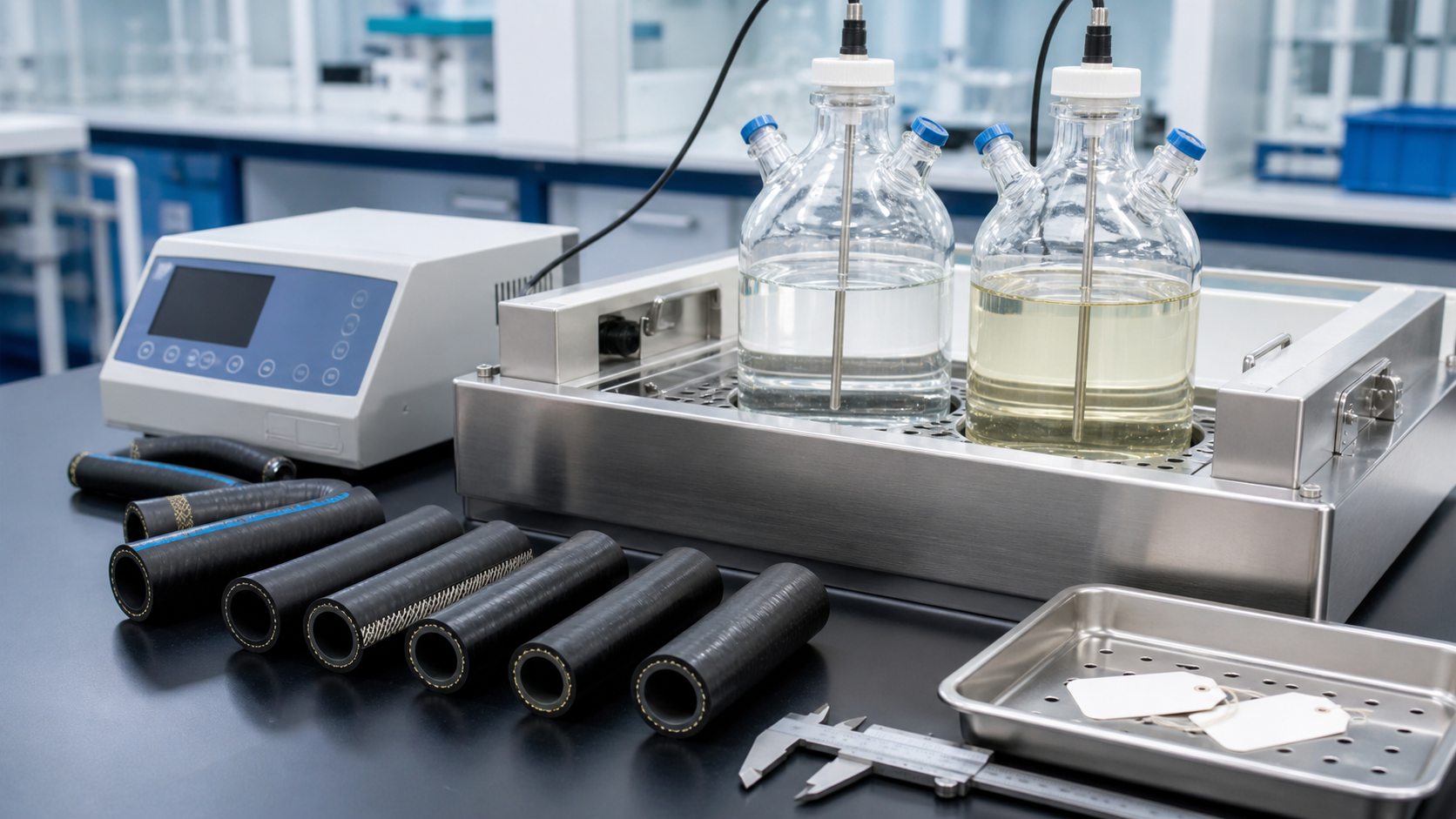
Step 5: Verify the Quality For bulk procurement, request test reports covering burst pressure validation, cold flexibility testing (typically at -20°C), and accelerated aging/UV resistance data. At Kingdaflex, every production batch undergoes burst pressure testing at the rated safety factor, cold flexibility testing to -20°C, and aging simulation before shipment.
Conclusion: Matching the Right PVC Hose to the Right Job
PVC hoses are not all the same — and the range of types, reinforcements, compound formulations, and pressure ratings exists precisely because different applications have genuinely different requirements. A layflat hose that performs perfectly for an irrigation farmer in Africa will fail immediately in a construction suction application. A fiber-braided air hose that’s ideal for a workshop compressor has no place in a mining dewatering system.
The best PVC hose for your application is the one correctly matched to your medium, pressure, temperature, and environment — and manufactured to a quality standard you can verify with documented test data.
At Kingdaflex, we’ve spent over 20 years engineering PVC hoses for buyers across 50+ countries. Our range covers 15+ PVC hose types, from light-duty garden and spray hoses to heavy-duty steel wire suction and industrial layflat — all manufactured from 100% virgin PVC resin, tested to 3:1 safety factors, and available with full factory test documentation.
Explore the Full Kingdaflex PVC Hose Range → Request a Quote or Sample →
Kingdaflex is a leading PVC hose manufacturer and wholesale supplier based in China, supplying agricultural, construction, industrial, and food-grade hose solutions to clients in over 50 countries. Contact us at [email protected] or WhatsApp: +86-18653246929.