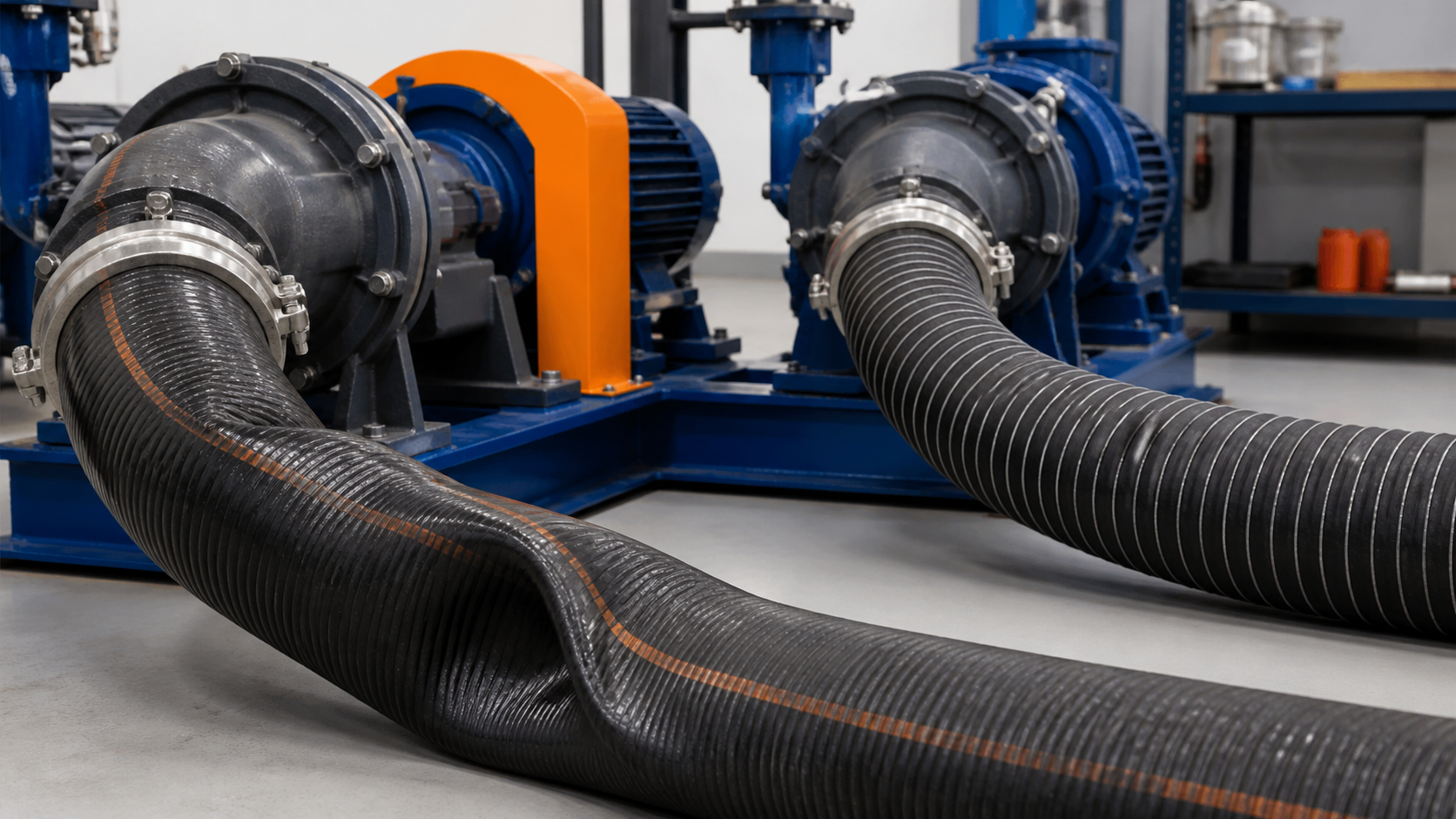
Modern agriculture depends on precision and reliability. Whether you are operating a large-scale corn planter across thousands of acres or running a grain drill through tough no-till soil, your equipment’s hydraulic system is doing critical work behind the scenes. At the heart of that system are the hydraulic hoses — components that are often overlooked until something goes wrong. Understanding how hydraulic hoses function in seeders and planters, and knowing how to select and maintain them properly, can mean the difference between a successful planting season and costly field downtime.
The Role of Hydraulic Hoses in Seeders and Planters
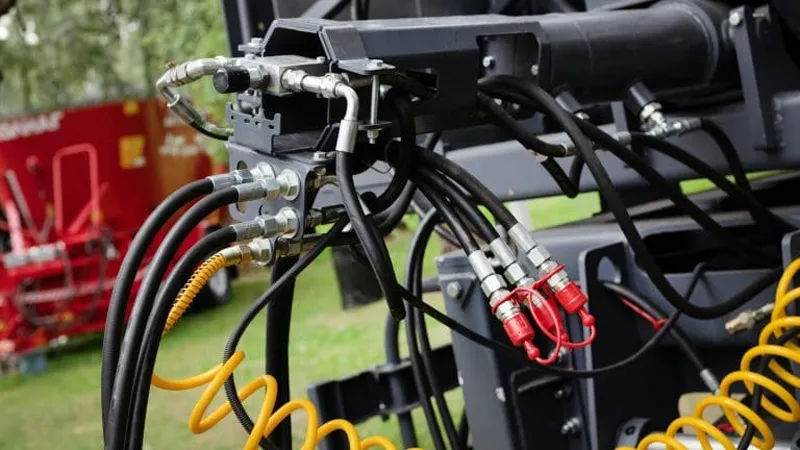
Seeders and planters are complex machines with multiple hydraulic functions working simultaneously. Hydraulic hoses act as the circulatory system of the equipment, transferring pressurized fluid to every moving component that requires power or precise control.
In a typical planter, hydraulic hoses are responsible for:
- Raising and lowering the implement — The main lift cylinders that fold and unfold wing sections and raise the frame in and out of field position are driven entirely by hydraulic pressure delivered through high-pressure hoses.
- Down-force control — Modern planters use hydraulic or pneumatic systems to apply the exact amount of down-force needed to push row units into the soil. Hydraulic hoses connect the control valves to individual row unit actuators.
- Seed meter drives — Many precision planters use hydraulic motors to drive individual row unit seed meters electronically. These motors rely on a steady, clean flow of hydraulic fluid.
- Marker arms — The hydraulic-driven marker arms that score the soil for the next planting pass are powered through dedicated hose circuits.
- Fan drives on air seeders — Air seeders use hydraulic fans to generate airflow that moves seed from the central tank through primary and secondary distribution hoses to each opener. The hydraulic hose supplying the fan motor must handle sustained high flow rates.
- Depth adjustment and section control — Automated section control systems use hydraulic actuators to lift and lower rows on-the-go, reducing seed overlap at field boundaries. These actuators cycle rapidly and repeatedly throughout the field, placing heavy demands on the hoses supplying them.
Because planters and seeders operate across rough terrain — over clods, through crop residue, and across uneven headlands — their hydraulic hoses are subjected to constant flexing, vibration, abrasion, and exposure to fertilizer, pesticide, and soil. Hose failure in the middle of a planting operation can shut the entire machine down at exactly the worst time.
Types of Hydraulic Hoses Commonly Used
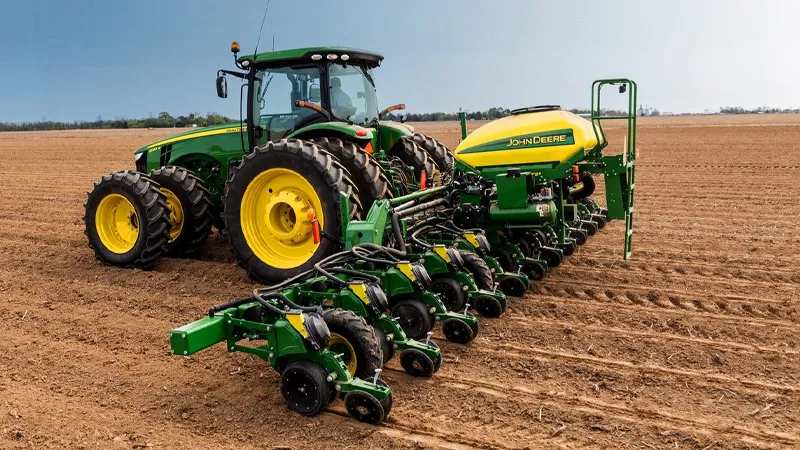
Not all hydraulic hoses are the same. Selecting the correct hose type for each circuit in a seeder or planter is essential for long service life and system safety.
Wire-Braided Hoses (SAE 100R1 / 100R2)
Wire-braided hoses are the most widely used in agricultural applications. A single-wire braid (SAE 100R1) is suited to medium-pressure circuits such as marker arms and auxiliary functions, while double-wire braid (SAE 100R2) handles higher-pressure circuits including main lift cylinders and down-force systems. These hoses offer good flexibility and are easy to route around the tight bends often found in planter frames.
Compact Wire-Braided Hoses (EN857 1SC / 2SC)
Compact hoses have a smaller outer diameter than standard R1/R2 hoses at the same pressure rating. On modern multi-row planters with dozens of hose runs bundled together, the space savings from compact hoses can simplify routing significantly and reduce the risk of abrasion between adjacent hoses.
Spiral-Reinforced Hoses (EN856 4SP / 4SH)
For the most demanding circuits — particularly hydraulic fan motor feeds on large air carts or high-cycle section control actuators — four-spiral or six-spiral hoses provide superior burst strength and fatigue resistance. These hoses maintain their pressure rating even after hundreds of thousands of flex cycles, making them ideal for applications where the hose flexes with every row that lifts and lowers across a field.
Thermoplastic Hoses (SAE 100R7 / R8)
Thermoplastic hoses offer excellent chemical resistance and are lighter in weight than rubber hoses of equivalent pressure rating. They work well in circuits exposed to fertilizer or herbicide contamination. Their smooth outer jacket also resists abrasion from soil and crop residue.
Environmental Challenges Unique to Seeding Equipment
Hydraulic hoses on seeders and planters face a uniquely hostile environment that is different from what you might encounter on a loader or excavator.
Chemical Exposure — Planters operate in close proximity to liquid fertilizer, seed treatment chemicals, and herbicides. These substances can degrade the outer jacket of standard hoses over time, leading to premature cracking and abrasion damage. Hoses with oil-resistant or chemically resistant outer covers are strongly recommended for any hose that runs near the seed delivery path or fertilizer tubes.
UV Exposure and Weather — Equipment often sits outdoors between seasons. Prolonged UV exposure causes rubber covers to harden and crack. Hoses with carbon black or UV-stabilized outer compounds resist sun degradation significantly better than standard covers.
Continuous Flexing and Vibration — Unlike construction equipment hoses that may remain largely static during operation, planter hoses on folding sections and row unit frames flex continuously. Each row that lifts over an obstacle or each fold of a wing section puts another cycle on the hose. Spiral-wound hoses with high-impulse ratings are the preferred choice for these positions.
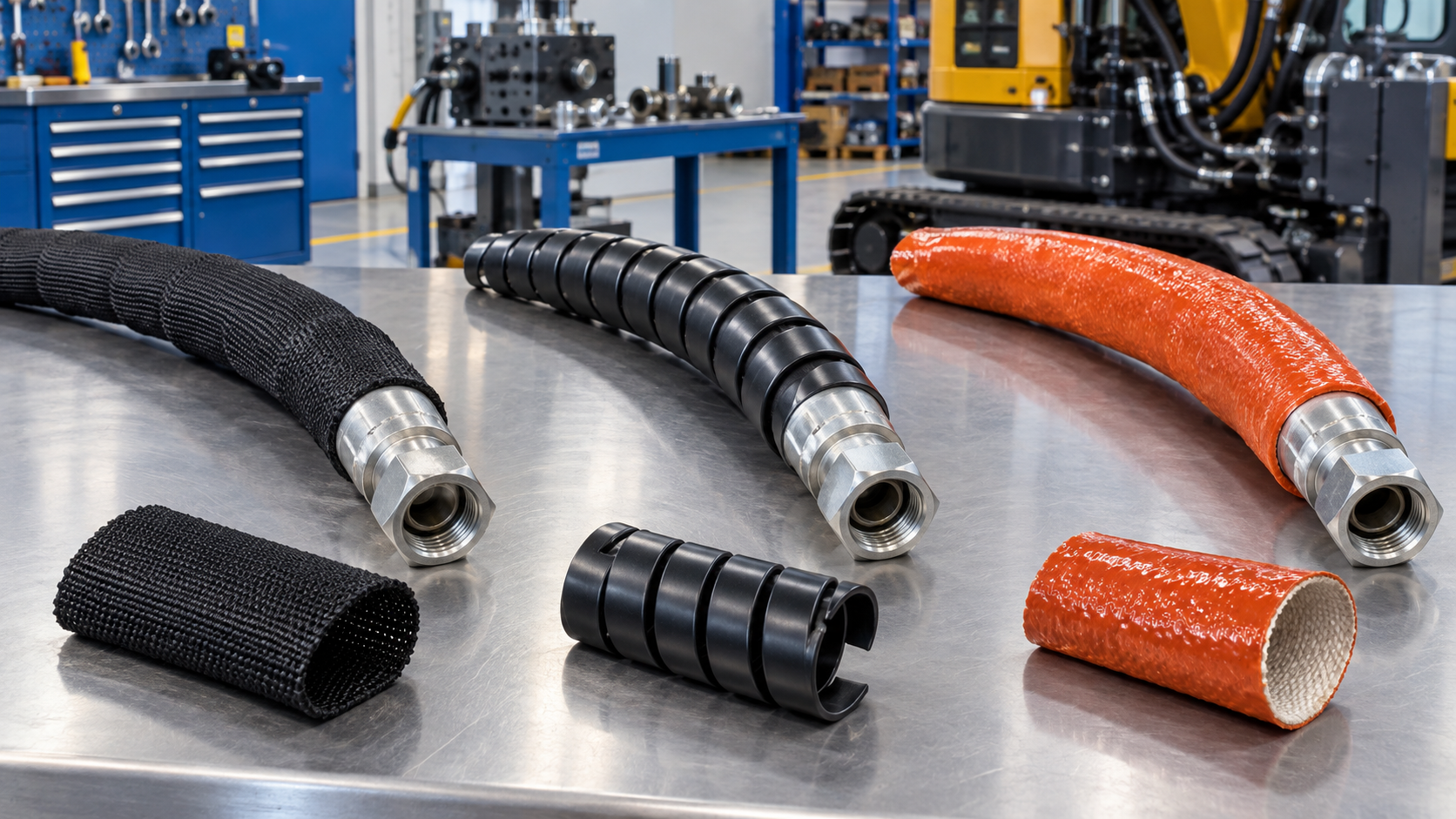
Abrasion from Soil and Residue — Hoses routed near the ground engage line, gauge wheels, and row cleaners risk physical abrasion from soil, rocks, and crop stubble. Hose sleeves, spiral guards, and abrasion-resistant outer covers significantly extend service life in these positions.
Maintenance Best Practices for Planter Hydraulic Hoses
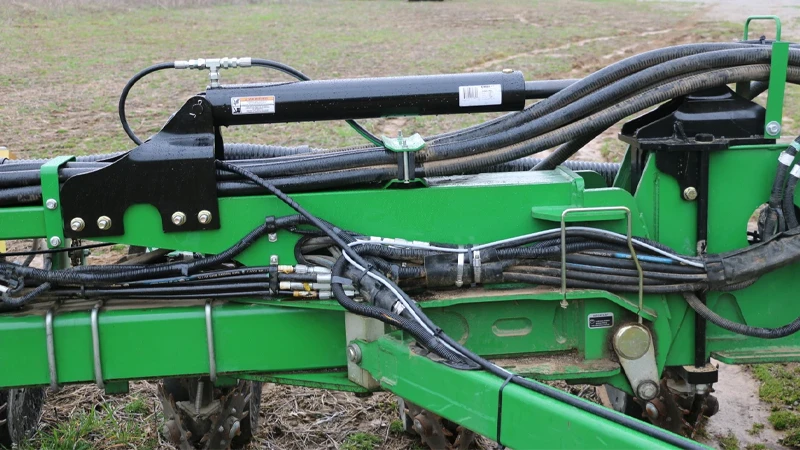
Proactive maintenance is far less costly than emergency hose replacement during peak planting season. Follow these key practices to maximize hose service life.
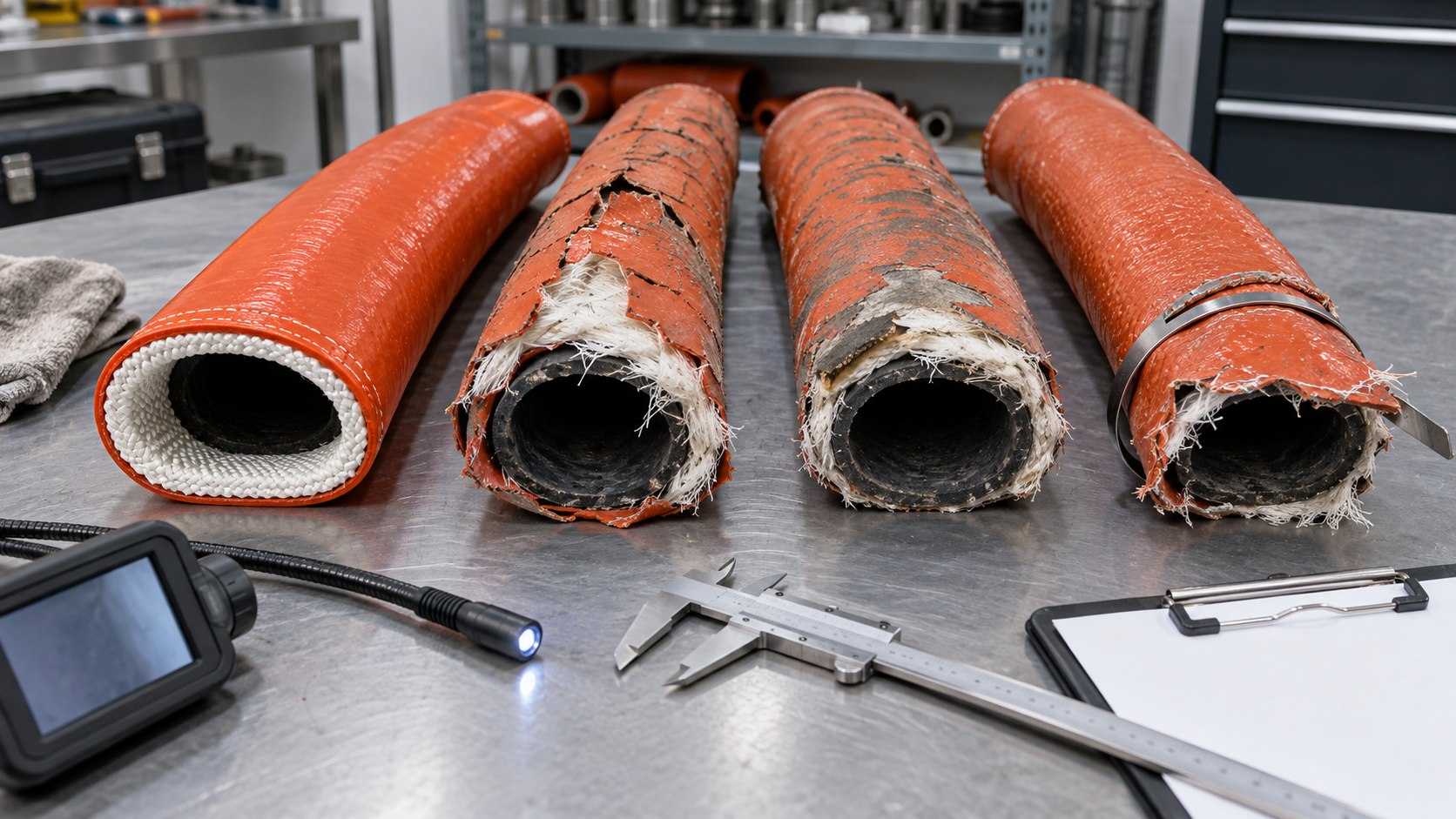
Pre-Season Inspection — Before every planting season, inspect every hydraulic hose assembly on the machine. Look for cracking or hardening of the outer cover, abrasion damage exposing wire braid, kinked or crushed sections, and weeping or staining around fittings. Any hose showing visible deterioration should be replaced before the machine enters the field.
Check Hose Routing — Confirm that no hose rubs against a metal edge, sharp frame member, or another hose during the full range of equipment motion. Even minor metal contact causes abrasion that eventually cuts through to the wire braid. Use clamps, sleeves, and protective wraps to keep hoses separated and secured.
Replace Hoses in Sets Where Practical — On folding planter frames, the hoses that feed the wing sections experience the same number of flex cycles. If one hose from a matched set fails, the others are likely near the end of their service life as well. Replacing the full set during scheduled maintenance avoids a second failure weeks later.
Keep Hydraulic Fluid Clean — Contaminated hydraulic fluid is one of the leading causes of premature hose and system component failure. Change fluid and filters per the tractor manufacturer’s schedule, and always cap open hose ends immediately when disconnecting lines to prevent contamination from entering the system.
Use Correct Fittings and Torque Values — Never reuse ferrules or damaged fittings. Crimped hose assemblies that are not properly crimped to the manufacturer’s specification can fail at the fitting under field pressure. Always follow published torque specifications when tightening field-reusable fittings.
Why Hose Quality Matters During Planting Season
Planting windows are short and weather-dependent. A hydraulic hose failure that takes a planter out of service for even half a day can mean missed planting dates that directly impact yield. Using high-quality, properly rated hoses with compatible fittings is not simply a matter of equipment longevity — it is an agronomic and economic decision.
Farmers who implement structured hydraulic hose maintenance programs report significantly fewer unplanned breakdowns during critical seasonal operations. The cost of quality hose assemblies is a small fraction of the potential losses from downtime, missed planting dates, or emergency service calls in the field.
Kingdaflex Hydraulic Hoses for Agricultural Applications
Kingdaflex manufactures a comprehensive range of hydraulic hoses built to perform in the demanding conditions of modern agricultural equipment. From SAE 100R1/R2 wire-braided hoses for standard planter circuits to EN856 4SP/4SH spiral hoses for high-cycle and high-pressure applications, every hose is produced under strict SAE and DIN standards with 100% proof pressure testing.
Our hoses are engineered with synthetic rubber compounds that resist UV exposure, ozone, and agricultural chemicals — exactly the conditions that seeders and planters encounter daily. Compatible crimped fittings in JIC, ORFS, BSP, and DIN thread forms are available to complete any hose assembly requirement.
Whether you need standard catalog hoses or custom-length assemblies to fit specific machine configurations, Kingdaflex provides the technical support and production flexibility to meet your requirements. Contact our team to discuss your agricultural hose needs and request specifications or samples for evaluation.
Kingdaflex is a leading hydraulic hose manufacturer supplying agricultural, construction, mining, and industrial markets worldwide. For more information on our agricultural hydraulic hose products, visit kingdaflex.com.