You need the best hydraulic hose solutions for your machines. These machines are excavators, loaders, and bulldozers. Good hoses help your equipment work better and last longer. Kingdaflex hydraulic hoses make your machines stronger and more reliable. Hydraulic hose solutions are important for power and safety. If you pick high-quality hoses, you will have less downtime. You also keep your team safe. Hydraulic hoses must handle high pressure and tough places. The right hoses stop leaks and bursts. You should check your hydraulic hose often. Change each hose before it breaks. Kingdaflex hydraulic hose solutions give you these benefits:
Hydraulic hose solutions give steady power to your machines.
Hydraulic hose solutions last in hard places and cut downtime.
Hydraulic hose solutions make things safer by stopping leaks and bursts.
Hydraulic Hose Solutions for Construction Machinery
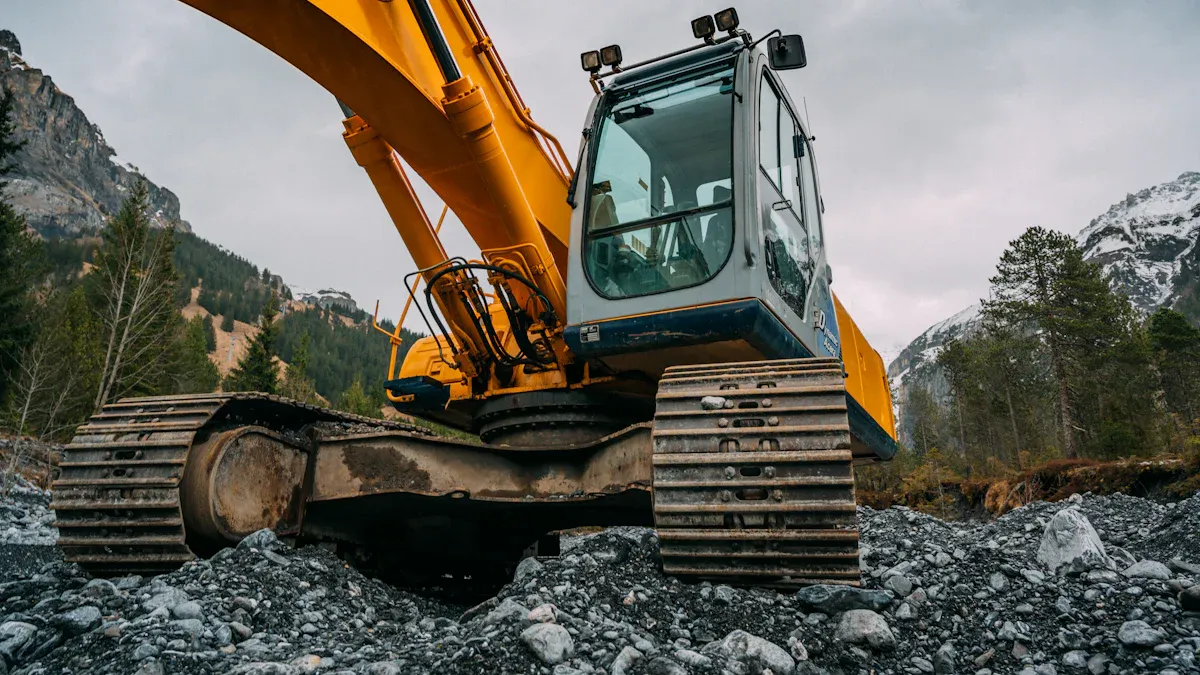
Role of Hydraulic Hoses in Excavators, Loaders, and Bulldozers
You use hydraulic hoses to make your machines work. These hoses move pressurized fluid to different machine parts. When you drive an excavator, loader, or bulldozer, you need hoses that can handle high pressure and lots of movement. Picking the right hose for each machine helps your equipment run well.
Hydraulic hoses do many important things in construction:
They move fluid to cylinders, motors, and valves.
They can take high pressure and bend a lot.
They help your machines lift, dig, and push heavy stuff.
They keep your equipment working and stop long breaks.
Each machine needs special hydraulic hoses:
Excavators need flexible hoses for good control and high pressure.
Loaders need hoses that do not wear out from rough ground.
Bulldozers need hoses that last in tough places and with heavy loads.
You can see the most commonly used hydraulic hose solutions for construction machines in this table:
Type of Hose | Pressure Rating | Applications |
|---|---|---|
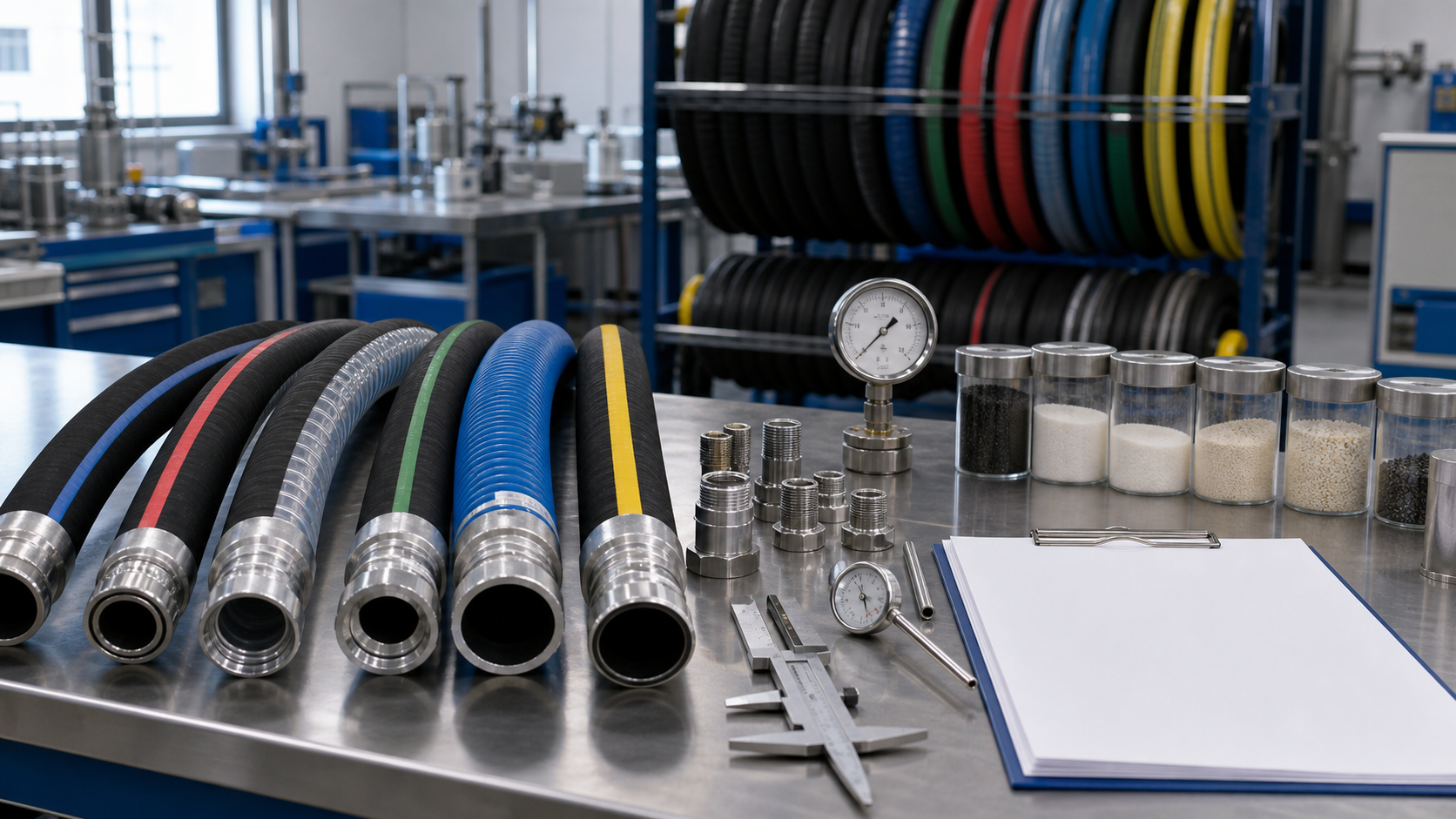
Wire Braided Hydraulic Hoses | Up to 5,000 PSI | Excavator boom and arm circuits, Power steering systems, Hydraulic tool connections, Mobile equipment auxiliary functions |
Wire Spiral High Pressure Hoses | Over 6,000 PSI | Main hydraulic supply lines, Heavy-duty excavator circuits, High-pressure pump connections, Industrial press applications |
Textile Braided Low Pressure Hoses | Below 300 PSI | Hydraulic return lines, Tank suction applications, Low-pressure auxiliary circuits, Cooling system connections |
If you pick the wrong hydraulic hose, you might get leaks, lose pressure, or your machine may slow down. A weak or blocked hose can make your equipment work less and cost more money. You should check your hoses often and change them before they break. Picking and putting in the right hydraulic hoses helps your construction jobs go well.
Tip: Always use the hose type that matches your machine’s pressure and how much it needs to bend. This stops long breaks and keeps your team safe.
Kingdaflex Hydraulic Hose Features and Benefits
Kingdaflex gives you custom hydraulic hose assemblies for construction machines. You get hoses that meet or are better than rules like SAE, DIN, and ISO. Kingdaflex hoses have oil-resistant synthetic rubber inside, so you can use them with many fluids. Strong steel wire or tough textile cords make each hose strong for hard jobs.
You can pick different covers. A wrapped cover stops scratches, and a smooth cover makes it easy to put the hose in place. Kingdaflex hoses can take high pressure and shaking, so they are great for heavy equipment hydraulic lines. You get custom hoses for excavators, loaders, and bulldozers.
Kingdaflex hoses solve common construction problems:
Spiral hoses like 4SP, 4SH, R12, R13, and R15 have many steel wire layers. These hoses can take more pressure and last longer when used a lot.
SAE 100R13 hoses are good for hard jobs. They keep a working pressure of 350 Bar (5075 PSI) and work in temperatures from -40°C to +120°C.
SAE 100R15 hoses keep a steady pressure of 420 Bar (6090 PSI) and a burst pressure of 1680 Bar (24,360 PSI). This keeps your equipment safe when pressure jumps.
EN856 4SH hoses do not wear out fast and can handle bad weather, so they are good for outdoor construction.
Here is a quick look at how Kingdaflex hoses work in tough places:
Hose Type | Working Pressure | Temperature Range | Best For |
|---|---|---|---|
SAE 100R13 | 350 Bar (5075 PSI) | -40°C to +120°C | Hydrostatic transmissions, heavy-duty equipment |
SAE 100R15 | 420 Bar (6090 PSI) | -40°C to +120°C | Modern mining excavators, heavy logging machinery |
EN856 4SH | 420 Bar (for 3/4″) | -40°C to +120°C | High-pressure systems in construction |
Kingdaflex hoses do more than just last a long time. They also stop cuts, handle pressure jumps, and protect from sharp things. Quick-disconnect fittings make it easy to change tools. Strain relief at the ends stops damage, so your hoses last longer.
Kingdaflex custom hydraulic hose assemblies let you pick the right hose for any construction job. You can order hoses in special lengths, colors, and with your company name. This helps you match hoses to your machines and keep your equipment neat.
Rules say hydraulic hoses must be safe and work well. Kingdaflex hoses do what the rules say and sometimes do even better. This means you get hoses you can trust for your construction jobs.
When you pick Kingdaflex, you get:
Hoses that last longer and stop long breaks.
Custom hoses for every construction job.
Hoses that work well in hot, cold, and high pressure.
Fast delivery and help for your team.
You can trust Kingdaflex for your excavator hydraulic hoses, loader lines, and bulldozer systems. You get the best in hydraulic hose applications, custom hoses, and heavy equipment hydraulic lines. Your construction jobs stay on time, and your machines keep working well.
Identifying Hydraulic Hose Issues

Common Signs of Hydraulic Hose Failure
You need to watch for hydraulic hose problems in your machines. Hydraulic systems use hoses to move fluid with high pressure. If you find problems early, you can stop breakdowns and keep your team safe.
Here are signs of hydraulic hose problems:
Cracks, bulges, or swelling on the hose.
Leaks or fluid loss near the hydraulic system or under machines.
Fluid leaking or seeping from hose connections.
Cuts, scrapes, or cracks on the hose cover.
Bulges, blisters, or bubbles on the hose.
Hoses that feel stiff, twisted, or kinked.
Fittings or connectors that are loose or broken.
Pressure drops or weaker hydraulic power.
Machines that lose power or work less well.
Strange noises or shaking from hydraulic equipment.
Check your hoses often. If you see leaks or damage, change the hose right away. Small hose problems can quickly turn into big ones.
Tip: Check hydraulic hoses before every shift. Finding problems early stops leaks and keeps your hydraulic system safe.
Impact on Equipment Performance and Safety
Hydraulic hose problems can hurt your machines in many ways. Leaks can stop work and leave machines sitting still. Losing fluid can make pumps too hot and break cylinders. These problems cost more money and make repairs take longer.
Hydraulic hose problems can also be dangerous. High-pressure leaks can spray fluid and burn or hurt people. Broken equipment can cause accidents or make you lose control. Leaks can also pollute dirt and water, making the worksite unsafe.
Kingdaflex helps lower hydraulic hose problems with strong quality checks. You get hoses that are tested for proof pressure and impulse cycles. Kingdaflex hoses meet SAE and DIN rules, so your hydraulic systems stay strong.
Quality Control Measure | Description |
|---|---|
Proof Pressure Testing | Every hose is tested for safety and strength. |
Industry Standards | Hoses follow SAE/DIN rules for good performance. |
Impulse Testing | Spiral hoses last through 400,000 impulse cycles, more than needed. |
Kingdaflex hoses wear down 50% less and handle 20% more heat than regular hoses. You protect your construction machines and hydraulic systems from leaks and breakdowns.
Note: Using Kingdaflex hoses helps you stop common hydraulic hose problems and keeps your hydraulic systems safe and working well.
Hydraulic Hose Repair and Maintenance
Inspection and Maintenance Best Practices
You want your construction machines to work well. Fixing and checking hydraulic hoses often stops big problems. Start by looking at hoses every day. Check for leaks, cracks, or loose parts on each hose. Clean around the hose before you look for problems. This helps you see damage more easily.
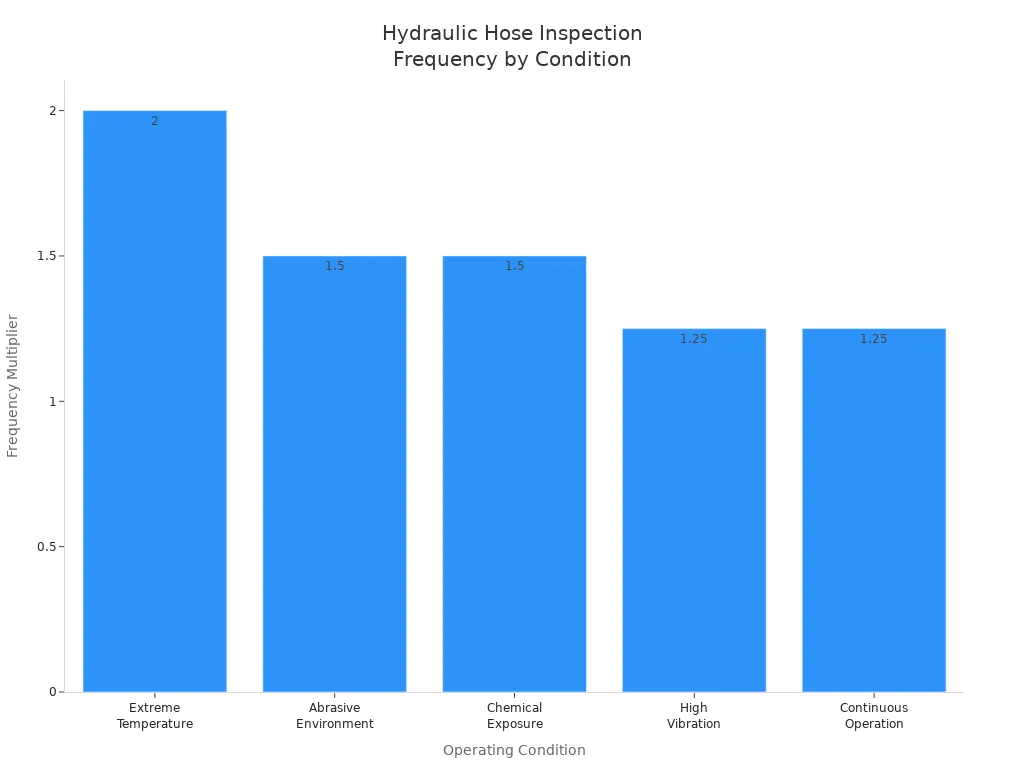
Check your hydraulic hoses every three to six months. If your machines work in very hot or cold places, check them more often. If your machines work where things can scratch or chemicals are used, check more too. Use this table to know how often to check:
Condition | Inspection Frequency |
|---|---|
Extreme Temperature | 2x Frequency |
Abrasive Environment | 1.5x Frequency |
Chemical Exposure | 1.5x Frequency |
High Vibration | 1.25x Frequency |
Continuous Operation | 1.25x Frequency |
Always use the right way to put in hoses. Use hoses and fittings from the same company. Make sure everything is clean before you put it together. Filter all fluids before you add them to the system. Change filters when you should. These steps help stop hose problems and keep your machines safe.
Safe Hydraulic Hose Replacement Procedures
When you fix a hydraulic hose, safety is most important. Turn off the machine and let out all pressure first. Use the right tools for fixing hoses. Make sure the new hose is the right size and type for your machine. Clean all parts before you put in the new hose. This keeps dirt out of the system.
Follow these steps to change hoses safely:
Hold up hoses so they do not hang down.
Keep hoses away from sharp things and rough spots.
Seal connections the right way so they do not leak.
Leave enough slack so hoses can move.
Change old or broken hoses right away.
Follow the maker’s instructions when you put hoses together. Use the right tools for fixing hoses. When you finish, look for leaks and test the system. If you need fast help, call someone who can come to your site the same day.
Extending Hose Life with Kingdaflex Solutions
You can help hoses last longer if you take care of them. Kingdaflex hoses protect against damage from heat, wear, and pressure jumps. Use Kingdaflex guards and fire sleeves to keep hoses safe. These products protect hoses in hard work places.
Check hoses often and change them before they break. Daily checks help you find problems early. Taking care of hoses helps your machines work better and last longer. You also keep your team safe.
Kingdaflex gives you fast help and good products for fixing hoses. You can get same day service and repairs at your work site. With Kingdaflex, your hydraulic systems stay strong and your jobs finish on time.
Tip: Taking care of hydraulic hoses saves money and helps your machines last longer.
You must pick the right hydraulic hose for your excavators, loaders, and bulldozers. Checking hoses often and changing them on time keeps your hydraulic systems safe and working well. Kingdaflex hydraulic hose solutions give you good quality, dependability, and helpful customer service.
Evidence Type | Description |
|---|---|
Quality | Kingdaflex hoses use top materials to last and work well. |
Reliability | Hoses follow industry rules and help stop machine downtime. |
Customer Support | Experts and after-sales help make customers happy. |
You can teach your team how to check hoses and do regular maintenance. This helps your workers and repair staff know what to do and be ready.
Teach technicians how to check hoses and write down what they find.
Regular maintenance helps hydraulic hose assemblies last longer.
Kingdaflex hydraulic hose solutions help protect your machines and make your work go faster.