A fire sleeve can only protect a hose effectively when it is installed the right way. Many buyers focus on heat resistance, but overlook practical details such as sleeve length, fit, closure style, and end securing. In real operating conditions, those details determine whether the sleeve keeps heat, flame, and molten splash away from the hose body or leaves critical areas exposed. This guide explains what a fire sleeve actually protects, why installation quality matters, and how to choose the right structure for different hose systems.
What a Fire Sleeve Actually Protects
Heat, flame, and molten splash risks around hoses
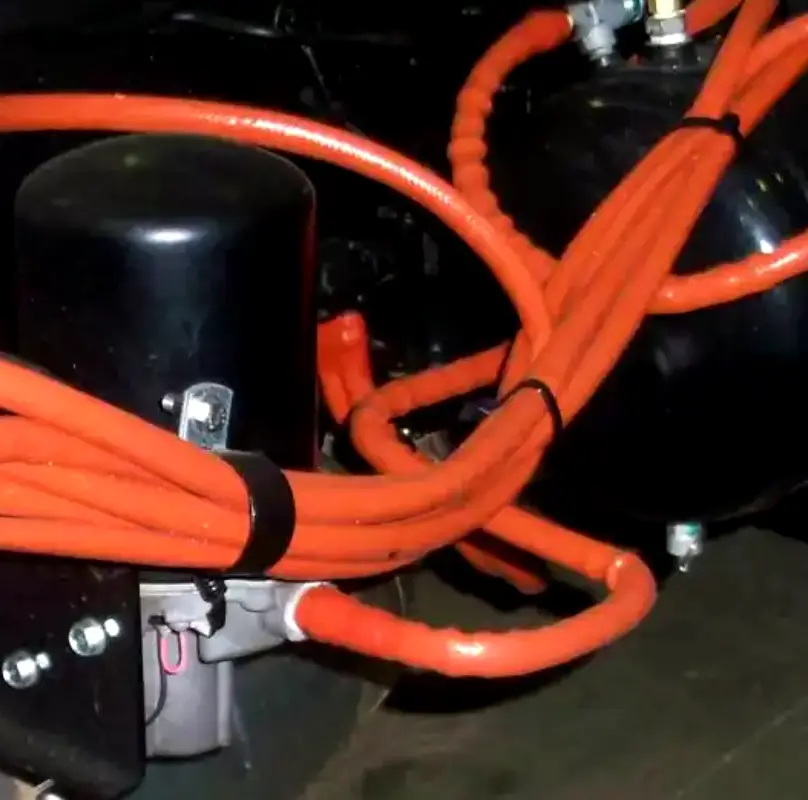
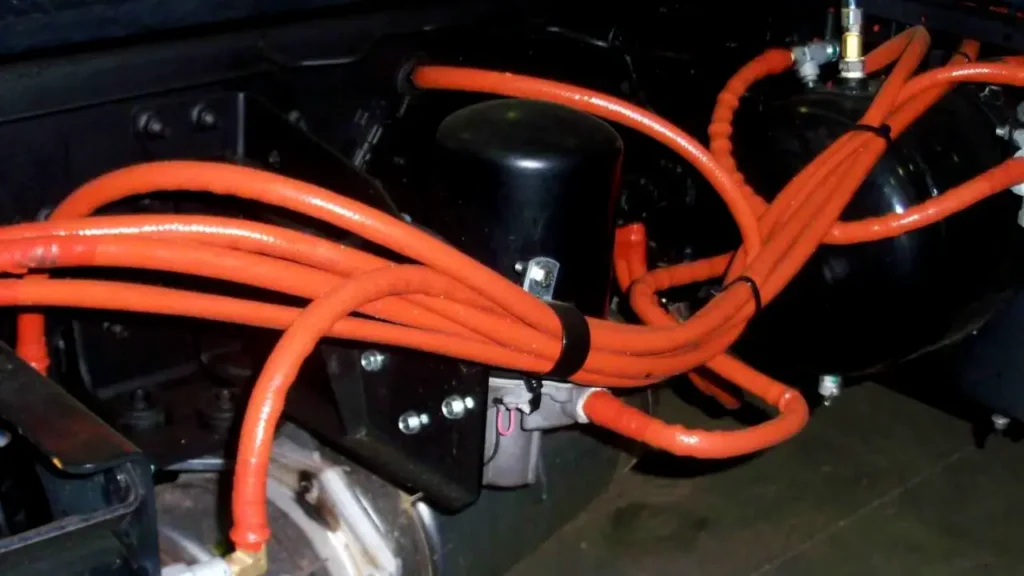
A fire sleeve is designed to protect hoses and pipes that operate near high heat sources or in areas exposed to direct flame and molten splash. In industrial equipment, these risks often come from engines, exhaust zones, welding stations, furnaces, foundries, and power generation systems. A quality fire sleeve creates an insulating barrier around the hose surface, helping reduce heat transfer, resist open flame, and protect against molten metal splash that could otherwise damage the hose cover and shorten service life. Kingdaflex fire sleeve structures are built around silicone and fiberglass materials and are designed for continuous exposure up to 260°C (500°F) with short-term resistance up to 1650°C (3000°F).
Why installation quality matters as much as material quality
Even a high-performance fire sleeve will not deliver full protection if it is installed poorly. If the sleeve is too short, key hose sections near fittings can remain exposed. If the wrong structure is selected, maintenance becomes difficult or protection becomes incomplete. For example, a tube-style sleeve offers the highest level of sealed coverage, but it must be threaded onto the hose before connection. By contrast, zipper, hook-and-loop, and snap-button styles are more suitable for retrofit jobs, maintenance-heavy systems, or complex routing where disassembly is not practical. Proper installation also means positioning the sleeve correctly and securing the ends so it does not shift, open, or bunch during operation.
Fire Sleeve Types and When to Use Each One
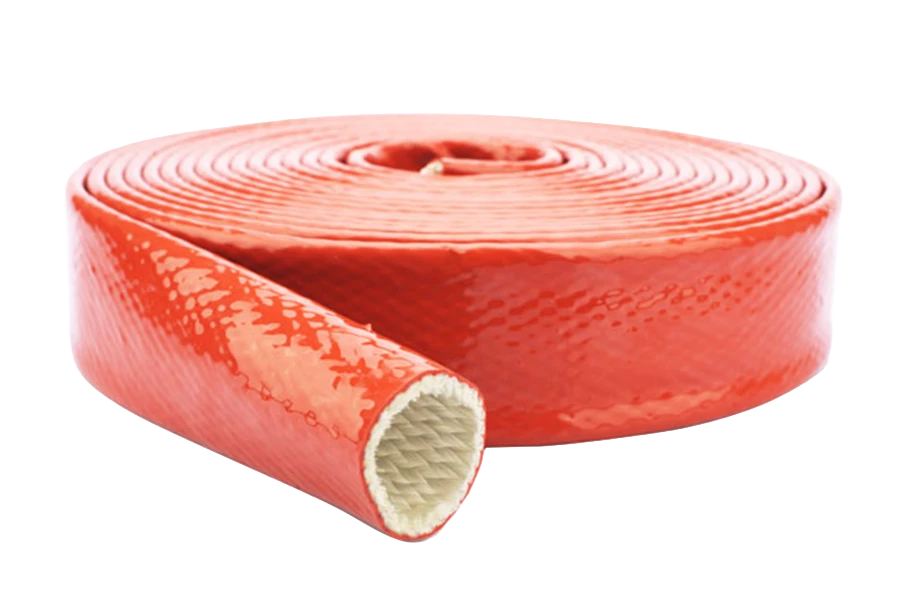


Tube-Style / Fully Enclosed Fire Sleeve
Tube-style fire sleeve is the best choice when maximum sealing integrity matters more than installation speed. Its seamless one-piece tubular construction creates the most complete barrier against extreme heat, molten splash, moisture, and surface contamination, making it ideal for short, straight hose runs where permanent protection is required. This style works especially well in pre-assembly applications, because the sleeve must be threaded onto the hose before the final connection is made. If your priority is full coverage, stable long-term positioning, and better insulation performance, tube-style fire sleeve is usually the most secure option.
Zipper Fire Sleeve
Zipper fire sleeve is designed for large or complex hose systems where access and serviceability are important. It uses a high-temperature zipper closure that allows fast installation and removal without disconnecting the hose assembly or threading the sleeve through the system. That makes it a strong option for equipment with tight routing, multiple bends, bundled lines, or areas that require regular inspection and replacement. Compared with fully enclosed sleeves, zipper designs offer much easier maintenance access while still delivering strong protection against heat and molten splash. For heavy industrial systems where downtime matters, this is often the most practical choice.
Hook & Loop Fire Sleeve
Hook-and-loop fire sleeve is the fastest style to install and one of the most flexible for retrofit work. Because it can be wrapped around an existing hose and reopened when needed, it is well suited for maintenance areas, test systems, temporary upgrades, and applications where bundles may change over time. It also adapts more easily to irregular shapes and mixed-diameter hose groups than fixed tubular styles. While it does not provide the same sealed structure as a fully enclosed sleeve, it offers an efficient balance of heat protection, adjustability, and reusability. When easy installation and repeat access are top priorities, hook-and-loop is often the right answer.
Snap Button Fire Sleeve
Snap button fire sleeve is built for tougher mechanical and thermal environments where a stronger closure is needed than standard hook-and-loop designs can provide. Using heavy-duty metal snap buttons, this style is especially suitable for areas exposed to welding spatter, heavy molten splash, and harsher physical abuse. It combines the practical advantage of wrap-around installation with a more secure mechanical hold, making it a strong fit for foundries, welding stations, and other severe-duty industrial settings. It is also useful when field adjustment is necessary, since additional snap points can be added to improve fit or closure security around bends and difficult routing sections.
How to Install Fire Sleeve Correctly
Step 1 – Measure Hose Length and Choose the Right Sleeve Size
Start by measuring the exact section of hose or pipe that needs thermal protection, not just the visible hot zone. In most cases, the sleeve should extend beyond the immediate heat source so nearby sections are not left exposed. After measuring length, match the sleeve inside diameter to the outside diameter of the hose assembly so the sleeve can fit over the line without excessive looseness or compression. A sleeve that is too tight can make installation difficult and create stress at bends, while one that is too loose may shift during operation. It is usually safer to cut slightly longer and trim if needed than to install a sleeve that leaves critical areas uncovered.
Step 2 – Prepare the Hose Surface and Surrounding Area
Before installation, make sure the hose surface is clean, dry, and free from oil, dust, grease, or loose debris. This is especially important when the sleeve ends will be secured with clamps, self-fusing tape, or other fastening methods, because contamination can reduce holding reliability. At the same time, inspect the hose routing and surrounding hardware. Check for sharp edges, abrasion points, or fitting areas where the sleeve may snag during installation. If the assembly is already installed in a tight machine space, confirm that you have enough room to slide, wrap, zip, or close the sleeve without twisting it. Good preparation reduces installation errors and helps the sleeve stay evenly positioned once the system is back in service.
Step 3 – Install According to Sleeve Structure
Tube-Style / Fully Enclosed Fire Sleeve
For tube-style fire sleeve, cut the sleeve cleanly to the required length, then thread it over the hose before the hose is connected into the system. This structure gives the highest level of encapsulation, but it only works when the assembly can be sleeved in advance. Slide it gradually over the hose and make sure it sits flat without bunching, twisting, or leaving gaps in the protected zone. This style is best for straight or relatively simple runs where permanent, sealed protection is the goal.
Zipper Fire Sleeve
For zipper fire sleeve, open the high-temperature zipper fully, place the sleeve around the installed hose or cable bundle, then close it carefully along the full protected length. Make sure the hose remains centered inside the sleeve and that the zipper line stays fully engaged from one end to the other. This structure is particularly useful on large or complex systems because it avoids hose disassembly and significantly reduces maintenance time. It is a strong option where inspection access and future replacement are likely.
Hook & Loop Fire Sleeve
For hook-and-loop fire sleeve, wrap the sleeve around the hose and press the closure firmly along the entire seam so the sleeve sits evenly around the assembly. Because this type is adjustable and reusable, it is ideal for retrofit jobs, irregular bundles, and systems that need periodic access. During installation, avoid leaving the closure partially open or offset, as that can reduce protection consistency and allow the sleeve to shift more easily during service. Its main advantage is speed and flexibility, so it works best when easy field installation matters more than fully sealed construction.
Snap Button Fire Sleeve
For snap button fire sleeve, wrap the sleeve around the hose and align each snap closure carefully before fastening them one by one. The sleeve should close evenly along its length without pulling to one side. Because this design uses heavy-duty metal snaps, it is better suited to areas with strong welding spatter, molten splash, or tougher physical abuse than lighter closure systems. In practice, this style is often chosen when the user wants retrofit convenience but also needs a more secure mechanical lock than standard hook-and-loop can provide.
Step 4 – Secure Both Ends Properly
Once the sleeve is in position, secure both ends so it cannot slide, fray, or bunch up during machine movement, vibration, or repeated thermal cycling. Common fastening methods include high-temperature resistant clamps, silicone self-fusing tape, and heavy-duty zip ties that are rated for high-heat applications. The fastening point should be tight enough to hold the sleeve in place, but not so tight that it crushes the hose, restricts flow, or damages the assembly underneath. End securing is especially important near fittings and in mobile equipment, because those are the areas most likely to experience sleeve movement over time.
Step 5 – Inspect Fit, Coverage, and Movement After Installation
After installation, inspect the full sleeved section before the system goes back into operation. Check that the protected zone is fully covered, the closure is complete, and there are no exposed hose sections near heat sources, fittings, or abrasion points. Make sure the sleeve is not twisted, excessively compressed at bends, or loose enough to migrate during movement. If the hose flexes in service, confirm that the sleeve moves naturally with the assembly without opening, bunching, or exposing the line underneath. A final inspection like this is what turns a basic sleeve install into a reliable protective solution that actually improves hose safety and service life.
Conclusion

Choosing a fire sleeve is only part of the job. To get real protection, the sleeve also has to match the hose layout, heat risk, maintenance needs, and installation method of the system.
A fully enclosed sleeve may deliver the best sealing performance, while zipper, hook-and-loop, or snap-button styles may be more practical for retrofit work, frequent service access, or harsher splash conditions.
When the structure and installation method are chosen correctly, a fire sleeve does much more than add surface protection. It helps reduce heat damage, improve hose safety, and extend service life in demanding industrial environments.
Kingdaflex offers multiple fire sleeve structures designed for different protection and installation requirements, making it easier to choose a solution that fits real working conditions rather than forcing one style into every application.