Offshore oil and gas platforms operate in one of the world’s most corrosive environments. Salt spray, humidity, chemical exposure, and temperature cycling create conditions that aggressively attack unprotected metals and elastomers.
While structural steel on offshore platforms is carefully protected with coatings and cathodic protection systems, the hydraulic hoses that power critical lifting, handling, and mooring equipment often receive less attention—despite their vital role in platform safety and operational efficiency.
Understanding the unique requirements of hydraulic hoses in offshore lifting applications, and selecting materials and designs specifically engineered for marine environments, is essential for operators who depend on reliable equipment performance in challenging conditions.
The Offshore Corrosion Challenge
The corrosive nature of offshore environments stems from multiple sources. Salt spray from breaking waves contains chloride ions that penetrate protective coatings and initiate corrosion in exposed metal. The high humidity and temperature cycling create condensation that allows moisture to accumulate in crevices and under cover materials. Offshore drilling operations themselves introduce additional chemical stressors—produced water containing dissolved salts and H₂S, chemical cleaners used for deck maintenance, and atmospheric contaminants specific to each geographic region. A hydraulic hose that performs adequately in a protected onshore facility may begin to fail within months when deployed on an offshore platform.
Standard industrial hydraulic hoses, designed for indoor or protected outdoor use, feature basic synthetic rubber covers that provide minimal protection against salt spray and UV exposure. After prolonged exposure to the marine environment, these covers become brittle, crack, and allow moisture and chloride ions to penetrate to the wire reinforcement underneath. Once the wire becomes exposed, corrosion accelerates dramatically. Corroded wire loses tensile strength, the hose’s pressure rating drops, and failure becomes imminent.
Beyond the visible damage to hose covers and wire reinforcement, hidden corrosion also occurs on ferrule fittings and adapters—the connection points where hoses attach to equipment. Stainless steel fittings resist seawater corrosion better than mild steel, but even stainless steel can corrode in marine environments if not properly selected and maintained. Corrosion at the hose-to-fitting interface reduces connection integrity and creates leakage paths that may not be detected until the hose fails under load.
Hydraulic Systems in Offshore Lifting Equipment
Offshore platforms employ numerous hydraulic systems to manage cargo and equipment. Supply boat cranes handle the transfer of supplies, personnel, and equipment between supply vessels and the platform—operations that may occur dozens of times per week in heavy seas. These cranes must operate safely under dynamic loads, sway conditions, and wave-induced platform motion. A crane failure could result in loss of supply access, personnel evacuation delays, or catastrophic equipment loss.
The hydraulic systems in these cranes operate at pressures ranging from 1,500 to 3,000 PSI and are exposed continuously to the marine environment. Hose runs on the crane boom are not protected by walkways or enclosures—they receive direct salt spray exposure during each operation. Below-deck hydraulic systems, while protected from direct spray, still experience elevated humidity and corrosive atmospheric conditions that accelerate hose degradation.
Mooring systems that hold floating platforms in position also depend on robust hydraulic systems. Anchor handling winches, tensioner units, and riser handling equipment all employ hydraulic hoses that must perform reliably under extreme environmental stress. Failure of a critical mooring hydraulic hose could lead to uncontrolled platform movement, collision with adjacent structures, or loss of well access—scenarios with severe operational and safety consequences.
Material Solutions for Offshore Environments
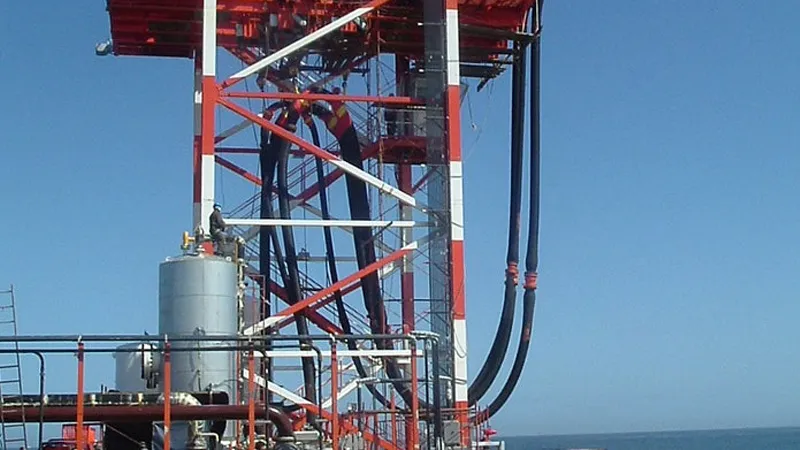
Nitrile Rubber with Enhanced Cover Systems provides a cost-effective solution for many offshore applications. Nitrile demonstrates excellent resistance to hydraulic fluids and performs well in marine environments when paired with specially formulated outer covers. Modern marine-grade nitrile hoses feature ozone-resistant, UV-resistant synthetic rubber covers that include carbon black additives and thickened outer layers to enhance resistance to salt spray and physical abrasion. These enhanced covers maintain their integrity longer than standard industrial covers, delaying the onset of wire corrosion and extending hose service life.
Viton-Based Elastomers offer superior chemical resistance and thermal stability compared to nitrile, making them the preferred choice for applications involving solvent-based hydraulic fluids or elevated circulating temperatures common on deepwater platforms. Viton hoses paired with high-quality marine covers provide extended service life in harsh environments. The additional cost of Viton—typically 40-60% more than nitrile—is justified in critical safety applications where hose failure consequences are severe.
Stainless Steel Reinforcement and Fittings represent a significant upgrade for offshore service. While standard galvanized or painted steel wire will corrode in marine environments, 304 and 316 stainless steel wire reinforcement resists seawater corrosion far more effectively. Similarly, stainless steel ferrule fittings, adapters, and hardware eliminate the corrosion-prone interface that exists with mild steel fittings. The investment in stainless steel reinforcement and fittings pays dividends through extended hose life and reduced maintenance requirements.
Epoxy-Coated Wire and Enhanced Sealing takes corrosion protection further. Some premium offshore hoses employ epoxy-coated wire reinforcement that provides a protective barrier against salt spray penetration. Additionally, sealed hose ends and protective caps prevent moisture from wicking into the hose interior during storage or periods of non-operation. These features significantly extend the interval between hose replacement and reduce in-service corrosion-related failures.
Performance Comparison: Standard vs. Offshore-Grade Hydraulic Hoses
| Feature | Standard Industrial Hose | Marine/Offshore Hose | Premium Offshore Hose |
|---|---|---|---|
| Outer Cover Material | Standard rubber | Ozone & UV-resistant synthetic | High-grade synthetic + additives |
| Wire Reinforcement | Galvanized steel | Galvanized or stainless steel | 304/316 stainless steel |
| Ferrule & Fittings | Mild steel (painted) | Carbon steel or 303 stainless | 316 stainless steel |
| Cover Thickness | Standard | Enhanced | Maximum |
| Salt Spray Resistance (hours to first corrosion) | 50–100 hours | 300–500 hours | 1,000+ hours |
| Typical Service Life Offshore | 6–12 months | 18–30 months | 36–48 months |
| Cost Relative to Standard | 1.0x (baseline) | 1.3–1.5x | 1.8–2.2x |
Best Practices for Offshore Hydraulic Hose Selection and Installation
Specifying hydraulic hoses for offshore lifting equipment requires understanding both the pressure and environmental requirements. Begin with the pressure profile of the crane or handling system—maximum working pressure, peak pressures during load swings, and cycle duty characteristics. Most offshore lifting hoses operate in the 1,500–3,000 PSI range, with safety factors typically set at 4:1 or higher.
The next critical decision is material selection. For supply boat cranes and general deck equipment operating in moderate seas, enhanced-cover nitrile hoses offer excellent value. For critical mooring systems, deepwater applications, or situations where hose replacement is difficult or costly, stainless steel-reinforced viton hoses provide superior long-term reliability. Consulting with the hose manufacturer about your specific platform location, climate conditions, and operational tempo will help identify the optimal material combination.
Installation practices significantly impact hose performance in marine environments. All hose runs should be routed to avoid direct pooling of water or accumulation of spray. Protective sleeves or conduit should be considered for hose sections exposed to high-velocity spray or frequent mechanical contact. Hoses should be secured with stainless steel clamps and supports—carbon steel hardware will corrode, creating a source of leakage and contamination. During scheduled maintenance intervals, inspect all visible hose sections for cover cracks, wire exposure, or discoloration that indicates corrosion of the reinforcement.
Storage and Long-Term Protection
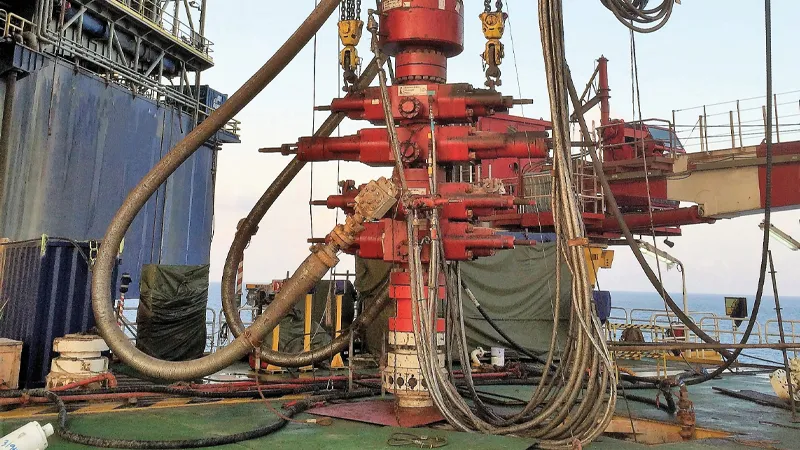
Offshore platforms often maintain spare hydraulic hoses for emergency replacement. These spares must be stored to prevent corrosion and environmental degradation while awaiting deployment. Hoses should be stored indoors, away from direct salt spray and UV exposure. When indoor storage is not feasible, sealed storage containers or UV-protective wrapping should protect hoses from environmental damage. Before installation, newly stored hoses should be inspected for cover cracks or degradation, even if the hose appears unused.
Cost-Benefit Analysis of Marine-Grade Hoses
The higher cost of marine-grade hydraulic hoses is often recovered through extended service intervals and reduced emergency replacement requirements. A supply boat crane employing standard industrial hoses might require complete hose replacement every 12 months, while the same equipment with marine-grade hoses might extend service intervals to 24–30 months. Over a 5-year operational horizon, the cost savings from reduced replacement frequency, minimized downtime, and avoided emergency callouts can easily justify the initial material premium.
Furthermore, the consequences of unexpected hose failure in offshore applications extend beyond simple replacement costs. Unplanned shutdowns delay supply operations and personnel transfers, emergency repairs may require costly vessel mobilization, and safety incidents resulting from equipment failure carry significant operational and reputational costs. These factors make the reliability advantage of premium marine-grade hoses compelling from a total-cost-of-ownership perspective.
Conclusion
Offshore platforms operate in harsh environments that aggressively attack standard hydraulic hose materials and hardware. Lifting and handling equipment—critical to daily platform operations and personnel safety—depends on hydraulic systems that must perform reliably under continuous corrosive exposure.
Selecting marine-grade hydraulic hoses with enhanced covers, stainless steel reinforcement, and high-quality fittings ensures robust performance, extended service intervals, and reduced risk of unexpected failures.
While marine-grade hoses represent a higher initial investment than standard industrial hoses, the extended service life and operational reliability they provide make them the cost-effective choice for any offshore operation where hose failure consequences are significant.