Aerial work platforms — scissor lifts, boom lifts, and telescopic handlers used for elevated work access — depend almost entirely on hydraulic systems to lift, extend, and position workers safely at height. Unlike many industrial machines where a hydraulic failure simply halts production, a hose failure on an aerial platform has direct implications for operator safety, since these machines are actively supporting personnel above ground level during operation. That safety dimension shapes hose and fitting selection throughout the industry, from OEM design through field maintenance.
This article covers the major hydraulic circuits found in scissor lifts and boom lifts, the operating conditions specific to aerial work platforms, and what OEMs and rental fleet operators should prioritize when specifying or maintaining hydraulic hose on this equipment.
Why Aerial Work Platforms Demand a Safety-First Approach to Hose Selection
Several factors combine to make hydraulic hose selection for aerial platforms different from many other mobile equipment categories:
- Direct personnel safety exposure — hydraulic failures can affect platform stability or descent control while workers are elevated
- Frequent, repeated cycling — rental and jobsite use often means many lift and lower cycles per day across a wide range of operators and applications
- Outdoor and indoor use across varied environments — aerial platforms move between construction sites, warehouses, and industrial facilities, each with different environmental exposure
- Rental fleet duty cycles — equipment in rental service often sees inconsistent maintenance attention between renters, making hose durability and fault tolerance especially important
- Regulatory and inspection requirements — many jurisdictions require regular safety inspections for aerial work platforms, including hydraulic system components
Key Hydraulic Circuits in Scissor Lifts
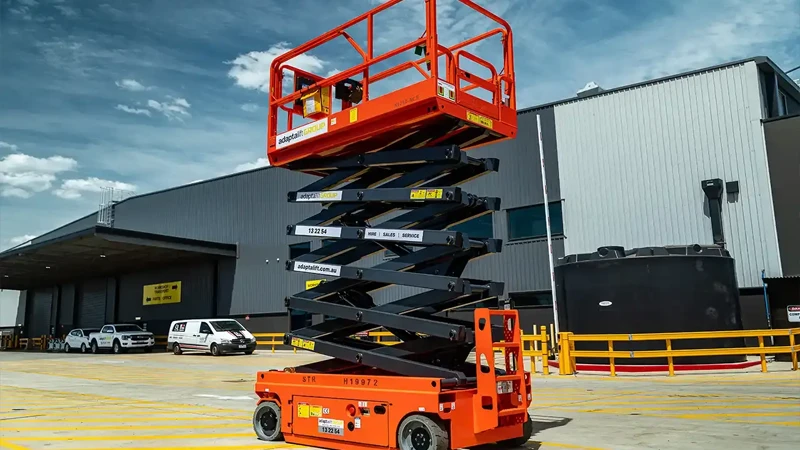
Lift Cylinder Circuits
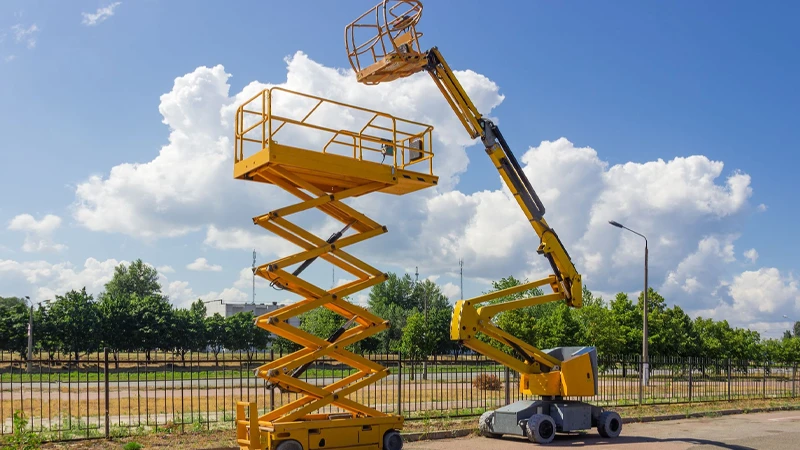
The primary lift cylinders in a scissor lift raise and lower the platform through a scissor mechanism. These circuits require smooth, controlled operation — both for operator comfort and to prevent sudden platform movement — along with reliable holding pressure to maintain platform position safely at height.
Steering and Drive Circuits
Self-propelled scissor lifts use hydraulic circuits for steering and, in many models, drive propulsion. These circuits cycle frequently as the platform is repositioned around a job site, particularly in models designed for confined indoor spaces requiring precise maneuvering.
Platform Leveling and Extension Systems
Many scissor lifts include hydraulic platform extension decks or leveling systems to accommodate uneven working surfaces. These lower-pressure but functionally important circuits require consistent hydraulic response for safe platform positioning.
Key Hydraulic Circuits in Boom Lifts
Boom Lift and Extension Cylinders
Boom lifts use one or more hydraulic cylinders to raise, extend, and articulate the boom arm, positioning the platform at height and reach combinations that scissor lifts can’t achieve. These circuits typically operate at higher pressure than scissor lift circuits and require precise control throughout the boom’s full range of motion.
Rotation (Slew) Systems
Boom lifts feature hydraulic slew drives that rotate the entire boom assembly around the machine’s base, allowing operators to position the platform without repositioning the whole vehicle. This circuit cycles frequently during normal operation and requires smooth, controlled rotation for operator safety and comfort.
Platform Leveling (Self-Leveling) Systems
As the boom raises, extends, and articulates, a hydraulic self-leveling system continuously adjusts platform angle to keep it level regardless of boom position. This circuit operates essentially continuously whenever the boom is in motion, making hose reliability in this system especially important for consistent platform stability.
Outrigger and Stabilization Systems
Many larger boom lifts use hydraulic outriggers to stabilize the machine before elevating the platform. These circuits engage less frequently than lift or rotation circuits but involve high force requirements critical to overall machine stability.
Steering and Drive Circuits
As with scissor lifts, self-propelled boom lifts use hydraulic circuits for drive and steering, often engaging frequently as operators reposition the machine across a job site between lift operations.
Operating Conditions That Shape Hose Selection
High-Frequency Cycling in Rental and Jobsite Use
Aerial platforms in active rental or jobsite service can cycle their primary hydraulic circuits many times per day, accumulating substantial cycle counts over a machine’s operating life. This makes impulse-rated hose and fitting assemblies an important specification, particularly for lift, boom, and leveling circuits — a topic covered in more depth in our article on hydraulic hose impulse rating.
Smooth, Precise Motion Control Requirements
Because operators are physically on the platform during boom and lift movement, hydraulic circuits need to deliver smooth, predictable motion rather than abrupt changes in speed or direction. Hose diameter, flexibility, and consistent internal bore all contribute to the controlled hydraulic response operators expect.
Variable Environmental Exposure
Aerial platforms frequently move between indoor and outdoor environments, and rental units in particular may operate across a wide range of climates depending on where they’re deployed. Hose covers need to handle both UV and weathering exposure for outdoor use and typical indoor industrial conditions without compromise.
Vibration and Mechanical Stress from Boom Articulation
Boom lifts in particular generate vibration and mechanical stress as the boom extends, articulates, and rotates through its range of motion, placing repeated stress on hose fittings over time — a factor explored further in our article on why hydraulic hoses fail at fittings.
Rental Fleet Wear and Inconsistent Maintenance
Equipment in rental service often experiences more varied operating conditions and less consistent preventive maintenance than owner-operated equipment, since different renters may use the machine differently and maintenance intervals can be harder to enforce consistently across a rental fleet. This makes hose durability and fault tolerance particularly valuable for rental-focused equipment models.
Recommended Hose Types for Aerial Work Platforms
Given the combination of personnel safety requirements, high-cycle operation, and variable environmental exposure, hose specifications for aerial work platforms typically include:
- Impulse-rated wire braid hoses for lift, boom, and self-leveling circuits subject to frequent cycling
- UV- and weather-resistant covers for machines used in outdoor rental and jobsite applications
- Compact, flexible hose constructions where routing space is limited within boom or scissor mechanisms
- Conservative safety margins above calculated working pressure, reflecting the personnel-safety context of this equipment category
- Consistent, well-documented specifications to support regulatory inspection and certification requirements common in this industry
Maintenance Considerations for Fleet Operators
Given the safety-critical nature of aerial work platforms and the challenges of rental fleet maintenance consistency, operators benefit from a structured approach to hydraulic hose upkeep:
- Follow required safety inspection schedules precisely, including hydraulic system checks mandated by applicable regulations for aerial work platforms
- Prioritize inspection of lift, boom, and leveling circuits, given their direct connection to platform stability and operator safety
- Watch for hose wear near boom articulation points, where mechanical stress and potential contact with moving components are highest
- Document maintenance and inspection records thoroughly, particularly important for rental fleets moving between different job sites and operators
- Replace hoses proactively based on service hours and inspection findings, rather than waiting for visible failure on safety-critical circuits
Working with a Hydraulic Hose Supplier for Aerial Platform Manufacturers
Aerial work platforms combine high-cycle industrial hydraulic demands with a safety standard that reflects their role in directly supporting personnel at height. OEMs and rental fleet operators need hose and fitting suppliers who understand both the performance requirements and the safety-critical context of this equipment category.
At Kingdaflex, we manufacture hydraulic hoses suited to the high-cycle, safety-critical demands of aerial work platforms, with impulse-rated constructions and weather-resistant cover options for both OEM production and rental fleet maintenance needs. Our team can help specify hose and fitting solutions for lift, boom, rotation, and leveling circuits built to support reliable, safe operation.
Frequently Asked Questions
Why is hose reliability especially critical for aerial work platforms?
Because these machines directly support personnel at height during operation, a hydraulic hose failure can affect platform stability or control, making hose reliability a direct safety consideration rather than just an operational one.
What hydraulic hose specification matters most for boom lift circuits?
Impulse rating is particularly important for boom, rotation, and self-leveling circuits, since these systems cycle frequently during normal operation and accumulate significant pressure cycles over the equipment’s service life.
Do rental aerial platforms need different hose specifications than owner-operated units?
Not necessarily different specifications, but rental fleet equipment often benefits from hose choices with strong durability and fault tolerance, given the more varied usage patterns and potentially less consistent maintenance across different renters.
How often should hydraulic hoses on scissor lifts and boom lifts be inspected?
Inspection frequency should follow applicable regulatory requirements for aerial work platforms, with particular attention to lift, boom, and leveling circuits given their direct role in platform stability and operator safety.