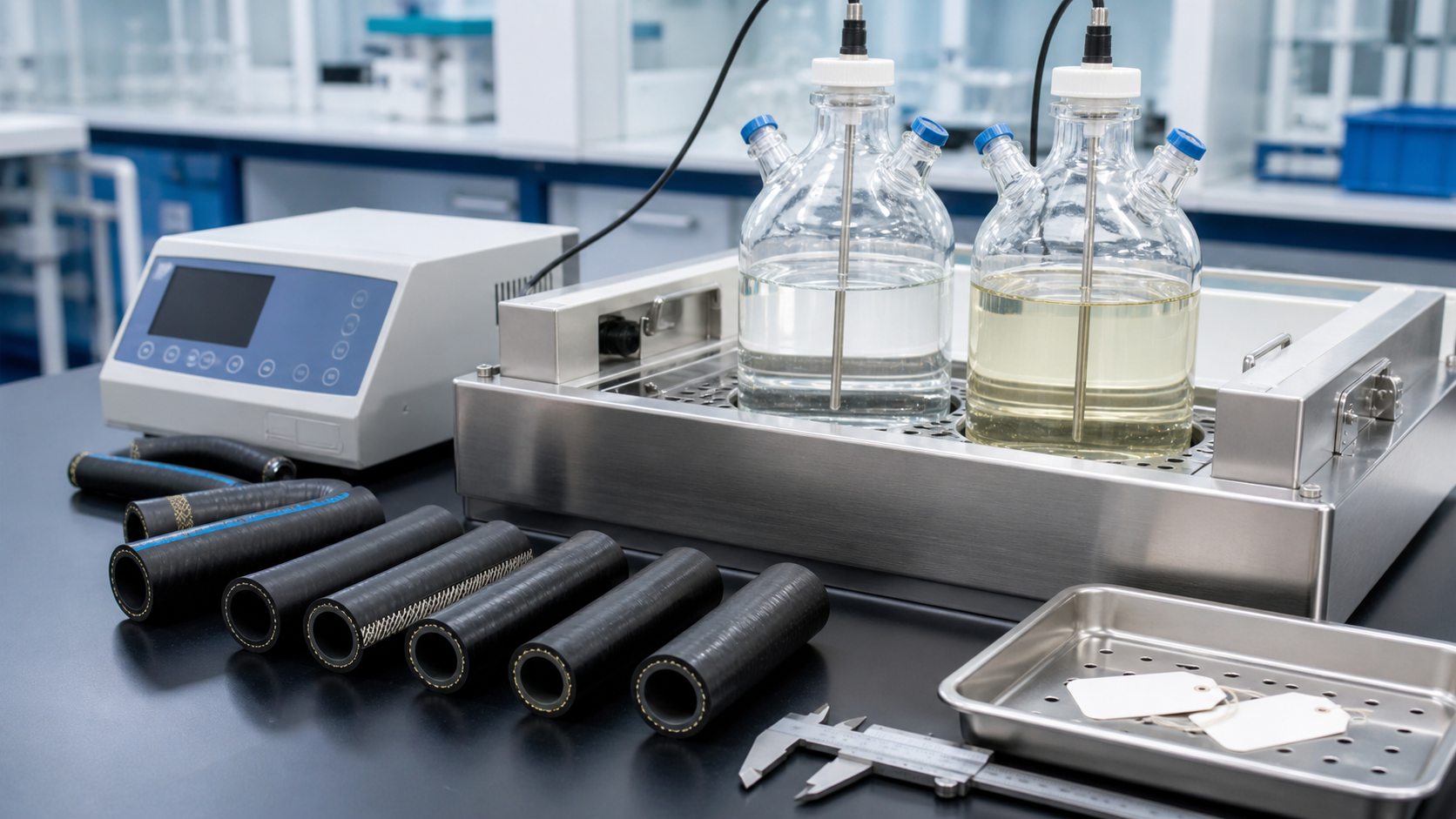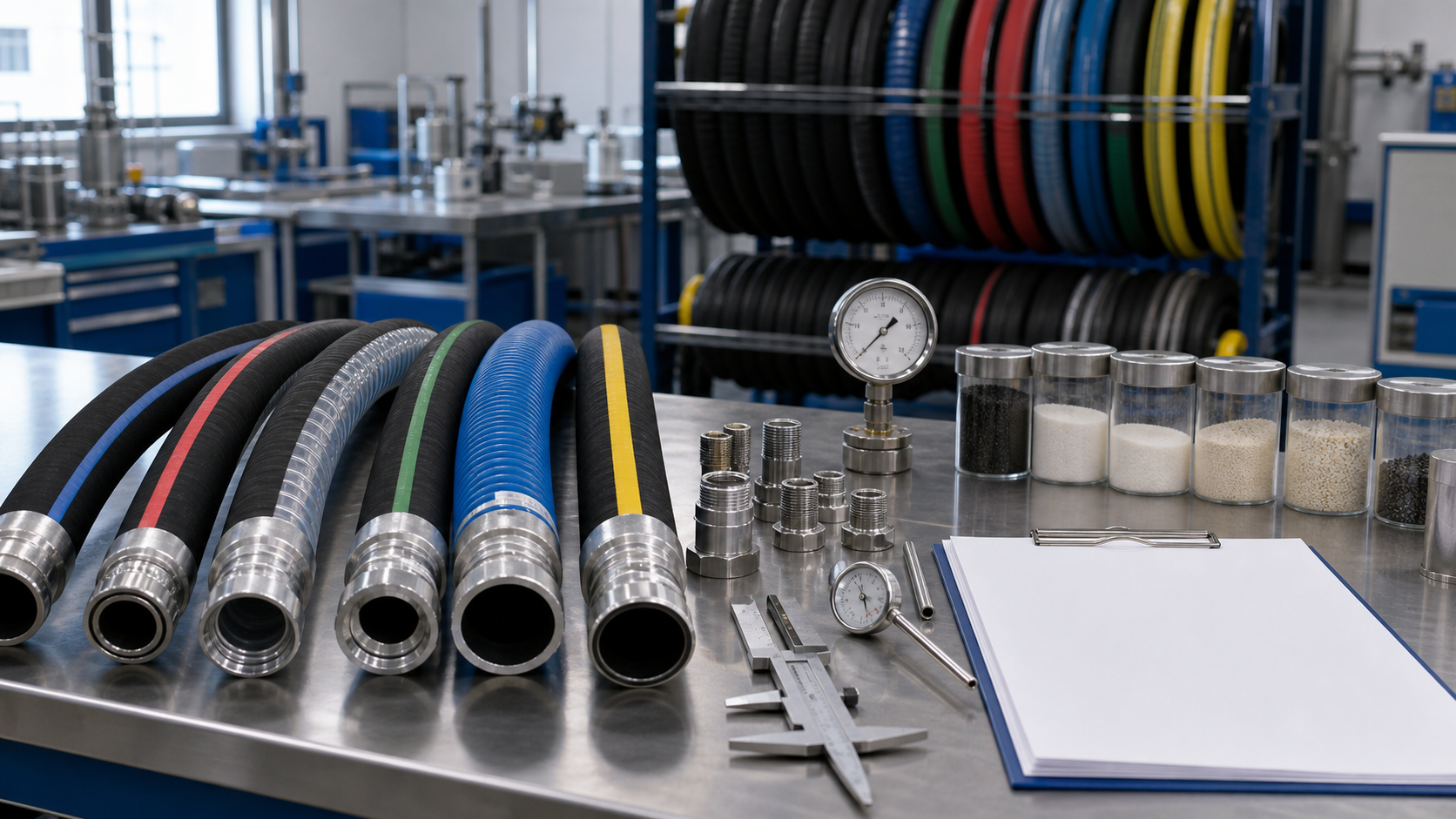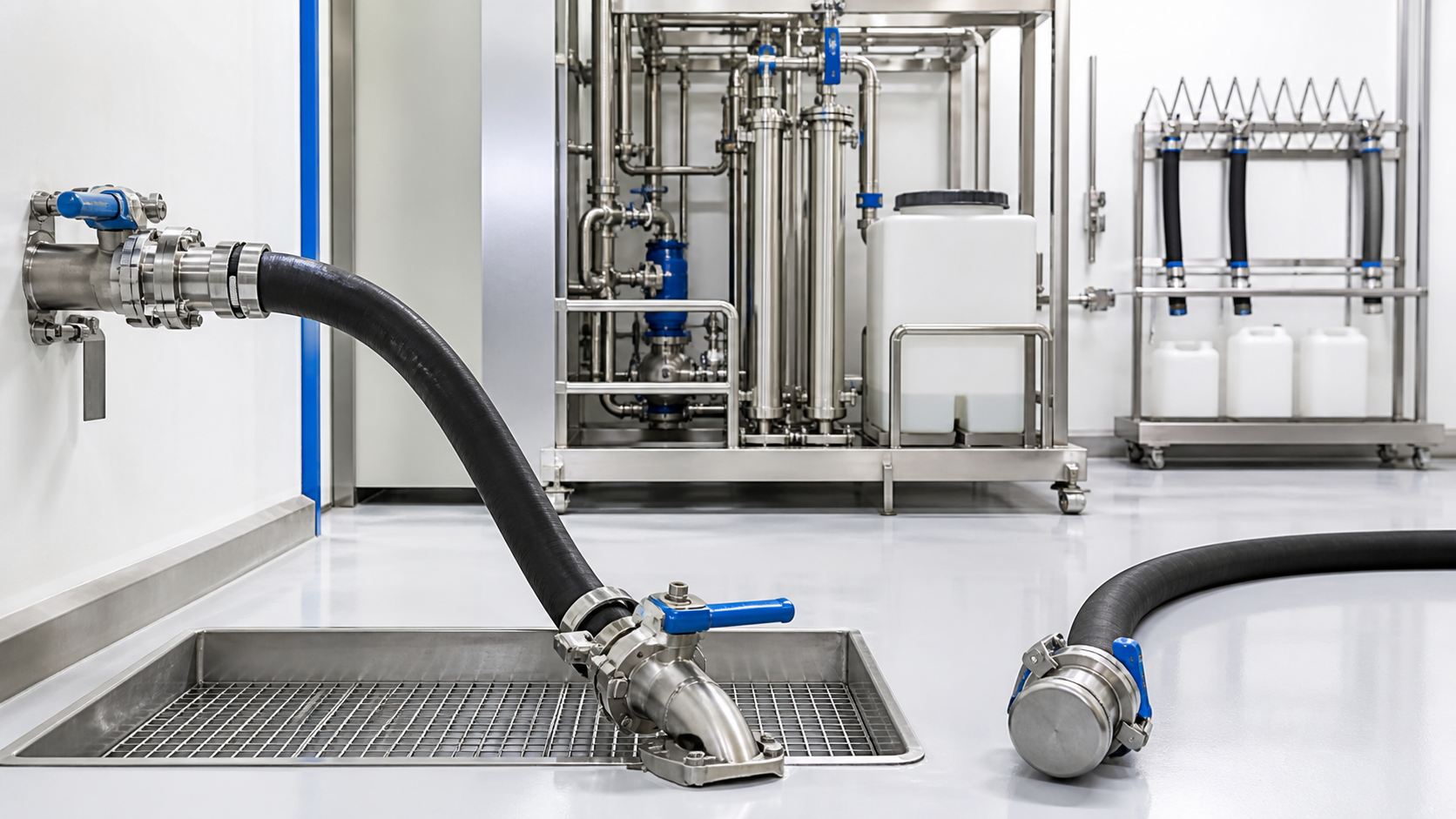
A new hydraulic hose assembly can look perfect externally while containing rubber particles, wire fragments, metal chips, dust, moisture, or packaging debris. Once installed, those contaminants can enter valves, pumps, cylinders, servo components, and bearings. A small amount of debris may cause sticking, accelerated wear, leakage, or an expensive commissioning failure.
A practical hydraulic hose cleanliness specification defines the required condition, cleaning process, verification method, capping, packaging, and traceability before the assembly reaches the machine. “Clean hose” is not measurable unless buyer and supplier agree on acceptance criteria.
Where Contamination Comes From
Cutting a hose can release tube and cover particles, reinforcement fragments, and dust. Skiving, fitting insertion, crimping, handling, and storage introduce additional opportunities. Contamination can also enter through uncapped ends during transport or installation.
Typical sources include:
- Saw-cutting residue and rubber dust
- Steel-wire fragments from reinforcement
- Metal chips or plating debris from fittings
- Lubricants used during fitting insertion
- Dirty air nozzles or cleaning projectiles
- Dust from workbenches, floors, and packaging
- Moisture or rust from poor storage
- Fibers from wipes and unsuitable caps
The assembly process should prevent contamination as well as remove it.
Define Cleanliness by Application Risk
Not every circuit needs the same verification level. A basic mobile cylinder line, a proportional-valve circuit, and a high-precision servo system have different sensitivities.
| Application | Cleanliness concern | Possible control level |
|---|---|---|
| General mobile hydraulics | Cutting and assembly debris | Validated projectile or flushing process |
| Proportional controls | Fine particles and fibers | Quantitative verification may be required |
| Servo systems | Very small particles | Tight target with laboratory analysis |
| Lubrication systems | Bearing-damaging particles | Fluid-based inspection and capping |
| Oxygen or special media | Residue and material compatibility | Dedicated cleaning procedure |
The OEM should set the requirement with its hydraulic-system and contamination-control specialists. A hose supplier should not guess the target from working pressure alone.
Cleaning Methods
Common methods include high-velocity air, foam projectiles, fluid flushing, and combinations of these. The correct method depends on hose size, length, construction, contamination type, fittings, target level, and permitted cleaning media.
Projectile cleaning sends a correctly sized foam projectile through the assembly using clean compressed air. It can remove loose particles effectively when the process is validated. Multiple projectiles may be used until the outgoing projectile meets acceptance criteria.
Fluid flushing circulates compatible filtered fluid at controlled velocity. It may be appropriate for critical assemblies or complex internal geometries. The flushing fluid, filter, sampling method, and disposal procedure must be specified.
Guidance on cleaning hydraulic hoses should be converted into a documented production instruction with defined equipment settings and acceptance rules.
Clean Compressed Air Matters
Compressed air used for cleaning can introduce oil, water, scale, or particles if the supply is not treated. Define filtration, dryness, and oil content appropriate to the process. Maintain filters and drains, and verify the air supply on a schedule.
Nozzles, launchers, and projectile storage must also remain clean. A clean projectile handled with dirty gloves or placed on a dusty bench defeats the process.
Verification Options
Visual inspection can detect large debris but cannot establish a fine cleanliness level. White-patch checks, flushed-fluid analysis, gravimetric measurement, particle counting, or microscopic examination may be used depending on the specification.
A good verification plan states:
- Sampling fluid and volume
- Extraction or flushing procedure
- Filter membrane or analysis method
- Particle-size ranges or mass limit
- Number and frequency of samples
- Acceptance and retest rules
- Required report format
Avoid specifying a particle code without explaining how the sample is obtained from the hose. Different extraction methods can produce different results.
Cleaning Before or After Crimping
Bulk hose should be protected during storage and cut with maintained equipment. Cleaning after cutting removes much of the generated debris. Fittings themselves should arrive clean and remain covered.
Final cleaning after assembly is valuable because insertion and crimping can release additional particles. The process must be compatible with the installed fitting bore and any special component such as an elbow or valve.
The complete hydraulic hose assemblies workflow should define when cleaning occurs and how cleaned status is preserved.
Caps and Plugs
Cleaning is wasted if the assembly remains open. Install clean, correctly sized caps or plugs immediately after final cleaning and inspection. They should remain secure through shipping but be removable without leaving fragments.
Caps should be compatible with the hose ends and environment. Reused dirty caps should not be placed on a clean assembly. Color coding may identify cleanliness status, but the meaning must be documented.
Packaging should prevent caps from being knocked off and protect fittings from impact. Long assemblies need support so they do not drag across dirty surfaces.
Production-Area Controls
A capable hydraulic hose manufacturer should separate dirty cutting operations from final cleaned assembly handling where practical. Work surfaces, racks, tools, and containers require routine cleaning.
Useful controls include covered bulk-hose ends, dedicated clean racks, preventive maintenance for saws and crimpers, clean gloves, closed projectile containers, labeled quarantine areas, and first-in-first-out material handling.
Operators need training on why apparently minor practices—such as leaving a cap off—can affect the customer’s system.
Traceability and Records
For OEM programs, the assembly label or packaging can link to hose and fitting lots, production date, operator, cleaning method, inspection result, and drawing revision. The record depth should match application risk.
If a contamination problem occurs, traceability helps distinguish one assembly, one batch, one cleaning machine, or a broader process issue. Retain records for the agreed period.
Validation and Ongoing Monitoring
Before routine production, validate the cleaning process using representative hose sizes, lengths, and fitting geometries. The most difficult assemblies may require different projectile sizes or additional passes.
Ongoing monitoring can include scheduled sample analysis, air-quality checks, projectile inspection, equipment maintenance, and audits of cap installation. A process validated once but allowed to drift is not reliable.
Hydraulic hose testing may cover pressure and performance requirements, but cleanliness verification should remain a separate, explicit deliverable when required.
RFQ Checklist
Specify the target cleanliness, reference method, extraction procedure, cleaning media, allowed residue, verification frequency, report requirement, cap type, packaging, label, traceability, shelf protection, and handling instructions. Include any prohibited oil, solvent, fiber, or cleaning chemical.
Ask the supplier to describe its process and identify exceptions before quoting. A numeric target without a feasible verification method can cause disputes after production.
Preserve Cleanliness During Installation
Supplier control ends only when a sealed assembly is delivered; system cleanliness still depends on installation. Store the hose in its closed packaging, inspect caps before use, and clean mating ports and tools. Remove caps immediately before connection rather than leaving the assembly open beside the machine.
If an installer drops a fitting, finds a loose cap, or routes the hose through a contaminated area, the assembly should be recleaned or replaced according to the OEM procedure. Do not wipe the fitting with a lint-producing cloth and assume it is restored. Record any on-site recleaning for critical circuits.
Final Principles
Hydraulic hose cleanliness is a controlled condition, not a visual impression. Cutting, assembly, cleaning, verification, capping, packaging, and installation all affect the result.
When buyers define measurable requirements and suppliers validate the process, new assemblies arrive ready to protect sensitive hydraulic components rather than contaminate them.