When a hydraulic hose assembly fails in the field, the fitting connection is almost always where the trouble starts. Industry data and field experience consistently show that the hose-to-fitting joint — not the hose body itself — is the weakest point in most hydraulic systems. A leak, a blown-off fitting, or a sudden pressure loss can shut down machinery, damage surrounding components, and in worst cases, create serious safety hazards for operators.
Understanding why fittings fail is the first step to preventing it. In this article, we look at the three most common root causes of fitting failure — improper crimping, vibration fatigue, and pressure peaks — and explain what manufacturers, assembly shops, and equipment operators can do to reduce the risk.
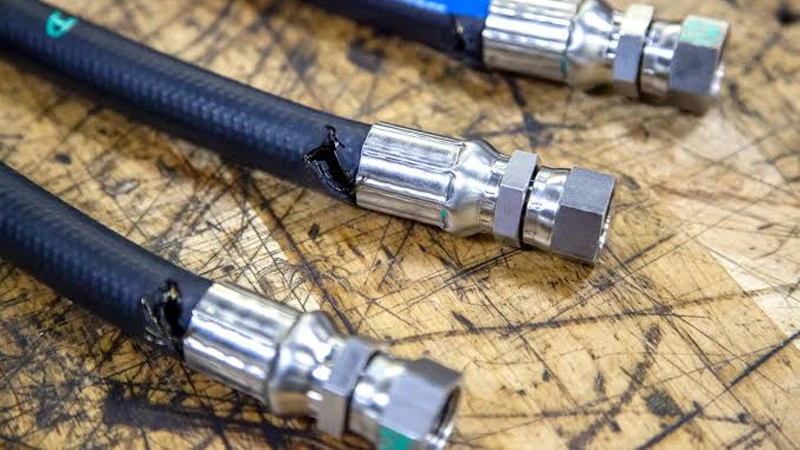
Why the Fitting Is the Weakest Point in a Hose Assembly
A hydraulic hose is built to flex and absorb pressure along its length. The fitting, on the other hand, is a rigid metal component attached to a flexible rubber or thermoplastic hose. That transition point — from flexible to rigid — concentrates mechanical stress in a very small area. Add in constant pressure cycling, movement, and sometimes harsh environmental conditions, and it’s easy to see why this junction is where most failures occur.
The three leading causes of fitting failure are almost always some combination of crimping errors, vibration-induced fatigue, and pressure spikes beyond the system’s rated capacity.
Cause 1: Improper Crimping
Crimping is the process of mechanically compressing a ferrule around the hose and fitting stem to create a permanent, leak-tight seal. If this process isn’t done correctly, the fitting is compromised from the moment the assembly leaves the shop — even if it passes an initial pressure test.
Common Crimping Mistakes
- Over-crimping: Compressing the ferrule beyond the manufacturer’s specified diameter can cut into the hose’s reinforcement layer (the wire braid or spiral), weakening it internally even though the hose looks fine from the outside.
- Under-crimping: Not compressing the ferrule enough leaves gaps between the hose, fitting stem, and ferrule, which can allow the hose to slip out under pressure or create a path for leaks.
- Wrong crimp die or machine setting: Using a crimp die sized for a different hose or fitting combination is one of the most frequent shop-floor errors, especially when multiple hose types are processed on the same crimping machine.
- Mismatched hose and fitting: Pairing a fitting with a hose it wasn’t designed for — even if they appear physically compatible — often results in an incorrect crimp profile.
How to Prevent Crimping Failures
- Always follow the fitting manufacturer’s crimp specification chart for the exact hose-fitting combination being used.
- Use a go/no-go gauge to verify crimp diameter after every assembly, not just periodically.
- Calibrate crimping machines regularly and document calibration records for quality traceability.
- Train assembly technicians specifically on crimp specifications rather than relying on general experience alone.
Cause 2: Vibration Fatigue
Hydraulic systems on mobile equipment — excavators, loaders, agricultural machinery, and industrial presses — are constantly exposed to vibration from engines, pumps, and moving parts. Over time, this vibration causes metal fatigue at the fitting connection, even in assemblies that were crimped correctly.
How Vibration Causes Failure
Vibration creates repeated micro-movements at the hose-to-fitting junction. Each cycle is small, but over thousands or millions of cycles, it can lead to:
- Fatigue cracking in the ferrule or fitting body
- Loosening of the crimp connection over time
- Abrasion where the hose rubs against nearby components or brackets near the fitting
- Work-hardening of metal at the stress point, making it more brittle and failure-prone
How to Reduce Vibration-Related Failures
- Proper hose routing: Avoid tight bend radii near fittings, since bending combined with vibration accelerates fatigue.
- Adequate clamping and support: Secure hoses at regular intervals so the fitting isn’t bearing the full weight of hose movement.
- Correct hose length: Hoses that are too short create tension at the fitting during equipment movement; too long, and they can whip or rub against nearby surfaces.
- Vibration-resistant fitting designs: Some fittings feature reinforced ferrule designs or additional sealing elements specifically engineered for high-vibration environments.
Cause 3: Pressure Peaks (Pressure Spikes and Surges)
Hydraulic systems are typically rated for a working pressure and a maximum (surge) pressure. However, real-world operating conditions often produce short, sharp pressure spikes — sometimes called pressure peaks or hydraulic shock — that exceed the system’s normal working pressure for a fraction of a second.
What Causes Pressure Peaks
- Sudden valve closures or directional changes in the hydraulic circuit
- Rapid starts and stops of cylinders or motors under load
- Pump pulsation, especially in systems with worn or poorly maintained pumps
- Cold start conditions, where fluid viscosity is higher and initial pressure spikes are more pronounced
Why Pressure Peaks Damage Fittings First
Even when a hose’s braid or spiral reinforcement can handle a pressure spike, the fitting connection is often the first point to show signs of stress — because it’s where reinforcement layers terminate and where the seal depends on precise mechanical compression. Repeated pressure peaks can gradually loosen a crimp, deform a ferrule, or cause micro-leaks that worsen over time.
How to Manage Pressure Peak Risk
- Select hose and fitting combinations rated with an adequate safety margin above the system’s expected working pressure — not just the nominal working pressure.
- Install pressure relief valves or accumulators in circuits prone to hydraulic shock.
- Regularly inspect fittings on equipment known to experience frequent start-stop cycles or heavy load changes.
- Work with a hose and fitting supplier that can recommend spiral-wire or four/six-spiral hose constructions for high-shock applications.
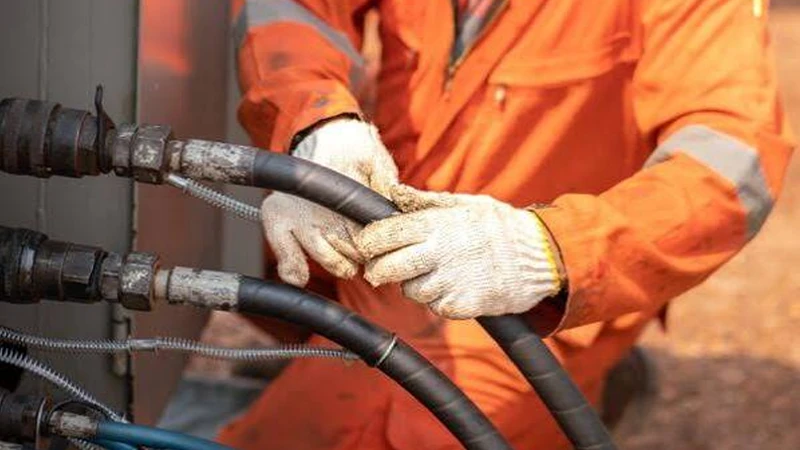
Recognizing the Warning Signs Before Failure
Fitting failures rarely happen without warning. Common early signs include:
- Slight weeping or oil residue at the base of the fitting
- Visible discoloration or rust on the ferrule
- A hose that has shifted position or rotated at the fitting
- Cracking or swelling in the hose cover near the crimp point
Routine visual inspection — ideally as part of a scheduled maintenance program — can catch these warning signs before they turn into unplanned downtime or safety incidents.
Building Reliability In from the Start
While crimping errors, vibration, and pressure peaks each have distinct causes, they share a common solution: starting with the right hose, the right fitting, and a properly controlled assembly process. Reliable hydraulic hose assemblies depend on precise manufacturing tolerances, verified crimp specifications, and components rated for the actual operating conditions — not just the nominal ones.
At Kingdaflex, we manufacture hydraulic hoses and fittings engineered to hold up under real-world conditions, including high-vibration equipment and systems prone to pressure spikes. Our technical team can help you select the right hose-fitting combination and crimp specifications to reduce failure risk and extend service life across your equipment fleet.
FAQs
What is the most common cause of hydraulic fitting failure?
Improper crimping — either over-crimping or under-crimping — is one of the most common and most preventable causes of fitting failure, since it directly compromises the seal at the point of assembly.
Can vibration alone cause a hydraulic hose to fail even if it was crimped correctly?
Yes. Prolonged vibration causes metal fatigue at the fitting over time, which can eventually lead to failure even in a correctly crimped assembly, especially if the hose isn’t properly routed and supported.
How often should hydraulic fittings be inspected?
For equipment operating in high-vibration or high-cycle environments, fittings should be visually inspected as part of routine maintenance, with more frequent checks for machines showing signs of wear or leaks.
Do pressure spikes damage the hose or the fitting first?
The fitting connection is typically the first point of stress under a pressure spike, since it’s where the hose’s reinforcement layers terminate and the seal depends on precise mechanical compression.