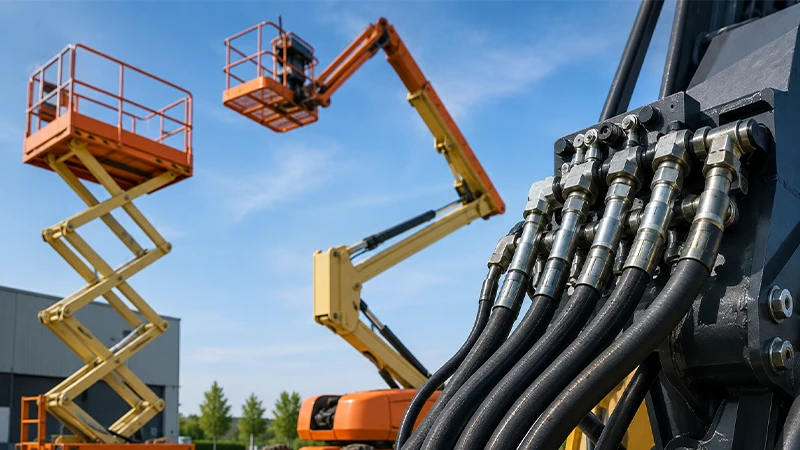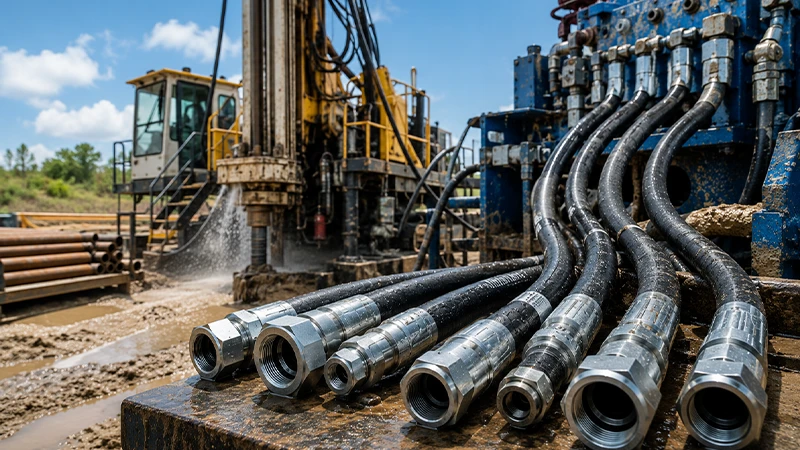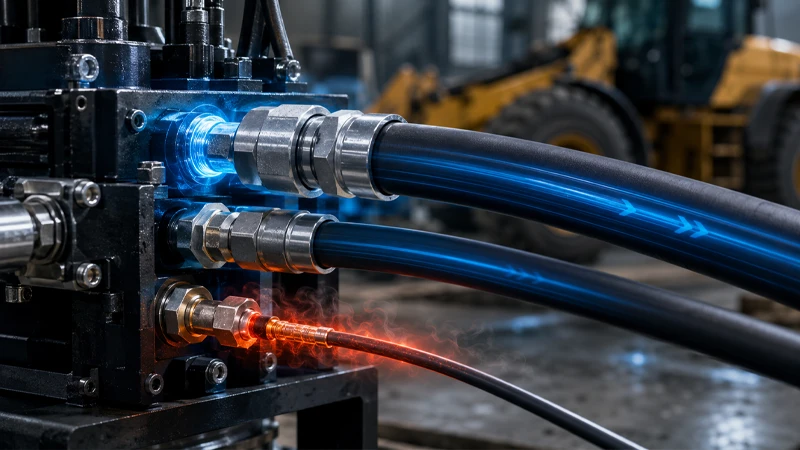
The difference between construction equipment that operates reliably for a decade and systems experiencing chronic failures often traces to fundamental hydraulic system architecture decisions made during the design phase. Modern construction equipment incorporates hydraulic systems of extraordinary complexity, with multiple independent circuits operating simultaneously at different pressures, flow rates, and temperatures. Designing these systems requires integrating engineering decisions across component selection, circuit layout, pressure hierarchy, flow management, and hose routing—all optimized for equipment reliability, cost efficiency, and field serviceability.
Equipment manufacturers who approach hydraulic system design strategically achieve competitive advantages in reliability, uptime, and customer satisfaction. Conversely, manufacturers treating hydraulic systems as secondary engineering problems inherit design complexity without corresponding optimization benefits. Understanding the principles that guide modern hydraulic system design enables equipment manufacturers to create systems balancing performance, reliability, cost, and maintainability—ultimately delivering superior products to competitive markets.
Circuit Pressure Hierarchy: The Foundation of System Architecture
Modern construction equipment organizes hydraulic circuits into pressure tiers, with each circuit operating at the minimum pressure required for its function. A single unified high-pressure circuit powering all functions would require all hoses, pumps, and actuators to tolerate the maximum system pressure. This approach creates unnecessary cost, weight, and failure risk. Instead, modern design uses multiple circuits operating at different pressures optimized for specific functions.
A typical excavator might incorporate a main lifting circuit at 3,500 PSI, an arm extension circuit at 3,000 PSI, a boom rotation circuit at 2,500 PSI, and pilot control circuits at 500 PSI. Each circuit operates at the minimum pressure necessary, reducing component cost and stress. Lower-pressure circuits use smaller hoses and lighter-duty fittings, directly reducing material costs and equipment weight. More importantly, lower pressures in non-critical circuits reduce failure risk—a pressure loss in a 500 PSI pilot circuit creates manageable degradation, while a loss in a 3,500 PSI main circuit causes catastrophic failure.
Pressure sequencing during operation further optimizes system efficiency. Equipment manufacturers design control systems where functions operate in priority sequence. Main lifting functions receive hydraulic priority at full system pressure. Secondary functions like boom rotation begin only after main lifting completes. This sequencing reduces simultaneous high-pressure demand, enabling smaller pump selection and lower overall system heat generation.
Multi-Path Valve Design and Control Logic
Modern construction equipment incorporates sophisticated multi-path directional control valves enabling complex equipment motions through coordinated hydraulic flows. Rather than simple on-off valve logic, modern systems implement proportional or closed-center valve designs enabling smooth, gradual motion transitions. A wheel loader’s bucket control system might enable bucket curl, tilt, and roll motions simultaneously through a single multi-position valve controlling flows to multiple actuators.
Pilot-operated control systems reduce operator effort and enable precision control impossible with simple manual valve operation. Pilot circuits at low pressure (500-1,000 PSI) redirect main system flow through directional control valves, enabling an operator to control massive hydraulic forces with minimal physical effort. This pilot system architecture separates control function (low-pressure pilot) from work function (high-pressure main circuit), improving both safety and controllability.
Load-sensing systems automatically adjust pump pressure to match actual load requirements, reducing wasted energy and system heat. Rather than maintaining constant maximum pressure regardless of load, load-sensing pumps increase displacement only when loads require increased pressure. This pressure-responsive approach reduces idle losses, cuts system heat generation, and extends component life. Load-sensing design requires sophisticated pressure transducers and proportional pump control, but the energy savings justify the added cost and complexity.
Hose Selection Integration in Design Phase
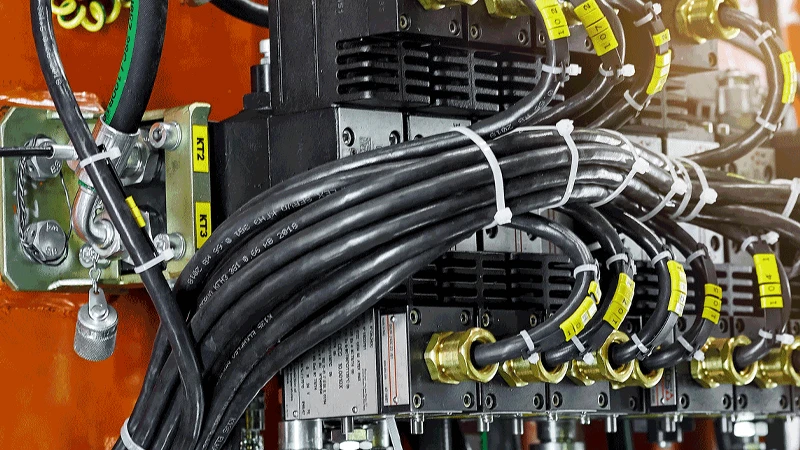
Successful hydraulic system design integrates hose selection from the initial architecture phase, not as an afterthought. Different circuits require different hose specifications based on pressure, flow rate, operating temperature, and environmental exposure. Main lifting circuits demand high-pressure hydraulic hose rated for sustained high pressure and rapid pressure cycling. Arm extension circuits benefit from SAE 100R2AT hose balancing pressure rating with fatigue resistance. Pilot control circuits can use smaller-diameter industrial hose reducing cost and weight.
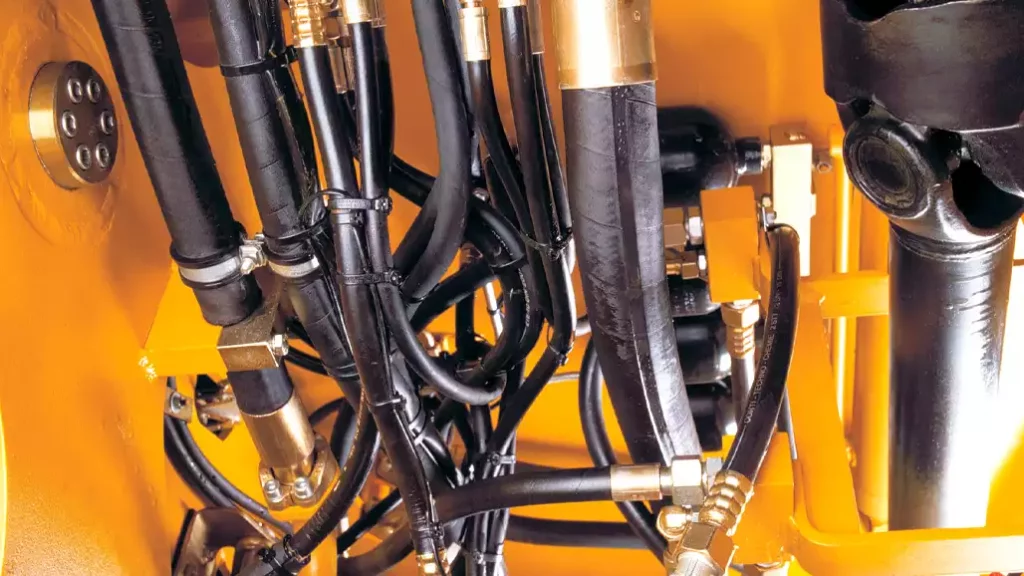
Hose routing design during the initial design phase prevents the installation compromises that plague field-built systems. Design engineers establish hose paths through 3D CAD models before fabrication, ensuring paths minimize length, avoid contact with sharp equipment edges, and maintain support intervals preventing vibration-induced damage. This systematic approach prevents the reactive routing that field technicians improvise, which frequently introduces twisting stress, excessive bending, or inadequate support.
System design engineers collaborate with hose suppliers to specify components meeting system-specific requirements. Manufacturers of equipment operating in extreme environments—arctic mining, tropical coastal regions, desert heat—specify hoses with elastomer compounds tolerating temperature extremes. Equipment experiencing intense vibration (crushers, conveyor drives) specifies hoses with damping properties and comprehensive clamping strategies. This proactive integration prevents field failures traceable to inadequate component specification.
Thermal Management and Cooling Strategy
Modern construction equipment incorporates sophisticated cooling systems managing hydraulic fluid temperatures within narrow operating windows. A typical design maintains fluid temperature between 40–60°C where hydraulic components operate most efficiently. Temperatures below 40°C increase fluid viscosity, reducing system responsiveness and increasing pump wear. Temperatures exceeding 60°C accelerate fluid oxidation, degrade hose elastomer, and reduce overall system efficiency.
Heat exchangers sized appropriately for maximum system load enable reliable cooling even in continuous operation or extreme ambient temperatures. Undersized heat exchangers that satisfy normal operation fail when equipment operates continuously in hot climates or under maximum load conditions. Modern design uses transient thermal analysis during the design phase to verify cooling capacity across anticipated operating conditions and climates.
Auxiliary cooler systems with thermostat-controlled fan engagement provide cost-effective cooling without requiring continuous fan operation. Fans running only when fluid temperature exceeds setpoint (typically 55°C) reduce energy consumption and noise compared to continuous-run designs. Fan speed proportional control further optimizes cooling efficiency, enabling gradual fan speed adjustment matching cooling demand rather than simple on-off operation.
Redundancy and Safety Architecture
Modern construction equipment incorporates redundancy in critical hydraulic circuits preventing single-component failures from creating catastrophic consequences. Equipment where failure could drop a suspended load incorporates dual-circuit architectures where either circuit alone can support the load at reduced speed. This redundancy adds cost and complexity but eliminates unacceptable failure modes where single-hose rupture causes load drop.
Check valves and load-holding circuits prevent uncontrolled load descent if pressure circuits fail. A boom cylinder equipped with pilot-operated check valves holds its load even if both main and pilot pressure lines rupture. This passive safety architecture protects equipment and personnel without requiring active system response. Modern equipment design incorporates these passive safety features throughout critical circuits.
Pressure relief valves protect the system from overpressure conditions caused by load shock, operator input mistakes, or component failures. Direct-acting relief valves provide simple, reliable overpressure protection. Proportional relief valves enable sophisticated pressure management, maintaining system pressure within setpoint ranges while accommodating load variations. Pilot-operated relief designs reduce heat generation at relief condition, improving system efficiency.
Modular and Standardized Component Strategy
Equipment manufacturers increasingly adopt modular hydraulic system architectures simplifying design, manufacturing, and service. Rather than custom-designed hydraulic manifolds for each equipment model, manufacturers develop manifold platforms serving multiple equipment variants. This modular approach reduces engineering cost, simplifies manufacturing, and improves supply chain reliability through component standardization.
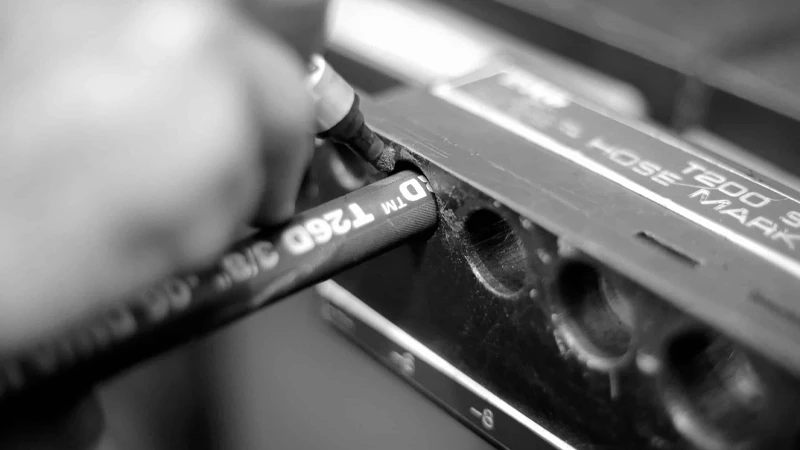
Standardized hose assemblies pre-assembled with fittings, specified lengths, and testing documentation enable faster equipment manufacturing and reduce field assembly errors. Hose assemblies manufactured in controlled factory environments achieve better quality, cleanliness, and documentation than field-assembled alternatives. Equipment manufacturers specify pre-assembled hose kits matching their documented system architectures, directly improving reliability and reducing installation labor.
Component standardization across equipment families reduces service complexity for equipment owners and rental companies. If all equipment models use identical pump pressure settings, relief valve tuning, and hose specifications, maintenance technicians achieve deeper expertise and carry smaller spare parts inventories. This standardization benefit becomes substantial for large equipment fleets.
Design Integration: System Optimization Examples
A modern excavator design might implement a pressure hierarchy where the boom lifting circuit operates at 3,500 PSI, the arm extension circuit at 3,000 PSI, and the bucket rotation circuit at 2,500 PSI. This pressure differentiation enables boom lifting hoses to be smaller-diameter high-pressure hose rated for extreme pressure, while arm hoses use larger-diameter, lower-pressure constructions, and bucket rotation hoses use even larger diameter at moderate pressure. This optimization reduces total hose weight, cost, and failure risk compared to a unified high-pressure approach.
A wheel loader design might incorporate proportional control enabling simultaneous bucket and steering operation through a single integrated control valve. Pilot pressure reduces required operator effort, while load-sensing pump adjustment maintains efficiency during combined loading. Modular design enables common platform architecture serving both compact and large loader variants through manifold configuration changes rather than complete system redesign.
A tower crane design might implement redundant lifting circuits where each circuit can independently support 100% of rated load at reduced speed. Dual hoisting drums with independent hydraulic motors enable continued operation even if one motor fails. This redundancy prevents the unacceptable failure mode where single-component failure causes suspended load drop.
Future Design Trends: Efficiency and Sustainability
Modern equipment design increasingly incorporates variable-displacement pump systems adjusting pump output to match actual system demand. Rather than constantly pumping at maximum displacement with excess flow returning to reservoir through relief valve, variable pumps reduce displacement during low-demand phases. This efficiency improvement reduces heat generation, extends component life, and reduces fuel consumption—increasingly important as manufacturers compete on equipment operating cost efficiency.
Electro-hydraulic systems combining electric motors with hydraulic actuation enable hybrid operation where equipment can operate on battery power for light-duty cycles, reducing fuel consumption. These hybrid systems require sophisticated control logic and advanced hose designs managing varying pressure and flow conditions, but deliver substantial operating cost reductions justifying the added complexity.
Smart hydraulic systems incorporating pressure and temperature monitoring throughout the system enable predictive maintenance. Pressure transducers identify developing problems before catastrophic failure occurs. Temperature monitoring reveals cooling system degradation. These diagnostic systems enable condition-based maintenance replacing components before failure, rather than fixed-interval replacement or reactive failure response.
Comparative Analysis: Design Approaches and Their Outcomes
| Design Approach | Pressure Optimization | Cooling Strategy | Redundancy | Standardization | Typical Uptime |
|---|---|---|---|---|---|
| Legacy/Basic | Single high pressure | Passive air cooling | None | Minimal | 85–90% |
| Contemporary | Multi-tier pressure | Thermostat fan control | Partial (lift) | Modular platforms | 92–96% |
| Advanced | Pressure + load-sensing | Active proportional cooling | Full (critical) | Standardized components | 96–98% |
| Premium | Smart pressure management | Predictive cooling | Full redundancy | Integrated smart systems | 98%+ |
Collaboration Between Manufacturers and Hydraulic Component Suppliers
Successful equipment design requires close collaboration between OEM manufacturers and hydraulic component suppliers during the design phase. Equipment manufacturers communicate anticipated operating conditions, duty cycles, and environmental challenges. Hydraulic suppliers recommend component specifications and system architectures addressing these requirements within cost targets.
This collaboration produces superior results compared to manufacturers specifying components independently without supplier input. Suppliers understand failure modes observed across diverse applications and customer bases. Their expertise often identifies design improvements improving reliability without significant cost impact. Conversely, suppliers gain understanding of real-world operating conditions, informing their component development roadmaps.
Kingdaflex collaborates with construction equipment manufacturers worldwide, contributing hydraulic system design expertise and component recommendations. Our complete range of hydraulic hose solutions addresses diverse design requirements from extreme-pressure lifting circuits to precision control applications. We combine technical expertise with field-proven performance, enabling manufacturers to specify systems delivering reliability in the harshest operating environments.
Conclusion: Design Excellence Enables Equipment Reliability and Uptime
The difference between construction equipment achieving 98% uptime and systems experiencing 85% availability often traces to hydraulic system design decisions made years before field operation. Manufacturers who approach hydraulic design systematically—integrating circuit architecture, component selection, redundancy strategy, and thermal management from the initial design phase—create equipment that operates reliably across decades of intense field use.
Conversely, manufacturers treating hydraulic systems as secondary engineering problems inherit unnecessary complexity and reliability challenges. The hydraulic design phase represents a critical opportunity to build reliability and uptime into equipment at minimal cost premium compared to reactive problem-solving addressing failures after equipment delivery.
Modern construction equipment represents the pinnacle of hydraulic system integration, combining complex circuit architectures with sophisticated control logic and advanced component technologies. Equipment manufacturers committed to design excellence achieve competitive advantages in equipment reliability, customer satisfaction, and market reputation that directly translate to stronger customer loyalty and higher equipment resale value.