Hydraulic elevators and lift systems use pressurized fluid to raise passenger cars, goods platforms, vehicle lifts, accessibility equipment, scissor lifts, and other vertical-moving structures. The hose may connect a power unit to a cylinder across a machine room, shaft, pit, or compact equipment frame.
Because the circuit raises and supports a load, hose selection affects safety, ride performance, energy efficiency, and serviceability. Choosing a hydraulic elevator hose requires verified pressure capacity, correct bore size, compatible materials, suitable fittings, controlled routing, cleanliness, and compliance with the equipment manufacturer’s requirements and applicable local rules.
Start with the Lift Design
Hydraulic lift arrangements vary. Some systems place the power unit close to the cylinder; others use a long flexible line. Direct-acting, roped hydraulic, telescopic cylinder, goods-lift, vehicle-lift, and accessibility systems may have different pressures and movement patterns.
Collect these application details:
- Lift type, rated load, and travel
- Cylinder arrangement and area
- Maximum system and relief pressure
- Hose bore, length, and elevation change
- Required flow and target car speed
- Hydraulic fluid and temperature range
- Routing through the machine room, shaft, or pit
- Connection standards and fitting orientation
- Fire, code, inspection, and documentation requirements
The hose should be selected from engineering data, not by copying only the outside diameter of an existing assembly.
Determine Working Pressure Correctly
System pressure depends on load, cylinder geometry, mechanical arrangement, and losses. Starting, stopping, valve action, thermal expansion, and trapped fluid can create conditions beyond the normal running pressure.
Choose a high-pressure hydraulic hose whose rated working pressure covers the maximum defined pressure for the selected size and temperature. Confirm the relief setting and any transient or trapped-pressure conditions. Burst pressure is not the allowable operating limit.
Consider the pressure rating of every assembly component, including hose, fittings, adapters, valves, and seals. The system is limited by its lowest-rated part. Any substitution should be approved against the lift manufacturer’s specification rather than accepted because the hose fits physically.
Hose Bore and Flow Performance
Inside diameter influences fluid velocity, pressure loss, noise, heat generation, and car movement. An undersized hose creates higher pressure drop and can affect acceleration or leveling. An unnecessarily large hose costs more, takes additional space, and may be difficult to route.
Sizing should use required flow, hose length, fluid viscosity, allowable pressure drop, and fitting restrictions. Long runs deserve particular attention because losses accumulate. Elbows, adapters, valves, and small connection passages can add more restriction than the hose alone.
Return flow during descent may differ from pump delivery flow during ascent. The system designer should verify performance in both directions and under the coldest expected fluid condition.
Reinforcement and Flexibility
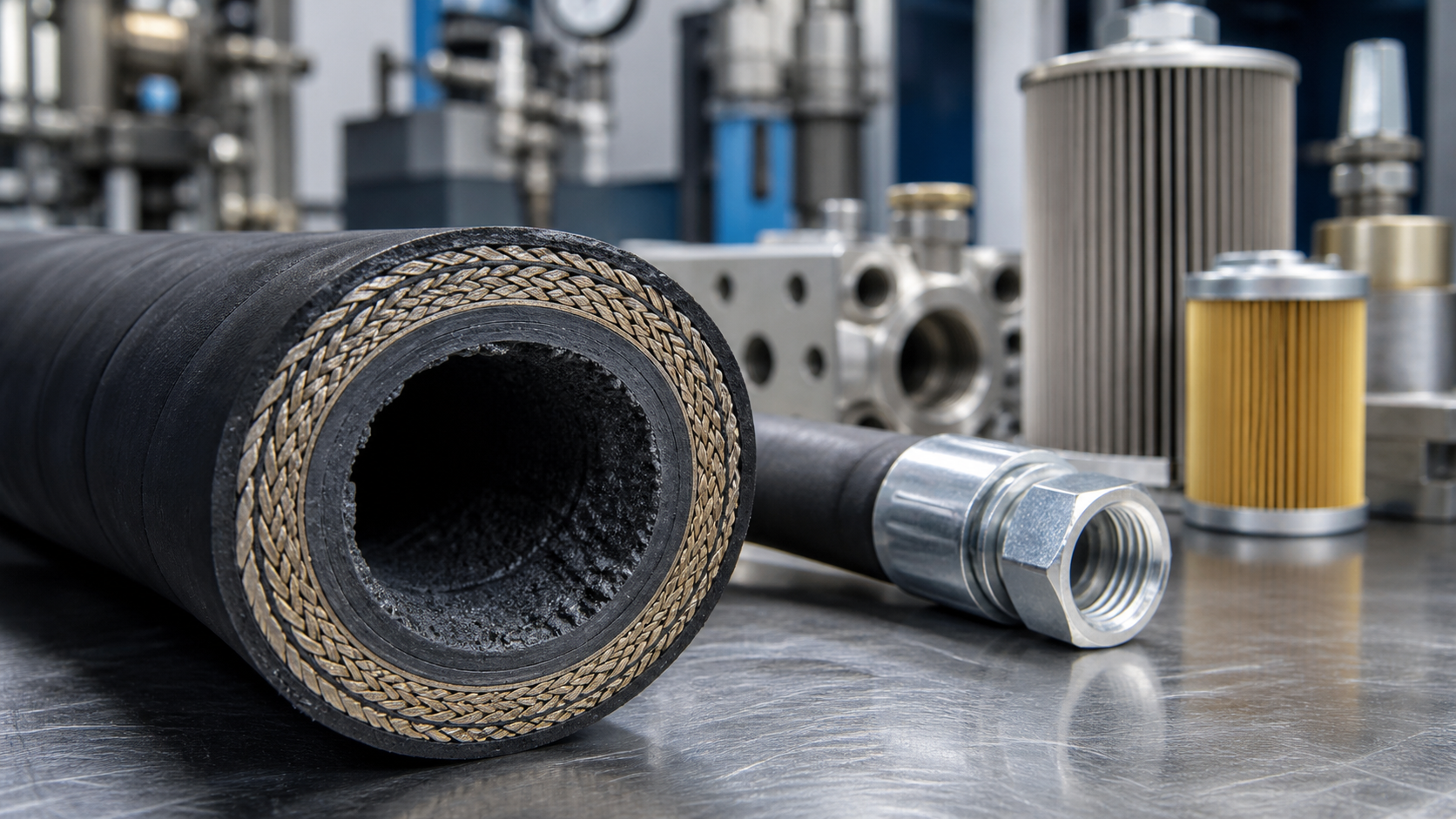
A wire braided hydraulic hose often provides a useful balance of pressure capacity, dimensional control, and flexibility for lift applications. The required number of braids and complete construction depend on pressure, size, bend radius, and applicable specification.
Spiral hose may offer higher pressure capacity but can be heavier and stiffer. It should not be selected automatically if a qualified braided construction meets the duty. Conversely, a low-pressure industrial hose must not be used merely because the elevator cycles slowly.
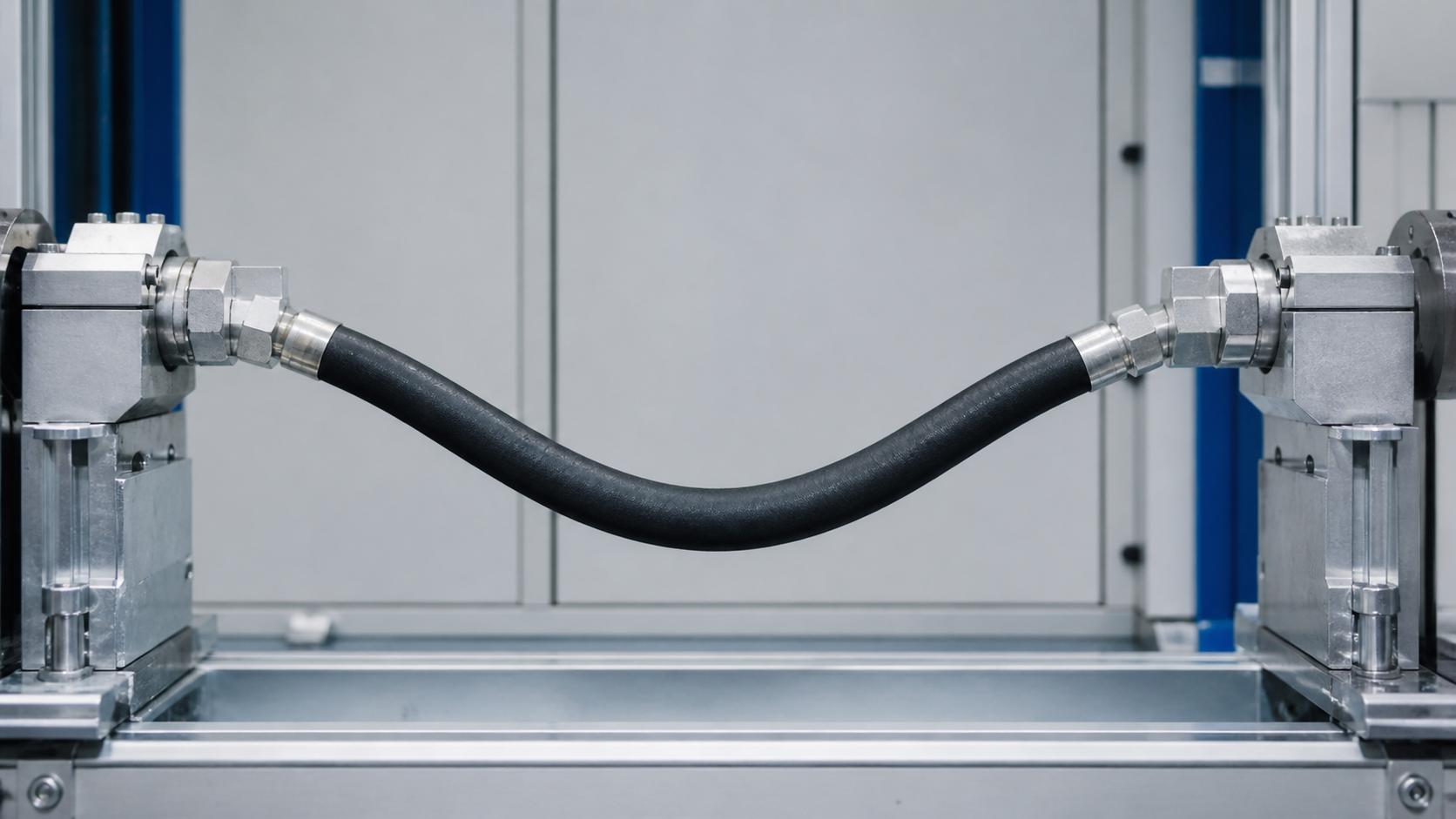
Check minimum bend radius and outside diameter. A hose forced into a tight machine-room corner can experience concentrated stress even when it does not move during every lift cycle.
Pressure Pulsation and Length Change
Elevator hoses experience pressure changes during every trip. Although the movement may be smoother than on construction equipment, repeated cycles accumulate over years of service. Valve switching and pump ripple can add pulsation.
Some hose constructions change length slightly as pressure rises. The route must accommodate the manufacturer’s stated behavior without pulling on fittings, rubbing against walls, or forming an unsafe loop. Do not clamp the assembly so rigidly that pressure-related movement is concentrated at one point.
Long vertical runs need adequate support for hose weight. Supports should not crush the cover or place the full load on a fitting. Follow the lift and hose suppliers’ routing and anchoring requirements.
Fluid and Temperature Compatibility
The inner tube, fitting seals, valve seals, and cylinder seals must be compatible with the exact hydraulic fluid. Provide the manufacturer and full product name when obtaining hose approval.
Machine rooms and pits may experience seasonal temperature changes. Cold fluid is more viscous and increases pressure loss, while high temperature reduces viscosity and accelerates hose aging. Confirm both fluid and ambient-temperature limits.
If the system changes to a biodegradable or fire-resistant fluid, review existing hoses and seals as well as flushing and residual oil. A general statement such as “hydraulic oil compatible” is not enough for an unusual formulation.
Fittings and Assembly Integrity
Use approved hydraulic hose end fittings with the specified insert, ferrule, and crimp dimensions. Unvalidated component mixing can damage the tube, reduce retention, or create leakage.
Confirm thread or flange standard, connection size, sealing method, material, pressure class, and angular orientation. Avoid unnecessary adapters, which add restriction and leak points. Support piping and valves so their weight is not carried by the hose.
Assembly length should be controlled from a drawing or approved measurement method. A used hose may have been routed incorrectly or may no longer represent its original length.
Routing in Machine Rooms, Shafts, and Pits
Keep the hose away from sharp edges, moving equipment, electrical components, heat, and areas where technicians may step on it. Maintain the specified minimum bend radius and leave a straight section next to each fitting.
Do not twist the hose during installation. Use the layline as a visual guide. Where a long run changes direction, use properly positioned supports and smooth bends rather than pulling the assembly tightly around a corner.
Protect the hose from falling tools, construction debris, and contact with building surfaces. Guards must not conceal leaks or prevent inspection. In pits or damp locations, consider moisture, drainage, fitting corrosion, and cover condition.
Cleanliness and Commissioning
Hydraulic elevator valves can be sensitive to contamination. New hoses should be internally cleaned according to the specified process, capped after preparation, and kept sealed until installation.
During commissioning, follow the lift manufacturer’s filling, bleeding, testing, and adjustment procedures. Air, contamination, or an incorrect fluid level can affect ride quality and system behavior.
Leak and functional tests should be performed from a safe position. Never touch a pressurized assembly to check for a pinhole leak.
Safety, Codes, and Documentation
Elevator and lifting equipment is regulated, and requirements vary by jurisdiction, equipment category, and installation. The lift manufacturer, qualified engineer, installer, inspector, and local authority determine the applicable rules.
General hydraulic hose safety practices support the process but do not replace lift-specific codes. Do not make an unapproved hose substitution, change routing, or alter pressure settings without the required review.
Maintain records for the hose specification, supplier, batch or assembly identification, installation date, inspections, tests, and replacement. Traceability helps future service teams avoid visually similar but unsuitable products.
Inspection and Replacement
Inspect the complete visible length and its connections. Look for:
- Leakage or movement at fittings
- Cracks, blisters, hardening, or softening
- Abrasion, cuts, or exposed reinforcement
- Kinks, crushing, flattening, or tight bends
- Corrosion in damp pits or near fittings
- Unsupported weight or contact with structures
- Twist or movement caused by pressure cycling
Before service, isolate electrical and hydraulic energy and secure the lift according to approved procedures. Trapped pressure may remain after the pump stops.
Replacement intervals should follow the lift manufacturer, authority, applicable standard, inspection findings, environment, and service history. A hose should be replaced immediately when its condition no longer meets acceptance criteria.
RFQ Checklist
Provide lift type and model, hose position, bore, length, working and maximum pressure, flow, fluid, temperature range, bend and support requirements, connection standards, fitting orientation, cleanliness, testing, marking, traceability, certification, quantity, and packaging.
For custom hose assemblies, use controlled drawings, tolerances, approved materials, and change management.
Final Selection Principles
The correct elevator hose safely carries the required pressure while supporting acceptable flow, predictable lift performance, and long-term inspection. Pressure, bore, reinforcement, fittings, fluid, routing, cleanliness, and regulatory requirements must be evaluated together.
A documented, manufacturer-approved assembly is far more reliable than a replacement chosen only because its dimensions appear similar.