Foundries and die-casting plants combine hydraulic pressure with heat, molten-metal hazards, abrasive contamination, rapid machine cycles, and demanding production schedules. Hydraulic hoses may operate on furnaces, tilting mechanisms, ladles, die-casting machines, core equipment, clamps, extractors, trimming presses, and material-handling systems.
A general-purpose hose can deteriorate quickly if it is exposed to radiant heat, metal splash, incompatible fire-resistant fluid, or severe pressure impulses. Selecting a high temperature hydraulic hose for foundry equipment requires coordinated decisions about the tube, reinforcement, cover, fittings, routing, protection, fluid, and inspection plan.
Identify the Real Hose Environment
Begin with the machine and the exact hose location. A protected line in a remote power unit has a different exposure from an assembly beside a furnace, die, or molten-metal transfer path.
Record:
- Circuit function and failure consequence
- Continuous and peak pressure
- Flow rate and hose size
- Hydraulic fluid and additives
- Maximum fluid temperature
- Local ambient and radiant heat
- Distance from molten metal or hot tooling
- Frequency and range of movement
- Abrasion, dust, scale, and cleaning exposure
- Applicable plant or machine safety rules
Ambient temperature should be measured or estimated at the hose, not taken from the general room temperature. A hose facing a hot die or furnace opening can receive intense radiant heat even when the surrounding air remains within its catalog range.
Pressure and Impulse in Production Machinery
Die-casting machines and presses can cycle rapidly. Clamping, injection, ejection, tilting, and material-handling functions may generate frequent pressure changes. Valve switching, impact, and cylinder end stops can create transient peaks.
Choose a high-pressure hydraulic hose by its working-pressure rating for the required bore. Confirm maximum pressure, credible spikes, impulse performance, duty cycle, and any temperature derating. Burst pressure is a test value, not an acceptable design limit.
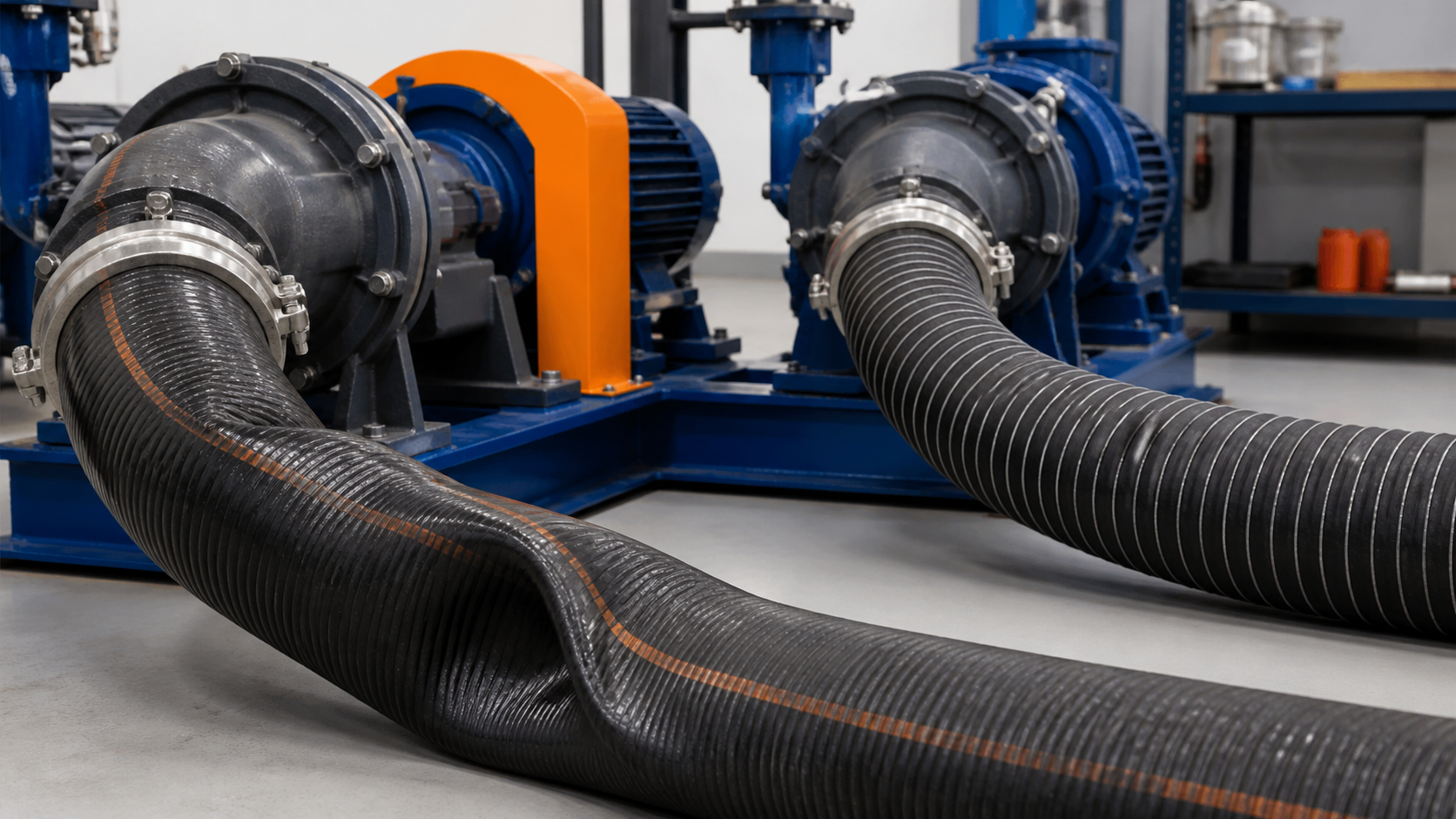
Wire-braided hose may provide flexibility for many circuits, while spiral-reinforced constructions can serve more severe pressure and impulse duties. The correct reinforcement must also fit the route. A stiff, large-diameter hose may overload a moving fitting or violate the available bend radius.
Fluid Temperature Versus Ambient Heat
These two temperatures affect different parts of the assembly. Hot fluid acts directly on the inner tube and can accelerate hardening, softening, swelling, or loss of adhesion. Ambient heat acts on the cover, reinforcement, fitting, and the hose body from outside.
Review hydraulic hose temperature ratings for the exact fluid and construction. A maximum value published for mineral oil may not apply to water-glycol, phosphate ester, or another fire-resistant fluid. Continuous operation near the limit can also produce shorter service life than moderate operation.
Use routing changes, shields, reflective barriers, ventilation, or equipment guards to reduce heat at the source. Do not rely on a sleeve alone when the underlying hose is exposed beyond its approved limits.
Fire-Resistant Hydraulic Fluids
Plants with ignition hazards may specify water-glycol, phosphate ester, or other fire-resistant fluids. These fluids do not have the same material compatibility as mineral hydraulic oil.
Provide the hose supplier with the fluid manufacturer, product name, classification, concentration where relevant, and maximum temperature. The tube, O-rings, seals, accumulator materials, reservoir coating, and maintenance products must all be reviewed.
An incompatible tube may swell, soften, shrink, harden, blister, or lose adhesion. Compatibility at room temperature is not enough; heat can accelerate the reaction. If direct approval is unavailable, a documented test or controlled field validation may be required.
When PTFE Hose May Be Considered
A PTFE hydraulic hose may be useful where broad chemical resistance or elevated temperature capability is important. Stainless-steel braid is commonly used as reinforcement in PTFE assemblies, and smooth-bore or corrugated tube styles provide different flow and flexibility characteristics.
PTFE is not a universal substitute for rubber hose. It has specific bend-radius, vibration, permeation, conductivity, fitting, and repeated-flexing requirements. Concentrated movement close to a fitting can shorten life. External metal braid also needs protection from crushing, abrasion, and corrosive contamination where applicable.
Select PTFE only as a complete, approved assembly for the exact pressure, fluid, temperature, and movement.
Protection from Molten Splash and Radiant Heat
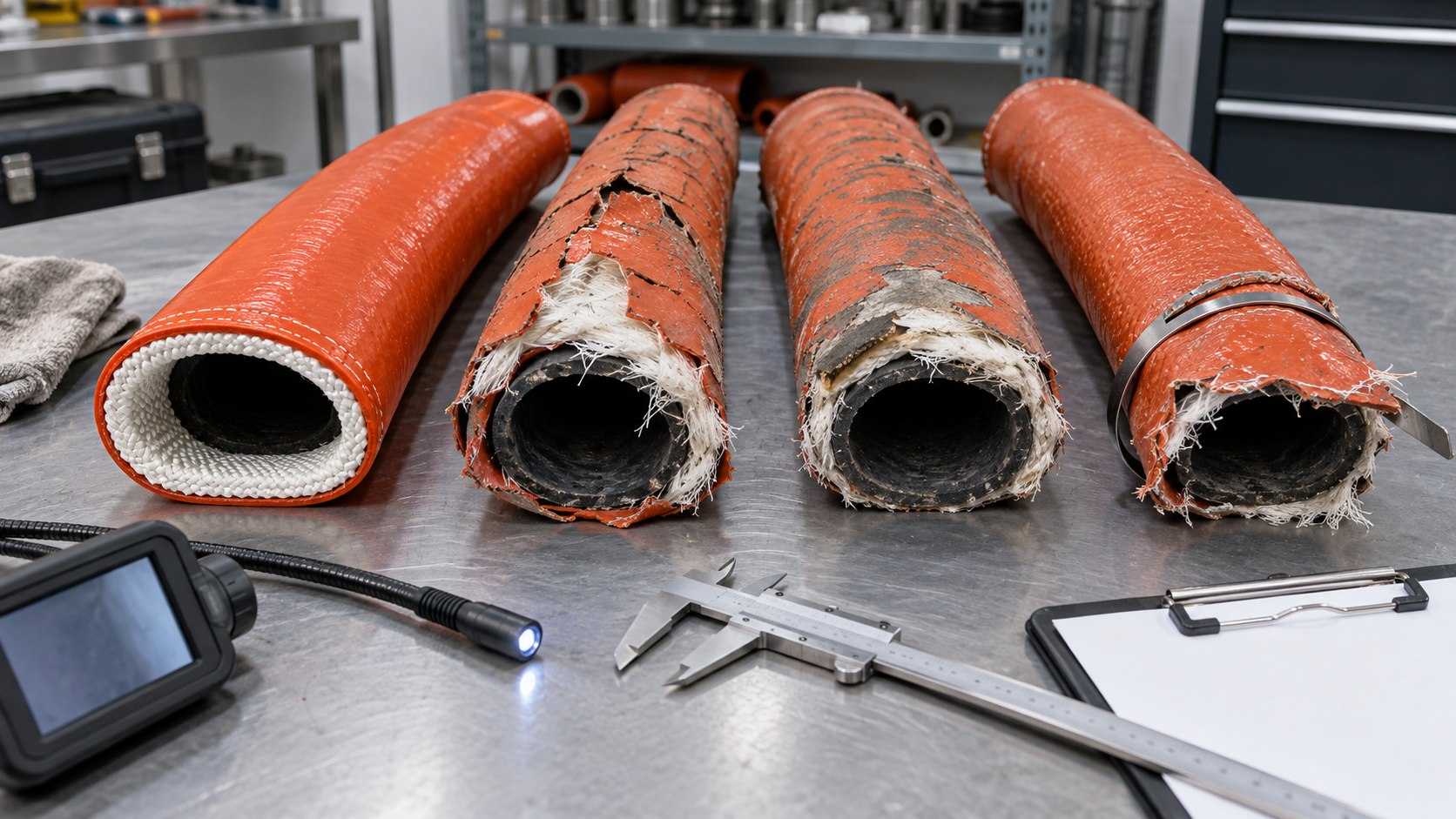
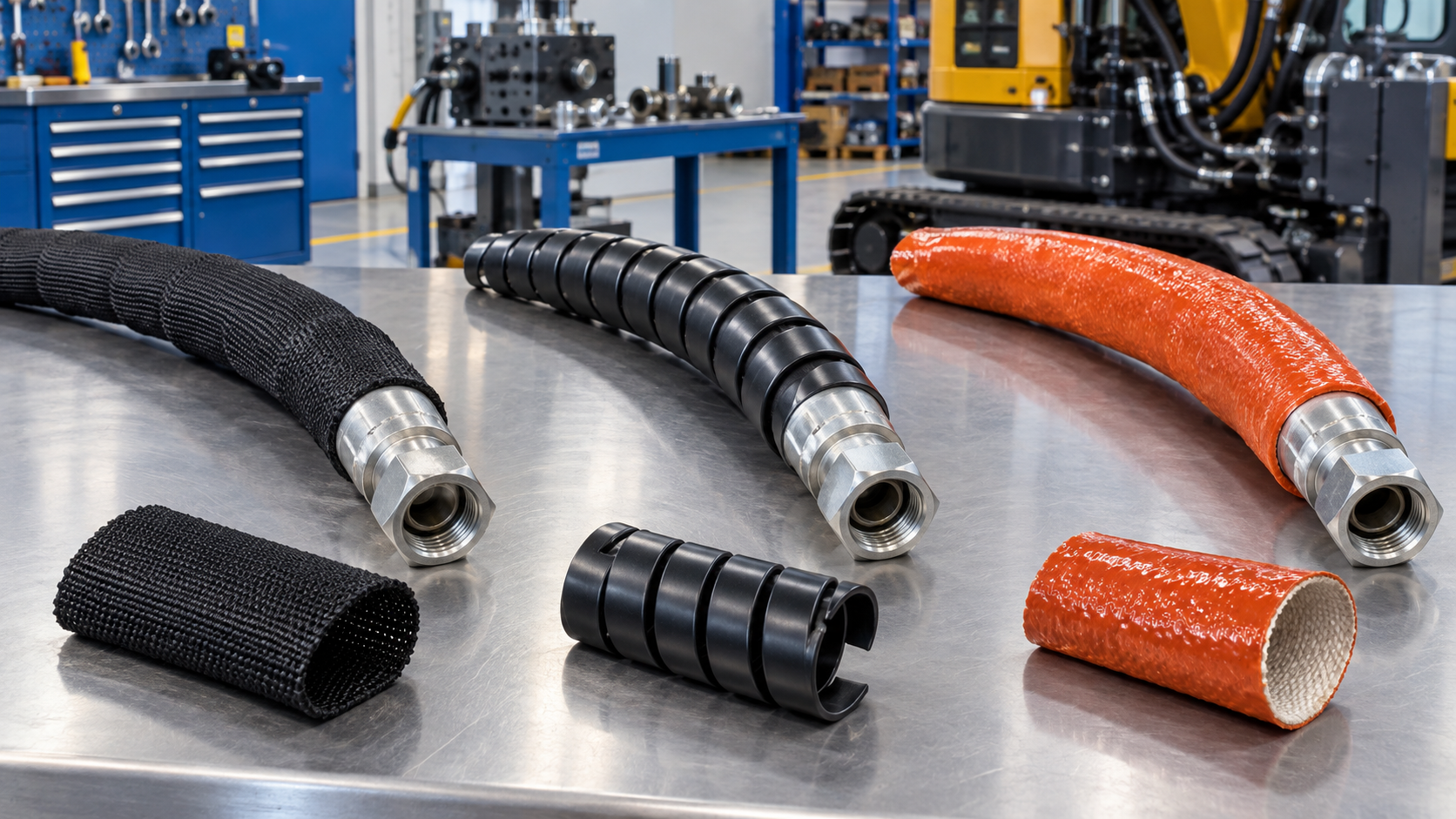
High-temperature fire sleeves can provide an additional barrier against radiant heat, short-duration flame exposure, and molten splash. They may also help contain fluid spray after a hose failure.
The sleeve must match the hazard. Confirm its continuous exposure rating, short-duration capability, inside diameter, closure method, and resistance to oils or process contamination. Install it without compressing the hose or forcing a smaller bend radius.
Ends and gaps deserve attention because heat or splash can enter an open sleeve. At the same time, installation should not trap leaking fluid against the hose or make inspection impossible. A sleeve does not turn an incorrectly rated hose into a high-temperature assembly.
Abrasion, Scale, and Mechanical Damage
Foundry environments contain sand, scale, metal particles, sharp edges, and moving guards. Hose covers can wear against clamps, frames, die components, or other hoses. Hot particles may become embedded in soft or contaminated surfaces.
Choose an abrasion-resistant cover when justified, then eliminate avoidable contact. Use smooth guides, correct clamps, and enough controlled length for movement. Inspect beneath guards and sleeves where debris can accumulate.
If the same hose repeatedly fails at one point, investigate routing, machine movement, and support. Adding a thicker guard without removing the contact may only postpone the next failure.
Fittings and Seals
Use a validated hose, insert, ferrule, and crimp combination. The fitting material and plating must tolerate the fluid, heat, corrosion, and cleaning environment. Confirm O-ring and seal compatibility separately.
Document connection standard, pressure class, sealing method, length, and angular orientation. Avoid unnecessary adapters, which add leak points and may place leverage on the coupling. Never assemble unfamiliar components simply because they fit together physically.
Thermal cycling can loosen poorly supported connections or reveal material differences. Include fittings and adapters in the inspection plan rather than examining only the hose cover.
Routing and Installation
Keep hoses away from direct molten-metal paths, furnace doors, hot surfaces, moving dies, and sharp structures wherever possible. Maintain the minimum bend radius and leave a straight section near the fitting. Prevent twist by using the layline as a visual guide.
For moving platens, extractors, tilting furnaces, and robot tooling, check the entire motion envelope. The hose should not become taut, kink, snag, or rub. Supports must control movement without transmitting vibration or crushing the cover.
Clean assemblies internally, cap the ends, and keep them protected until installation. Contamination can damage valves and pumps and may be especially costly on high-cycle production equipment.
Inspection and Replacement
High-heat and high-consequence zones need frequent inspection. Look for:
- Cover hardening, cracking, blistering, or discoloration
- Melted, charred, or contaminated protection
- Deep abrasion or exposed reinforcement
- Leaks, wetness, or fitting movement
- Kinks, flattening, twist, or tight bends
- Corrosion at fittings or beneath damaged cover
- Loss of flexibility after heat exposure
Depressurize, isolate, and secure equipment before touching a hose. Never use bare hands to locate a pressurized leak.
Record the assembly position, installation date, operating cycles, exposure, and removal reason. Trend data can distinguish heat-related aging from abrasion, incompatibility, incorrect crimping, or pressure spikes.
Information for a Supplier RFQ
Provide the machine and circuit, hose size and length, continuous and peak pressure, impulse duty, exact fluid, fluid temperature, ambient and radiant heat, movement, bend radius, abrasion and splash exposure, fitting and seal requirements, fire sleeve, cleanliness, testing, identification, certification, quantity, and packaging.
Final Selection Principles
A reliable foundry or die-casting hose must withstand both the hydraulic circuit and the process environment. Pressure strength, material compatibility, heat control, external protection, fittings, and routing must work together.
By measuring the real exposure and documenting the complete assembly, plants can reduce avoidable leaks, unplanned production stops, and repeated replacements in their most demanding hot-work areas.