Vibration represents one of the most destructive forces targeting hydraulic hoses in industrial equipment. Unlike steady-state pressure, which hoses are engineered to withstand indefinitely, vibration creates oscillating stress that accumulates over time. A hydraulic hose installed in a vibration-intensive environment like a mining truck, construction crane, or industrial compressor drive system may fail in months despite operating well within its pressure rating. The difference between equipment that operates reliably for years and systems experiencing chronic hose failures often comes down to clamping methods and protective strategies specifically designed for vibration environments.
Most equipment maintenance teams underestimate vibration’s destructive potential. Hydraulic systems installed in laboratory conditions with minimal vibration operate indefinitely. The same systems transferred to real-world environments with constant machine vibration fail prematurely. This discrepancy isn’t due to component defects—it reflects the difference between theoretical engineering specifications and the practical demands of industrial field conditions. Understanding vibration effects on hydraulic hoses and implementing appropriate clamping and protection methods transforms unreliable equipment into dependable systems.
The Mechanics of Vibration-Induced Hose Damage
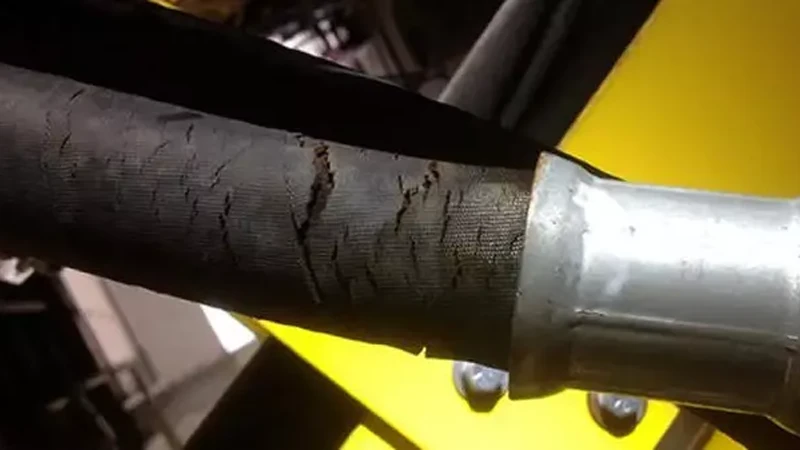
Vibration damages hydraulic hoses through multiple simultaneous mechanisms. Fretting corrosion occurs where hoses contact mounting brackets or other equipment surfaces. Vibration causes micro-scale movement between the hose and its contact surface, grinding away protective elastomer layers and exposing inner materials to oxidation. This process accelerates dramatically in corrosive environments like coastal regions or salt-spray facilities where chlorides accelerate oxidation.
Hose internal structure experiences cyclical stress from vibration transmitted through mounting points. As equipment vibrates, hose sections flex thousands of times per shift. This repetitive flexing, even within the hose’s rated pressure range, gradually degrades internal reinforcement fibers. The damage is invisible until catastrophic failure occurs suddenly, appearing without warning.
Connection fittings suffer accelerated wear in vibration environments. Vibration causes micro-movement at fitting-to-hose connections, gradually loosening mechanical crimps that attach hose ends to fittings. A connection that was properly torqued during installation slowly separates under vibration stress, eventually leaking or failing catastrophically. Studies show vibration-induced fitting failures occur 30-50% faster than static installation failures.
Pressure ripple amplification occurs in hoses subjected to vibration. The system pump creates small pressure oscillations as individual pump strokes cycle. In static installations, these ripples dissipate through the hose structure. In vibration environments, system vibration couples with pressure ripples, amplifying them into larger pressure spikes. These amplified spikes subject hoses to pressure peaks exceeding normal system ratings, causing premature pressure-rupture failures.
Temperature cycling accelerates vibration-induced damage significantly. Equipment operating in outdoor environments experiences simultaneous vibration and temperature extremes. Cold temperatures increase elastomer brittleness, reducing the material’s capacity to distribute vibration stress. Hot temperatures soften elastomers, allowing vibration to create larger-amplitude deformations. This combination of vibration, temperature extremes, and material property changes creates extremely harsh conditions for hydraulic hoses.
Clamping Methods: Engineering Support for Vibration Resistance
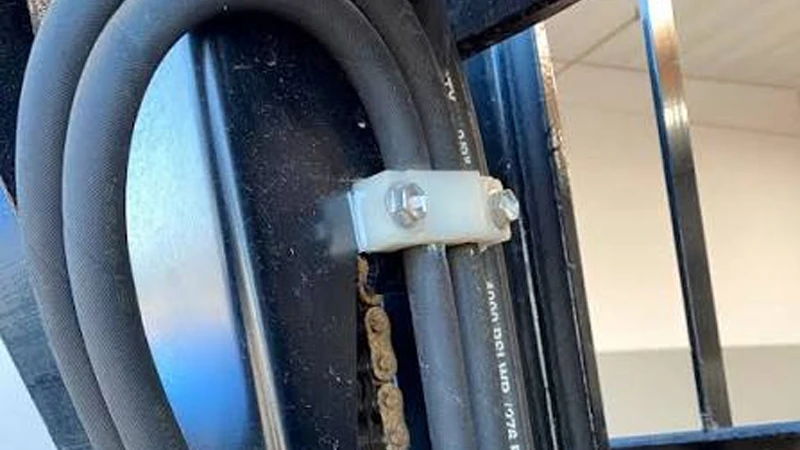
Standard metal clamps used in static installations prove inadequate for vibration environments. A rigid metal clamp creates a hard contact point where the hose connects to the clamp. Vibration forces concentrate at this contact point, accelerating fretting corrosion and material degradation. Over-tightening clamps to prevent vibration movement only exacerbates the problem, increasing contact stress and accelerating damage.
Rubber-lined clamps distribute clamping pressure across a larger hose surface area, reducing contact stress concentration. The rubber liner absorbs vibration energy that would otherwise transmit directly into the hose, dampening oscillating motion. These clamps typically reduce vibration-induced fretting damage by 40-60% compared to standard metal clamps. For equipment operating in vibration-intensive environments, rubber-lined clamps represent the minimum acceptable specification.
Distributed support using multiple smaller clamps spaced closely together outperforms single large clamps in vibration environments. Rather than using one clamp every 24 inches, distributed support uses two clamps every 12-15 inches. This approach distributes vibration-induced deflection across multiple support points, reducing the amplitude of hose movement at any single location. The reduced movement decreases fretting damage and limits stress concentration at hose bends.
Elastomeric clamp materials with built-in vibration damping provide superior performance compared to basic rubber-lined clamps. These specialty clamps incorporate viscoelastic elastomer compounds that absorb vibration energy, converting oscillating mechanical motion into heat dissipation. For high-vibration applications like mining equipment and industrial drives, these damping clamps extend hose service life by 50-100% compared to standard support methods.
Spring-loaded clamps that flex with hose movement rather than rigidly restraining it represent an advanced approach to vibration mitigation. These clamps allow controlled hose movement while maintaining support, preventing the stress concentration that rigid clamps create. Spring clamps are particularly effective for dynamic equipment where hoses must simultaneously accommodate pressure cycling, thermal expansion, and equipment motion.
Protective Covers and Abrasion Guards
Protective covers provide multiple benefits in vibration environments. UV-resistant outer sleeves prevent direct sunlight exposure that degrades elastomer properties, maintaining material resilience under vibration stress. Flame-resistant covers protect hoses near welding and cutting operations where thermal degradation accelerates. Ozone-resistant wrapping protects circuits near electrical equipment where ozone concentration is elevated.
Abrasion guards protect hoses from contact with sharp equipment edges, rough surfaces, and moving machinery parts. In vibration environments, hose movement is constant and significant. Hoses that vibrate into contact with sharp surfaces quickly develop surface cracks that propagate internally under pressure cycling. Heavy-duty abrasion guards with reinforced materials prevent this damage, extending hose life significantly.
Thermal insulation sleeves maintain hose elastomer temperature within optimal ranges, improving resistance to vibration-induced damage. In extreme hot environments (desert mining, tropical climates), uninsulated hoses reaching 70-80°C become brittle and vulnerable to vibration damage. Reflective insulation sleeves maintain elastomer temperature 10-15°C cooler, preserving material properties and vibration resistance.
Moisture protection in marine and corrosive environments prevents water infiltration that accelerates internal corrosion. Sealed protective covers prevent saltwater spray and humidity from reaching hose surfaces. This is particularly critical for offshore equipment, coastal mining operations, and maritime vessel hydraulic systems where vibration combines with corrosive atmospheric conditions.
We recommend high-pressure hydraulic hose equipped with multi-layer protective covers for vibration-intensive applications. These hoses integrate UV-resistant, flame-resistant, and abrasion-resistant outer layers designed specifically for harsh field environments. The integrated protection approach simplifies installation and ensures consistent protection across the entire hose length.
Application-Specific Vibration Challenges and Solutions
Mining equipment operates in some of the world’s most vibration-intensive environments. Trucks traveling over rough terrain experience constant vertical and lateral vibration. Crushers and mills operating at high throughput generate sustained vibration across broad frequency ranges. In these applications, rubber mining hose with specialized vibration-damping construction provides essential performance. Combined with distributed rubber-lined clamping every 12 inches, mining equipment achieves hose reliability unattainable with standard specifications.
Industrial compressor and pump drive systems operate at constant high-speed rotational motion that generates intense vibration. The equipment mounted on flexible foundations to reduce vibration transmission still generates significant vibration in attached hydraulic systems. Hydraulic motors powering compressors or conveyor drives transmit rotational vibration directly into hydraulic lines if clamping and protection don’t adequately isolate the vibration.
Construction equipment experiences dynamic vibration from engine operation combined with hydraulic shock from load engagement. Cranes slewing under load experience gyroscopic vibration effects. Loaders and backhoes operating with rapid bucket cycles create pressure shock that compounds vibration effects. These complex, multi-axis vibration patterns demand robust clamping strategies and protective measures integrated throughout the hydraulic system.
Marine vessel hydraulic systems face simultaneous vibration from engine operation and ocean wave-induced hull motion. Saltwater spray creates aggressive corrosive environment where vibration-induced fretting corrosion accelerates dramatically. These applications demand maximum protection through sealed covers, vibration-damping clamps, and corrosion-resistant hose materials that resist the combined effects of mechanical and chemical attack.
Comparative Analysis: Clamping Strategies Across Vibration Severity Levels
| Vibration Severity | Example Equipment | Clamp Type | Spacing | Protection Level | Expected Service Life |
|---|---|---|---|---|---|
| Low Vibration | Stationary industrial | Standard metal | 24 inches | Basic cover | 5–7 years |
| Moderate Vibration | Wheel loaders, standard cranes | Rubber-lined clamps | 18 inches | UV-resistant sleeve | 4–5 years |
| High Vibration | Mining trucks, conveyors | Damping clamps | 12–15 inches | Full protective cover | 3–4 years |
| Extreme Vibration | Crushers, marine vessels | Spring clamps + damping | 12 inches | Multi-layer sealed cover | 2–3 years* |
| Extreme + Corrosive | Offshore equipment | Spring + sealed isolation | 10–12 inches | Sealed thermal + corrosion guard | 2–3 years* |
*Note: Shorter service life reflects extreme operating conditions, not hose quality. Regular inspection and maintenance extend actual life significantly.
Installation Best Practices in Vibration Environments
Proper hose routing is critical in vibration environments. Hoses should never route directly along equipment frames where they absorb machine vibration most intensely. Instead, route hoses through cable trays or conduit that isolates them from the vibrating structure. When direct routing cannot be avoided, use flexible isolator sections between the hose and vibrating equipment frame.
Connection fitting selection becomes critical in vibration environments. JIC (SAE flange) fittings with bonded elastomer seals resist vibration-induced loosening better than simple compression fittings. Thread-locking compounds applied to fitting threads prevent gradual unscrewing from vibration cycling. In extreme vibration applications, lock-washers and secondary retention devices prevent catastrophic fitting failure.
Installation angle affects vibration transmission to hoses. Hoses routed at shallow angles to equipment motion planes absorb more vibration energy than hoses routed perpendicular to vibration direction. During installation, orient hose routing to cross vibration paths at optimal angles that minimize vibration coupling.
Pressure stabilization through proper accumulator sizing and relief valve tuning reduces pressure ripple that amplifies under vibration. Systems properly tuned to minimize pressure ripple experience dramatically reduced vibration-induced stress on hoses. This represents a system-level design approach complementing hose-specific clamping and protection strategies.
Maintenance Protocols for Vibration-Exposed Systems
Establish inspection schedules more frequent than standard maintenance intervals for equipment operating in vibration-intensive environments. Equipment in low-vibration environments might receive annual hose inspections; vibration-exposed systems require quarterly inspections. This increased inspection frequency identifies degradation early, before catastrophic failure occurs.
Check clamp tightness regularly. Vibration causes clamps to loosen gradually over time. Re-tightening clamps quarterly or semi-annually maintains optimal contact pressure and prevents excessive hose movement. Document clamp tightness as part of preventive maintenance, tracking which clamps require frequent re-tightening as an indicator of inadequate clamp design.
Inspect protective covers for damage from UV exposure, abrasion, and thermal stress. Damaged covers that expose underlying hose material dramatically reduce hose life in vibration environments. Replace damaged covers immediately rather than deferring to next scheduled maintenance.
Monitor system pressure for unusual ripple or oscillation patterns. Many hydraulic diagnostic tools enable real-time pressure monitoring. Increased pressure ripple indicates developing component wear or system imbalance that amplifies vibration effects. Responding to pressure ripple warnings prevents cascade failures in dependent hose systems.
Material and Construction Specifications for Vibration Resistance
Hose construction significantly affects vibration resistance. SAE 100R2AT hose with two-spiral reinforcement provides adequate performance in moderate vibration applications when combined with proper clamping. Four-spiral and six-spiral constructions distribute vibration-induced stress more effectively, significantly extending service life in high-vibration applications.
Elastomer compound selection determines temperature stability and vibration resilience. Standard elastomers lose resilience outside their optimal temperature range, becoming brittle in cold and soft in heat. Premium synthetic elastomers maintain consistent properties across wider temperature ranges, preserving vibration-damping characteristics despite environmental temperature swings.
Integrated damping properties in hose construction reduce vibration transmission through the hose itself. Specialty hoses incorporate viscoelastic materials between reinforcement layers that absorb vibration energy. These hoses cost more than standard designs but provide superior performance that justifies the investment in harsh field environments.
Internal hose cleanliness affects vibration resistance through friction effects. Contaminated hoses with internal particles experience increased internal friction that dissipates vibration energy more effectively than perfectly clean hoses. However, this benefit doesn’t justify accepting contamination—the damage contamination causes exceeds any vibration benefits.
Conclusion: Vibration Mitigation Extends Equipment Life and Improves Reliability
Vibration represents an underappreciated threat to hydraulic system reliability in field equipment. Standard clamping methods and protection strategies designed for controlled environments prove inadequate for vibration-intensive applications. Equipment operating in mining, construction, marine, and industrial drive environments demands specialized clamping, protection, and maintenance practices that recognize vibration as a primary failure mechanism.
The investment in vibration-rated clamping hardware, protective covers, and optimized hose construction costs a small percentage of total system cost yet prevents the majority of field failures attributed to “defective” hoses. Most hose failures in vibration environments result from inadequate clamping and protection, not from component defects.
Kingdaflex supplies complete vibration mitigation solutions including specialty clamps, protective covers, vibration-damping hoses, and engineering guidance for field-demanding applications. Our complete range of hose solutions includes vibration-resistant constructions and integrated protective systems designed specifically for harsh environments.
The next time your equipment experiences chronic hose failures in a vibration-intensive environment, examine the entire system context—not just the failed hose. How are hoses clamped? What protection is provided? How frequently are clamps tightened? Often, these installation and maintenance factors hold the key to preventing recurrent failures. With proper vibration mitigation strategies, hoses that fail repeatedly in poorly protected systems can achieve years of reliable service.