When engineers and procurement teams specify hydraulic lines, one question comes up repeatedly: should this section of the system use a hydraulic hose or a rigid tube? Both carry pressurized fluid. Both can handle demanding conditions. But they are not interchangeable, and choosing the wrong one creates problems that are expensive to fix after the machine is already built.
This guide focuses on where each solution works best — not just what they are, but which applications genuinely call for one over the other.
The Core Difference in One Sentence
Hydraulic hose is designed to move. Rigid tube is designed to stay still.
Everything else — pressure ratings, materials, installation complexity, maintenance intervals — flows from that single distinction. If the line between two connection points needs to flex, rotate, absorb vibration, or accommodate misalignment, hose is the correct solution. If the line is fixed, straight, and stable, tube is often the better choice.
When to Use Hydraulic Hose
1. Mobile Machinery with Moving Components
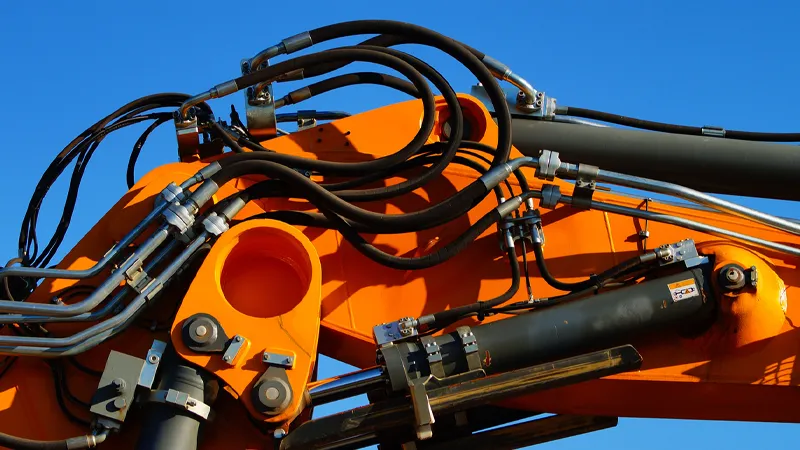
This is the most obvious and most common application for hydraulic hose. Excavators, wheel loaders, backhoes, and articulated dump trucks all have hydraulic circuits that must follow moving parts — boom arms, stick cylinders, swing frames, and bucket actuators. Rigid tube cannot follow this movement. It would crack, fatigue at the fittings, or simply prevent the machine from operating.
On an excavator boom, for example, every digging cycle flexes the hydraulic lines dozens of times per hour. Over a single shift, that adds up to thousands of flex cycles. A properly specified hydraulic hose handles this without stress. A rigid tube would fail at the bends and fittings within days.
2. Engine-Mounted and Chassis-Separated Systems
In trucks, buses, and industrial vehicles, the engine moves relative to the chassis. It sits on vibration mounts that absorb road shock and engine torque. Any hydraulic line connecting the engine to the chassis — power steering supply lines, transmission cooler lines, fan drive circuits — must use flexible hose to bridge that gap. Rigid tube connecting two points with different vibration behavior will develop cracks and leaks at joints due to constant fatigue loading.
3. Agricultural Equipment
Tractors, combine harvesters, sprayers, and seeders operate in fields where ground conditions change constantly. Hydraulic lines must route through folding sections, connect to implements that are attached and detached regularly, and survive constant exposure to UV, chemicals, and abrasion from crop debris and soil. Hose handles all of this better than rigid tube. Hose assemblies on agricultural equipment are also designed to be field-replaceable without specialized tube bending equipment — an important practical consideration when a breakdown happens 20 kilometers from the nearest service center.
4. Mining Drills and Underground Equipment
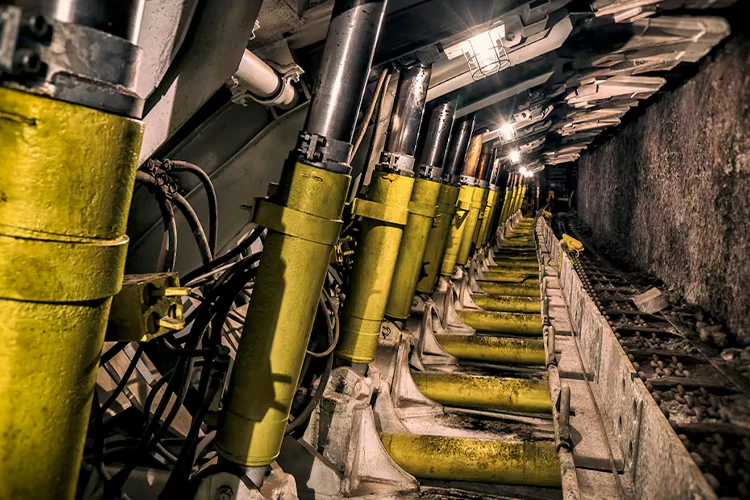
Underground mining equipment — continuous miners, roof bolters, shuttle cars — operates in extremely confined spaces with constant movement and vibration. Hydraulic circuits must flex around tight corners, tolerate shock loading, and be easy to replace during maintenance windows. Hose assemblies meet all these requirements. In underground applications, hose also needs to meet flame-resistance requirements (MSHA certification in North American markets), which is a specialized application where tube offers no meaningful advantage.
5. Connections to Cylinders and Actuators
Any hydraulic cylinder that extends, retracts, rotates, or pivots needs a hose connection, not a rigid tube. The end fitting of a cylinder moves as the rod strokes. Even a cylinder that appears to move only linearly creates side loads on a rigid connection as alignment changes under load. Hose absorbs this movement and misalignment without transmitting stress into the fittings or the cylinder ports.
6. Maintenance Access and Easy Replacement
Hose assemblies are swapped in the field without specialized tools. A technician can replace a failed hose assembly with a pre-made replacement in minutes. Rigid tube requires cutting, bending, flaring, and fitting — work that usually requires a workshop. In applications where downtime is expensive and hose replacement is a routine maintenance task, hose wins on total cost of ownership even if the initial price is similar.
When to Use Rigid Tube
1. Fixed Hydraulic Power Units
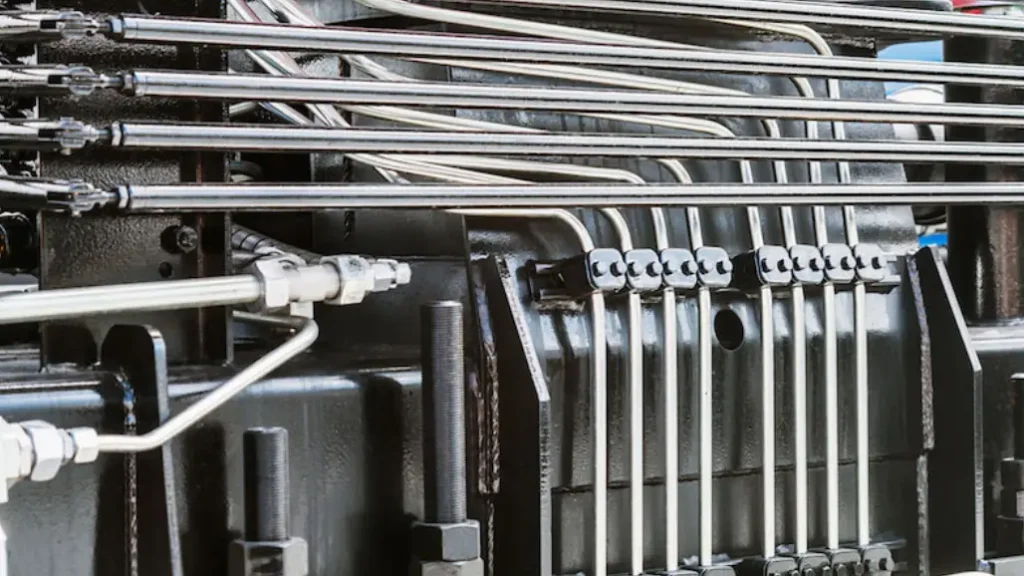
Stationary hydraulic power units — the kind found in industrial presses, injection molding machines, die casting equipment, and test benches — typically use rigid tube for the main circuit lines between the pump, manifold, valve bank, and reservoir. These components do not move. The routing is planned once and stays fixed for the life of the machine. Tube provides a clean, stable, low-maintenance solution in this context.
2. Long Fixed Runs Inside Machinery
When hydraulic fluid needs to travel a long, straight distance inside a machine frame — from a pump to a distant valve block, for example — rigid tube is the more practical choice. A long hose run sags, requires more support brackets, and has higher internal volume that adds lag to the system response. A welded or clamped tube run is cleaner and easier to inspect.
3. High-Pressure Circuits Requiring Dimensional Stability
Some very high-pressure circuits benefit from the dimensional stability of rigid tube. Tube walls do not expand under pressure the way a hose inner tube does, which means there is less internal volume change when the system pressurizes. In applications requiring very precise volumetric control — certain press circuits or servo-controlled axes — this can matter.
4. Clean-Room and Contamination-Sensitive Applications
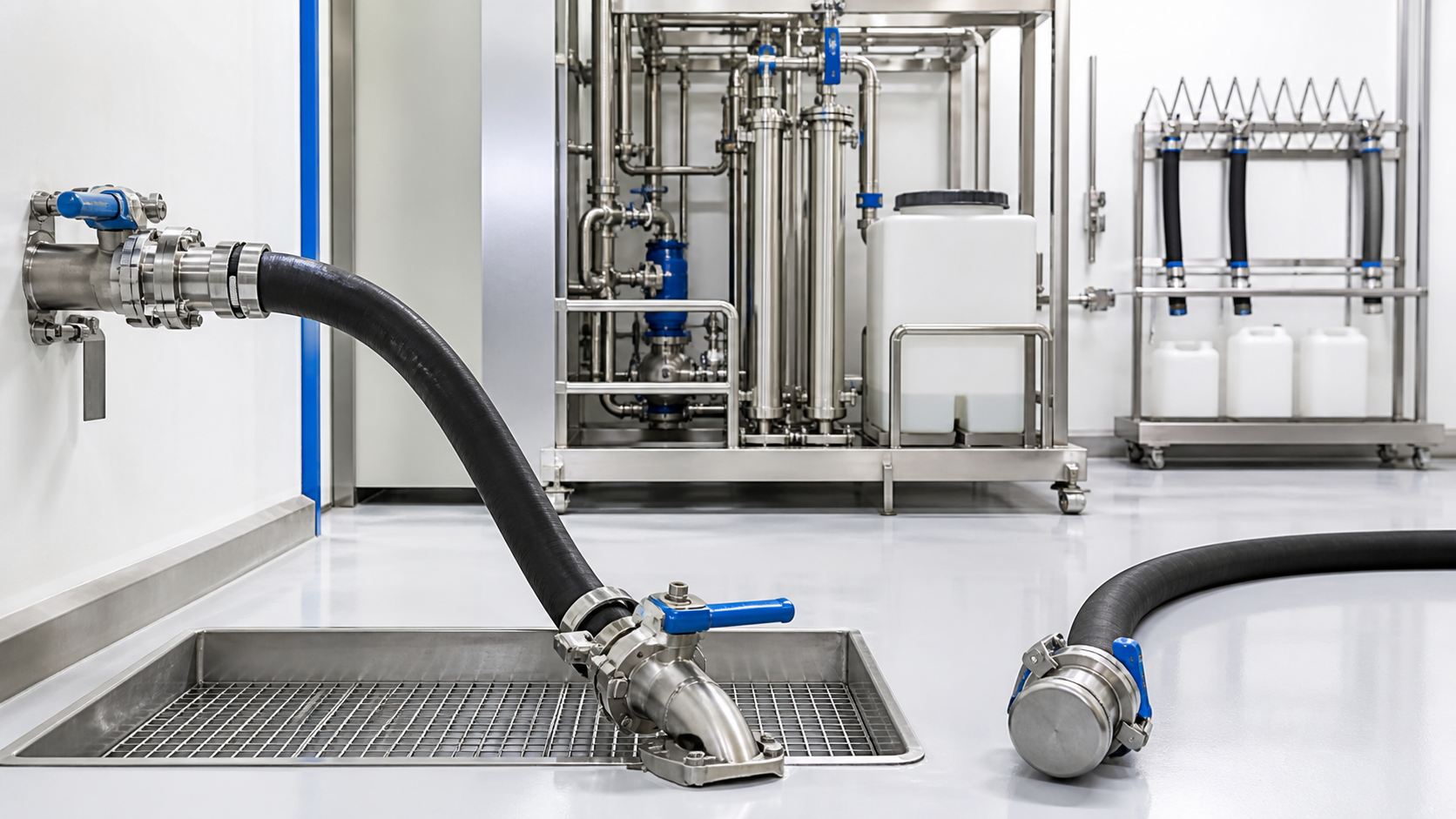
Rigid metal tube has a smooth, non-porous inner surface. In pharmaceutical manufacturing, food processing, and semiconductor fabrication, contamination control is critical. Tube is easier to clean, validate, and inspect than hose. There is also no elastomer inner tube that could contribute extractable compounds to the fluid. For these applications, tube is the preferred choice even when the pressure ratings would allow hose.
5. Aesthetic and Structural Applications
In some custom machine builds, control panels, or display equipment, tube is used because it looks cleaner and can be bent and routed to follow the machine geometry precisely. This is a secondary consideration but a real one in high-visibility installations.
Using Hose and Tube Together
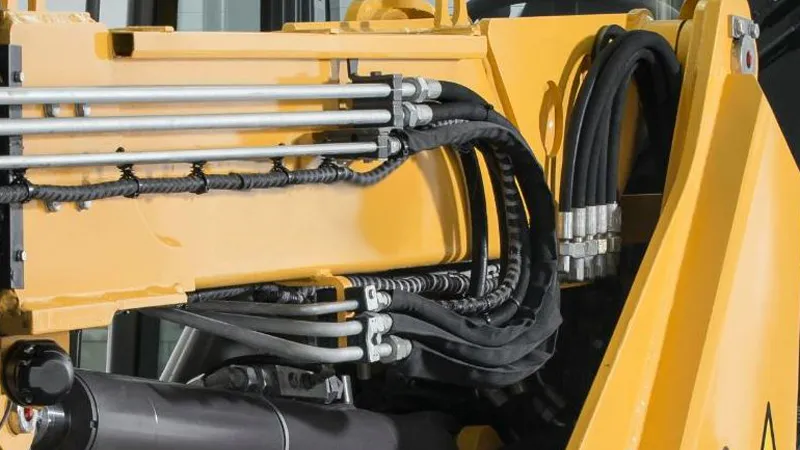
The best-designed hydraulic systems usually combine both. A well-engineered excavator, for example, will use rigid tube inside the protected sections of the main frame where lines are stable and space is organized — then transition to hose at every point where the circuit must connect to a moving component. Industrial machines do the same: tube for the fixed manifold connections, hose at the cylinder ports.
Designing a system with only hose everywhere adds unnecessary cost and installation complexity. Designing it with rigid tube everywhere creates maintenance nightmares and vibration failures at every joint that experiences movement. The correct approach is to match the component to the actual operating condition at each point in the circuit.
A Practical Selection Checklist
Before specifying hose or tube for any section of a hydraulic system, answer these questions:
- Does either connection point move during operation? → Use hose
- Is there relative vibration between the two connection points? → Use hose
- Will this line be regularly disconnected for implement changes or maintenance? → Use hose
- Is the routing long, straight, and permanently fixed? → Consider tube
- Is contamination control or cleanability the primary concern? → Consider tube
- Is the system stationary industrial equipment with planned routing? → Consider tube
If the answers are mixed, hose is generally the more forgiving choice for complex or field-serviced equipment. Tube offers long-term advantages in clean, controlled industrial environments where the routing is finalized at build time.
Choosing the Right Hydraulic Hose for Your Application
Once hose is the right answer, the next step is specifying the correct hose type. Construction equipment running high-impulse circuits typically needs spiral-wound hose (SAE 100R12, R13, or R15) with four or six wire layers. Agricultural and general industrial equipment is well-served by two-wire braid hose (SAE 100R2). Low-pressure return and suction lines can use textile-reinforced rubber hose. The pressure rating, temperature range, fluid compatibility, and minimum bend radius all need to match the specific installation conditions.
Kingdaflex manufactures a full range of hydraulic hoses for mobile, agricultural, mining, and industrial applications — built to SAE, DIN, and EN standards. If you need technical support selecting the right hose for your system, contact our team directly.