You often see PTFE Hose used where chemicals, heat, and pressure are too much for regular hoses. PTFE means polytetrafluoroethylene, which is a material that does not react with chemicals and has a smooth, non-stick surface. This hose can handle strong liquids and high heat without getting damaged. Many industries pick it because it is safe and works well.
Kingdaflex is a top hydraulic hose maker and makes sure every hose follows strict world rules. This is why PTFE Hose is a great choice when you need something strong and dependable in hard places.
What is PTFE Hose?
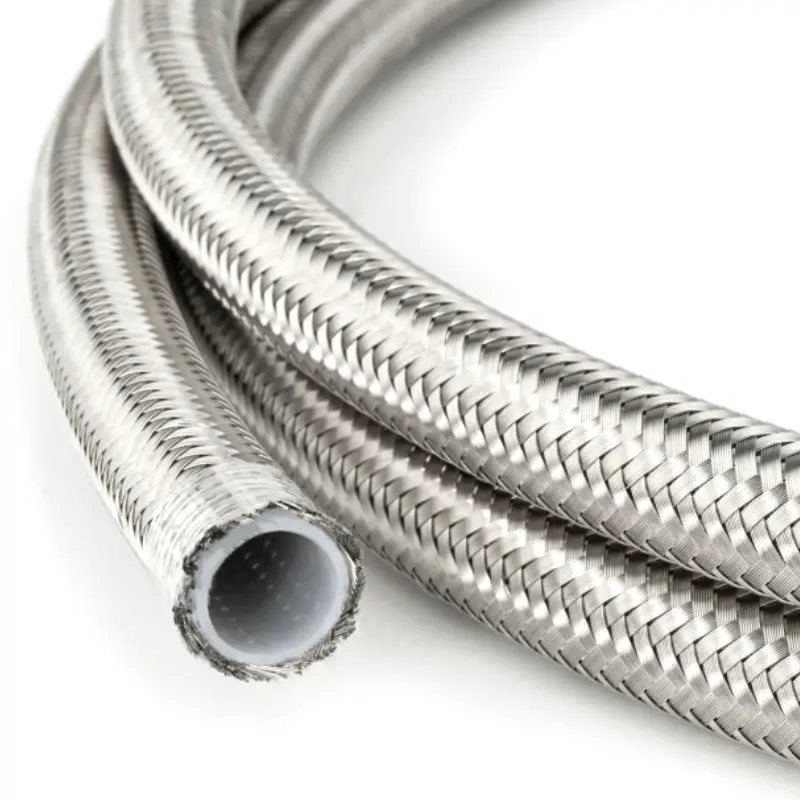
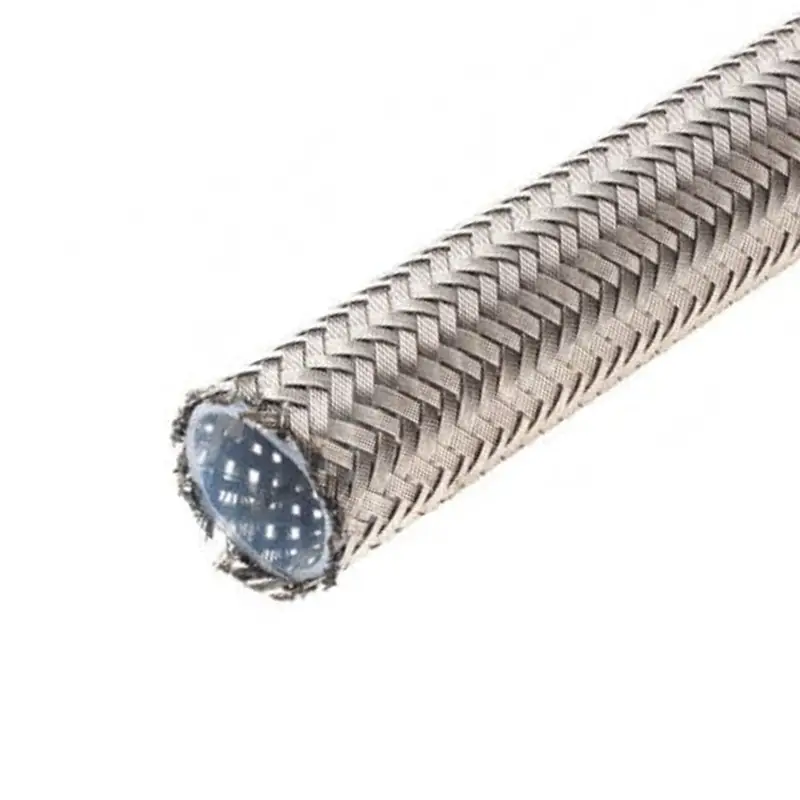
You might ask why PTFE Hose is not like other hoses. PTFE means polytetrafluoroethylene. This material gives the hose special strengths for tough jobs. Here are some key facts about it:
- PTFE Hose uses polytetrafluoroethylene, which is a strong plastic.
- The hose can resist almost all chemicals, like acids, bases, oils, and fuels.
- It has a smooth surface, so liquids and gases move easily inside.
- PTFE Hose can handle temperatures from -250℃ to 260℃ without breaking or getting old.
- The molecular structure of PTFE does not have carbon-carbon double bonds, so it is very stable and hard to damage by oxidation.
These features let you use PTFE Hose where other hoses would not work. For example, PVC hoses do not have the same chemical stability or resistance to oxidation.
Main Functions
PTFE Hose does many important jobs in industry. You will see it used where safety, reliability, and performance are needed. Here are the main functions:
- It carries chemicals, fuels, and other fluids without reacting or breaking down.
- The hose protects equipment by lowering friction and wear, so machines last longer.
- You can use PTFE Hose in systems with high heat or pressure because it stays strong and flexible.
- It keeps fluids clean, which matters in food, medicine, and labs.
In cars, PTFE Hose helps lower fuel use and emissions. Its low friction and high wear resistance make it good for moving car parts. Engineers also use PTFE Hose in green projects because it works well without extra lubrication.
Note: Top manufacturers keep making PTFE Hose better. They work on hoses that are safer, more flexible, and better for the planet. Here is a table showing some new ideas:
| Manufacturer | Innovation Description |
|---|---|
| Eaton | New design helps fluid flow better with a smooth inside to lower friction and pressure drops. |
| Parker | Better sealing for leak-free connections and high flexibility for tight spaces. |
| Saint-Gobain | Eco-friendly PTFE materials that can be recycled and have anti-static properties for safety in risky places. |
| Flexotech | Special technologies like conductive PTFE tubes for risky environments and custom solutions. |
You can see PTFE Hose is special because of its material and the important work it does in many industries.
PTFE Hose Construction
Inner Liner & Braiding
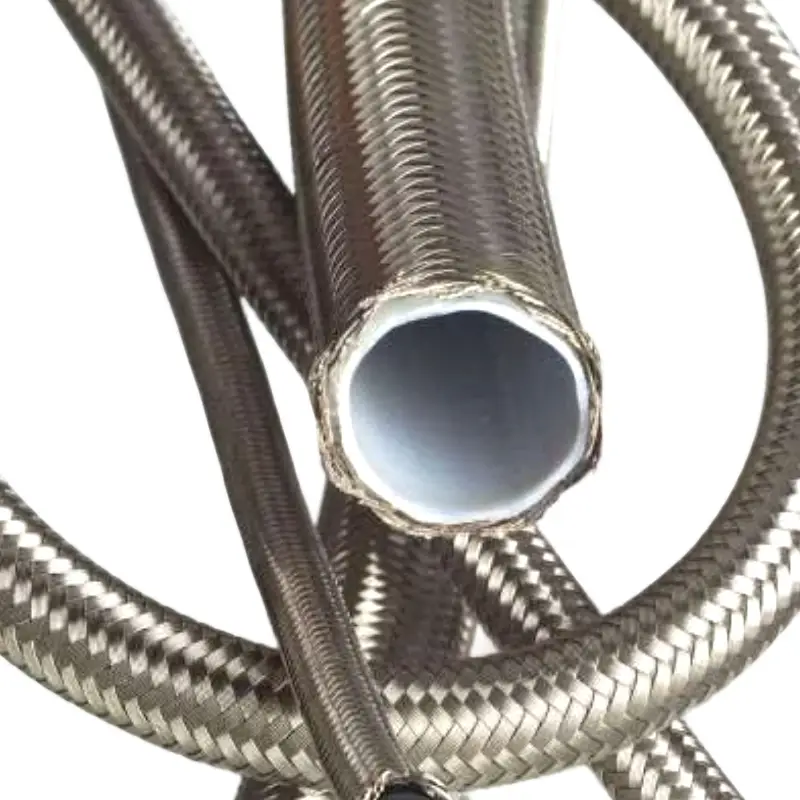
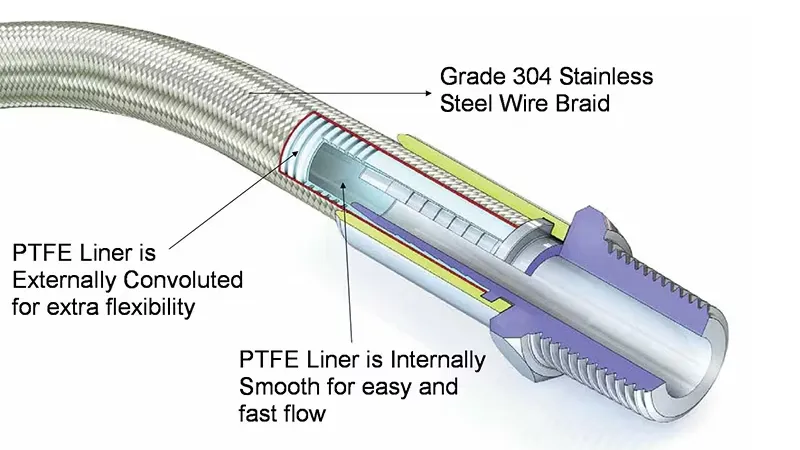
It is important to know how PTFE Hose is made. This helps you see why it works in tough places. The inside liner is made from polytetrafluoroethylene. This gives the hose its chemical resistance and smooth inside. The liner keeps fluids clean and stops reactions with the hose.
Kingdaflex uses special ways to make each hose. They follow strict rules like ISO 9001:2015. This means the hose lasts longer and stays safe under pressure.
A stainless steel braid wraps around the PTFE liner. This braid does many jobs:
- It keeps the hose steady when used with high pressure.
- It stops the hose from getting bigger, so you can trust it.
- It protects the hose from cuts and scrapes, making it last longer.
- It can handle very hot or cold places.
Here is a table that shows how each layer helps the hose work well:
| Characteristic | Contribution to Performance |
|---|---|
| Chemical Resistance | Stops contamination in food and pharma industries. |
| Temperature Tolerance | Works in very cold or hot places, so you can use it almost anywhere. |
| Flexibility | Makes the hose easy to move and install. |
| Durability | Gives the hose strength and long life, even with pressure. |
Smooth vs Convoluted Types
You can choose between smooth bore and convoluted PTFE Hose. Each type has its own good points.
| Feature | Smooth Bore PTFE Hose | Convoluted PTFE Hose |
|---|---|---|
| Flow Characteristics | Straight flow, less mixing | More mixing, good for mixing fluids |
| Flexibility | Stiffer, not as bendy | Very flexible, bends and twists easily |
| Pressure Resistance | Handles higher pressure | Lower pressure rating |
| Abrasion Resistance | Better at stopping damage | Gets damaged more easily |
| Cost | Usually costs more | Costs less |
| Applications | Used for chemicals, food, hydraulics | Used in labs, mobile gear, vacuum systems |
If you need a hose for high-pressure work, pick the smooth bore type. If you need more bending for tight spaces, the convoluted type is better. Kingdaflex can help you pick the right hose for your job. This makes sure you get the best safety and performance.
PTFE Hose Features
When you choose a hose for tough jobs, you want something that stands up to chemicals, heat, and pressure. PTFE Hose gives you these benefits. Kingdaflex always focuses on quality and makes sure each hose works well in harsh places.
Chemical Resistance
PTFE Hose stands out because it does not react with most chemicals. You can use it with acids, bases, oils, and fuels. This hose keeps working even when other hoses break down. Here are some reasons why:
- PTFE is less reactive than FEP, so it works better with strong chemicals.
- Both PTFE and FEP resist harsh chemicals, making them good for tough jobs.
- PTFE has a non-stick surface and very low friction, so fluids move easily.
- You can clean PTFE Hose with strong cleaners, and it will not wear out.
Tip: If you work in a lab or factory with many chemicals, PTFE Hose helps keep your system safe and clean.
Temperature & Pressure
You need a hose that can handle both hot and cold. PTFE Hose works in a wide range of temperatures and pressures. Look at this table to see what it can do:
| Temperature Range | Pressure Range |
|---|---|
| -76°F to +500°F | 4,000 PSI to 5,000 PSI |
| -65°F to 500°F | 3,000 PSI to 6,000 PSI |
You can use PTFE Hose in freezing cold or very hot places. It also works well under high pressure, so you do not have to worry about leaks or bursts.
Durability
PTFE Hose lasts a long time, even in hard conditions. You get a hose that does not kink or break easily. Here are some features that show its strength:
- Multi-layer construction gives the hose extra strength and stops kinking.
- PTFE Hose meets clean room standards, so it does not release harmful gases.
- Special insulation, like a Fire Jacket, keeps the hose safe from heat loss.
- In breweries and factories, PTFE Hose means fewer bursts and less cleaning, saving you time and money.
Kingdaflex tests every hose to make sure it meets high standards. You get a product that works well and lasts longer, even in the toughest jobs.
PTFE Hose Applications
Industrial Uses
PTFE hose is used in many industries. It can handle tough jobs. Here are some places where you see it:
- Chemical plants use PTFE hose to move strong acids and bases safely.
- Mining companies use it to transfer rough slurries and chemicals.
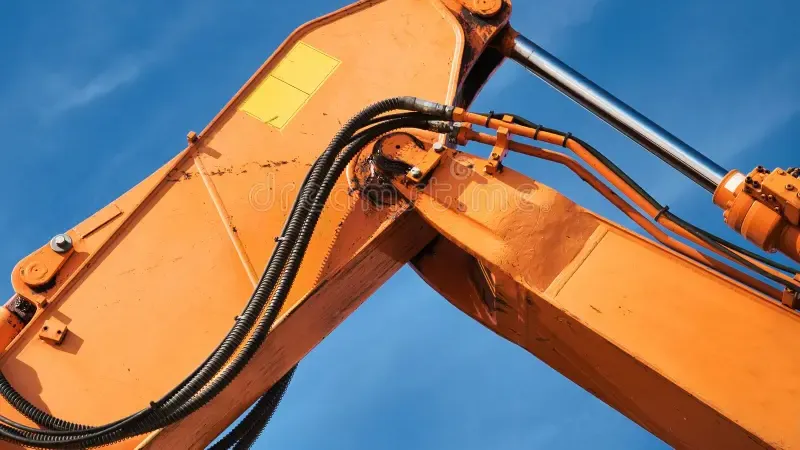
- Construction sites use PTFE hose for hydraulic systems and big machines.
- Oil and gas fields use it for fuels and high-pressure fluids.
- The aircraft industry wraps wires and cables with PTFE hose because it resists heat.
- Textile factories coat rollers with PTFE hose to stop rust during chemical transfers.
- The electrical industry uses PTFE hose as insulation for wires and cables.
Kingdaflex helps mining and oil & gas companies fix hose problems. They solve issues like hose breaking and long wait times. For example, a mining company in Australia used Kingdaflex hoses. This helped them work more and save money.
Automotive & Hydraulic
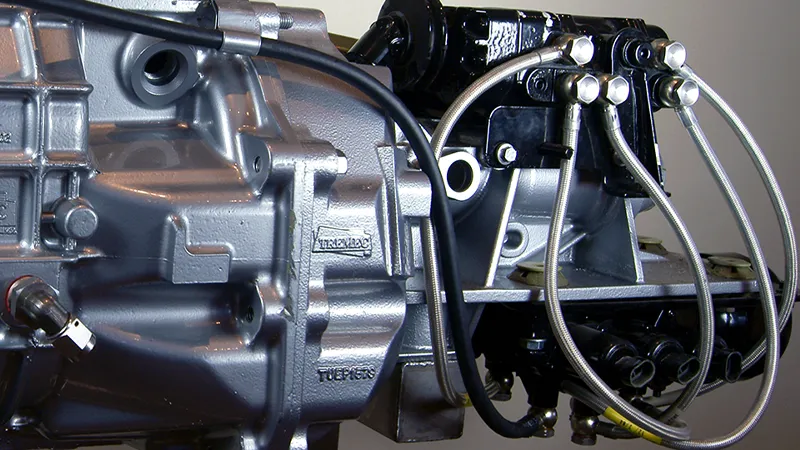
PTFE hose is found in cars and trucks. It works in fuel lines, brake lines, vacuum lines, and coolant hoses. Here is why people pick it:
- PTFE hose resists strong chemicals in fuels and oils.
- Its smooth surface lets fluids move easily.
- Conductive types stop static electricity, keeping fuel systems safe.
- Nonconductive types work well in high-pressure hydraulic systems.
Kingdaflex gives hydraulic hoses to vehicles and heavy machines. Their hoses help machines last longer and stay safe, even in tough places.
Food & Pharma
PTFE hose is used in food and medicine factories. You can move liquids and powders without worrying about dirt. These hoses follow strict rules like FDA 21 CFR 177.1550 and CE 1935/2004. In the US, food hoses must use FDA-approved materials. You see PTFE hose in coffee machines, clean rooms, and medical tools like catheters and endoscopes. The smooth surface makes cleaning simple and keeps products pure.
Tip: Always check if your hose meets the right rules for food or medicine. Kingdaflex has hoses that follow these rules, so you can trust them for important jobs.
PTFE vs Rubber Hose
Performance Comparison
It is important to know how PTFE hose and rubber hose work in hard places. PTFE hose is special because it can handle almost all chemicals. Rubber hose changes based on what kind of rubber it is made from. Some rubber hoses are good for oil, while others are better for water. PTFE hose does not react with strong acids, bases, or solvents. This makes it safe for moving dangerous liquids.
| Hose Type | Chemical Resistance | Notes |
|---|---|---|
| PTFE | Works with almost all chemicals | Does not react with most chemicals, acids, bases, or strong cleaners. It is very safe for moving harmful liquids. |
| Rubber | Changes a lot | Depends on the rubber type (like Nitrile for oil or EPDM for water). No one rubber hose can handle every chemical. If you use the wrong one, it can break or stop working. |
PTFE hose can also handle very hot and very cold temperatures. It works from -410°F to 500°F. Rubber hose usually cannot handle such extreme heat or cold. PTFE hose is good for tough jobs, but rubber hose is fine for normal work.
| Hose Type | Temperature Range |
|---|---|
| PTFE | -410°F to 500°F |
| Rubber | Lower range for less pressure (not listed) |
Cost & Flexibility
You may wonder about price and how easy the hoses are to bend. PTFE hose costs more because it uses special materials and is made in a special way. Rubber hose is cheaper and fits most people’s budgets. PTFE hose bends well in small spaces. It keeps its shape even with high heat or pressure. Rubber hose is also bendy, but it cannot handle as much heat or pressure.
| Hose Type | Cost | Applications |
|---|---|---|
| PTFE Hose | More expensive | Used for chemicals, medicine, food, and high-pressure jobs |
| Rubber Hose | Less expensive | Used for air, water, and most regular jobs |
Tip: Pick PTFE hose when safety is very important. Use rubber hose for simple, everyday jobs.
- PTFE hoses bend more and work well with high heat and pressure.
- Rubber hoses have limits based on what liquid, heat, and pressure they face.
Application Suitability
You need to pick the right hose for your job. PTFE hose is best for chemical plants, airplanes, and places with harsh liquids. Rubber hose is good for machines and normal factory work. Nitrile rubber hose is used a lot for moving hydraulic fluids. Rubber hoses with fabric braids are for low pressure. Rubber hoses with steel wire braids are for high pressure.
| Hose Type | Characteristics | Suitable Applications |
|---|---|---|
| PTFE | Stands up to strong chemicals, high heat, and wear | Good for chemical plants and airplanes |
| Nitrile Rubber | Works with most hydraulic fluids | Good for machines and jobs with low or high pressure |
- PTFE hose is best for chemical plants and airplanes.
- Nitrile rubber hose is best for machines that use hydraulic fluids.
PTFE hose gives you the best safety for hard jobs. Rubber hose is a good choice for normal, everyday work.
PTFE Hose Selection & Care
Choosing the Right Hose
You need to pick the right PTFE hose for your job. Each application has unique needs. Look at the factors below to help you decide:
| Factor | Description |
|---|---|
| Chemical Compatibility | PTFE hoses resist strong chemicals. Use them for corrosive fluids. |
| Temperature Range | Check the hose’s limits. Make sure it fits your temperature needs. |
| Pressure Requirements | Match the hose to your system’s pressure. Avoid leaks and bursts. |
| Hose Size and Length | The inner diameter affects flow. Choose the right size and length for your space. |
| End Fittings | Pick fittings that match your hose and system. Prevent leaks. |
| Quality and Certification | Look for hoses with industry certifications. Trust hoses that meet standards. |
| Cost Considerations | Balance price with performance and maintenance. |
Kingdaflex offers custom lengths, sizes, and cover types. You can select color options for visibility. Add spiral guards or fire sleeves for extra protection. Kingdaflex also provides custom branding and a wide range of end fittings, including straight, 45°, or 90° elbows.
Installation Tips
You want your PTFE hose to work well. Follow these steps for proper installation:
- Cut the hose to the desired length. Make sure the cut is straight and clean.
- Place the collar on the hose before attaching the ferrule.
- Put the ferrule on the tip of the hose. Keep the hose round.
- Lubricate the hose end with a small amount of oil.
- Insert the nut into the pipe. Place the pipe into the joint core rod and tighten it.
- Use a machine to press the sleeve onto the joint. Connect the joints with a ferrule.
Common challenges include incorrect cutting, improper insertion, and over-tightening. Use the right tools and follow torque specifications. Always inspect for contaminants and pressure test after installation.
Maintenance Advice
You can extend the life of your PTFE hose with good care. Try these practices:
- Route hoses properly. Avoid vertical hanging and make sure the length is correct.
- Store hoses in clean, dry places. Protect them from sunlight and cap the ends.
- Set a regular maintenance schedule. Check hoses often to prevent failures.
Kingdaflex can help you with custom-engineered assemblies and documentation for installation accuracy. You get hoses that fit your needs and last longer.
You get lots of good things when you pick PTFE hose for important jobs.
- PTFE hose stops chemicals and keeps leaks away.
- You can use it in food and medicine places because it follows FDA rules.
- Kingdaflex is a trusted company with happy customers and lots of experience.
| Technical Strength | Description |
|---|---|
| Chemical Resistance | Handles strong chemicals better than rubber or PVC. |
| Flexibility | Bends easily and stays strong. |
| Performance | Smooth inside lets fluids move fast and stay clean. |
| Temperature Resistance | Works in heat up to 260°C. |
| Cleanability | Easy to clean and keeps things safe from dirt. |
You can reach out to Kingdaflex for special hoses and help with your project.