Fire sleeve is exposed to heat, oil, abrasion, vibration, weather, and mechanical damage while hiding the hose beneath it. Waiting until the sleeve falls apart defeats its purpose. A controlled inspection program should identify damage early, define clear rejection limits, and require hose inspection after significant thermal events.
Knowing when to replace a fire sleeve depends on condition, exposure, and consequence of failure—not color alone or a fixed calendar date.
What Inspectors Should Look For
| Condition | Possible meaning | Recommended response |
|---|---|---|
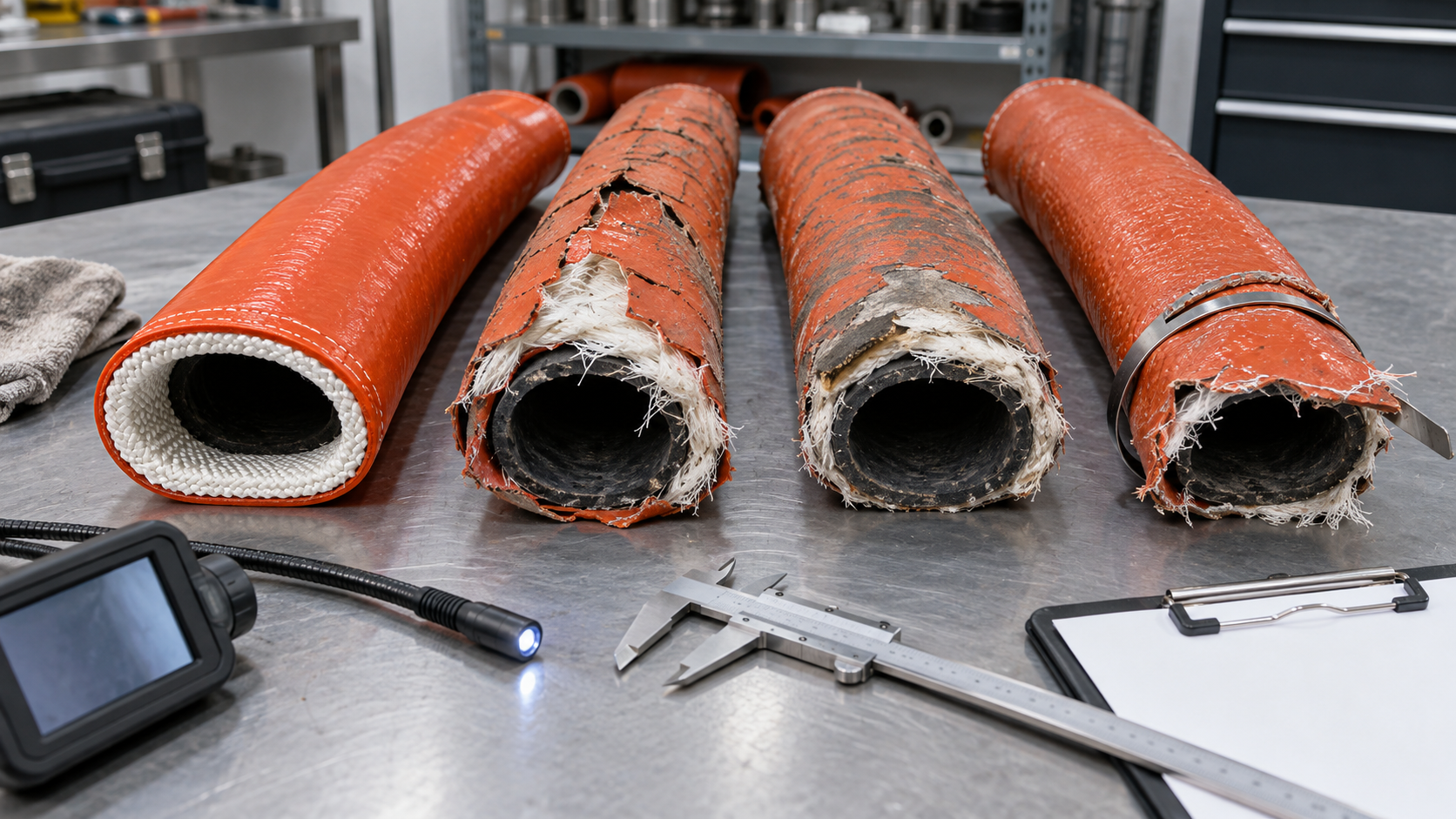
| Cracked or missing silicone | Fiberglass exposed to abrasion and fluids | Evaluate severity; replace if substrate is exposed |
| Hard, glazed surface | Heat aging or flame exposure | Inspect hose underneath and replace as required |
| White fiberglass visible | Coating worn, cut, or burned away | Replace affected sleeve |
| Cuts or tears | Mechanical damage and reduced coverage | Replace or use approved repair only if permitted |
| Loose end seal | Sleeve can migrate or admit splash | Re-terminate if sleeve remains serviceable |
| Oil saturation | Possible coating damage or hidden leak | Find leak, clean safely, assess and replace |
| Charred seam/closure | Heat exceeded closure capability | Replace and review orientation/specification |
| Molten material adhered | Local thermal event | Remove from service and inspect beneath |
Site criteria should be aligned with the sleeve manufacturer, hose manufacturer, equipment risk assessment, and applicable standards.
Inspect the Complete Protection System
Do not inspect only the orange surface. A fire sleeve hose protector includes the sleeve body, longitudinal closure where present, end terminations, overlap, and relationship to the hose and fittings.
Check:
- coating condition over the full length;
- exposed fiberglass or weave distortion;
- cuts, punctures, and crushed areas;
- seams, zippers, snaps, hook-and-loop, or lacing;
- bands, wire, tape, clamps, and sealant;
- movement away from fittings;
- folds that can trap molten splash;
- abrasion against equipment or other hoses;
- contamination by oil, fuel, chemicals, or metal debris.
Use good lighting and inspect all sides, including the hidden underside.
Immediate Rejection Conditions
Remove the sleeve from service when it can no longer provide continuous coverage or when its history is uncertain after a severe event. Typical rejection conditions include:
- large areas of missing silicone coating;
- torn or separated fiberglass;
- burn-through or deep charring;
- closure that will not remain fully engaged;
- missing snaps, failed zipper, or detached hook-and-loop;
- sleeve shortened or migrated away from the hazard zone;
- molten metal trapped beneath the sleeve;
- sharp contamination embedded through the structure;
- end termination cutting into the hose;
- evidence that the hose beneath may have overheated or leaked.
Do not use ordinary tape, wire, or sealant as an improvised repair unless the manufacturer has an approved field-repair procedure.
Heat Aging and Glazing
Repeated high temperature can make silicone hard, glossy, brittle, or cracked. The sleeve may lose flexibility and break when the hose moves. Discoloration alone does not always prove failure, but a change in texture or flexibility deserves attention.
Compare with a new reference sample of the same product. Flex a cool, depressurized section gently only if the inspection procedure permits it. Cracking, flaking, or exposed substrate indicates loss of protective condition.
Investigate why aging occurred. The hose may be too close to an exhaust, furnace opening, or radiant source. Replacing the sleeve without changing routing can reproduce the damage.
Abrasion and Mechanical Damage
Fire sleeve can rub against brackets, clamps, sheet metal, adjacent hoses, or the ground. Once silicone wears through, exposed fiberglass can fray rapidly and absorb contamination.
Look for polished flat spots, localized thinning, cuts at clamp edges, and crushed sections. Check the full movement envelope; damage often occurs only at one machine position.
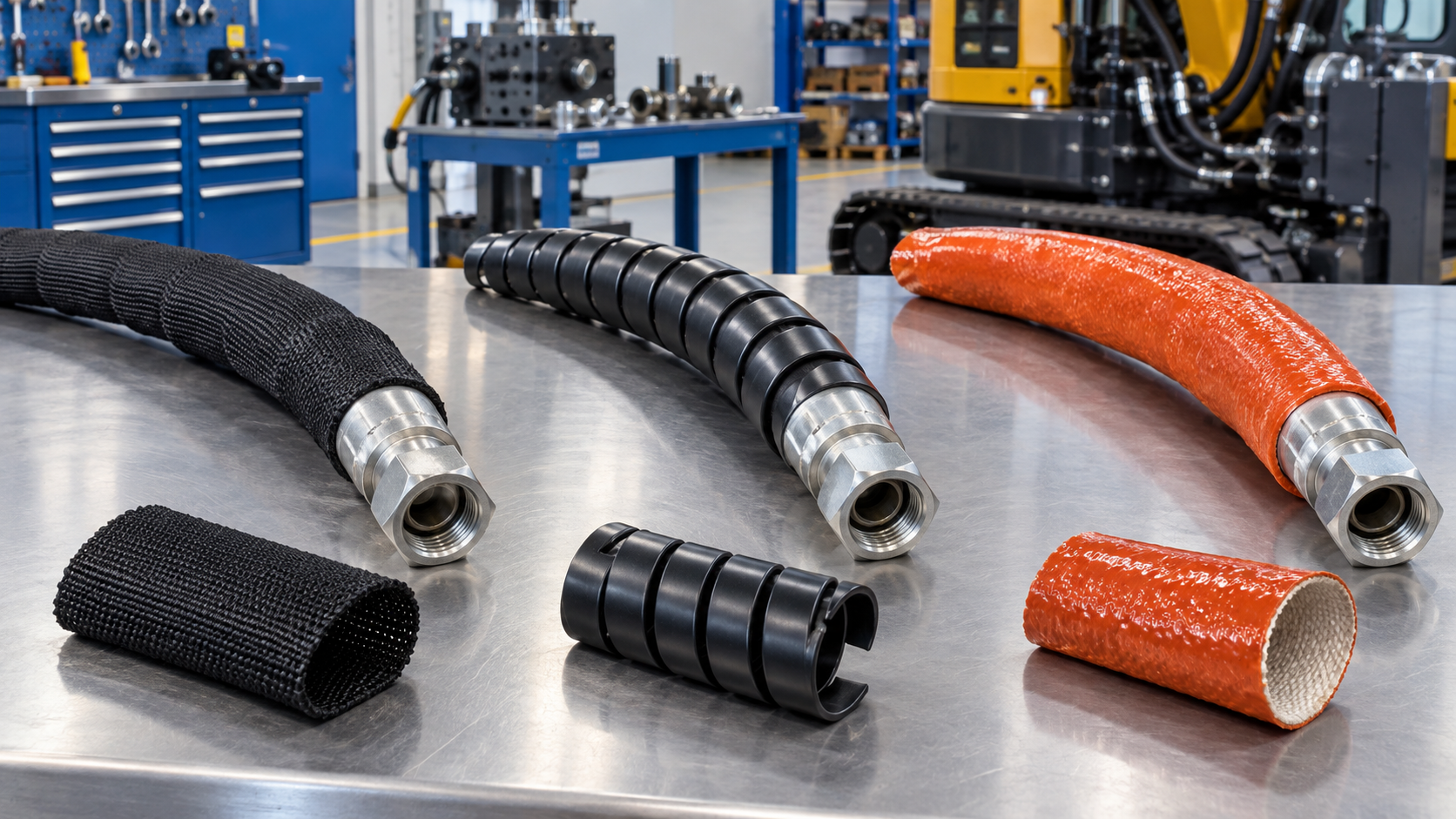
Use suitable hose protection products and route changes to remove the contact. Additional guard should not trap heat or conceal future damage.
Oil and Hydraulic Fluid Contamination
Oil on the sleeve may come from a nearby spill or a leaking hose beneath it. Treat unexplained wetness as a possible leak. Make the system safe before touching or opening the sleeve.
Contamination can attract abrasive dirt, affect coatings and closure materials, create smoke or fire hazards, and hide the origin of leakage. Follow approved cleaning guidance only if the product is still structurally serviceable.
If fluid has penetrated the sleeve or pooled inside, remove it and perform a full hydraulic hose inspection. Never return a leaking hose to service merely because a new sleeve hides it.
End-Seal Failure
Loose bands, peeled tape, cracked sealant, broken wire, and migrated clamps can allow the sleeve to slide away from the fitting. An open end may admit flame, debris, or molten splash.
If the sleeve body is undamaged and exposure has been minor, an approved end treatment may be replaced. Inspect the area beneath first. Do not reuse stretched bands or heat-damaged tape.
If repeated loosening occurs, review sleeve size, installation position, band tension, hose movement, vibration, and fitting geometry.
Closure Damage
Retrofit sleeves depend on the longitudinal closure. Inspect zipper teeth and slider, hook-and-loop engagement, snaps, lacing, stitching, and protective flaps.
Reject the sleeve if the closure opens during normal movement, leaves an uncontrolled gap, or has heat damage beyond the approved limit. A closure positioned toward direct splash or abrasion may need reorientation or a different design.
After Fire, Flame, or Molten Splash
Any significant thermal event requires more than an external glance. Isolate and depressurize the equipment, allow safe cooling, document the event, and inspect the sleeve and underlying hose.
Look for:
- char, glazing, cracks, and adhered metal;
- hard or discolored hose cover;
- blistering, swelling, or exposed reinforcement;
- damaged fittings, seals, clamps, and labels;
- oil leakage or odor;
- changed hose flexibility or routing.
The sleeve may have performed successfully by sacrificing itself. Replace it even if damage appears localized when the manufacturer or site procedure requires post-event replacement.
Inspection Frequency
Frequency should reflect exposure and risk. Inspect before use or each shift in severe foundry, furnace, mobile-equipment, or engine environments. Less severe fixed installations may use scheduled inspections supplemented by operator checks.
Shorten the interval when there is:
- continuous high temperature;
- frequent movement or vibration;
- direct splash potential;
- external abrasion;
- oil or chemical exposure;
- previous damage in the same location;
- recent routing or production changes.
Do not rely on a calendar alone. Operating hours, thermal cycles, and events may be better triggers.
Document Condition and Trend Damage
Assign each assembly an identification number. Record location, sleeve type and size, installation date, inspection date, findings, photographs, exposure events, repairs, and replacement.
Use consistent defect categories. Trend repeated failures by machine area. If several fire sleeves fail at the same bend or bracket, the system needs a routing or shielding change.
Photographs should include a scale and orientation reference. Preserve failed samples when supplier analysis is needed.
Replacement Installation Checks
Before installing the new sleeve, confirm that the hose itself is serviceable and the heat source, leak, sharp edge, or routing problem has been corrected.
Verify sleeve size, coverage length, closure orientation, bend clearance, and end terminations. Move the equipment through its operating range and check for stretching, bunching, snagging, and contact.
Update records with the new product and batch so future inspectors have a baseline.
Final Replacement Principle
Replace a fire sleeve when its coating, fiberglass, closure, or end seals can no longer maintain reliable coverage—or whenever a severe event creates doubt about the protected hose.
Inspection should protect the hose, not merely preserve the sleeve. Clear rejection criteria, post-event checks, and damage trending turn fire sleeve from a hidden consumable into a managed safety component.