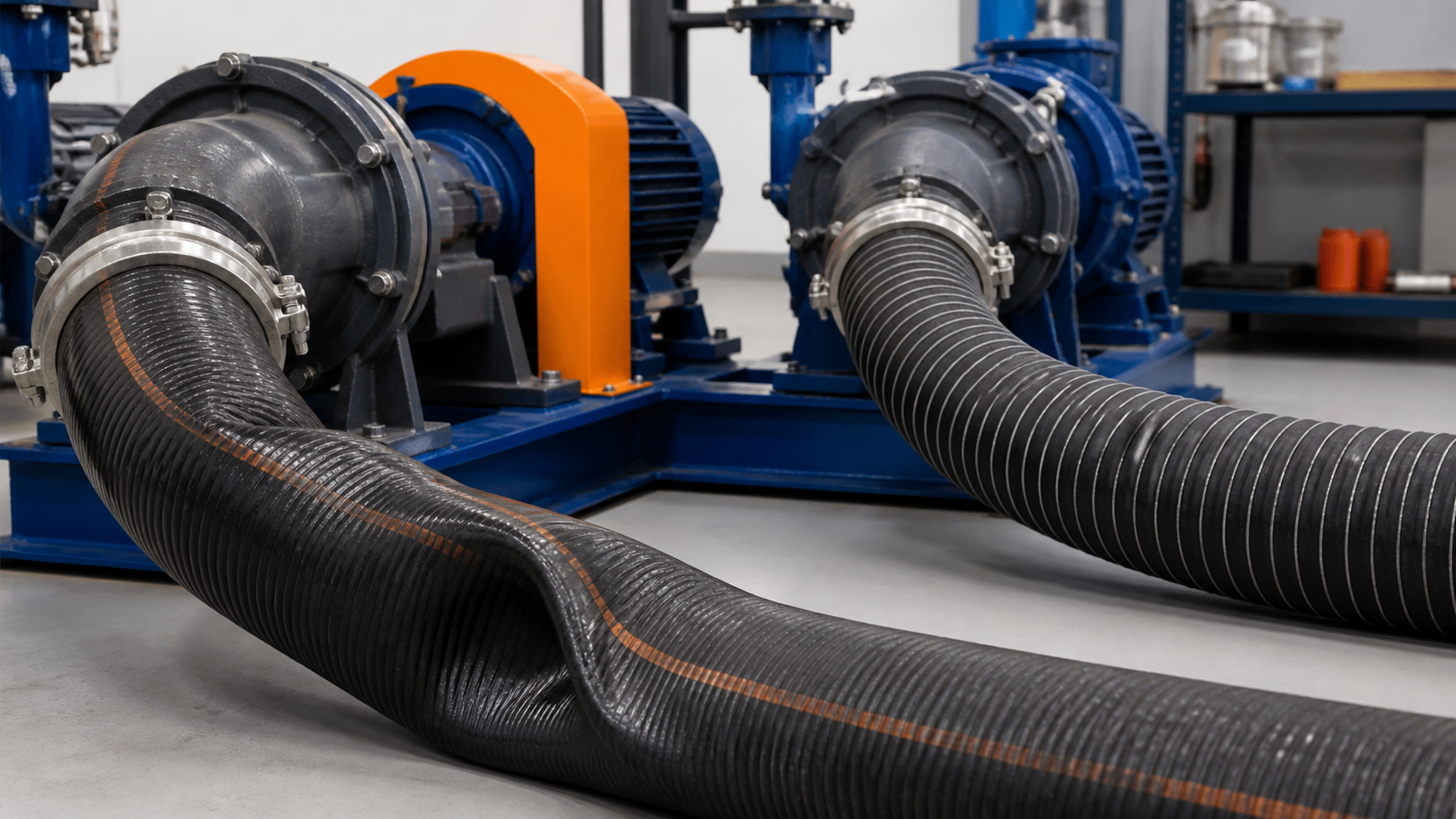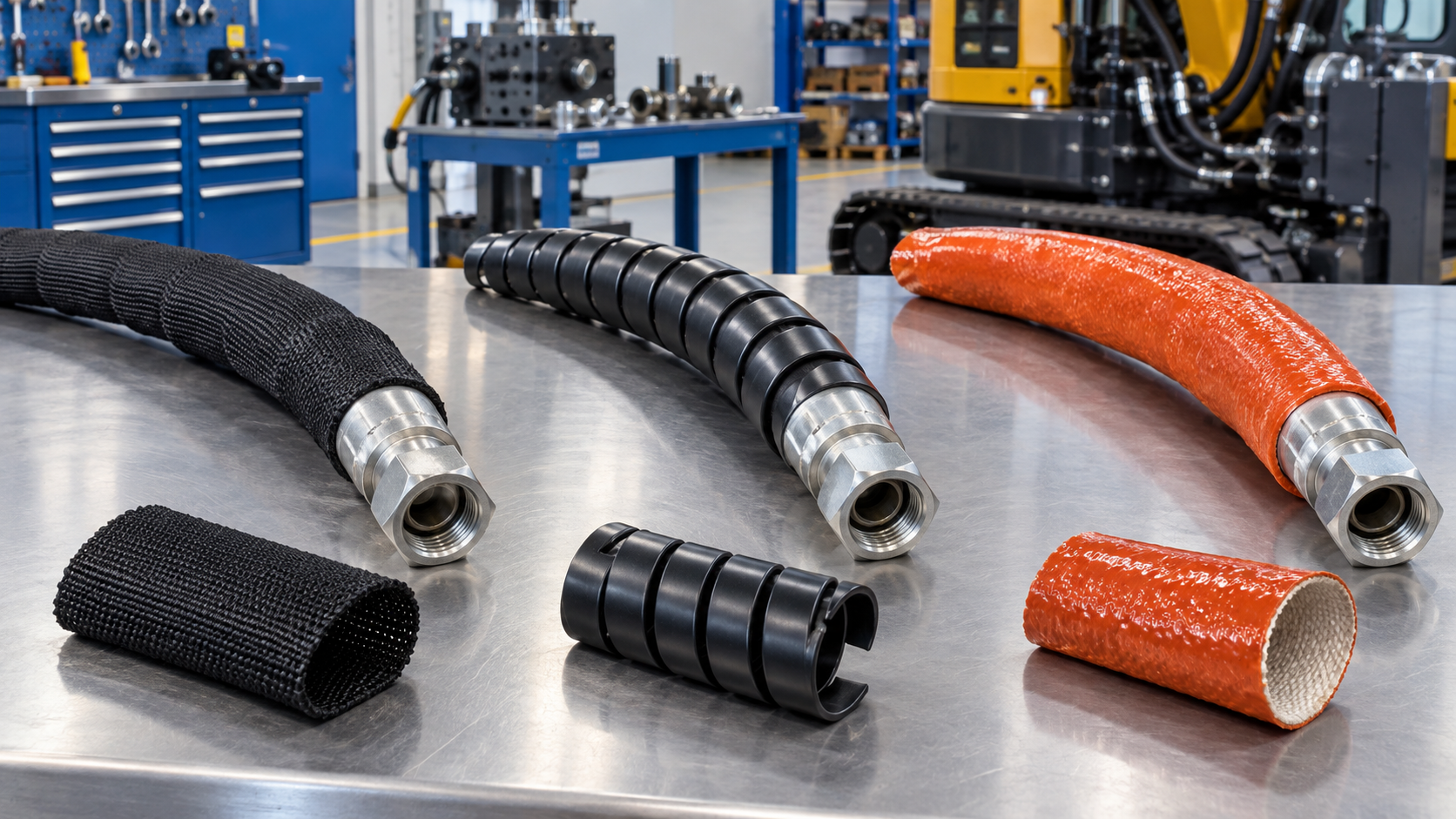
Many protective sleeves look similar from the outside, but their intended functions can be very different. An abrasion sleeve protects the hose cover from rubbing. A burst-containment sleeve is designed to help restrain or diffuse fluid and energy after a hose failure. One product may provide both functions, but that capability must be supported by design and test evidence.
Understanding burst-containment sleeve vs abrasion sleeve is essential when people work near high-pressure hydraulic lines. Choosing by color, weave, or thickness alone can create a false sense of safety.
Safety note: No sleeve makes it safe to touch or approach a suspected hydraulic leak. High-pressure fluid can penetrate skin. Depressurize, isolate, and follow emergency procedures before inspection.
Functional Difference at a Glance
| Feature | Abrasion sleeve | Burst-containment sleeve |
|---|---|---|
| Primary purpose | Protect cover from external wear | Help contain or diffuse effects after failure |
| Normal service focus | Chafing, rubbing, bundle protection | Personnel exposure and spray control |
| Construction evidence | Abrasion testing and material durability | Pressure-failure or pinhole containment testing |
| Installation sensitivity | Fit and end retention matter | Fit, overlap, end treatment, length, and test configuration are critical |
| Replacement trigger | Wear, cuts, fraying, contamination | Any significant pressure event, damage, or failed retention |
Specific products vary. Read the technical specification and test report for the exact size and construction.
What an Abrasion Sleeve Does
An abrasion sleeve forms a sacrificial layer between the hose cover and external contact. It can reduce damage from hose-to-hose rubbing, light dragging, vibration against a frame, and movement inside a bundle.
A woven nylon protective sleeve is commonly used because it is flexible and lightweight. Other abrasion products include textile guards, spiral wrap, and specialized coated sleeves.
Abrasion sleeve can extend cover life, but it cannot correct:
- a route across a sharp edge;
- bend below minimum radius;
- hose twist;
- excessive pressure or impulse;
- incompatible fluid;
- overheating;
- a damaged fitting or incorrect crimp.
Remove the root cause whenever practical rather than relying on a consumable layer indefinitely.
What Burst Containment Means
When hydraulic hose fails, the release can take several forms: a pinhole jet, cover blister and spray, fitting separation, longitudinal rupture, or complete burst. A containment sleeve may be designed to restrain the failed hose and diffuse escaping fluid along the sleeve rather than allowing a concentrated jet.
That does not mean the system can continue operating after failure. The sleeve is a secondary protective measure intended to reduce exposure long enough for the event to be recognized and the system shut down.
Performance depends on pressure, hose size, fluid, temperature, failure mode, sleeve length, clearance, ends, and how the product was tested.
Why Abrasion Resistance Does Not Prove Containment
A strong fabric may resist rubbing yet open, tear, or allow a concentrated jet when pressurized fluid escapes. Conversely, a containment-oriented sleeve may have a loose fit that permits fluid to travel and depressurize, which can look different from a tight abrasion cover.
Do not infer burst performance from fabric weight or tensile strength alone. Ask for:
- test pressure and hose size;
- fluid and temperature;
- induced failure method;
- sleeve fit and free space;
- end treatment and overlap;
- acceptance criterion;
- video, report, or third-party evidence;
- sizes covered by the result.
Understand Hydraulic Injection Risk
A pinhole leak can produce a narrow high-velocity jet that is difficult to see. Fluid injected through skin is a medical emergency even when the wound appears small.
Training on preventing hydraulic injection injuries should prohibit searching for leaks with hands or body parts. Use approved detection methods from a safe position, isolate pressure, and seek immediate medical treatment after suspected injection.
A sleeve is part of a hierarchy that also includes safe routing, guarding, inspection, pressure control, maintenance, and keeping personnel out of exposure zones.
Select by Risk Zone
Burst-containment protection is especially relevant where high-pressure hoses are close to operators, passengers, service technicians, access platforms, cabs, controls, or walkways.
Abrasion sleeve may be sufficient where the main risk is cover wear and people are separated from a possible release. Some locations need both abrasion and containment performance.
Assess:
- working and transient pressure;
- hose size and fluid temperature;
- distance to people;
- likely direction of spray;
- duration before automatic or manual shutdown;
- hose movement and potential whipping;
- surrounding ignition or slip hazards;
- consequence of fitting separation.
Fit Is Part of Containment Performance
A containment sleeve is not necessarily installed tightly. Controlled clearance may allow fluid to disperse along the hose, reducing concentrated spray. Too tight a fit may not behave as tested; too loose a fit can snag, migrate, or interfere with equipment.
Follow the manufacturer’s size table. Measure actual hose OD, not nominal inside diameter. For bundles, confirm whether the product is tested for multiple hoses or only one.
An ordinary hydraulic hose sleeve should not be described as containment protection unless its data supports that claim.
End Treatment and Assembly Length
Ends must retain the sleeve without creating a sealed pressure vessel. The approved design may require specific clamps, ties, overlap, or termination locations. Improvised sealing can change the way fluid escapes.
Cover the full risk zone, including the hose near fittings where appropriate. Allow for movement and assembly length changes. Do not place retention devices where they crush the hose, obstruct swivels, or hide fitting movement.
If the sleeve is intended to limit hose whip after separation, verify that its design and anchor method specifically address that hazard. A general textile sleeve is not automatically a whip restraint.
Temperature and Fluid Compatibility
The sleeve material and closures must withstand ambient heat, fluid temperature, oil exposure, cleaning chemicals, UV, moisture, and weather. Hot hydraulic fluid can weaken some textiles and increase burn risk.
Containment tests performed with room-temperature water may not represent hot oil in the field. Ask the supplier to explain limitations and safety factors.
For fire or exhaust exposure, additional hydraulic hose protection may be required. Do not assume a nylon containment sleeve replaces a tested fire sleeve.
Inspection Requirements
A protective sleeve can hide the hose cover, so the inspection program must include controlled opening or movement where appropriate. Look for:
- sleeve cuts, fraying, glazing, or contamination;
- loose ends or migration;
- wetness, staining, or swelling;
- hard or soft spots beneath the sleeve;
- fitting movement;
- exposed reinforcement;
- abrasion at clamps and bends;
- evidence of a previous leak.
Treat unexplained wetness as a possible pressure leak. Make the machine safe before touching it.
Replacement Rules
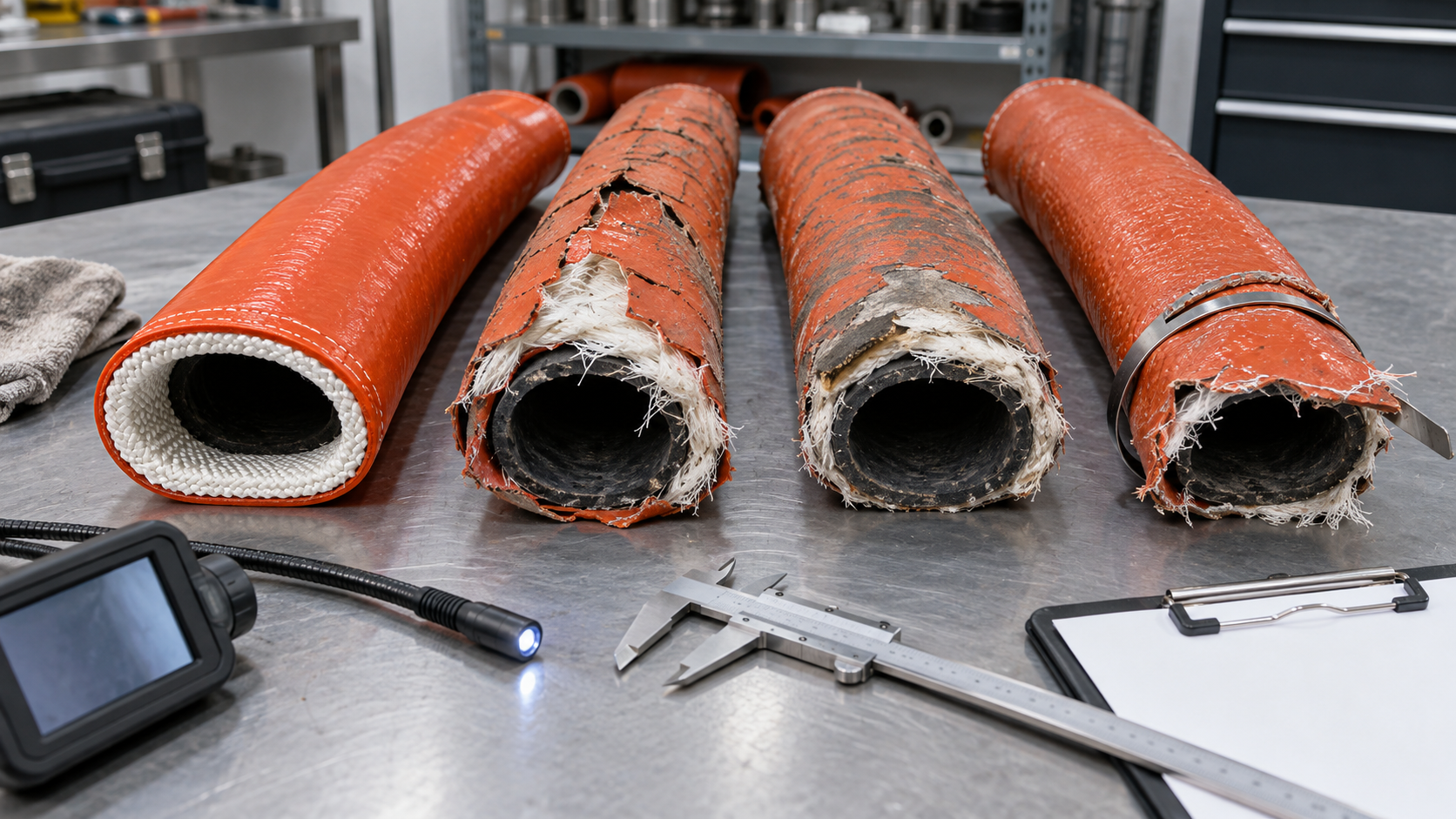
Replace an abrasion sleeve when it is worn through, cut, frayed, chemically damaged, heat damaged, or no longer retained. Inspect the hose beneath and correct the contact point.
Replace a containment sleeve after a significant hose-failure event, even if it appears reusable, unless the manufacturer’s documented procedure states otherwise. Also replace it after cuts, failed closures, severe contamination, unknown history, or exposure beyond its limits.
Never reuse a sleeve to hide a hose that has leaked or lost reinforcement.
Questions for Suppliers
When sourcing protection, ask:
- Is the product intended for abrasion, containment, or both?
- Which test method supports each claim?
- What pressure, size, temperature, and failure mode were tested?
- What fit range and clearance are required?
- How must ends be terminated?
- Can it cover hose bundles?
- What are the fluid and temperature limits?
- How should the hose be inspected beneath it?
- When must the sleeve be replaced?
- What marking and traceability are supplied?
Final Selection Principle
Use abrasion sleeve to prevent external cover wear. Use a tested burst-containment sleeve where the risk assessment requires control of spray or released energy near people. Use a dual-function product only when evidence supports both claims.
Protective sleeve is a secondary safety layer, not permission to run damaged hose. Correct routing, compatible components, inspection, pressure control, and immediate shutdown after leakage remain the foundation of hydraulic safety.