Fire sleeve closure style affects far more than installation speed. It influences thermal coverage, resistance to molten splash, maintenance access, snag risk, sealing, flexibility, and whether a hose must be disconnected for installation.
The best option depends on when the sleeve is installed, how often the hose is inspected, what hazards are present, and whether the closure will face direct flame, radiant heat, abrasion, oil, or metal splash. This guide compares the main fire sleeve closure types: continuous tube, zipper, hook-and-loop, and snap.
Quick Comparison
| Closure | Main advantage | Main limitation | Typical use |
|---|---|---|---|
| Continuous tube | Maximum continuous coverage | Usually requires hose-end access | New assemblies and high exposure |
| Zipper | Fast retrofit and repeated access | Zipper can add stiffness or snag points | Serviceable equipment |
| Hook-and-loop | Flexible and easy to wrap | Closure cleanliness and overlap matter | Large bundles and irregular shapes |
| Snap | Positive mechanical closure | Discrete gaps and hardware exposure | Retrofit where fast access is needed |
These are general tendencies. Construction quality, overlap, materials, thread, coating, and end treatment can matter as much as closure category.
1. Continuous Tubular Fire Sleeve
Tubular sleeve has no longitudinal closure. The woven fiberglass and silicone coating form a continuous body around the hose.
Advantages
- uniform circumference and clean profile;
- no zipper teeth, snaps, or exposed closure edge;
- fewer snag points;
- strong resistance to direct splash when properly terminated;
- often the simplest construction to inspect;
- suitable for installation during hose assembly.
Limitations
The sleeve normally must slide over a hose end or be installed before the second fitting. Large flanges, elbows, and quick couplings may require an oversized tube. Replacement can require disconnecting the hose and managing contained fluid.
Tubular types of fire sleeves are often preferred for new assemblies and severe exposure, provided installation access exists.
Best suited for
- factory-built hose assemblies;
- long-term installations with limited access needs;
- areas with molten splash or direct exposure;
- compact routing where snag resistance matters;
- standardized hoses with known OD and fitting sequence.
2. Zipper Fire Sleeve
A zipper sleeve opens along its length and wraps around an installed hose or bundle. The zipper provides quick closure and can support repeated access.
Advantages
- installs without disconnecting the hose;
- fast opening and closing;
- useful for inspection or replacement access;
- positive alignment along the closure;
- practical for long installed assemblies.
Limitations
The zipper adds a relatively stiff longitudinal feature. Teeth, slider, stitching, and end stops must tolerate the environment. The closure may snag, collect contamination, or create a lower-protection line if overlap is insufficient.
Orient the closure away from the most severe flame, heat, splash, or abrasion exposure when the approved installation instructions allow it. Protect the slider from vibration and unintended opening.
Best suited for
- retrofit projects;
- equipment requiring periodic hose access;
- long runs where wrapping speed matters;
- installations with enough clearance for the zipper profile.
3. Hook-and-Loop Fire Sleeve
Hook-and-loop sleeve wraps around the hose and closes through overlapping fastener strips. It can accommodate irregular bundles and is easy to adjust during installation.
Advantages
- no hose disconnection;
- flexible around bundles, bends, and mixed diameters;
- quick installation with minimal hardware;
- broad adjustment range;
- easy reopening for inspection.
Limitations
Performance depends on overlap and engagement along the full length. Dirt, oil, fibers, or damaged fastener material can reduce holding strength. The closure can peel under snagging or pressure from a poorly arranged bundle.
The hook-and-loop material, stitching, and cover flap must be rated for the temperature and hazard. Ordinary textile fastener should never be assumed equivalent to a purpose-designed high-temperature construction.
Best suited for
- large or irregular hose bundles;
- short-term or frequently serviced installations;
- complex equipment where fitting clearance prevents tubular sleeve;
- applications needing adjustable wrap.
4. Snap Fire Sleeve
Snap-closure sleeve uses spaced mechanical fasteners along an overlapping seam. It provides a tactile, visible closure and can be installed around existing lines.
Advantages
- positive closure at defined points;
- easy confirmation that each snap is engaged;
- fast access without a zipper slider;
- useful where gloves make hook-and-loop handling difficult;
- replaceable around installed hoses.
Limitations
Spacing between snaps can allow localized opening if the overlap is poorly designed. Metal hardware may become hot, corrode, abrade adjacent components, or create snag points. Missing or damaged snaps reduce coverage.
Select snap alloy and construction for the external environment. Verify that hardware does not contact the hose or create electrical concerns.
Best suited for
- retrofit protection with occasional access;
- industrial equipment where visible closure confirmation is useful;
- moderate-complexity bundles with sufficient clearance.
Compare by Hazard, Not Convenience Alone
Installation speed is important, but the hazard should control selection.
Direct flame and radiant heat
Continuous tubular sleeve offers an uninterrupted body. Retrofit styles need adequate overlap and a closure system qualified for exposure. Orient seams according to the supplier’s instructions.
Molten metal or hot splash
Liquid can enter an upward-facing gap or poorly closed seam. Consider gravity, splash direction, overlap, end seals, and whether hardware can trap material. A continuous tube may offer advantages in severe foundry service.
Abrasion and snagging
Zippers and snaps create external features. Hook-and-loop edges may peel if dragged. Route the closure away from contact surfaces and add external protection only if it does not trap heat or hide damage.
Oil and chemical exposure
Silicone coating, thread, fastener, zipper tape, snaps, and hook-and-loop material must all resist the exposure. A compatible sleeve body does not guarantee a compatible closure.
Installation Access Is the First Decision
If the hose is being manufactured or can be disconnected safely, a tube often provides the cleanest profile. If disconnection is difficult, costly, or unsafe, a retrofit closure may be more practical.
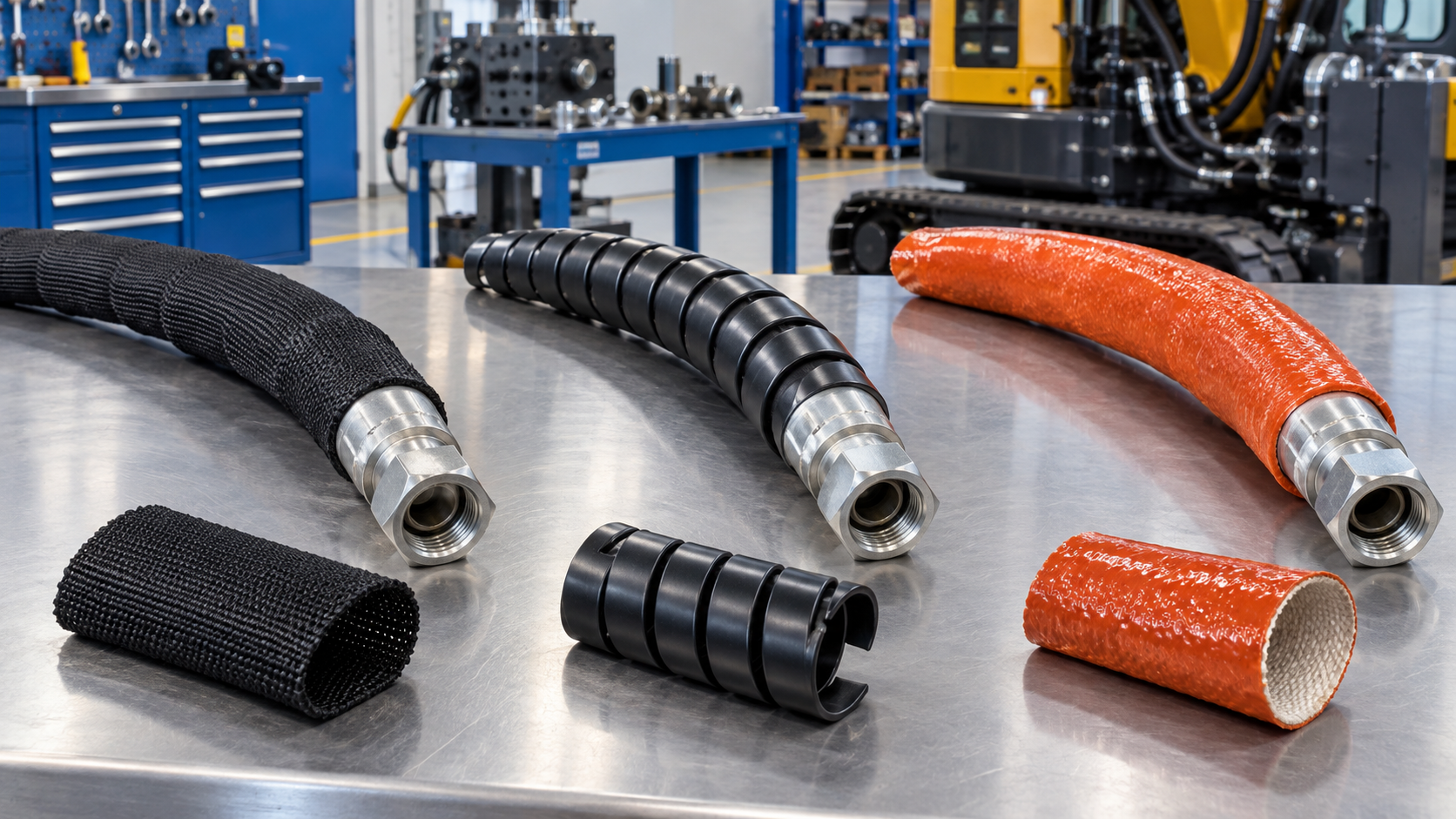
Guidance on retrofit fire sleeves can help compare zipper, wrap, and snap approaches for installed equipment.
Never disconnect a hose solely for sleeve installation without controlling pressure, fluid, contamination, lockout, and reconnection requirements.
Consider Inspection Frequency
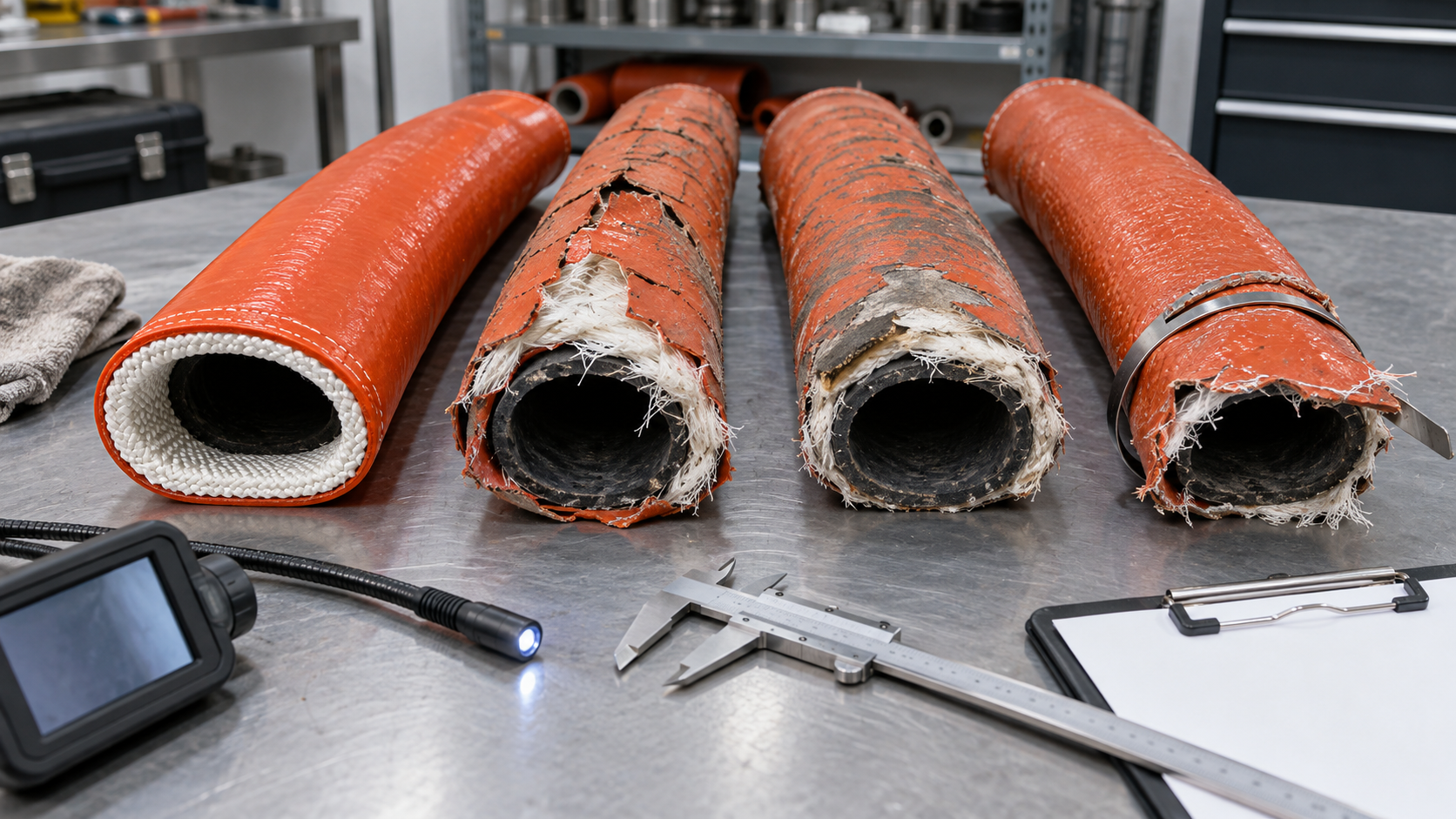
Fire sleeve protects the hose but also hides its cover. Frequently inspected equipment may benefit from a reusable opening, provided a controlled procedure defines safe access, inspection points, closure checks, replacement limits, and records. Operators must restore the full overlap after every inspection.
Fit, Overlap, and Bundle Shape
Tubular sleeve is selected by internal diameter and pass-over clearance. Retrofit sleeve is often selected by finished circumference, required overlap, and closure geometry.
For bundles, measure the installed envelope through all positions. Allow flexing without crushing small hoses or creating a loose sleeve that sags or snags.
Request sizing guidance from a qualified fire sleeve manufacturer, especially for mixed bundles, irregular fittings, or moving equipment.
End Termination
Every closure style still needs appropriate end treatment. Open ends can admit flame, splash, contamination, or abrasion. Loose sleeve can move away from the protected zone.
Common methods include stainless bands, high-temperature tape, wire, clamps, and compatible sealant. The termination must not cut the sleeve, crush the hose, obstruct fitting movement, or create a leak-hiding pocket.
Follow the approved fire sleeve installation procedure for overlap, seam orientation, end sealing, and inspection.
Maintenance Comparison
Maintenance checks should match the closure. On tube sleeve, examine coating, chafing, end seals, and contamination. For zipper designs, inspect teeth, slider, stitching, flap, and end stops. Hook-and-loop must retain full engagement without peeling or contaminated fastening surfaces. Every snap should be present, engaged, undistorted, and free from harmful corrosion. Replace any closure that cannot maintain its designed overlap consistently.
Procurement Checklist
Specify:
- hose or bundle dimensions;
- fitting sizes and available installation access;
- temperature and exposure type;
- flame, splash, oil, chemical, and abrasion conditions;
- movement and minimum bend radius;
- inspection and reopening frequency;
- closure orientation and overlap;
- end-termination method;
- required test standard or performance evidence;
- cut length, quantity, marking, and packaging.
Ask for a trial sample when access is tight or the bundle shape changes during movement.
Which Closure Is Best?
Choose a continuous tube when maximum uninterrupted coverage and low snag risk matter and installation access is available. Choose a zipper when rapid retrofit and repeated access are priorities. Choose hook-and-loop for adjustable wrapping around irregular bundles. Choose snaps when positive, visible closure points and easy access are useful.
No closure is automatically safest in every application. Match the sleeve body, seam, fasteners, overlap, and end seals to the actual hazard and maintenance plan. The best closure is the one that remains fully installed and protective throughout real service—not merely the easiest one to fit on day one.