Fire sleeve specifications often show several impressive temperature values. One may describe continuous exposure, another a short peak, and another molten-metal splash. These numbers are not interchangeable. Using the highest figure as a general operating limit can lead to hardened silicone, weakened fiberglass, exposed hose, or failure of the end seals.
Understanding a fire sleeve temperature rating requires knowing what was tested, for how long, at what distance, and which failure criterion was applied. Buyers should compare the complete exposure profile rather than selecting the largest number on a data sheet.
The Three Main Rating Concepts
| Rating type | What it generally describes | Key purchasing question |
|---|---|---|
| Continuous | Long-duration ambient or surface exposure | Can the sleeve retain function for the full duty cycle? |
| Intermittent | Short elevated-temperature events | How hot, how long, and how often? |
| Molten splash | Brief contact with molten material | Which metal, quantity, angle, and test method? |
The exact definitions depend on the manufacturer and test standard. Never assume two suppliers use identical conditions.
Continuous Temperature Rating
Continuous rating describes the temperature a sleeve can withstand for extended operation under stated conditions. It is usually the most relevant value near engines, exhaust systems, furnaces, foundries, and hot process equipment.
“Continuous” does not necessarily mean unlimited life. Material aging still depends on temperature, oxygen, oil, vibration, bending, and time. As exposure approaches the upper limit, silicone coating may harden or discolor, while the fiberglass substrate can become more vulnerable after the coating degrades.
Ask whether the published value refers to ambient air, direct contact with a hot surface, internal fluid temperature, or radiant heat. A sleeve suspended near a hot pipe may behave differently from one touching it.
Intermittent or Peak Rating
An intermittent rating applies to a defined short exposure. It may represent startup, shutdown, furnace-door opening, exhaust regeneration, or an abnormal hot-air event.
Four details are essential:
- maximum temperature;
- duration of each event;
- frequency of repetition;
- cooling period between events.
A sleeve may survive one brief peak but age rapidly when the same peak occurs every few minutes. Repeated intermittent exposure can become the practical equivalent of continuous severe service.
Request the test cycle and acceptance criterion from the fire sleeve supplier. “Peak temperature” without time is not a usable engineering specification.
Molten-Metal Splash Rating
Molten splash testing evaluates whether the sleeve sheds or resists brief contact with molten material. It is particularly relevant in foundries, steel mills, welding areas, and metal-processing equipment.
This value does not mean the sleeve can remain immersed in molten metal. Performance depends on:
- metal type and melting temperature;
- droplet size or total mass;
- impact angle and velocity;
- sleeve orientation and surface condition;
- exposure duration;
- whether molten material can pool in folds;
- condition of seams and end terminations.
A smooth silicone surface can help hot material roll off, but an upward-facing gap, damaged coating, or loose fold may trap it. Sleeve routing and seam orientation are therefore part of the protection system.
Flame Exposure Is a Separate Question
Temperature resistance, flame resistance, and fire containment are different properties. A material can tolerate hot air yet behave differently under direct flame. Flame impingement introduces intense radiant and convective heat and can damage the hose beneath before the sleeve visibly fails.
Ask whether the product has been tested for flame resistance, flame spread, afterflame, burn-through, or hose protection under a specified flame. A fire-retardant sleeve may reduce ignition or flame propagation, but “fire retardant” does not automatically define a continuous temperature rating.
Radiant Heat vs Contact Heat
Radiant heat travels from a hot source without direct contact. Exposure depends on source temperature, distance, view angle, shielding, airflow, and reflective surfaces.
Contact heat occurs when the sleeve touches a hot component. Local temperature can be higher and heat transfer more efficient. Vibration can abrade the silicone coating at the contact point, accelerating failure.
Keep protected hoses away from hot surfaces where possible. Fire sleeve is a secondary control, not permission to route directly on exhaust manifolds or furnace walls.
Internal Fluid Temperature Matters
The sleeve protects from external heat, but the hose may also carry hot fluid. If the hose cover is already hot internally, the sleeve can reduce cooling and raise cover temperature further.
Verify the hose’s own temperature rating for the fluid, pressure, and exposure time. A high-temperature sleeve cannot upgrade an unsuitable hose. In some installations, adding insulation without a thermal review can shorten hose life.
What Silicone-Coated Fiberglass Does
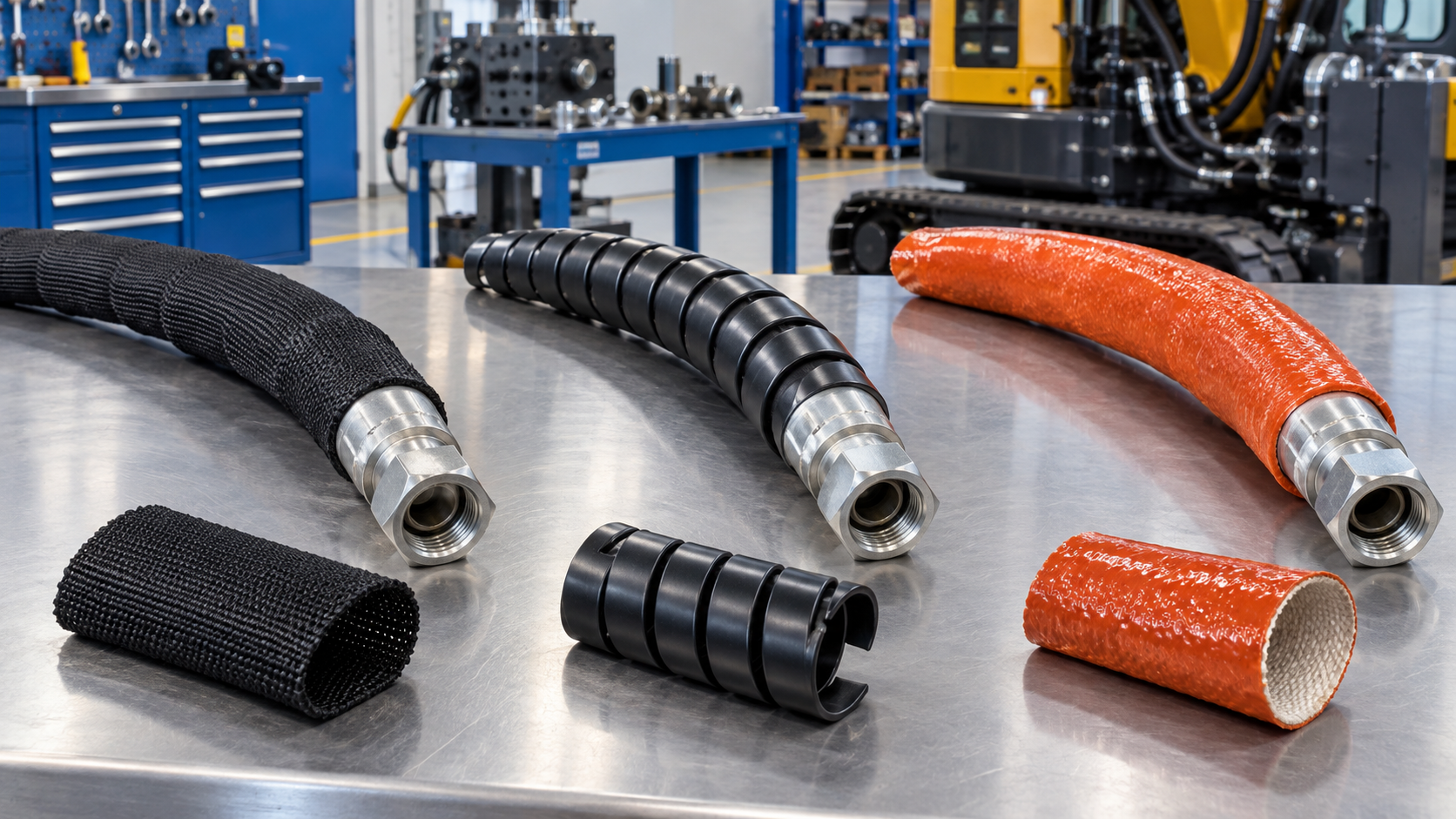
A typical silicone fire sleeve combines a fiberglass textile substrate with a silicone rubber coating. The fiberglass provides a heat-resistant structure; the silicone adds flexibility, sealing, abrasion resistance, and protection from splash.
Performance depends on coating thickness, adhesion, weave, wall thickness, curing, and dimensional consistency. Two orange sleeves that look similar may have different thermal behavior.
Color alone is not evidence of quality or temperature capability. Request controlled technical data and relevant test reports.
Installation Changes Thermal Performance
A sleeve tested as a straight, properly fitted sample may perform differently when:
- stretched tightly over the hose;
- oversized and folded;
- compressed at a bend;
- split along an unprotected seam;
- terminated with unsuitable tape;
- contaminated by oil or chemicals;
- abraded against equipment;
- installed over multiple hot hoses.
Follow sizing and installation instructions. Maintain hose minimum bend radius and avoid trapping the sleeve between clamps and sharp edges.
End Treatments Must Match the Rating
The body may withstand high temperature while tape, hook-and-loop material, thread, zipper, snaps, or sealant fails earlier. Review every component.
End closures should prevent sleeve movement and reduce ingress without crushing the hose or creating a heat trap. If the application involves molten splash, orient and seal ends so liquid cannot enter and collect inside.
Build an Exposure Profile
Before comparing high-temperature fire sleeves, document:
- normal ambient temperature;
- hot-surface temperature and distance;
- continuous exposure duration;
- intermittent peak temperature, duration, and frequency;
- flame source and possible impingement time;
- molten material type and splash direction;
- internal fluid temperature;
- airflow, movement, and vibration;
- oil, fuel, hydraulic fluid, and chemical exposure;
- required inspection and replacement interval.
Use measured data where possible. Temperatures near exhausts and furnaces can vary significantly with machine load and airflow.
Compare Supplier Data Correctly
Request the test method, sample construction, exposure time, acceptance criterion, and test report. Determine whether the result applies to the exact sleeve size and closure type being purchased.
Avoid comparing one supplier’s continuous rating with another supplier’s brief peak. Likewise, a molten-splash number cannot replace flame-performance evidence.
If the application approaches a limit, perform a representative installation trial with controlled monitoring. Include hose surface temperature beneath the sleeve, not only surrounding air temperature.
Inspection After Thermal Exposure
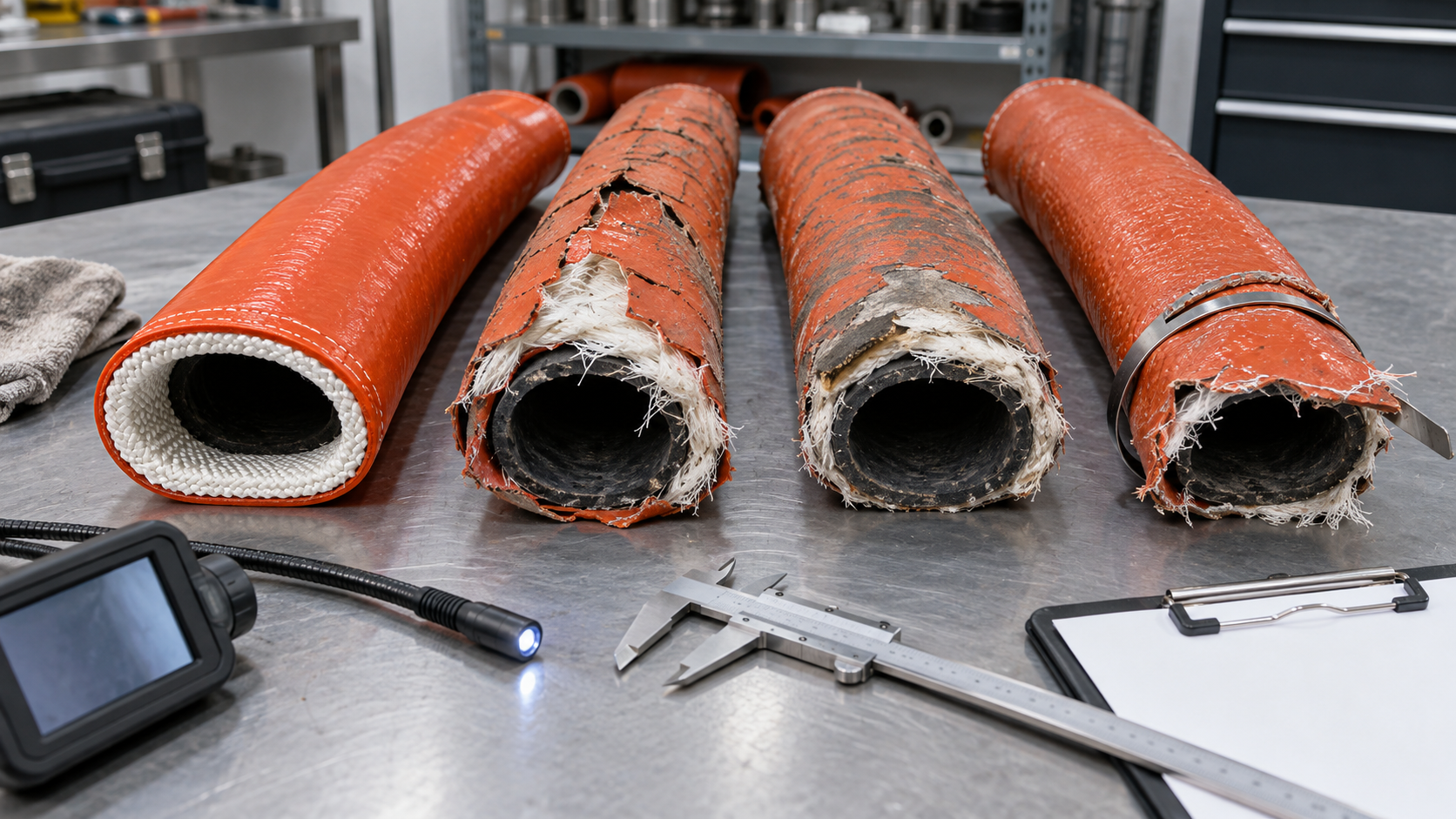
Look for glazing, cracking, hardening, chalking, discoloration, loss of flexibility, exposed white fiberglass, delamination, seam damage, loose end seals, and areas where molten material has adhered.
After a significant fire or splash event, make the system safe and inspect the hose underneath. A sleeve can appear largely intact while the hose cover has overheated. Replace components according to the risk assessment and manufacturer guidance.
Final Rating Principle
Continuous, intermittent, flame, and molten-splash ratings answer different questions. The correct sleeve is selected by matching each published rating to the real duration, frequency, heat-transfer mode, and installation.
Treat the data sheet as the start of an engineering review, not a single-number shortcut. When exposure and test conditions are aligned, fire sleeve becomes predictable protection rather than decorative insulation.