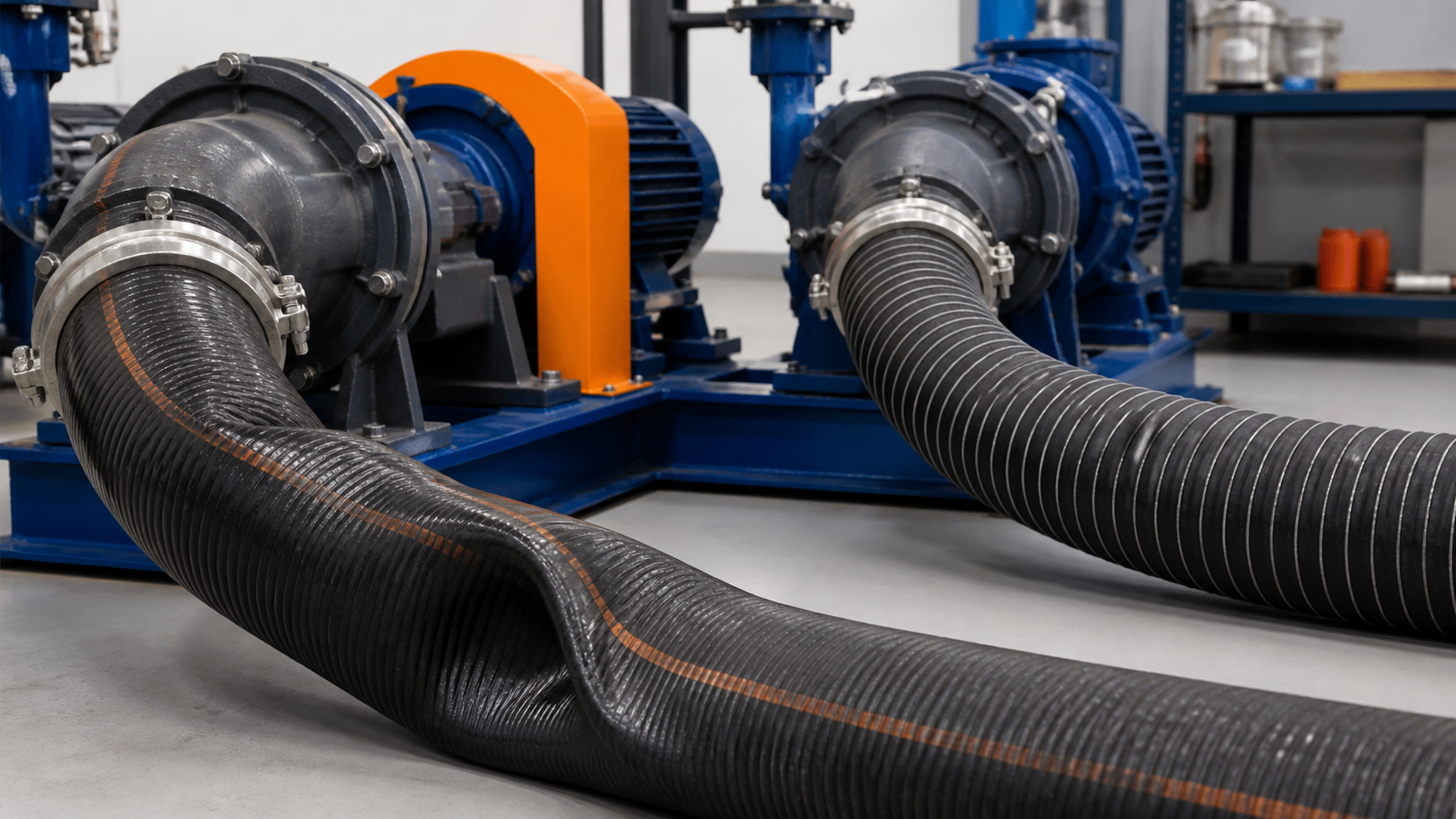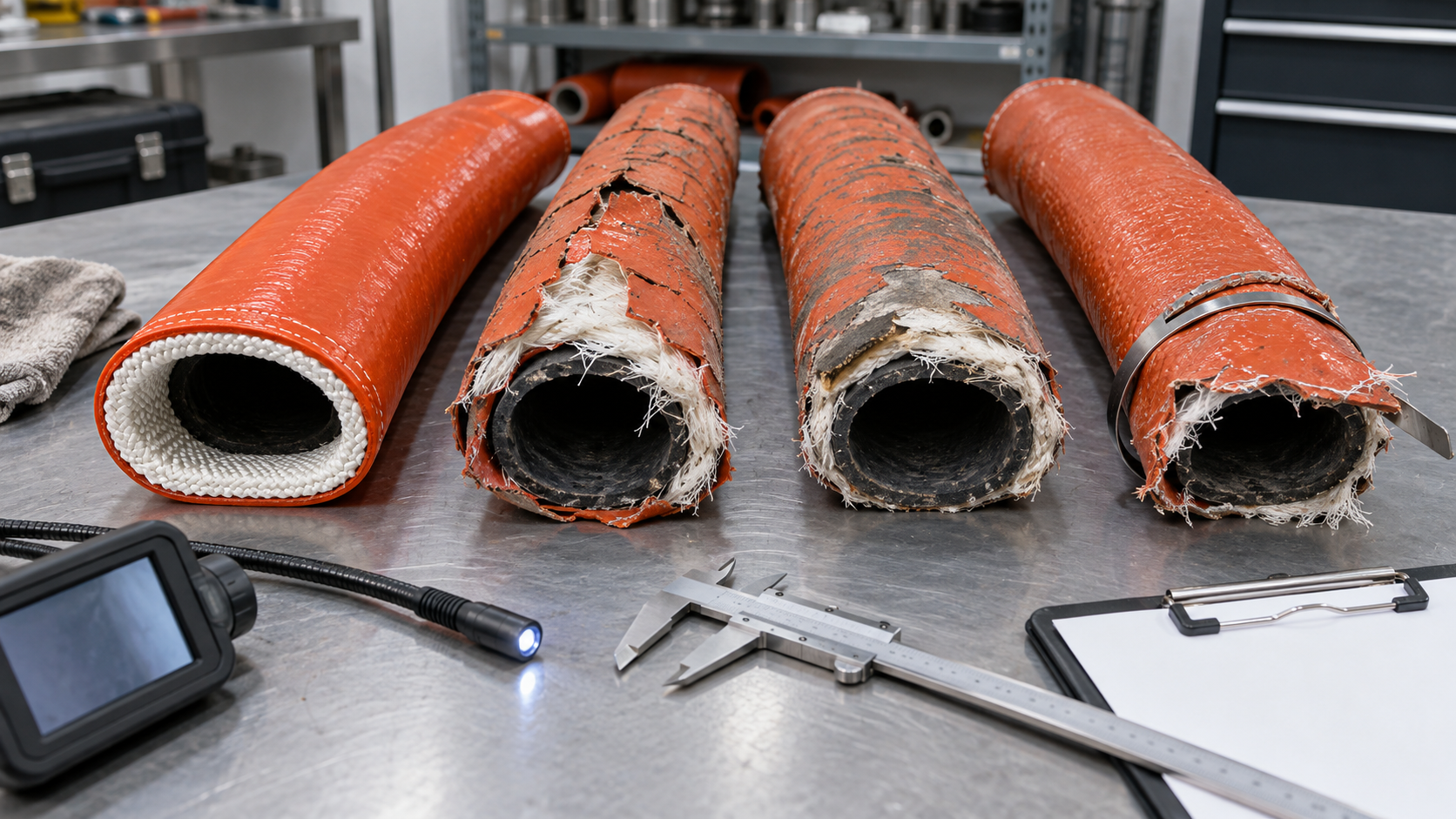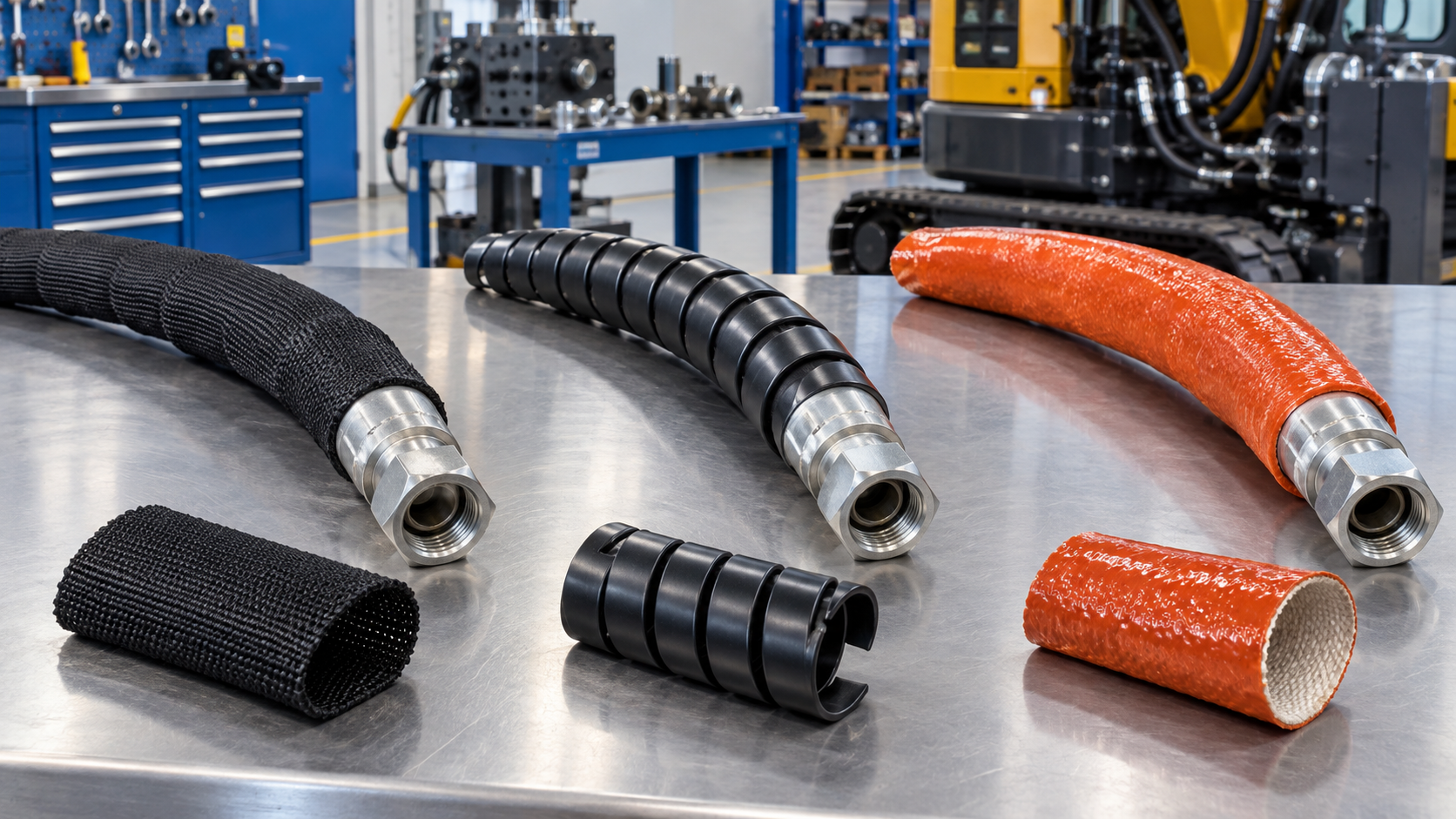
Fuel hose selection becomes more difficult when the fuel contains aromatic hydrocarbons, oxygenates, bio-components, or aggressive additives. A hose that performs acceptably with one gasoline or diesel formulation may swell, harden, permeate, crack, or lose coupling retention with another.
The phrase fuel hose aromatic content matters because aromatic compounds can be strong solvents for many elastomers. However, aromatic percentage is only one part of the decision. Temperature, pressure, vapor exposure, immersion time, fuel composition, emissions requirements, and hose construction all influence service life.
This guide compares the practical roles of NBR, CPE, and barrier liners without treating any material as universally suitable.
Why Aromatic Content Matters
Aromatic hydrocarbons can penetrate elastomer networks and change their physical properties. Depending on the compound, exposure may cause:
- volume swell and increased outside diameter;
- softening and reduced tensile strength;
- extraction of additives followed by hardening;
- loss of adhesion between tube and reinforcement;
- increased fuel permeation and odor;
- blistering or cover damage;
- reduced coupling retention;
- shortened fatigue life.
Higher aromatic content often increases severity, but the relationship is not always linear. Fuel blends contain multiple components whose combined solvent power can differ from any single ingredient.
Compare the Main Liner Approaches
| Liner approach | Typical strength | Selection concern |
|---|---|---|
| NBR-based tube | Good general fuel and oil resistance | Compound grade and aromatic limit matter |
| CPE-based tube | Useful heat, weather, and fuel resistance in suitable formulations | Flexibility and exact fuel compatibility vary |
| Fluoropolymer/barrier liner | Low permeation and broad resistance for many fuels | Cost, flexibility, bonding, and fitting design |
| Multilayer construction | Balances permeation, flexibility, and reinforcement | Layer adhesion and end preparation are critical |
These are material families, not performance guarantees. Supplier test data for the actual compound and construction should control selection.
NBR Fuel Hose
NBR rubber is widely used for fuel and oil service because acrylonitrile content and compound formulation can be adjusted to balance resistance, low-temperature flexibility, and mechanical properties.
In general, increasing acrylonitrile content can improve resistance to fuels and reduce swelling, while potentially reducing low-temperature flexibility. Fillers, plasticizers, cure system, and polymer blends also affect performance. Two NBR hoses can therefore behave differently in the same fuel.
NBR may be a practical choice for many conventional fuels when temperature, pressure, aromatic content, and permeation limits are within the hose specification. Buyers should not approve it based on the abbreviation alone.
Ask for immersion or fuel-resistance data relevant to the intended blend, including changes in volume, mass, hardness, tensile properties, and appearance.
CPE Fuel Hose
Chlorinated polyethylene, or CPE, can provide useful resistance to heat, weather, ozone, oils, and certain fuels when properly formulated. It may be used as a tube, cover, or component of a multilayer hose.
CPE performance depends on chlorine content, compounding, reinforcement, and service conditions. It should be evaluated against the exact fuel rather than treated as an automatic upgrade from NBR.
Where the hose sees both internal fuel exposure and severe external weathering, a CPE-based construction may offer a helpful balance. The supplier should distinguish tube compatibility from cover resistance.
Barrier Liners
Barrier liners reduce permeation and can broaden compatibility with modern fuels. Fluoropolymer or other low-permeation layers may be used inside a flexible hose structure.
Advantages can include lower vapor loss, reduced odor, resistance to aggressive fuel components, and improved compliance with application-specific permeation requirements. Limitations may include higher cost, different bend behavior, potential liner kinking, special coupling needs, and more demanding manufacturing control.
A thin barrier is effective only if it remains continuous. Poor bonding, excessive bending, damaged end preparation, or incompatible fittings can compromise the layer. Evaluate the complete assembly and its flexing duty.
Modern Fuel Blends Add Complexity
Aromatic content should be reviewed alongside:
- ethanol, methanol, or other oxygenates;
- biodiesel or renewable components;
- additives and detergents;
- sulfur level;
- seasonal formulation changes;
- contamination with water;
- vapor versus liquid exposure;
- cleaning or flushing fluids.
Alcohol-containing fuels can change both chemical compatibility and water behavior. Biodiesel content can affect elastomers differently from petroleum diesel. Recovered, off-specification, or waste fuels may have uncertain composition and require additional caution.
Use the fuel supplier’s full specification and safety data rather than a broad name such as “gasoline” or “diesel.”
Permeation Is Not the Same as Leakage
Fuel molecules can migrate through a tube and cover without a visible crack. Permeation may create odor, emissions, cover blistering, or a flammable atmosphere in an enclosed space.
Applications with strict emissions limits, occupied compartments, marine engine spaces, or hot environments may require a dedicated low-permeation construction. Wall thickness alone does not necessarily solve permeation; liner chemistry and multilayer design are important.
Ask the supplier which test method, fuel, temperature, and limit support any low-permeation claim.
Temperature Accelerates Fuel Attack
Higher temperature generally increases diffusion and can accelerate material change. Under-hood, engine-room, return-line, or recirculating fuel service may be considerably hotter than storage conditions.
Define continuous, peak, ambient, and fuel temperatures. Include heat soak after shutdown and nearby exhaust or engine surfaces. A hose approved at room temperature may not provide the same swelling, permeation, or pressure performance when hot.
Cold temperature also matters. A chemically resistant tube that becomes stiff can crack under vibration or tight bending during winter startup.
Pressure, Vacuum, and Routing
Fuel systems can include suction, low-pressure supply, high-pressure injection support, return, vent, fill, or transfer functions. Each needs an appropriate construction.
Do not use one generic rubber fuel hose for every circuit. Specify working pressure, surge, vacuum, bend radius, flow, vibration, and impulse. The lowest-rated component determines assembly capability.
For vessel applications, a marine fuel hose may also need fire, permeation, saltwater, and regulatory performance. Confirm the exact intended location and applicable requirements.
Cover and External Exposure
The cover may contact fuel through spills, splash, or permeation. It can also face oil, salt, ozone, UV, abrasion, heat, and cleaning chemicals. A tube-compatible hose can still fail when its cover is unsuited to the environment.
Review fire resistance, weathering, abrasion, and external chemical requirements separately. Protective sleeves should not trap leaked fuel or hide inspection points.
Couplings and Seals
Fuel exposure can soften a tube and reduce fitting grip. Select couplings validated for the hose and use controlled crimp or clamp dimensions. Check fitting alloy, plating, seal material, and corrosion environment.
Barrier-lined hose may require special inserts or preparation to avoid cutting, folding, or bypassing the liner. Do not mix fittings based only on nominal size.
Inspect completed assemblies for insertion depth, crimp diameter, orientation, cleanliness, and leakage. Pressure testing does not by itself verify long-term chemical compatibility.
Information Required for Selection
Before comparing fuel hose types, provide:
- fuel trade name and full composition range;
- aromatic content and test basis;
- oxygenate or biofuel percentages;
- liquid and vapor exposure;
- operating and peak temperature;
- working pressure, surge, and vacuum;
- permeation or emissions limit;
- route, bend, vibration, and flexing;
- external environment;
- fitting, seal, and certification requirements.
If composition varies by region or season, specify the worst credible blend rather than the current delivery only.
Validate Borderline Applications
When published compatibility data are incomplete or the application approaches a limit, test the actual hose with a representative fuel under realistic temperature and exposure. Evaluation may include volume change, hardness, tensile strength, permeation, adhesion, pressure capability, and coupling retention.
Laboratory immersion is useful but may not reproduce pressure cycling, flexing, vapor exposure, or thermal aging. A controlled field trial and scheduled inspection can provide additional evidence.
Final Material Principle
NBR, CPE, and barrier liners each have valid roles. The best choice is the construction whose tested compound, permeation behavior, reinforcement, cover, and fitting system match the complete fuel environment.
Treat aromatic content as a critical input—not a standalone answer. When fuel composition and operating conditions are documented together, buyers can select a hose that controls swelling, permeation, and mechanical risk throughout its expected service life.