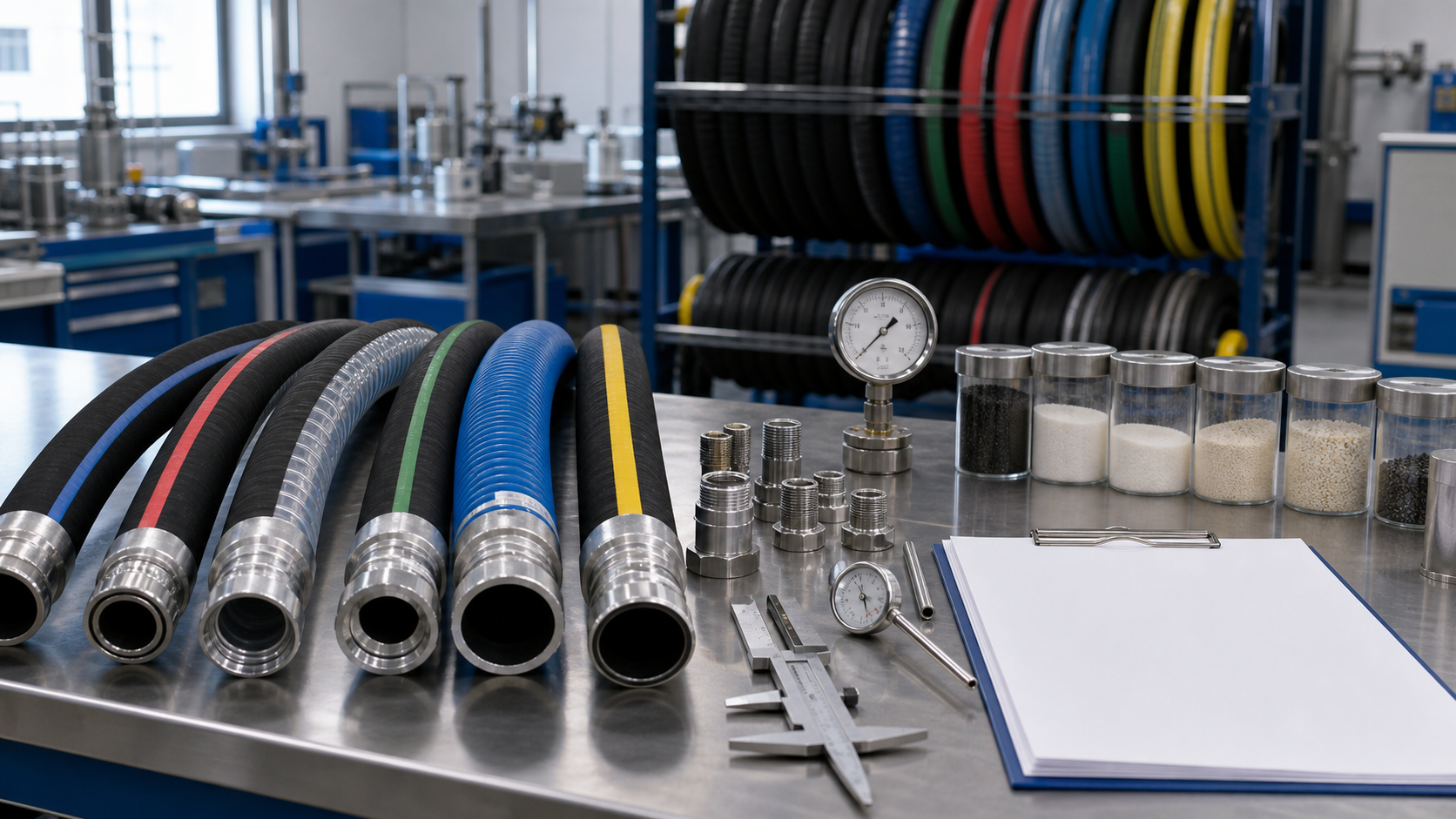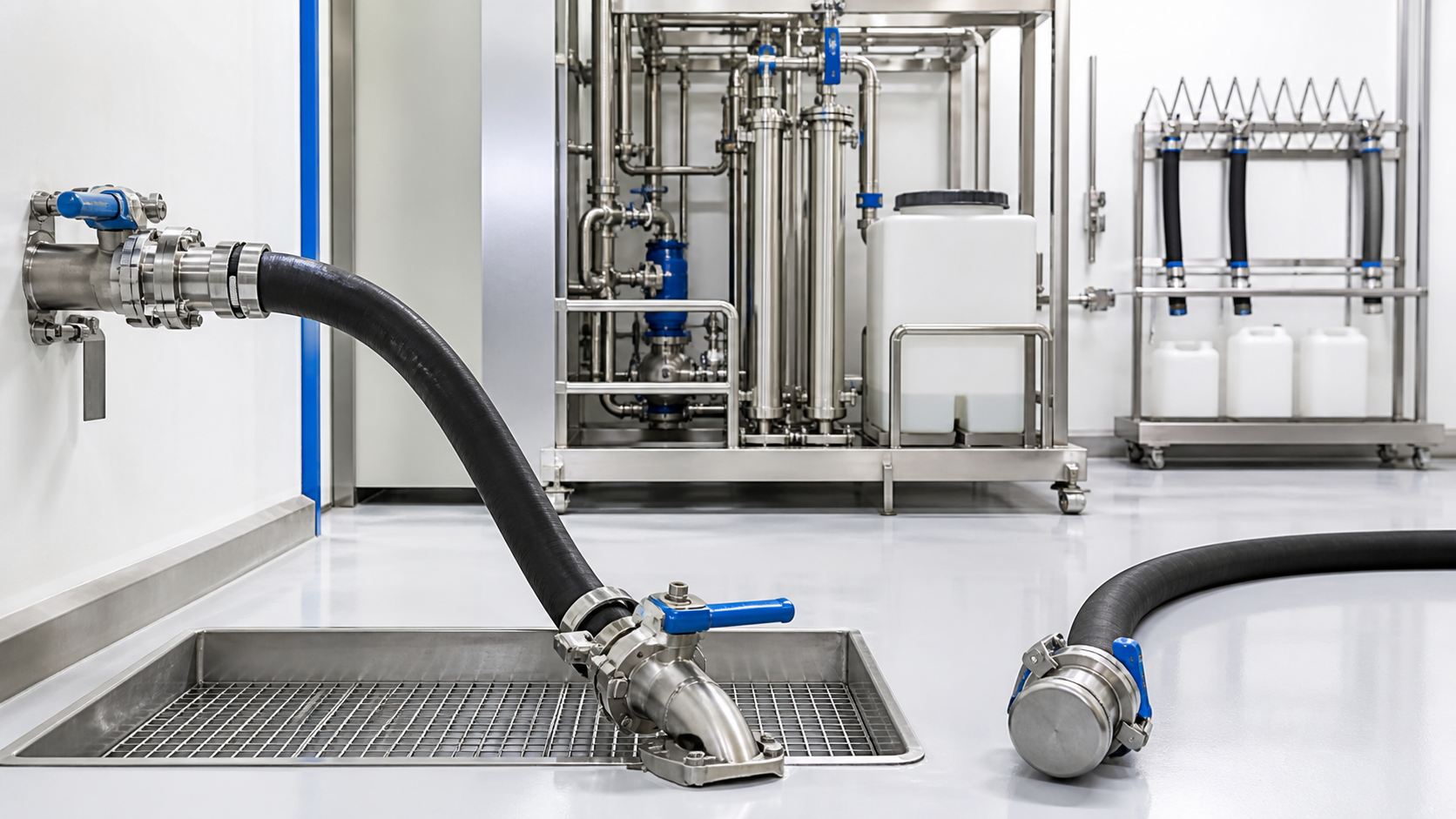
A hydraulic circuit may use hoses that look similar but perform different jobs. The pressure line carries oil from the pump to an actuator or valve, the return line brings oil to the reservoir, and the suction line supplies the pump. Each faces a different combination of pressure, vacuum, temperature, flow, and mechanical stress.
Treating these hoses as interchangeable is a common mistake. A return hose may not tolerate pump-outlet pressure spikes, while a heavily reinforced pressure hose may be unnecessarily stiff for a return line. A suction hose must resist vacuum collapse, requiring a different construction.
Understanding pressure line vs return line hydraulic hose requirements helps equipment manufacturers, repair companies, and distributors choose a safer and more economical specification. The right choice begins with the function of the line rather than its outside diameter or appearance.
The Three Main Hydraulic Line Functions
Most hydraulic systems contain more than three individual hoses, but their functions generally fall into three categories.
Pressure lines
Pressure lines carry fluid after it leaves the pump. They may connect the pump to a valve block or connect valves to cylinders, motors, brakes, steering systems, and other actuators. These lines must withstand the system’s normal operating pressure as well as transient peaks created by rapid valve movement, shock loading, or sudden changes in actuator direction.
High-pressure circuits typically use wire-braided or wire-spiral reinforcement. The correct construction depends on working pressure, impulse frequency, hose size, bend requirements, and the severity of the application. Buyers selecting a high-pressure hydraulic hose should compare the full pressure and impulse specification, not only the advertised burst pressure.
Return lines
Return lines carry oil from valves and actuators back to the reservoir. Their average pressure is usually much lower than the pressure side of the circuit. However, “low pressure” does not mean “no pressure.” Filters, coolers, long hose runs, restrictive fittings, cold oil, and undersized lines can all create backpressure.
A return hose must accommodate the expected flow rate without creating excessive velocity or heat. It also needs suitable oil resistance, temperature capability, and cover durability. A low-pressure hydraulic hose may use textile reinforcement or a lighter construction when the actual circuit conditions allow it.
Suction lines
Suction lines connect the reservoir to the pump inlet. Instead of containing high positive pressure, they operate below atmospheric pressure as the pump draws fluid. Their main structural challenge is resisting collapse.
A suction hose normally includes a rigid or helical reinforcement that keeps the bore open under vacuum. The hose must also have a sufficiently large inside diameter, a smooth flow path, and an airtight connection. SAE 100R4 suction hose is a common construction for petroleum-based hydraulic fluid suction and low-pressure return service, subject to the manufacturer’s temperature and compatibility limits.
Key Differences at a Glance
| Selection factor | Pressure line | Return line | Suction line |
|---|---|---|---|
| Main duty | Deliver pressurized fluid | Return fluid to reservoir | Feed pump inlet |
| Main risk | Burst and impulse fatigue | Backpressure, heat, and restriction | Vacuum collapse and air leakage |
| Typical reinforcement | Wire braid or wire spiral | Textile or wire reinforcement | Textile plus helical reinforcement |
| Sizing priority | Pressure rating and flow | Low backpressure | Low inlet loss and collapse resistance |
| Common installation issue | Abrasion, flexing, pressure spikes | Undersizing and restrictive fittings | Kinks, loose clamps, and excessive length |
The table is a starting framework for collecting operating data.
How Pressure Rating Changes the Selection
For a pressure line, the hose’s rated working pressure must be equal to or higher than the maximum pressure the system can produce. The relief-valve setting is important, but it may not capture every transient event. Equipment with rapid cycling, impact loads, or pressure intensification may experience short spikes above the normal gauge reading.
Burst pressure is a destructive laboratory value, not an allowable operating pressure. Selecting a hose because its burst figure exceeds system pressure ignores fatigue life and the safety factor built into the specification. Buyers should compare working pressure, impulse performance, temperature derating, size, and the relevant hose standard.
Return hoses also require a realistic pressure rating. A blocked filter, restricted cooler, or cold start can increase return pressure substantially. If the line is located downstream from a counterbalance valve or another restrictive device, its pressure may be higher than expected. Measure or calculate worst-case backpressure rather than assuming the entire return side is nearly atmospheric.
Suction lines require a vacuum rating or documented collapse resistance. A hose designed only for positive pressure may flatten as the pump draws oil, starving the inlet and damaging pump performance.
Flow Velocity and Hose Inside Diameter
The required inside diameter is influenced by flow rate and the acceptable fluid velocity for that part of the circuit. Pressure lines can generally tolerate higher velocity than return and suction lines. A suction line usually needs the lowest velocity because excessive inlet loss can contribute to cavitation.
An undersized pressure hose increases pressure drop and heat generation. An undersized return hose can create unwanted backpressure. An undersized suction hose can restrict pump inlet flow, produce noise, aeration, and cavitation, and shorten pump life.
Do not size a replacement by measuring only the outside diameter. Reinforcement thickness varies between hose types, so two hoses with a similar outside diameter can have different bores. Use the specified dash size or nominal inside diameter and confirm that fittings do not create a severe restriction.
Temperature and Fluid Compatibility
Every line must be compatible with the hydraulic fluid and the temperature at both the inner tube and outer cover. Oil returning from an actuator can be hotter than reservoir temperature, especially in systems with continuous throttling or inefficient components. Pressure hoses near engines, exhaust systems, or furnaces may also experience high external heat.
Cold temperature creates another set of problems. Viscous oil increases pressure drop in return and suction lines. A hose that becomes stiff in cold weather may transmit more load to fittings and resist normal equipment movement.
Fluid compatibility should cover the base oil, additives, water content, cleaning chemicals, and any fire-resistant fluid. A suitable pressure rating does not compensate for an incompatible tube. The hydraulic hose range includes constructions for different pressure classes and circuit functions.
Fittings Matter as Much as the Hose
The assembly is limited by its lowest-rated component. Hose, fittings, ferrules, adapters, and connection standards must be compatible with one another. An incorrectly matched fitting can pull out, leak, damage the reinforcement, or create an internal restriction.
Pressure-line fittings must withstand the same working pressure and impulse conditions as the hose. Return and suction fittings should be sized to avoid unnecessary flow restriction. Suction connections must also remain airtight because a small inlet leak can draw air into the system without producing an obvious external oil leak.
For OEM assemblies, specify end style, thread or flange standard, sealing method, orientation, cut length, and angular relationship between fittings. These details are especially important when replacing formed tube sections with flexible hose.
Routing Rules for Each Line
Pressure hoses need protection from abrasion, sharp edges, hot surfaces, and excessive movement. Allow enough length for flexing and pressure-related length change, but avoid unnecessary slack that can rub against surrounding components.
Return hoses should follow a direct path to reduce pressure loss. Avoid undersized elbows, excessive adapters, and tight bends near the fitting. If the line passes through a cooler or filter, include those components when evaluating backpressure.
Suction hoses should be short, generously sized, and free from high points that can trap air. Keep the bend radius above the specified minimum. Support the hose without crushing it, and inspect clamps and connections for signs of air entry.
A Practical Specification Checklist
Before ordering any of the three hose types, collect:
- Line function: pressure, return, suction, case drain, or pilot
- Maximum continuous and peak pressure
- Required vacuum capability where applicable
- Minimum and maximum fluid temperature
- Ambient and external heat exposure
- Hydraulic fluid and additive package
- Flow rate and desired velocity
- Inside diameter and connection size
- Required hose standard
- Impulse or duty-cycle severity
- Minimum bend radius and available routing space
- Abrasion, ozone, weather, and flame-resistance needs
- Fitting types, orientation, and assembly length
Providing these details helps a manufacturer recommend a complete construction rather than making a guess from size and pressure alone.
Conclusion
Pressure lines need working-pressure and impulse strength, return lines need flow capacity with controlled backpressure, and suction lines need an unrestricted bore with resistance to vacuum collapse. A reliable specification considers function, peak pressure, flow, temperature, fluid, reinforcement, fittings, and routing together. For OEM equipment or replacement programs, classify every hose by circuit duty before selecting the product family.