A high-pressure hydraulic system running smoothly for months—then suddenly failing with no warning. No overpressure event. No mechanical damage. Just a burst hose or a clogged valve. In many such cases, the root cause isn’t poor design or operator error. It’s hydraulic hose media incompatibility: the slow, invisible chemical reaction between the fluid and the hose’s inner tube material.
This silent degradation—corrosion, swelling, hardening, or leaching—compromises integrity long before visible signs appear. Yet it’s often overlooked during maintenance planning or component selection. This article explains why media compatibility is a non-negotiable factor in hydraulic reliability, how to evaluate it systematically, and what practical steps engineers and procurement teams can take to avoid preventable failures.
What Is Hydraulic Hose Media Compatibility?
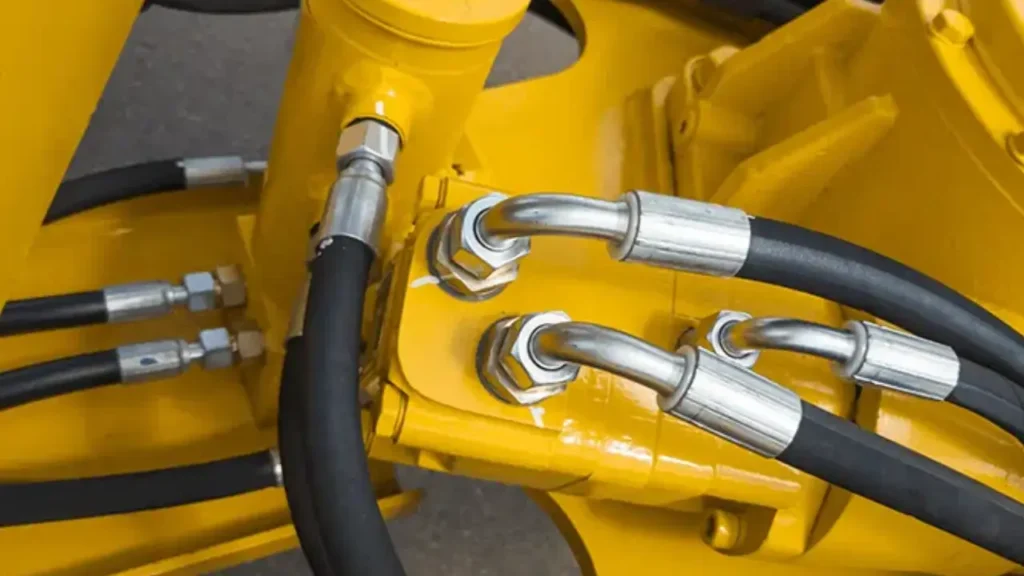
Hydraulic hose media compatibility refers to the chemical resistance of a hose’s inner tube (and sometimes cover) to the specific fluid it carries—whether mineral oil, synthetic ester, water-glycol, phosphate ester, or even bio-based hydraulic fluids.
When incompatible, the fluid can:
- Degrade elastomer or thermoplastic linings, causing cracks or loss of flexibility
- Swell the tube, reducing bore diameter and increasing flow resistance
- Leach additives or polymer fragments into the fluid, contaminating valves and pumps
- Harden the material, making it brittle and prone to rupture under pressure cycling
Why Pressure Ratings Aren’t Enough
Many buyers focus solely on working pressure, burst pressure, and impulse ratings—critical specs, yes—but they assume chemical stability is guaranteed. It’s not. A hose rated for 5,000 PSI may still fail at 1,000 PSI if the fluid slowly eats away at its inner layer. The failure mode shifts from mechanical overload to chemical fatigue.
The Real Cost of Ignoring Media Compatibility
System downtime due to hose failure isn’t just about replacing a $50 component. Consider:
- Production line stoppage in manufacturing: $10,000–$50,000/hour
- Contamination cleanup in closed-loop systems
- Secondary damage to pumps, servovalves, or actuators
- Safety incidents from sudden fluid ejection
These risks compound when systems use non-standard or retrofitted fluids—common in sustainability-driven upgrades to biodegradable or fire-resistant alternatives.
Case Pattern: The Bio-Based Fluid Surprise
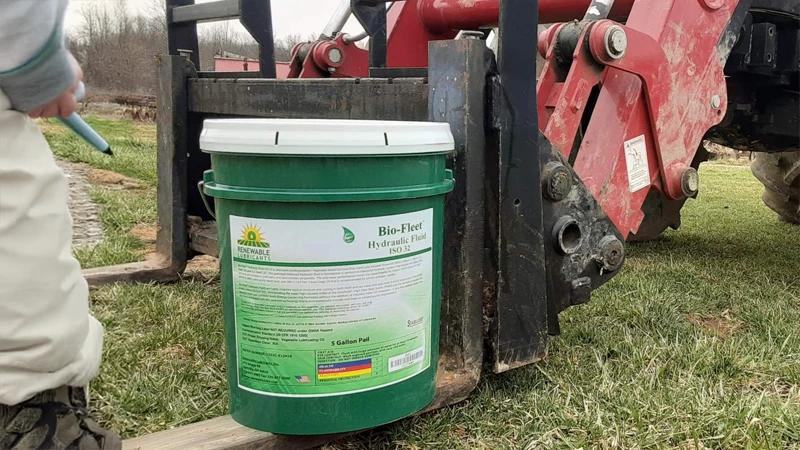
A packaging plant switched to a bio-based hydraulic fluid to meet ESG goals. Within six months, multiple hoses developed micro-cracks. Investigation revealed the fluid’s ester content attacked the nitrile rubber (NBR) lining—a material perfectly fine for mineral oil but unsuitable for this new medium. The fix? Re-specifying hoses with fluorocarbon (FKM) or polyurethane liners.
How to Evaluate Media Compatibility Systematically
Step 1: Identify Your Exact Fluid Composition
“Hydraulic oil” isn’t specific enough. Request the fluid manufacturer’s technical data sheet (TDS). Note base stock (Group I–V mineral oils, PAO, PAG, etc.), additives (anti-wear, anti-foam), and any bio-content percentage.
Step 2: Cross-Reference with Hose Material Charts
Reputable hose manufacturers publish chemical resistance guides. Look for ratings like “Excellent,” “Good,” “Fair,” or “Not Recommended” for your fluid against common liner materials:
| Liner Material | Mineral Oil | Synthetic Ester | Water-Glycol | Phosphate Ester |
| Nitrile (NBR) | Excellent | Fair / Poor | Poor | Not Recommended |
| EPDM | Poor | Good | Excellent | Good |
| Fluorocarbon (FKM) | Excellent | Excellent | Fair | Excellent |
| Polyurethane (PU) | Good | Good | Poor | Not Recommended |
Step 3: Validate with Real-World Testing (When in Doubt)
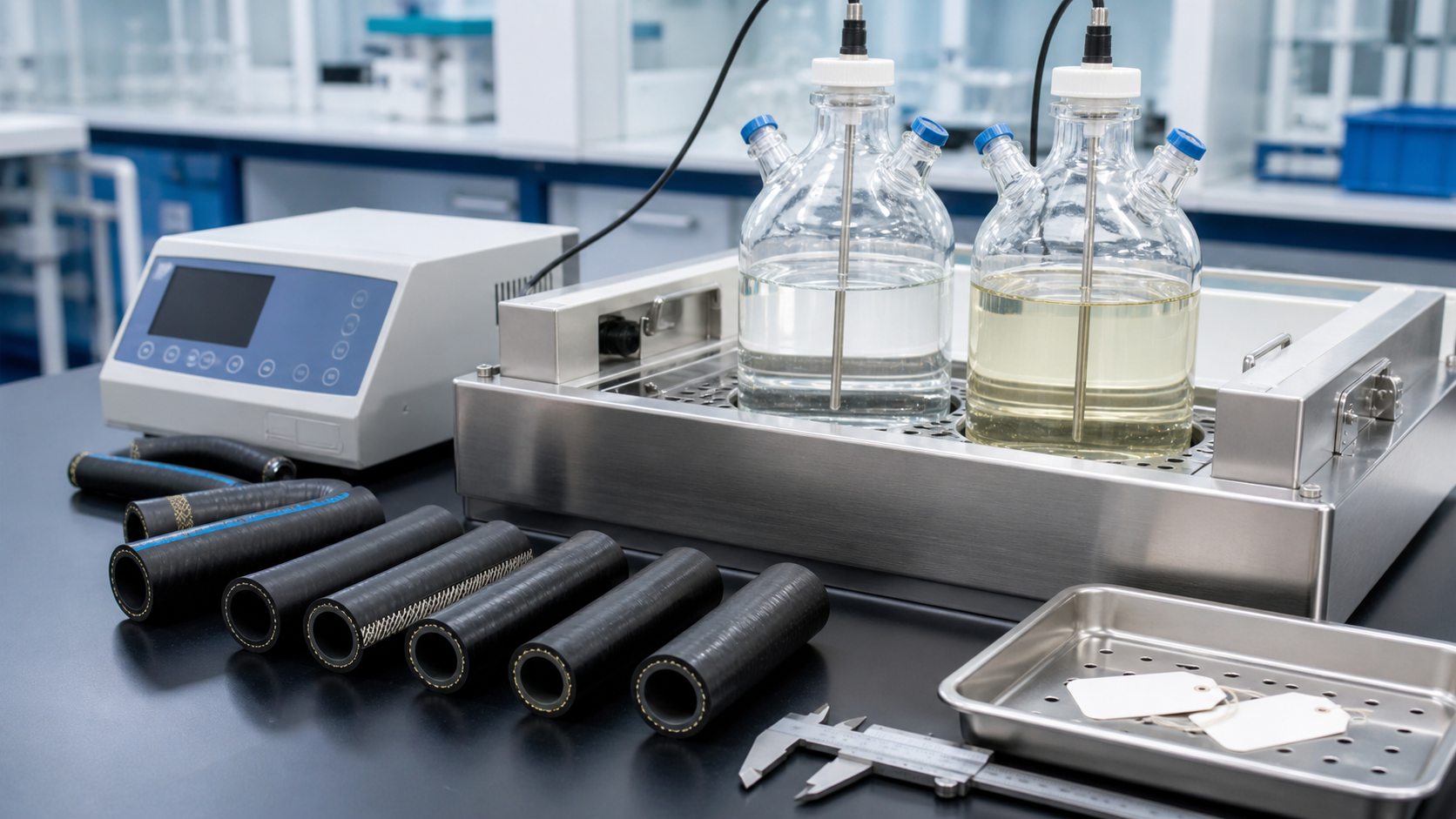
For critical applications or novel fluids, request immersion testing data: samples of the hose liner are submerged in the fluid at operating temperature for 70–168 hours. Key metrics include:
- Volume swell (%)
- Tensile strength retention (%)
- Elongation at break change
Procurement Checklist: Avoiding Media Mismatch
Use this checklist when sourcing or replacing hydraulic hoses:
- ✅ Confirm exact fluid type and brand (not just “hydraulic oil”)
- ✅ Verify hose liner material matches fluid per manufacturer’s compatibility chart
- ✅ Check if system operates above 60°C—heat accelerates chemical reactions
- ✅ Ensure cover material is also compatible (e.g., ozone-resistant for outdoor use)
- ✅ For retrofits, audit all wetted components—not just hoses but seals and accumulators
- ✅ Document fluid-hose pairings in your maintenance log
Common Objections—and Why They’re Risky

“Our old hoses lasted years with this fluid.”
Past performance ≠ future safety. Fluid formulations change. New additive packages may introduce aggressive components. Also, older systems often used more robust (but heavier) hoses—modern lightweight designs may have thinner liners with less margin for error.
“The supplier says it’s compatible.”
Ask for the test standard used (e.g., ISO 1436, SAE J517). Generic claims like “suitable for most oils” are red flags. Demand specific data for your fluid.
FAQ
Can I use the same hose for mineral oil and biodegradable fluid?
Generally no. Biodegradable fluids (especially ester-based) require FKM, EPDM, or specialized polyurethane. NBR hoses will degrade rapidly.
What’s the minimum order quantity (MOQ) for custom-compatible hoses?
Standard hoses with verified compatibility are usually available off-the-shelf. Custom formulations may require MOQs, but many suppliers offer sample reels for validation.
How long does media-induced degradation take?
It varies by fluid, temperature, and pressure cycling. Some failures occur in weeks; others take years. Accelerated aging tests simulate long-term exposure.
Does hose color indicate material compatibility?
No. Color coding is not standardized globally. Always rely on part numbers and material specs, not visual cues.
Take Control Before Failure Strikes
Hydraulic reliability starts with chemistry—not just mechanics. By treating media compatibility as a core design parameter, you prevent hidden degradation that leads to unexpected downtime, safety hazards, and cascading damage.
If you’re evaluating a fluid change, troubleshooting recurring hose failures, or specifying a new system, share your fluid type, operating temperature, and pressure range. We’ll help you cross-reference with verified compatibility data and suggest appropriate hose constructions—no sales pitch, just engineering clarity.