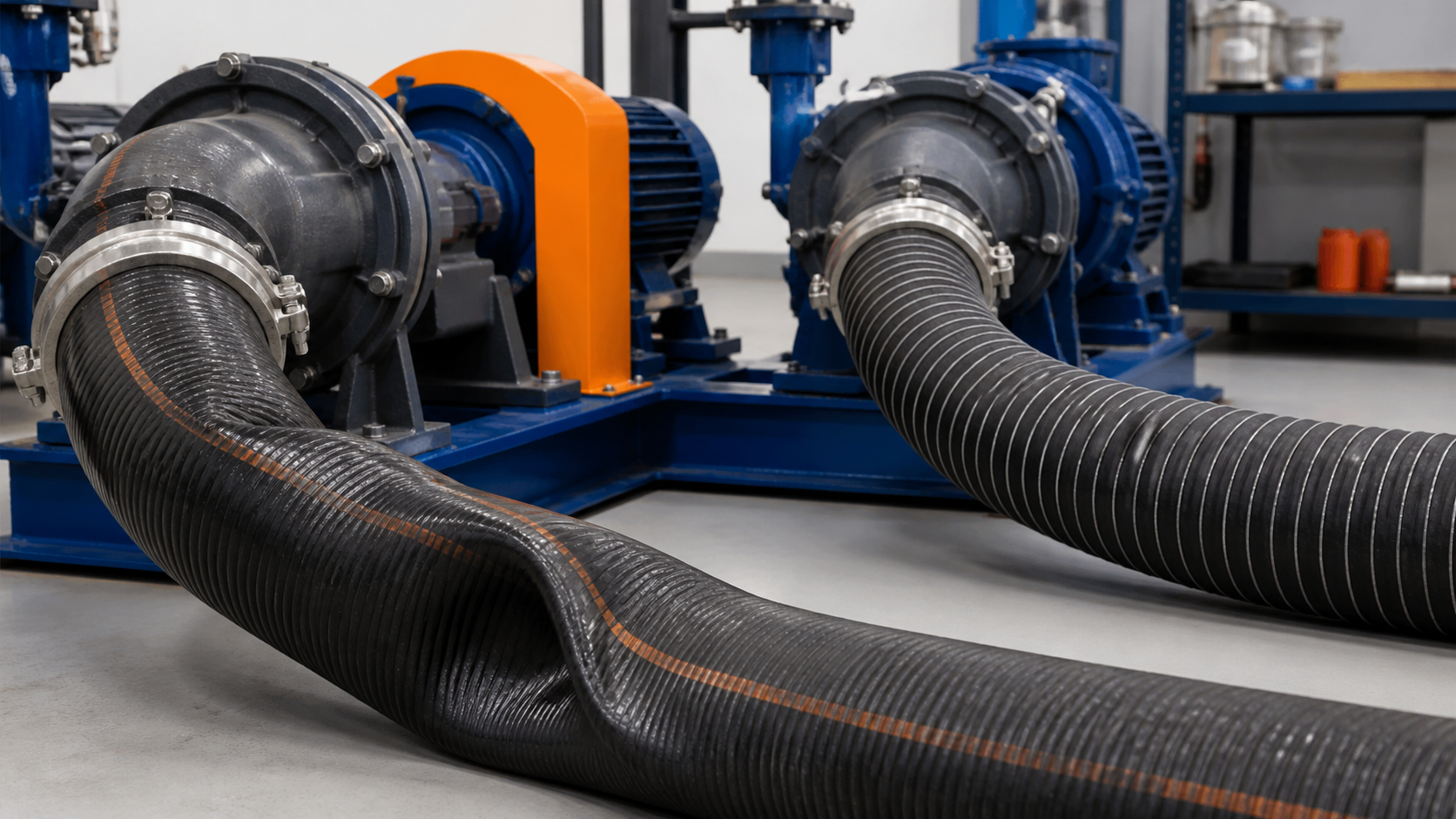
What Are Hydraulic Hose Standards and Why Do They Matter?
In modern fluid power systems, hydraulic hose standards are the backbone of safety, predictability, and interchangeability. Established by governing bodies like the Society of Automotive Engineers (SAE), the International Organization for Standardization (ISO), and the European Standard (EN), these benchmarks ensure that a hose manufactured by one company will safely connect and perform under the exact same criteria as one from another.
For fleet managers and equipment owners, these standards eliminate guesswork, ensuring that high-pressure lines can withstand extreme pulse cycles, mechanical vibrations, and temperature spikes without catastrophic failure.
Understanding SAE Hydraulic Hose Classifications
The SAE J517 standard is the traditional benchmark for hydraulic hoses in the United States, classifying hoses into specific series such as SAE 100R1, 100R2, 100R4, 100R12, 100R13, and 100R15.
Historically, these classifications are dictated by the hose construction type rather than its pressure capacity. This means:
- SAE 100R1 & 100R2: Built with single or double steel wire braids, typically used for low-to-medium pressure applications.
- SAE 100R12 & 100R13: Engineered with four-to-six layers of spiral-wound steel wire to handle severe, high-pressure impulse applications.
- The Pressure Variable: Under traditional SAE standards, as the inner diameter (ID) of the hose increases, the working pressure rating drops significantly.
The Evolution of Hydraulic Hose Technology in Modern Machinery
Modern construction and industrial equipment demands higher power density from increasingly compact footprints. Yesterday’s machinery relied on massive, rigid steel lines and low-pressure hydraulic circuits. Today’s heavy equipment—like tier-4 final excavators, skid steers, and high-tonnage cranes—operates at extreme pressures often exceeding 5,000 to 6,000 PSI to maximize breakout force and cycle times.
This engineering shift exposed the limitations of traditional SAE hose classifications. Because older hose designs lost pressure capacity as they grew in size, engineers were forced to specify bulky, stiff, and heavy multi-spiral hoses just to maintain a consistent system pressure across different line sizes. This challenge paved the way for modern isobaric (constant pressure) hose technology, revolutionary engineering designed to match the high-duty cycles and tight routing constraints of next-generation machinery.
What Is an Isobaric (Constant Pressure) Hydraulic Hose?
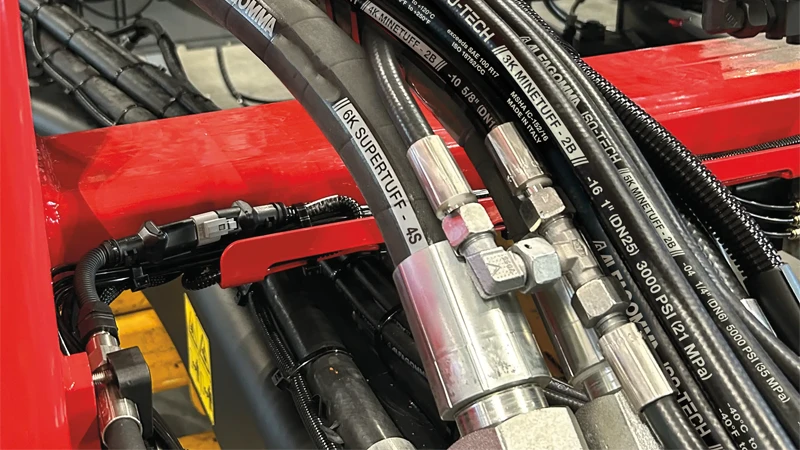
Traditional hydraulic setups force you to juggle different pressure ratings as hose diameters change. Isobaric hoses completely throw that complicated method out the window, delivering a modern solution engineered for high-performance equipment.
Definition and Working Principle of Isobaric Hoses
An isobaric hydraulic hose, commonly known as a constant pressure hose, is engineered to maintain the exact same working pressure rating regardless of its internal diameter. Whether you are running a 1/4-inch line or a massive 2-inch line, the pressure limit stays identical.
Unlike older standards that rely strictly on a set number of steel layers, isobaric hoses utilize advanced materials and precise engineering. To maintain a constant pressure across larger sizes, the reinforcement layer—often constructed using high-tensile wire spiraling or wire braided hose techniques—is structurally adjusted. This ensures that the hose wall can handle extreme stress without requiring bulkier, stiffer materials.
How Constant Pressure Ratings Simplify Hose Selection
Selecting the right components for modern construction equipment used to be a headache. Under old systems, as your hose diameter increased, the maximum pressure rating dropped, forcing engineers to redesign systems or source specialized, heavy hoses.
Isobaric ratings simplify your entire build and maintenance strategy:
- Eliminate the Guesswork: If your machine’s hydraulic system runs at 4,000 PSI, you simply source 4,000 PSI isobaric hoses across all sizes.
- Streamline Design: Engineers no longer have to cross-reference complex charts to ensure a larger return or supply line can handle the system pressure.
- Fail-Safe Replacement: Field technicians can replace lines faster with zero risk of accidentally installing an undersized hose that might rupture under standard operating pressures.
Traditional SAE Hydraulic Hoses Explained
Traditional SAE (Society of Automotive Engineers) hydraulic hoses have been the backbone of construction and industrial equipment for decades. Built around specific material constructions—such as the number of steel wire braids or spirals—these hoses follow historical standards like SAE 100R1, 100R2, or 100R12. While reliable, the traditional SAE system ties a hose’s pressure capacity directly to its physical size, requiring a deeper look at how these ratings function in real-world applications.
Pressure Ratings Across Different SAE Hose Types
Under traditional SAE standards, as the inside diameter (ID) of the hose increases, its maximum working pressure drops. This occurs because a larger surface area experiences higher total force under the same internal pressure. To maintain high pressures in larger lines, equipment designers must step up to heavier, thicker hose classifications.
| SAE Hose Type | Construction Type | 1/4″ ID Pressure Rating | 2″ ID Pressure Rating |
|---|---|---|---|
| SAE 100R1 | Single Wire Braid | 2,750 PSI | 375 PSI |
| SAE 100R2 | Two Wire Braid | 5,000 PSI | 1,125 PSI |
| SAE 100R12 | Four Spiral Wire | 4,000 PSI (Fixed) | 2,500 PSI |
Challenges of Matching SAE Hoses to System Requirements
Managing a fleet of modern machinery using traditional SAE hoses creates significant engineering and maintenance hurdles.
- Complex Engineering Calculations: Specifying a single 3,000 PSI hydraulic system requires sourcing entirely different hose specs for the pressure lines, return lines, and supply lines based purely on diameter.
- Massive Parts Inventory: Fleet managers must stock dozens of different hose types and matching fittings, driving up overhead costs. For operations running mixed setups, tracking a complex hydraulic hose price list for multiple SAE categories becomes an administrative burden.
- Installation Bottlenecks: Heavy-duty, high-pressure SAE spiral hoses are notoriously stiff. Forcing these rigid hoses into tight engine compartments increases installation time and puts extra stress on technicians.
Isobaric Hoses vs. Traditional SAE Hoses: Key Differences
When comparing isobaric hoses vs. traditional SAE hydraulic hoses, the engineering differences directly impact your machine’s performance and your shop’s bottom line. For modern construction equipment, switching to constant pressure hoses changes how systems are designed and maintained.
Pressure Rating Structure and Performance Consistency
Traditional SAE hoses base their pressure ratings on the hose diameter. As the hose gets larger, the maximum working pressure drops. To maintain high pressure in larger lines, you have to upgrade from a standard braided hose to a heavy, multi-layer spiral vs. braided hydraulic hose.
Isobaric hoses completely eliminate this headache. Whether you run a 1/4-inch line or a 2-inch line, the pressure rating remains exactly the same across the entire product family.
| Feature | Traditional SAE Hoses | Isobaric (Constant Pressure) Hoses |
|---|---|---|
| Pressure vs. Size | Pressure drops as ID increases | Constant pressure across all sizes |
| Hose Construction | Variable wall thickness and reinforcement | Uniform engineering per pressure class |
| Selection Method | Must match size, standard, and PSI | Match system PSI, then choose size |
Bend Radius, Weight, and Flexibility Comparison
Modern, tight engine compartments require highly flexible plumbing. Traditional high-pressure SAE hoses are stiff, bulky, and heavy because they require extra steel wire reinforcement as they get larger. Isobaric hoses use advanced materials and precise manufacturing to deliver up to half the minimum bend radius of standard SAE hoses.
- Weight Reduction: Isobaric lines are up to 30% lighter, reducing total machine weight.
- Tighter Routing: Increased flexibility means shorter hose lengths and cleaner routing in tight pivot joints.
- Less Kinking: Lower risk of mechanical failure from tight bends during equipment operation.
Inventory Management and Part Number Reduction
Managing a fleet with traditional SAE hoses requires stocking dozens of different hose types (such as SAE 100R1, 100R2, 100R12, and 100R13) just to cover various pressure and size combinations.
Isobaric hoses simplify your warehouse. By grouping hoses purely by pressure class (e.g., 3,000 PSI, 4,000 PSI, 5,000 PSI), you can cut your unique part numbers by up to 50%. You only need to stock one family of hoses for each major system pressure level on your equipment.
Installation and Maintenance Efficiency
Hose replacement downtime kills productivity on the job site. Because isobaric hoses are lighter and much more flexible, mechanics can route them through tight frames and over booms far quicker than stiff SAE hoses.
Maintenance Tip: Matching replacement parts becomes foolproof. Mechanics do not need to double-check complex SAE charts; they just look at the system pressure rating and grab the correct size hose from that specific pressure family.
Fewer installation errors mean fewer leaks, less wasted oil, and higher machine uptime.
Why Modern Construction and Industrial Equipment Is Moving Toward Isobaric Hoses

Higher Operating Pressures in New-Generation Hydraulic Systems
Modern construction machinery demands unprecedented power density. To lift heavier loads and cycle faster, new-generation hydraulic systems operate at much higher, continuous pressures—often exceeding 4,000 to 6,000 PSI. Traditional standard hoses degrade rapidly under these intense, fluctuating cycles if they aren’t perfectly matched. Isobaric hoses excel here because they are engineered to handle constant high pressure across all sizes, ensuring the machine delivers peak performance without risking premature line ruptures.
Reducing Downtime Through Simplified Hose Replacement
When an excavator or skid steer blows a hose on a busy US job site, every minute of downtime bleeds cash. Finding a specific traditional hose with the exact required pressure rating for that specific diameter can turn into a logistical nightmare. Isobaric hoses completely streamline this headache. Because the pressure rating remains constant regardless of the hose ID (inside diameter), service technicians can quickly identify, grab, and install the right replacement line, drastically slashing machine downtime and keeping projects on schedule.
Supporting Compact and Lightweight Equipment Designs
Today’s industrial equipment is shrinking in footprint but growing in capability. Tight engine compartments and compact chassis designs leave minimal room for bulky plumbing. Traditional high-pressure hoses rely on thick, rigid steel reinforcement layers that make them incredibly stiff and heavy. Isobaric alternatives utilize advanced materials and engineering to achieve a much tighter bend radius and a lighter profile. This allows us to route lines through tight spaces effortlessly, reducing overall machine weight and preventing hose chafing in compact equipment designs.
Performance Comparison in Real-World Applications
When choosing between Isobaric Hoses vs. Traditional SAE Hydraulic Hoses for modern construction equipment, real-world application is where the rubber meets the road. Heavy machinery demands plumbing that can take a beating, handle high pressures, and bend into tight spaces without failing.
Excavators and Earthmoving Equipment
Excavators rely on rapid, high-pressure cycles to dig and lift. Traditional SAE hoses often require thicker, stiffer 4-wire or 6-wire constructions as the hose diameter increases, making boom and arm routing a nightmare. Isobaric hoses maintain a constant pressure rating regardless of size. This allows us to use a lighter, more flexible hose that reduces friction, lowers fuel consumption, and easily handles the constant flexing on the job site.
Mining and Heavy-Duty Machinery
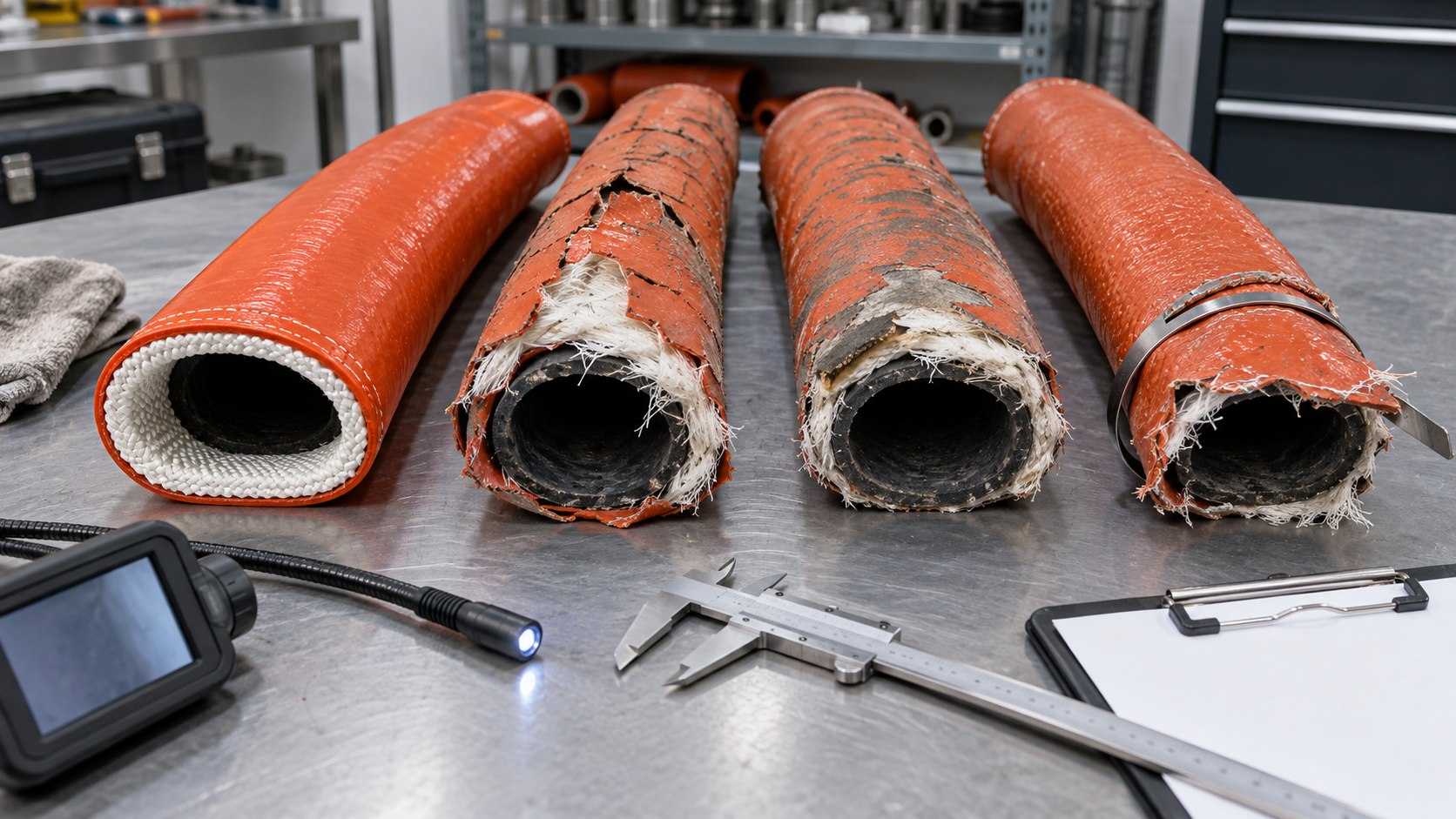
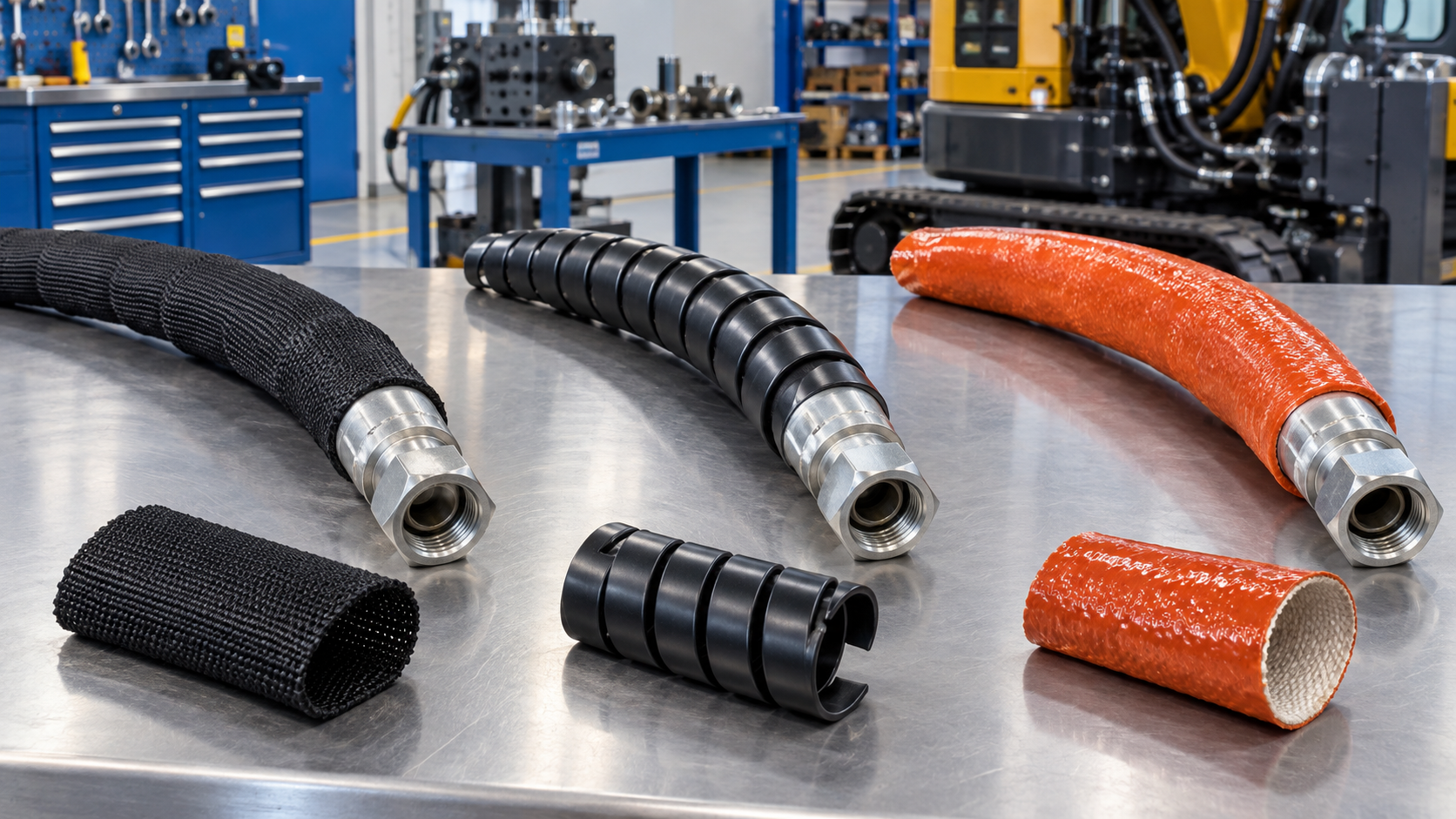
Mining equipment operates in the absolute harshest environments. Here, hose failure means massive financial losses from downtime. Because isobaric hoses offer a tighter bend radius and excellent abrasion resistance, they are far less likely to snag or rub against raw rock. To maximize uptime in these high-friction environments, we highly recommend wrapping critical lines in a heavy-duty fire sleeve hose protector to guard against external heat, slag, and abrasive wear.
Agricultural and Forestry Equipment
Modern tractors, harvesters, and forestry forwarders pack massive hydraulic power into increasingly compact engine bays and articulation joints. Traditional SAE hoses require larger bend radiuses, leading to kinked lines or awkward routing. Isobaric alternatives bend tighter and weigh up to 30% less, reducing the overall weight of the equipment and preventing hose fatigue during tight turns in the field.
Mobile Hydraulic Systems and Fleet Maintenance
For fleet managers across the United States, managing a service truck is all about efficiency. Tracking dozens of different SAE hose types (like 100R1, 100R2, 100R12, and 100R13) for various tool attachments creates massive inventory headaches. Switching to a single isobaric family simplifies everything.
| Application Factor | Traditional SAE Hoses | Isobaric Hoses (Constant Pressure) |
|---|---|---|
| Pressure vs. Size | Pressure drops as hose diameter increases | Pressure remains identical across all sizes |
| Flexibility | Stiff and bulky in larger diameters | High flexibility with a tight bend radius |
| Weight | Heavy, requiring more robust mounting brackets | Lightweight, lowering total machine weight |
| Inventory Complexity | High (must stock multiple SAE specs) | Low (one hose family covers the entire machine) |
Advantages of Isobaric Hydraulic Hoses
When comparing Isobaric Hoses vs. Traditional SAE Hydraulic Hoses, the modern isobaric design offers clear operational advantages for heavy equipment. Engineered to meet the intense demands of modern construction machinery, these constant-pressure hoses outperform older standards in reliability, routing, and overall cost-efficiency.
Consistent Pressure Ratings Across Multiple Hose Sizes
Traditional SAE hoses require you to drop the operating pressure as the hose diameter increases. Isobaric hoses completely eliminate this headache.
Whether you are running a 1/4-inch line or a 1-inch line, the pressure rating stays exactly the same (e.g., a constant 4,000 PSI or 5,000 PSI). This predictability simplifies system design and ensures that larger supply lines don’t become the weak link in your high-pressure hydraulic circuits.
Improved Flexibility and Reduced Minimum Bend Radius
Modern engine compartments and hydraulic bays are tighter than ever. Isobaric hoses are engineered with advanced materials that allow for a significantly tighter bend radius—often up to 50% more flexible than standard SAE spiral hoses.
- Easier Routing: Bends around tight corners without kinking.
- Less Stress: Reduces mechanical strain on connections and fittings.
- Less Material: Shorter hose lengths are needed to make the same connections when buying your hydraulic hose by the foot.
Lower Inventory Costs and Simplified Stock Management
Managing a fleet means tracking dozens of different hose and fitting combinations. Because isobaric hoses utilize a single pressure rating across various sizes, you can drastically cut down on the variety of hoses you need to keep in stock.
| Inventory Impact | Traditional SAE Hoses | Isobaric Hoses |
|---|---|---|
| Stock Variety | High (Multiple pressure ratings per size) | Low (One constant pressure family) |
| Sourcing Confusion | High risk of incorrect pressure matching | Low risk; sizes share the same rating |
| Storage Space | Demands massive warehouse footprint | Compact, streamlined inventory |
This reduction in part numbers streamlines your shop management, lowers overhead costs, and ensures your technicians grab the right hose every single time.
Enhanced Reliability in High-Pressure Applications
Construction environments subject machinery to brutal pressure spikes, constant vibrations, and extreme impulse cycles. Isobaric hoses are built to handle these harsh conditions. Their robust construction handles high-frequency pressure surges smoothly, which prevents premature fatigue and reduces unexpected job site downtime. When paired with clear, durable hydraulic hose labels for quick identification during routine maintenance, these high-pressure lines deliver a safer, longer-lasting plumbing solution for heavy-duty equipment.
Are There Any Situations Where Traditional SAE Hoses Still Make Sense?
While isobaric hoses are dominating new equipment designs, traditional SAE hydraulic hoses aren’t obsolete just yet. There are specific scenarios where sticking with the classic SAE standards is the most practical choice for your operation.
Legacy Equipment and Existing SAE Specifications
Older fleets are built entirely around traditional SAE specifications. When a single hose blows on a 15-year-old excavator, replacing it with the exact same SAE 100R2 or 100R12 hose keeps the system running without altering the original engineering setup.
- Exact Fits: Legacy machines have routing brackets and clearances designed for specific SAE hose diameters.
- Component Matching: Existing hydraulic fittings manufacturers have supplied millions of legacy couplings that mate perfectly with traditional SAE hose dimensions.
Budget-Conscious Hydraulic Systems
Upgrading an entire shop to isobaric hoses requires an upfront investment. For budget-conscious operations or low-pressure applications, traditional SAE hoses offer a cost-effective alternative.
| Hose Selection Factor | Traditional SAE Hoses | Isobaric Hoses |
|---|---|---|
| Upfront Material Cost | Lower (especially for small diameters) | Higher initial cost |
| System Pressure Demands | Low to medium | High and constant pressure |
| Best Use Case | Utility trailers, simple return lines | Heavy construction, high-pressure lines |
Industry Standards and Customer Requirements
Many government contracts, military specifications, and conservative industrial plants still mandate strict adherence to traditional SAE guidelines. If a client’s procurement blueprint demands an SAE 100R1AT hose, delivering anything else—even a high-performing isobaric alternative—can lead to compliance issues and rejected maintenance work. Sticking to the requested standard ensures you hit every regulatory mark without friction.
How to Choose Between Isobaric and SAE Hydraulic Hoses
Choosing between isobaric hoses vs. traditional SAE hydraulic hoses comes down to matching your specific machine demands with your long-term operational goals. To make the right call for modern construction equipment, you need to look closely at your system pressures, your shop’s inventory strategy, and what the original equipment manufacturer (OEM) specs demand.
Evaluating System Pressure and Duty Cycles
Traditional SAE hoses require you to constantly check the engineering math because their pressure ratings drop as the hose diameter gets larger. If your machinery runs heavy duty cycles with high-pressure spikes, isobaric hoses offer a distinct advantage. They maintain a constant pressure rating (like 3,000 or 5,000 PSI) across all sizes, ensuring predictable performance under severe workloads.
| Evaluation Factor | Traditional SAE Hoses | Isobaric (Constant Pressure) Hoses |
|---|---|---|
| Pressure vs. Size | Pressure rating decreases as hose ID increases | Pressure rating remains identical across all sizes |
| Application Fit | Legacy systems, low-pressure lines, mixed-duty cycles | High-pressure modern machinery, severe duty cycles |
| Spike Resistance | Variable; requires careful engineering oversight | High; engineered for uniform stress distribution |
Considering Maintenance and Inventory Strategies
Managing a fleet means balancing uptime with warehouse costs. If your shop is drowning in hundreds of different hose and fitting combinations, switching to an isobaric system simplifies everything. Because one hose family covers all sizes at a specific pressure, you can radically cut down your stock.
When building or replacing assemblies, making sure you use the right mating components is just as critical to preventing leaks. For instance, pairing your lines with high-quality components like an interlock hose fitting ensures the connection can handle the high vibration and intense pressure cycles common in modern American construction zones.
- Standardization: Isobaric hoses let you stock one or two pressure tiers rather than dozens of different SAE specifications.
- Reduced Errors: Technicians are less likely to install an incorrectly rated hose during an emergency breakdown.
- Cost Efficiency: Lower inventory carrying costs and less wasted shelf space.
Reviewing Equipment Manufacturer Recommendations
Always check the factory documentation before swapping out hose types. Modern tier-4 and electric-hybrid construction equipment is increasingly plumbed with isobaric hoses straight from the factory to save space and reduce weight. If you are servicing older legacy machinery, the manual will likely specify traditional SAE standards. Stick to the OEM guidelines unless you are redesigning the hydraulic circuit for better efficiency, tighter bend radiuses, or simplified maintenance.
Conclusion
The debate between Isobaric Hoses vs. Traditional SAE Hydraulic Hoses: Which Is Better for Modern Construction Equipment? comes down to efficiency, modern machine demands, and smart fleet management. Traditional SAE hoses served the industry well for decades, but the engineering shifts in modern, high-pressure heavy machinery require a more streamlined approach.
For fleet owners and equipment operators looking to cut downtime and boost performance, switching to isobaric hoses is the superior choice.
- Constant Pressure Simplify Selection: You choose hoses by system pressure, not by fluctuating size-dependent limits.
- Streamlined Inventory: You stock fewer product lines, dramatically lowering overhead costs.
- Enhanced Plumbing Flexibility: Half the bend radius means easier routing in tight engine compartments.
While legacy systems might still rely on traditional SAE setups, upgrading to isobaric standards is the most reliable way to future-proof your heavy equipment, reduce installation headaches, and optimize your maintenance budget.