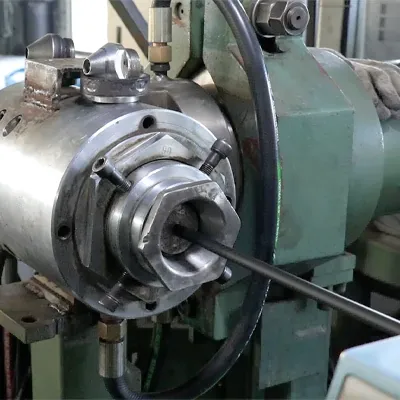
Kingdaflex is a professional hydraulic rubber hose manufacturer based in China, supplying SAE and EN-certified hydraulic hoses to distributors, OEM equipment brands, and industrial buyers in over 50 countries. Our hydraulic hose factory operates more than 20 wire-braiding and spiraling machines, enabling full control over quality, specifications, and lead times.
We offer a complete range of hydraulic rubber hoses — from single wire braid (SAE 100R1) to six-spiral ultra-high-pressure assemblies (SAE 100R15) — alongside custom hydraulic hose assemblies, OEM private labeling, and wholesale bulk supply.
Our hydraulic hoses are engineered to perform in the most demanding environments across multiple industries. The correct hose specification — including pressure class, reinforcement type, and cover compound — varies significantly by application. Select your industry below for targeted product recommendations.
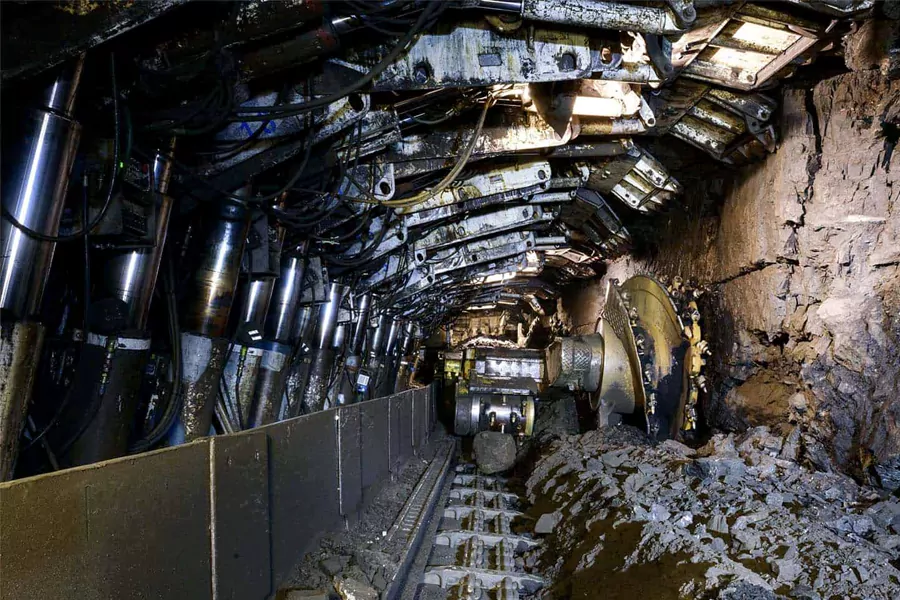
Underground mining is one of the harshest environments for hydraulic hose. Hoses must resist constant abrasion from rock and debris, withstand extreme impulse loads from hydraulic hammers and drill rigs, and in underground coal applications, meet MSHA fire-resistance certification requirements.
Recommended hose types: EN856 4SP, EN856 4SH, SAE 100R13, SAE 100R15 — all with wrapped abrasion-resistant outer covers. See: Hydraulic hose solutions for mining equipment.
Agriculture & Farming
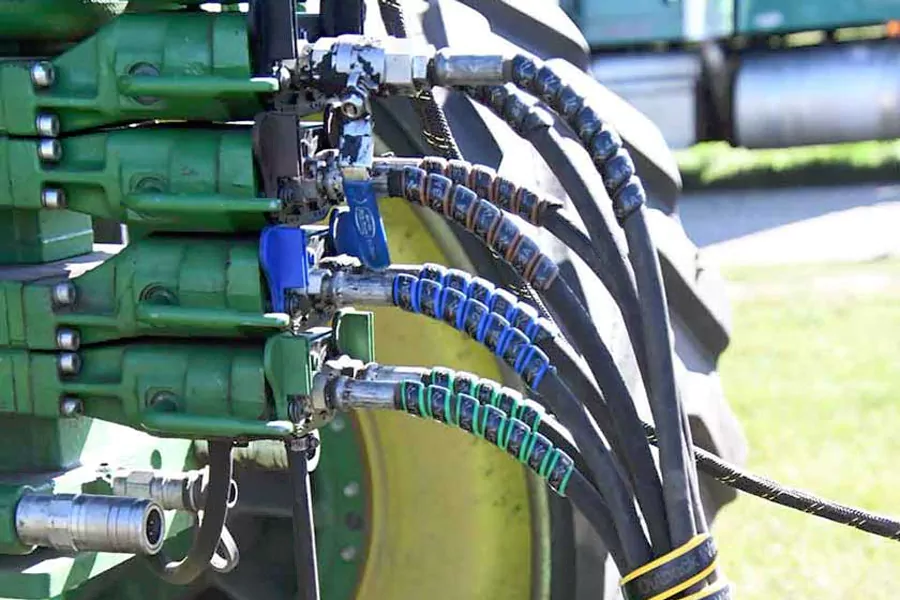
Tractors, combine harvesters, and precision seeding equipment require hydraulic hoses with superior UV and weather resistance for long outdoor service life. Hoses on agricultural equipment must also flex reliably through thousands of low-pressure operating cycles without fatigue failure.
Recommended: SAE 100R1AT / R2AT for most tractor and implement circuits; SAE 100R7/R8 thermoplastic for lightweight precision machinery. See: Hydraulic hose applications for agricultural equipment.
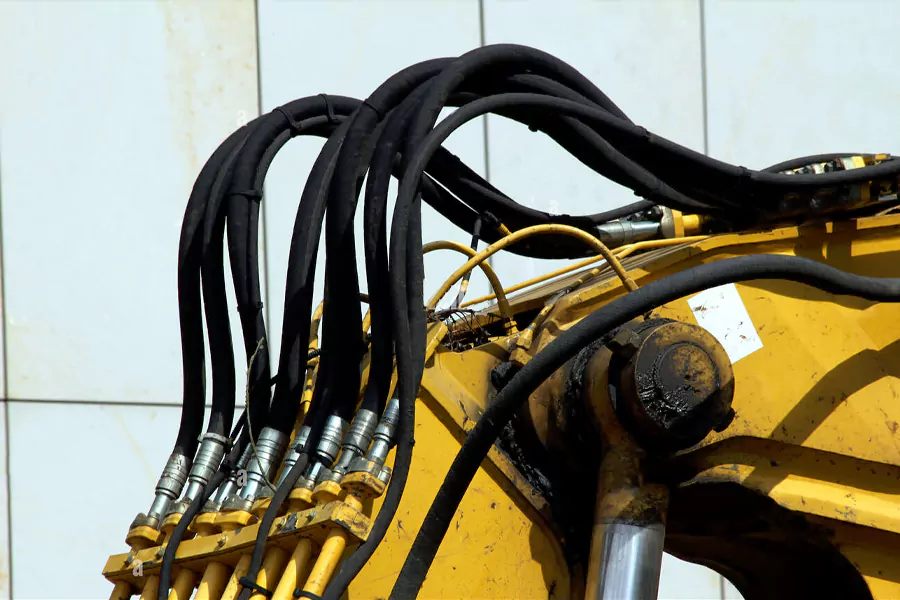
Excavators, wheel loaders, bulldozers, and concrete pumping equipment require hydraulic hoses that can handle high impulse cycles, wide temperature swings, and exposure to concrete, grit, and hydraulic oil. Our 4-spiral and 2-wire braided hoses with tough wrapped covers are the standard specification for leading construction OEMs.
Recommended: EN856 4SP / 4SH for boom and stick circuits; SAE 100R2AT for pilot and low-pressure return lines. See: Hydraulic hose solutions for construction machinery.
Industrial Machinery
Injection moulding machines, hydraulic presses, CNC machining centres, and industrial automation systems require hydraulic hoses that provide leak-free, stable fluid transmission across thousands of operating hours without intervention. Smooth inner bore, excellent fluid compatibility, and low swell characteristics are the key selection criteria.
Recommended: SAE 100R2AT for general hydraulic circuits; SAE 100R14 PTFE for clean-room or chemical-contact applications; EN856 4SH for ultra-high-pressure presses.
Hydraulic Rubber Hose Construction — What Is It Made Of?
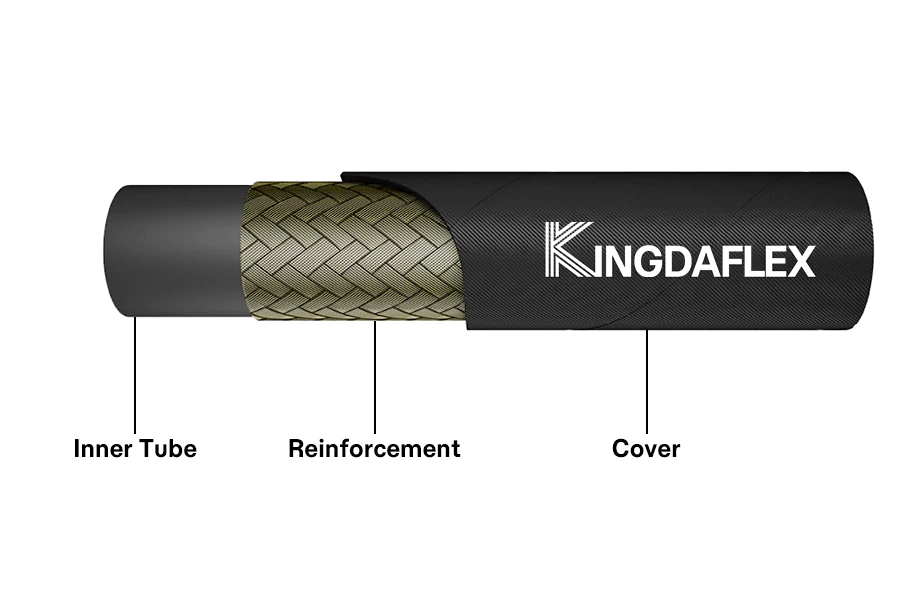
All Kingdaflex hydraulic rubber hoses are built with a three-layer construction: an oil-resistant inner tube, a steel wire reinforcement layer, and a weather-resistant outer cover.
The specific hydraulic hose material in each layer is selected based on the operating pressure, fluid type, and environmental conditions.
The inner tube is the most critical layer: it contacts the hydraulic fluid directly and must resist degradation. Our standard NBR inner tube is fully compatible with:
For aggressive chemicals or extreme temperatures, inner tube options include PTFE (polytetrafluoroethylene) for our R14 range, and EPDM for water/steam service.
Braided reinforcement: 1 or 2 layers of high-tensile steel wire (or textile braid for low-pressure hose). Provides structural strength for medium to high-pressure applications. Offers superior flexibility and a tighter minimum bend radius, making wire-braided hose the preferred choice for compact routing in mobile equipment.
Spiral reinforcement: 4 or 6 layers of spirally-wound high-tensile steel wire. Engineered for extreme-pressure, high-impulse service. Wire spiral hoses deliver greater impulse cycle life and burst pressure than equivalent wire-braided constructions, making them standard on heavy mining and construction equipment.
Two outer cover options are available across our range:
Smooth cover (standard): compact OD, clean appearance, easy routing. Abrasion resistance suitable for most general applications.
Wrapped cover (textured): additional abrasion resistance layer from the fabric impression during vulcanisation. Recommended for environments with constant contact with rough surfaces, edges, or debris.
Cover compound is an EPDM/Neoprene synthetic rubber blend, providing resistance to ozone, UV radiation, weathering, and incidental oil contact.
From raw material testing to final impulse testing, ensuring zero defects.
Advanced Manufacturing
State-of-the-art braiding and spiraling machines for consistent precision.
Global Reach
Trusted by customers in over 50 countries across Europe, Middle East, and Americas.
Custom Solutions
Private labeling (OEM), custom lengths, and assembly services available.
FAQs of Hydraulic Hose
What is the main difference between wire braided and wire spiral hydraulic hoses?
The primary difference lies in their reinforcement structure and pressure capabilities. Wire braided hoses (such as SAE 100 R1AT and R2AT) typically feature one or two layers of braided high-tensile steel wire. They offer excellent flexibility and a tighter bend radius, making them ideal for medium-pressure applications and compact routing lines.
In contrast, wire spiral hoses (like EN856 4SP, 4SH, and R13/R15) are reinforced with four or six layers of spiraled steel wire. These are engineered for extremely high-pressure, high-impulse applications, offering superior strength and longevity in grueling environments like mining and heavy excavation.
What is the difference between hydraulic rubber hose and thermoplastic hydraulic hose?
Hydraulic rubber hose (NBR or EPDM inner tube) offers superior flexibility at low temperatures, easier field routing, and broad compatibility with petroleum-based hydraulic oils. It is the most widely used hose type globally.
Thermoplastic hydraulic hose (SAE 100R7/R8) uses a thermoplastic inner tube with thermoplastic reinforcement braids. It is significantly lighter than rubber, has better resistance to a wider range of chemicals, and maintains flexibility at lower temperatures. It is the preferred choice for lightweight mobile equipment and precision agriculture applications.
The choice depends on your operating temperature, fluid, routing constraints, and weight budget. Contact our technical team for a specific recommendation.
How do I choose the right hydraulic hose for my specific application?
Selecting the correct hose requires evaluating several critical factors, often referred to as the STAMPED rule.
First, ensure the hose’s working pressure meets or exceeds your system’s maximum pressure.
Second, consider the application environment; for example, mining equipment may need hoses with high abrasion resistance, while agricultural machinery requires superior UV and weather resistance.
You must also verify the fluid compatibility of the inner tube with the oil or liquid being conveyed.
Finally, check the bend radius to avoid kinking.
Kingdaflex offers a wide range of smooth and wrapped cover hoses to match these diverse needs perfectly.
STAMPED
Parameter
What to Define
Why It Matters
S
Size
Bore (ID) and outside diameter
Under-sized bore increases velocity and heat build-up; over-sized adds weight and cost
T
Temperature
Min/max fluid temp AND ambient temp
Wrong temp rating leads to inner tube hardening or swelling
A
Application
Static or dynamic? Routing constraints?
Dynamic applications require tighter bend radius and higher impulse rating
M
Material / Media
Fluid type, concentration, additives
Fluid incompatibility with the inner tube causes swelling and leakage
P
Pressure
System working pressure + surge peaks
Hose working pressure must exceed max system pressure including spikes
E
Ends / Fittings
Thread type, angle, ferrule standard
Mismatched fitting standards are the leading cause of assembly leaks
D
Delivery
Required length, routing, bend radius
Sharp bends beyond minimum bend radius cause structural fatigue
How do I choose the correct hydraulic hose size?
Hydraulic hose size is defined by bore (ID) — typically expressed in dash sizes (e.g., -4, -6, -8, -12, -16) or millimetres (DN6, DN10, DN12, DN19…). Correct sizing ensures that the fluid velocity within the hose stays within the recommended range (typically 2–4 m/s for return lines, 4–6 m/s for pressure lines).
An under-sized hose increases velocity, raising system temperature and reducing hose life. An over-sized hose is heavier and more expensive without performance benefit. Use our hydraulic hose size calculator, or share your flow rate and system pressure with our technical team for a sizing recommendation.
What is the hydraulic hose flow rate for a given bore size?
Hydraulic hose flow rate depends on bore ID and the target velocity for your line type. As a reference:
Dash Size
Bore ID
Suction/Return Line (max)
Pressure Line (max)
-4
6.3 mm (1/4″)
6 L/min
10 L/min
-6
9.5 mm (3/8″)
14 L/min
22 L/min
-8
12.7 mm (1/2″)
25 L/min
40 L/min
-10
15.9 mm (5/8″)
40 L/min
63 L/min
-12
19.0 mm (3/4″)
57 L/min
90 L/min
-16
25.4 mm (1″)
100 L/min
160 L/min
-20
31.8 mm (1-1/4″)
160 L/min
250 L/min
-24
38.1 mm (1-1/2″)
225 L/min
355 L/min
Wire Braided vs Wire Spiral Hydraulic Hose — Which Is Right for You?
Wire Braided (R1AT / R2AT)
Wire Spiral (4SP / 4SH)
Ultra-High Pressure (R13 / R15)
Max Working Pressure
Up to 400 bar
Up to 420 bar
Up to 690 bar
Flexibility / Bend Radius
Excellent — tight bends
Good — moderate bend radius
Limited — larger bend radius required
Impulse Resistance
High (suitable for most mobile equipment)
Very high (recommended for mining/excavators)
Extreme — deep-sea / ultra-HP presses
Weight
Light
Heavier
Heaviest
Typical Applications
Tractors, forklifts, light excavators, general hydraulics
Heavy excavators, mining equipment, hydraulic hammers
Compact routing, medium pressure, cost-sensitive projects
High impulse cycles, harsh environment, heavy-duty OEM
System pressure exceeds 420 bar
What materials are your hydraulic hoses made of to ensure durability?
Our hydraulic hoses are constructed using a robust three-layer design to ensure maximum performance.
The inner tube is made from oil-resistant synthetic rubber (typically NBR) to ensure seamless compatibility with petroleum-based hydraulic fluids.
The reinforcement layer consists of high-tensile steel wires or textile cords, arranged in braided or spiral formations, providing the necessary structural integrity to withstand high pressures.
The outer cover is crafted from premium synthetic rubber (such as Neoprene or EPDM blends) designed to resist abrasion, ozone, weathering, and oil, ensuring long service life even in the harshest outdoor or underground conditions.
What are the standard hydraulic hose SAE and EN specifications?
The two primary hydraulic hose standards are SAE J517 (USA) and the European EN 853 / EN 856 / EN 857 series. Many hose types carry dual ratings — for example, SAE 100R1AT is dimensionally and performance-equivalent to DIN EN853 1SN, so a hose manufactured to one standard typically meets the other.
For a complete guide to SAE vs EN hydraulic hose standards and how to cross-reference specifications, see: Hydraulic hose SAE standards and Hydraulic hose EN standards.
Do you offer OEM branding and custom manufacturing services?
Yes, Kingdaflex provides comprehensive OEM and ODM services to support your brand identity. We understand that brand recognition is vital for our distributors and equipment manufacturers.
We can customize the hose layline by printing your company logo, part numbers, and specifications directly on the hose surface. Additionally, we offer customization for hose lengths, special packaging, and even specific color requirements to match your market strategy. Whether you need private labeling or a specific hose assembly solution, our manufacturing flexibility allows us to tailor products that align perfectly with your business goals.
What quality standards and certifications do Kingdaflex hoses meet?
Quality is the foundation of our manufacturing process. With over 20 years of industry experience, we strictly adhere to international quality standards.
Our hydraulic hoses are manufactured in accordance with SAE J517 (USA) and DIN EN 853/856 (Europe) specifications, ensuring global compatibility. We implement rigorous quality control measures, including raw material inspection and finished product testing for impulse resistance and burst pressure.
Our commitment to stable quality has earned us ISO management system certifications and the trust of clients in over 50 countries, making us a reliable partner for your fluid power needs.
What is your MOQ and shipping policy for international orders?
As a dedicated B2B manufacturer and exporter, we primarily serve wholesalers, distributors, and industrial manufacturers. Our hydraulic hoses are typically supplied in standard rolls of 50 meters or 100 meters, depending on the hose size and type.
While we focus on bulk orders to provide the most competitive wholesale pricing, we remain flexible and open to discussing trial orders to establish a new partnership.
We have extensive experience exporting to Europe, North America, and South America, and we provide professional logistics support to ensure timely and safe delivery to your designated port or warehouse.