In high-heat industrial environments—foundries, steel mills, glass plants, and heavy equipment operations—the protection of hydraulic hose is not optional; it is a critical safety requirement. However, a common misconception persists among maintenance managers: that installing high-grade thermal protection requires a complete system shutdown and the disconnection of hydraulic hoses.
When you disconnect a line, you aren’t just losing time. You are inviting contaminants into the hydraulic circuit, risking fluid spills, and necessitating a system bleed-out that can take hours. This is where Retrofit Fire Sleeves (also known as wraparound sleeves) change the game. By utilizing advanced closure systems like Snap Buttons, Hook & Loop, or Zippers, you can achieve world-class thermal protection without turning off the machine.
The High Cost of Disconnection: Why “Shutting Down” is a Last Resort
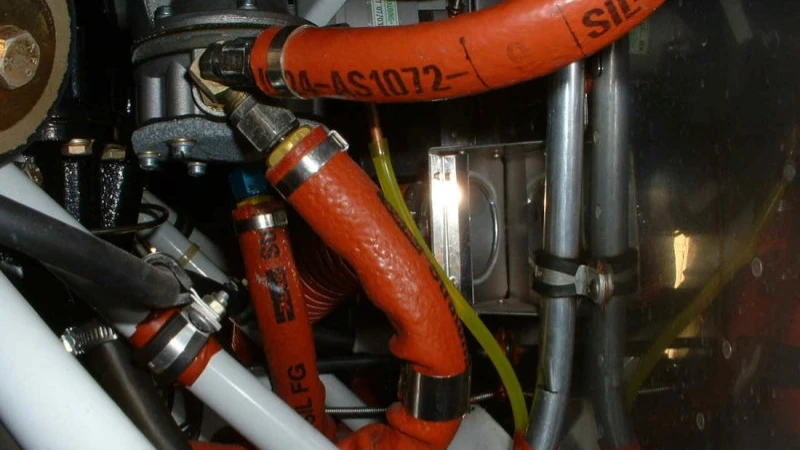
For a professional maintenance expert, the math is simple: Downtime is the enemy of ROI. Traditional “Tube-Style” fire sleeves require you to slide the sleeve over the hose before the fittings are crimped, or to remove the hose entirely to install it later. In a complex hydraulic manifold, disconnecting a single hose can take anywhere from 30 minutes to 2 hours when you factor in draining the fluid, unbolting the fittings, and the inevitable cleanup of oil spills.
Furthermore, every time a hydraulic connection is broken, you risk damaging the threads or introducing microscopic debris that can lead to valve failure. Retrofitting allows you to maintain the integrity of the original seal while upgrading the hose’s thermal resistance in a fraction of the time.
Tube-Style vs. Wraparound: Choosing the Right Protection Strategy
While “Tube-Style” (fully enclosed) sleeves offer a seamless 360-degree barrier, they are designed for OEM (Original Equipment Manufacturer) installation. For the aftermarket and MRO (Maintenance, Repair, and Overhaul) sectors, wraparound solutions are the superior choice.
| Feature | Tube-Style (Enclosed) | Wraparound (Retrofit) |
| Installation Time | High (Requires disconnection) | Low (10-15 minutes) |
| System Integrity | Risk of contamination | Zero risk; seal remains intact |
| Maintenance | Must cut off to inspect hose | Easy to open and inspect |
| Best For | New builds/assemblies | Field repairs and upgrades |
By choosing a retrofit design, you eliminate the need for specialized tools or hydraulic technicians. A standard maintenance worker can secure a 10-meter line in the time it would take to simply locate the correct wrench for a tube-style installation.
Deep Dive: The Anatomy of High-Performance Retrofit Fire Sleeves
Not all “wraparound” sleeves are created equal. High-quality fire sleeves are constructed from a high-bulk fiberglass substrate coated with a thick layer of iron-oxide red silicone rubber.
The Science of Heat Resistance
A premium fire sleeve must withstand:
- Continuous Operating Temperature: Up to 260℃ to 500℃.
- Short-term Exposure: Up to 1090℃ to 2000℃ for 15-20 minutes.
- Instantaneous Flash/Splash: Withstanding molten metal splashes at 1650℃ to3000℃.
The Three Main Closure Systems


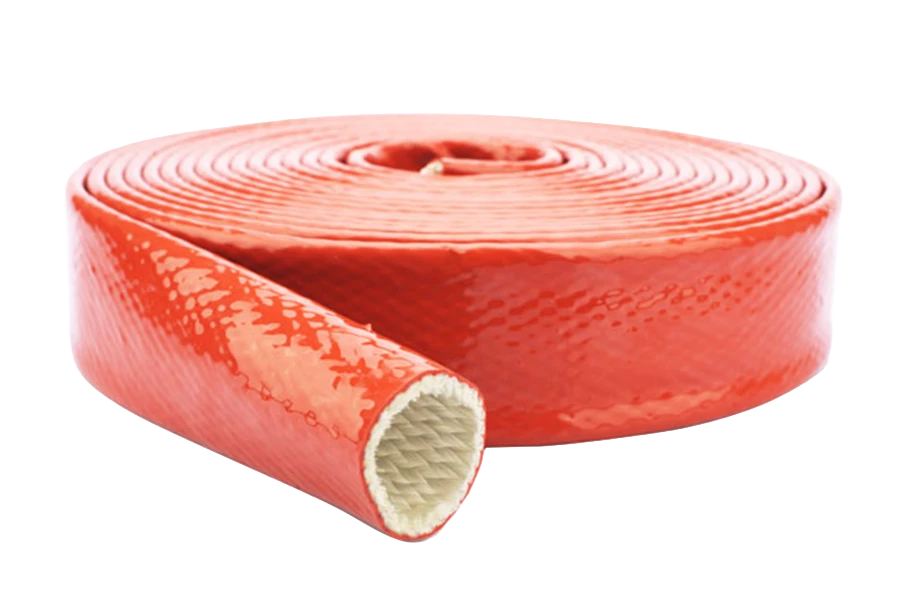
- Hook & Loop (Velcro-Style) Fire Sleeve: This is the most popular retrofit option. It uses an industrial-grade, flame-retardant hook and loop closure. It provides a tight, adjustable fit and is excellent for hoses that require frequent inspection.
- Snap Button Fire Sleeve: This version uses heavy-duty stainless steel (304 or 316 grade) snap fasteners. It is the “gold standard” for high-vibration environments. Unlike adhesives or fibers that might degrade, mechanical snaps remain locked even when coated in industrial grease or oil.
- Zipper Fire Sleeve: Utilizing heat-resistant zippers (often made of nylon or brass), this style is ideal for long, continuous runs of hose where a consistent, fast closure is required.
Step-by-Step Installation: The Expert’s Method
To ensure your retrofit fire sleeve performs to its rated capacity, follow this professional installation protocol:
Step 1: Surface Preparation
Even though you aren’t disconnecting the line, you must wipe down the hydraulic hose with a degreaser. Residual hydraulic fluid or carbon buildup can act as a heat bridge, transferring thermal energy through the sleeve.
Step 2: Precise Measurement & Overlap
When ordering a retrofit sleeve, the “Internal Diameter” (ID) should match your hose’s outside diameter. However, for Hook & Loop or Snap Button styles, ensure there is a minimum of 20mm to 25mm of overlap. This overlap is vital; it prevents “seam-leakage” where fire or molten splash could find a path to the hose.
Step 3: Sequential Fastening
- For Snap Buttons: Start from the center and move outward to the ends to ensure the tension is distributed evenly.
- For Hook & Loop: Pull the sleeve tight as you press the seal to eliminate air pockets, which can reduce the insulating “R-value” of the fiberglass.
Step 4: End Sealing (Crucial)
Use specialized Fire Tape (silicone self-fusing tape) to seal both ends of the sleeve. This prevents “wicking”—the process where the inner fiberglass braid absorbs oil or moisture from the environment, which could eventually lead to the sleeve becoming flammable itself.
5. The ROI: Why Retrofitting Saves Thousands
In the industrial sector, the price of the product is often secondary to the Total Cost of Ownership (TCO). Let’s look at the ROI of a Snap Button Fire Sleeve:
- Scenario: A 5-meter hydraulic line on a plastic injection molding machine needs protection.
- Traditional Method: 2 hours of labor ($150) + 2 hours of lost production ($4,000) + Cost of fluid replacement ($100) = $4,250 total cost.
- Retrofit Method: 15 minutes of labor ($20) + 0 hours of lost production ($0) + Fire Sleeve cost ($150) = $170 total cost.
By utilizing a quick-install sleeve, you are essentially saving over $4,000 per hose. When you scale this across a factory with 50 or 100 machines, the savings reach hundreds of thousands of dollars.
6. Conclusion: Safety Without Compromise
Retrofitting fire sleeves is the most efficient way to bring your facility up to safety standards (such as SAE AS1072 or UL 1441) without sacrificing productivity. Whether you choose the ruggedness of the Snap Button or the versatility of the Hook & Loop, you are choosing a solution that prioritizes both the longevity of your equipment and the safety of your operators.
Don’t wait for a hose burst or a fire to upgrade your protection. Retrofitting allows you to be proactive, not reactive.