A brewery hose must do more than transfer beer. The same assembly may contact wort, finished beer, yeast, water, caustic cleaner, acid rinse, sanitizer, hot liquid, and carbon dioxide pressure. It must remain cleanable, drainable, flexible, pressure-capable, and free from materials that could affect taste or aroma.
This brewery hose selection guide organizes the major decisions for brewhouse, cellar, packaging, tanker, and cleaning applications. The correct choice depends on the complete duty—not simply a “food-grade” label.
Map Every Hose Application
Start by listing where flexible connections are used:
- hot-water and brewing-liquor transfer;
- mash or wort movement;
- whirlpool and heat-exchanger connections;
- yeast and trub handling;
- fermented or bright beer transfer;
- tank-to-tank and tanker loading;
- packaging-line connections;
- clean-in-place supply and return;
- compressed gas or utility service.
One hose may not suit every location. Hot wort, finished beer, abrasive spent material, and concentrated cleaning chemicals create different demands.
Use a food-grade hose as the starting category, then verify product contact, cleaning cycle, pressure, temperature, and fittings for each circuit.
Selection Factors at a Glance
| Factor | Brewery question |
|---|---|
| Product | Beer, wort, yeast, water, or cleaning chemical? |
| Temperature | Cold transfer, hot wort, or thermal sanitation? |
| Pressure/vacuum | Pump discharge, tank pressure, or suction return? |
| Cleaning | Which chemicals, concentrations, and cycle frequency? |
| Hygiene | Can the assembly drain and be inspected? |
| Mechanical duty | Fixed, dragged, flexed, or vehicle-connected? |
| Fittings | Which sanitary standard, size, seal, and finish? |
| Documentation | Food-contact, traceability, and test requirements? |
Product Compatibility and Flavor Protection
Finished beer can be sensitive to odor, extractables, and cross-contamination. The inner tube should be suitable for alcoholic beverages and the intended contact time. It should not transfer taste or aroma under defined conditions.
Provide the supplier with alcohol range, pH, product temperature, carbonation, additives, and whether beer remains in the hose between transfers. Include flavored products, fruit additions, non-alcoholic beer, hard seltzer, and other beverages if the hose is shared.
Dedicated hoses may be appropriate for allergens, strong flavors, mixed fermentation, or products that are difficult to clean. Color coding supports identification but should not replace tags and traceable records.
Hot Wort vs Cold Beer
Hot-side hose faces higher temperature and can soften during transfer. It must retain pressure capability, avoid kinking, and tolerate cleaning cycles. The minimum bend radius may be harder to maintain when the hose is full and hot.
Cold-side hose may see lower product temperature but stricter flavor, microbial, and oxygen-control requirements. Condensation on the cover can make handling difficult and create a wet external environment.
Do not assume the maximum published temperature applies continuously or with every fluid. Ask whether the rating changes with alcohol, caustic, acid, steam, or pressure.
Cleaning Chemicals Often Control the Choice
Brewery hose typically experiences cleaning more often than product transfer. List every cleaner and sanitizer by trade name, active ingredient, maximum concentration, temperature, duration, and cycles per day.
Common cleaning programs may involve alkaline detergent, acid treatment, oxidizing sanitizer, hot water, or other agents. Compatibility must include the liner, reinforcement, cover, fittings, and seals.
If concentrated chemicals are transferred from a chemical station, that duty may require a dedicated chemical transfer hose rather than the same hose used for beer. Concentrate exposure can be far more severe than the diluted CIP solution.
Define the response to overdosing or overheating. A hose exposed outside its approved window should be quarantined until assessed.
CIP Temperature, Flow, and Time
Cleaning effectiveness depends on time, temperature, chemistry, and mechanical action. Hose selection must accommodate their combined maximum—not four unrelated ratings.
The route should support sufficient cleaning flow without collapse or excessive pressure loss. Long hose, small bore, restrictive fittings, or sagging sections can reduce velocity and create poorly cleaned areas.
For high-temperature or aggressive cleaning, PTFE hose may be considered because of broad chemical resistance and a smooth liner. Review flexibility, bend radius, permeation, static behavior, fitting design, and fatigue requirements before selection.
Bore Size and Flow
Size the hose for the required transfer rate and allowable pressure loss. An undersized hose increases velocity, foaming, pressure loss, and pump demand. An oversized hose is heavier, holds more product, and may be difficult to drain.
Consider viscosity and solids. Yeast slurry or fruit-containing product may require a larger bore and smoother path than filtered beer. Avoid abrupt reducers and internal fitting steps that collect soil or disturb flow.
Verify pump performance with the complete route, including hose length, elevation, valves, fittings, and heat exchanger.
Pressure, Vacuum, and Carbonation
Record pump discharge pressure, tank pressure, surge, vacuum, and trapped-pressure conditions. Carbonated product can release gas when pressure falls, affecting flow and foaming.
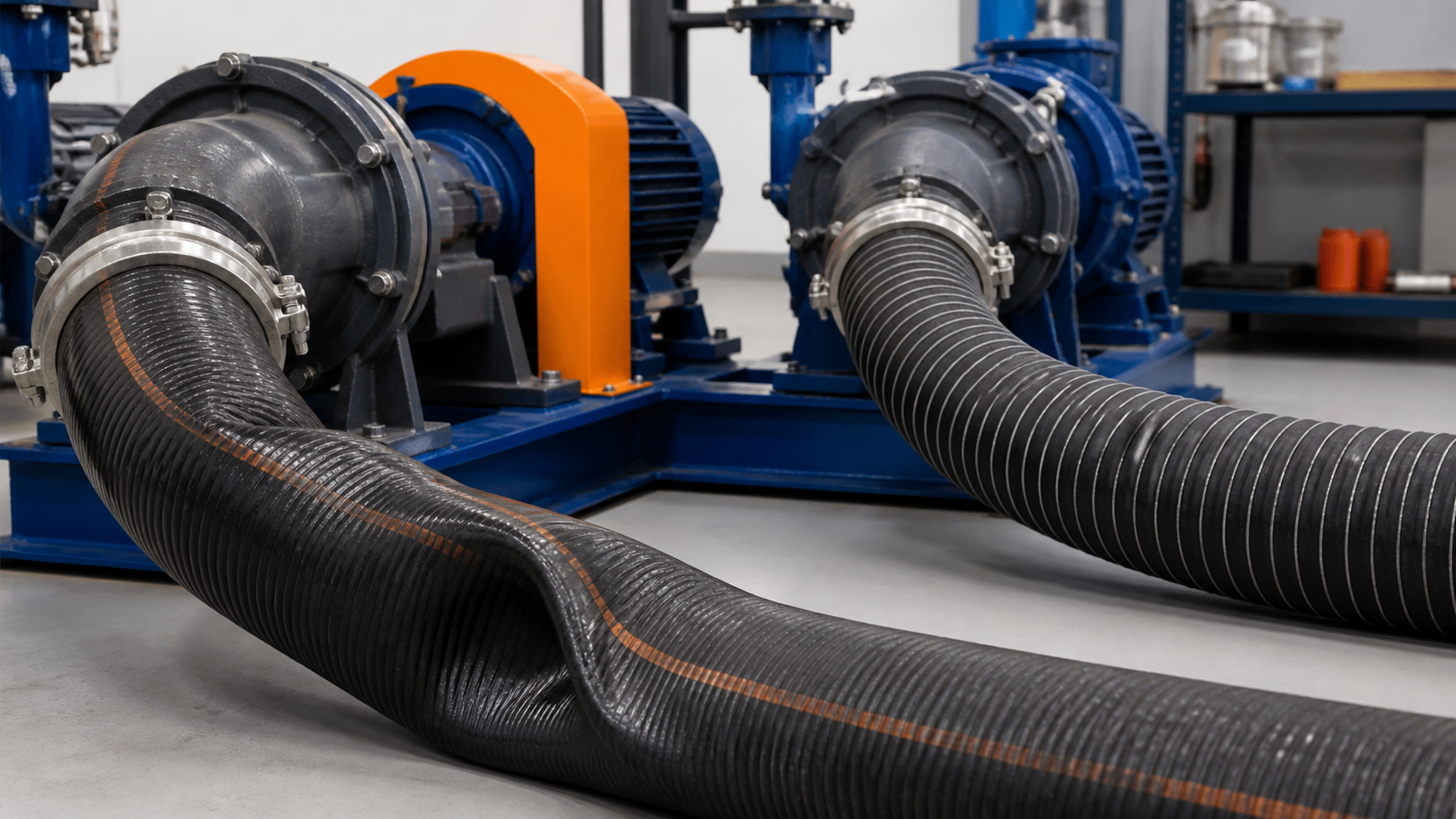
Suction service requires a hose designed to resist collapse. A pressure-rated beer hose without suitable reinforcement may flatten on a CIP return or pump inlet.
The lowest-rated component controls the assembly. Include gaskets, clamps, adapters, sight glasses, and valves—not only the hose.
Sanitary Fittings and Seals
Specify sanitary connection standard, nominal size, ferrule dimensions, alloy, surface finish, gasket material, and assembly method. Similar-looking fittings from different standards may not mate hygienically.
The liner should transition smoothly into the fitting without a ledge, gap, or exposed reinforcement. Inspect for damaged ferrules, distorted clamps, cut gaskets, and misalignment.
Seal compatibility must cover both beer and cleaning chemicals. Maintain controlled spare gaskets so operators do not substitute an unknown elastomer.
Drainability and Routing
Route hose with a continuous slope where practical. Avoid low loops, unnecessary length, tight bends, and elevated end connections that retain liquid. Support full hose weight without crushing or creating a new pocket.
Check drainability in the installed position. A line that looks straight when empty may sag when full. Mobile hoses need racks that support broad curves and protect ends from the floor.
After cleaning, use the approved drying or storage condition. Cap sanitized ends with clean, compatible closures only when the procedure permits.
Cover and Handling Requirements
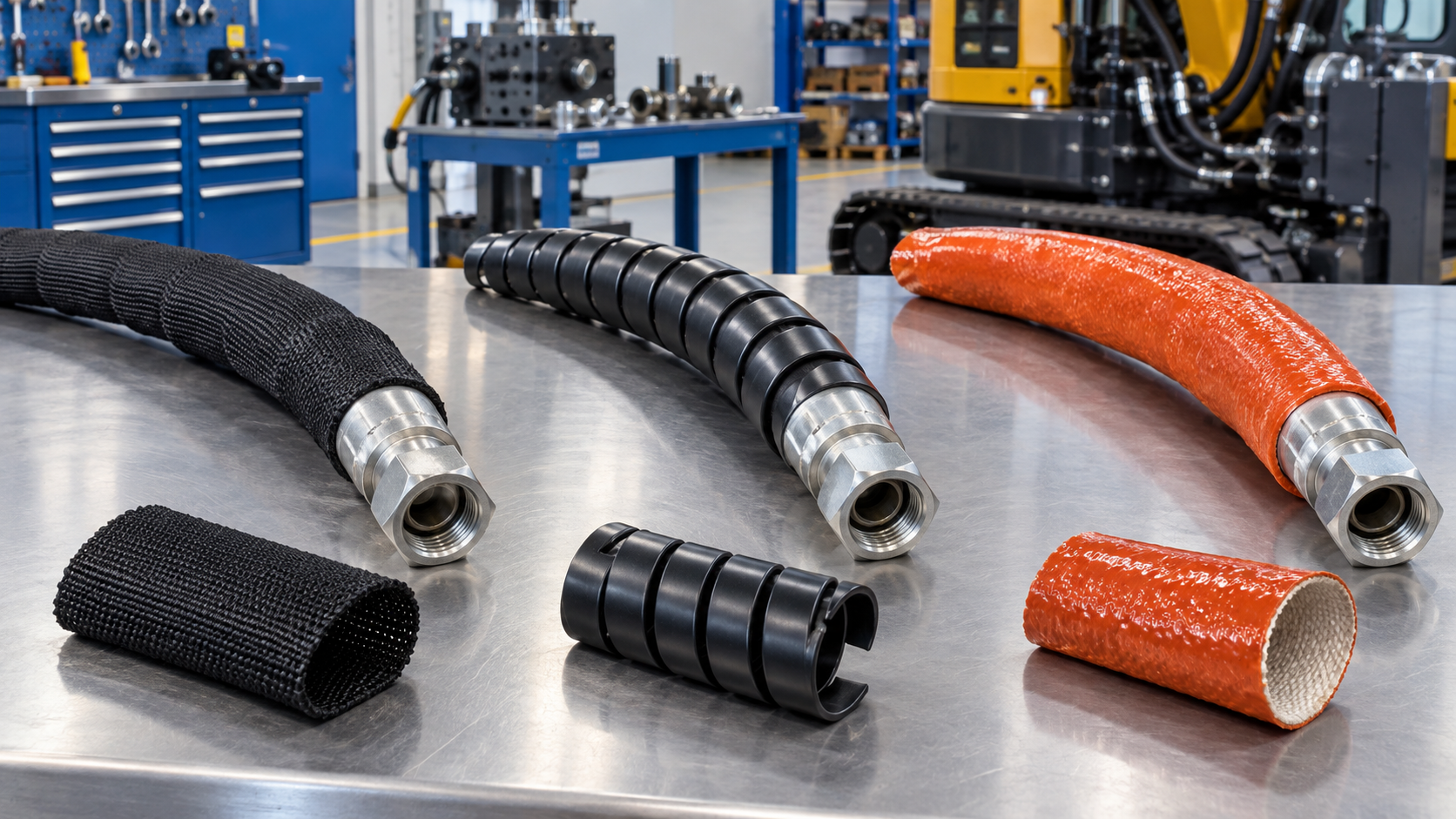
The exterior may face dragging, hot water, cleaning splash, oils, ozone, UV, and repeated washdown. Choose a cover that can be cleaned and inspected.
A heavy hose may require handles or supports, but attachments should not create unhygienic pockets or hide damage. Never lift a filled assembly by its coupling alone.
Review the broader industrial hose range for utility applications, but keep food-contact and non-food hoses clearly segregated.
Documentation to Request
Ask the supplier for:
- product data sheet and dimensional drawing;
- food-contact declaration for the intended market;
- material and batch traceability;
- temperature and pressure limits;
- chemical compatibility guidance;
- cleaning and sterilization limits;
- coupling assembly specification;
- pressure-test or inspection report when required;
- storage and service-life recommendations.
A certificate should identify the exact hose construction, not only a general material family.
Inspection and Replacement
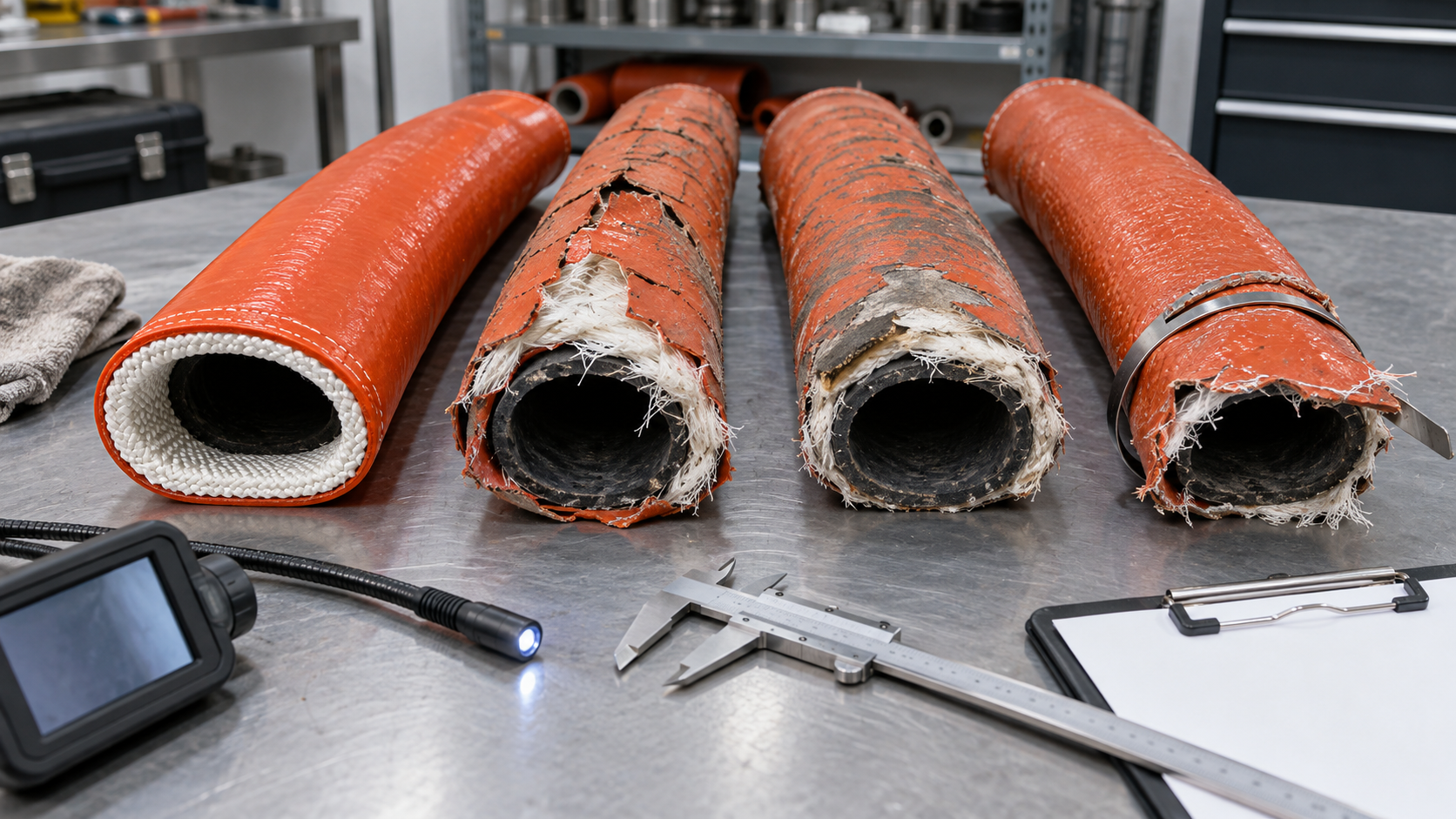
Before use, inspect cover, liner where visible, couplings, clamps, seals, identification, and cleanliness status. Remove hoses with cuts, blisters, swelling, exposed reinforcement, permanent kinks, loose fittings, damaged liner, persistent odor, or uncertain history.
Pressure integrity does not prove hygienic condition. Scratches, delamination, or retained residue may make an assembly unsuitable even when it does not leak.
Trend sanitation failures, flavor complaints, coupling movement, and hose damage by location. Repeated problems may indicate poor routing, incorrect cleaning, or unsuitable construction.
Brewery Hose RFQ Checklist
Provide potential suppliers with:
- product and alcohol range;
- temperature and transfer time;
- flow, pressure, surge, and vacuum;
- CIP chemicals, concentrations, temperatures, and frequency;
- required bore, length, and bend radius;
- fitting and seal specification;
- routing, handling, and drainability;
- food-contact and documentation requirements;
- quantity, marking, packaging, and delivery;
- inspection and acceptance criteria.
Final Selection Principle
The best brewery hose is not simply the most flexible or highest-temperature product. It is the assembly that handles the beverage, survives the validated cleaning cycle, drains completely, connects hygienically, and remains inspectable throughout service.
Select each hose by its most demanding product and cleaning condition. That approach protects beer quality, improves sanitation consistency, and reduces avoidable hose replacement.