Steam hose can look sound on the outside while serious damage develops inside. One distinctive failure mode is steam hose popcorning: blisters, cavities, or chunks of inner tube appear after steam service, often when the line cools. The damage can restrict flow, contaminate the process, weaken the hose, and create an unsafe release during the next operating cycle.
Popcorning is not simply ordinary wear. It is closely related to moisture penetration, pressure changes, temperature cycling, tube condition, and shutdown practice. Understanding the mechanism helps plants select the right hose and cool it down without trapping destructive condensate.
Safety note: Steam can cause severe burns and hose failure can release stored energy. Only trained personnel should operate, isolate, inspect, or disconnect steam hose under the facility’s approved procedures.
What Steam Hose Popcorning Looks Like
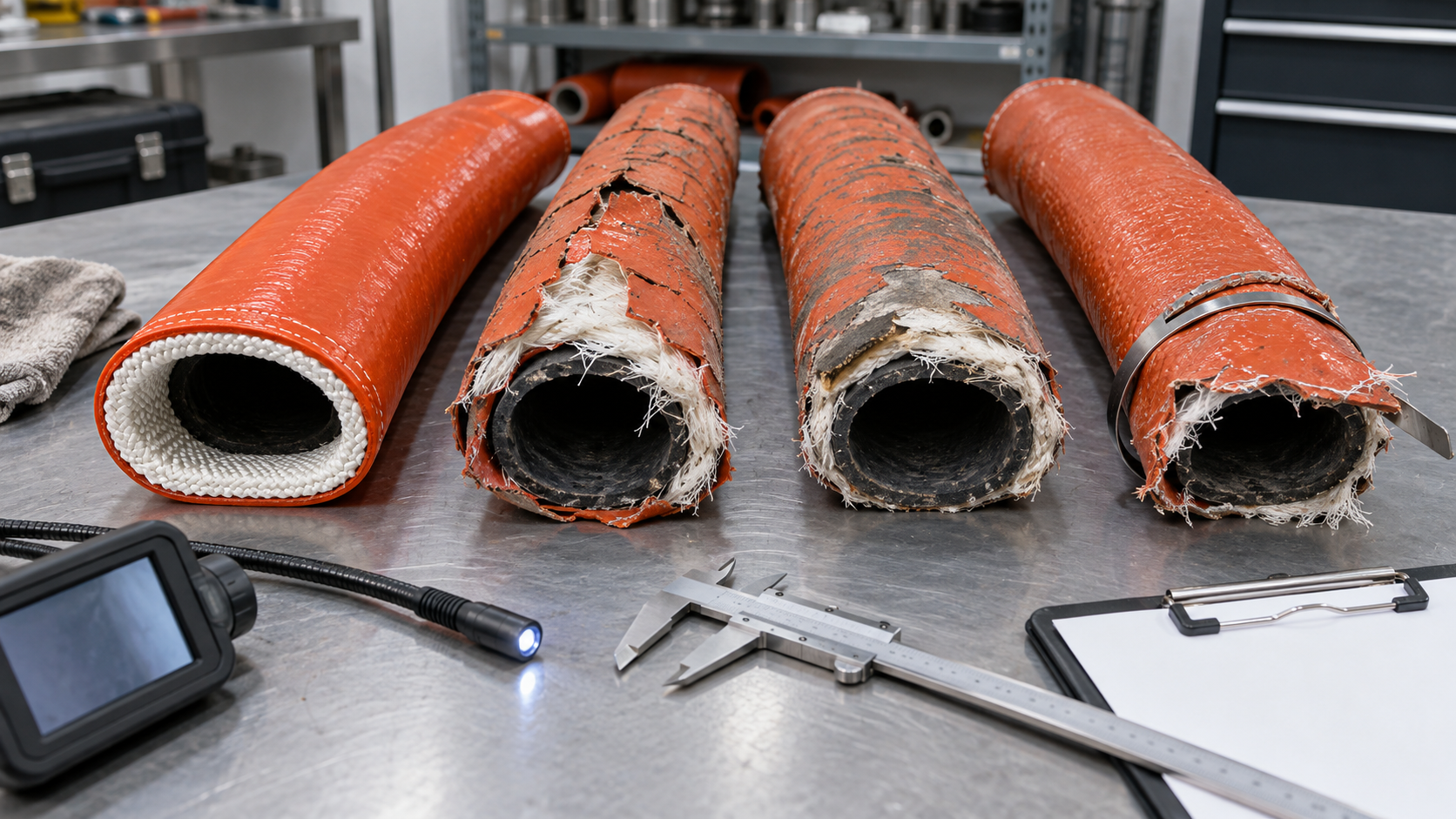
The inner tube may show raised blisters, pockmarks, loose flakes, soft cavities, or crater-like damage. In advanced cases, pieces of tube detach and the bore becomes rough or partially blocked. Damage may be concentrated near low points, couplings, or sections that retain condensate.
External signs can include cover blisters, soft spots, swelling, unusual odor, reduced steam flow, or particles discharged downstream. However, an assembly may show little external evidence. That is why internal inspection and operating history matter.
The Basic Failure Mechanism
Steam and hot condensate can penetrate or diffuse into the rubber tube over time. During depressurization and cooling, absorbed moisture changes state and expands within the tube material. If pressure is released too quickly or condensate remains trapped, internal vapor pressure can exceed the strength of the rubber structure, forming voids and blisters.
Repeated heating and cooling magnify the damage. Each cycle can create new pathways, weaken adhesion, and enlarge existing cavities until material breaks away.
The exact mechanism depends on compound design, steam quality, pressure, temperature, exposure time, and operating sequence. A purpose-designed rubber steam hose uses heat-resistant materials, but it still requires correct installation and handling.
Main Causes and Warning Signs
| Contributing factor | Effect on the hose | Typical warning sign |
|---|---|---|
| Rapid depressurization | Moisture flashes inside the tube | Damage after shutdown |
| Trapped condensate | Extends hot-water exposure | Blisters near low points |
| Hose left sealed while hot | Prevents controlled drainage and cooling | Swelling or soft bore |
| Excess temperature/pressure | Accelerates tube degradation | Hardening, cracking, odor |
| Incorrect hose type | Tube lacks steam resistance | Early widespread damage |
| Frequent thermal cycling | Repeats expansion stress | Progressive bore roughness |
| Poor routing | Creates pockets and tight bends | Localized damage and kinks |
| Contaminated steam | Introduces chemicals or oils | Softening or discoloration |
Rapid Depressurization
Opening a downstream valve abruptly or disconnecting immediately after use can create a fast pressure drop. Moisture absorbed in the tube may vaporize before it can escape gradually. The resulting pressure inside the rubber contributes to blister formation.
Use a controlled shutdown sequence defined for the system. Isolate the source, allow pressure to decrease through the intended route, verify zero pressure, drain condensate, and cool the assembly before handling. Never rely on hose appearance or valve position alone to confirm that stored pressure is gone.
Trapped Condensate
Steam loses heat as it travels and produces condensate. Low points, sagging hose, closed valves, reducers, or poor slope can trap that hot liquid. Condensate exposes the tube to prolonged heat and can contribute to water hammer when steam returns.
Route hose to support drainage without violating minimum bend radius. Avoid unnecessary loops and pockets. Provide suitable traps, drain points, and supports as required by the engineered system. A steam assembly should never be positioned where personnel must lift a hot, pressurized hose to empty it.
Operating Beyond the Hose Rating
Temperature and pressure are linked in steam service. Verify both against the manufacturer’s rating for the exact hose and size. Do not treat a general pressure rating as permission for steam at any temperature.
Include startup, cleaning, upset, and shutdown conditions. Superheated steam may create different demands from saturated steam, while contaminated wet steam can expose the tube to oils or treatment chemicals. Review steam hose basics before choosing a construction.
The lowest-rated part controls the assembly: hose, couplings, clamps, gaskets, valves, and adapters must all be suitable.
Choosing the Correct Steam Hose
Select from a documented steam hose range using actual service data:
- steam type and quality;
- normal and maximum pressure;
- normal and peak temperature;
- continuous or intermittent duty;
- cycle frequency and duration;
- outdoor, washdown, abrasion, or chemical exposure;
- routing, movement, and bend radius;
- coupling system and retention method;
- required electrical characteristics;
- inspection and replacement policy.
The available types of steam hose may differ in pressure class, reinforcement, cover, flexibility, and intended duty. Never substitute air, water, oil, or general-purpose hose for steam service.
Couplings Matter
Steam hose softens and changes dimension as it heats, making coupling retention critical. Use fittings and clamps designed for the selected hose. Follow the supplier’s assembly dimensions, clamp arrangement, bolt-tightening method, inspection interval, and re-tightening guidance.
Do not mix unapproved components. An apparently tight clamp can still cut the cover, distort reinforcement, or lose grip through thermal cycling. Install restraints or safety devices when required by site rules, but do not use them to compensate for a damaged assembly.
A Safer Cool-Down Sequence
The exact sequence must match the plant design, but a controlled process generally includes:
- stop the steam supply using the approved operating method;
- isolate the upstream source;
- release residual pressure through the designated safe route;
- drain condensate from engineered drain points;
- allow gradual cooling in a supported, drainable position;
- verify zero pressure and safe temperature;
- disconnect only when authorized;
- inspect, dry if required, cap, and store correctly.
Avoid quenching a hot hose with cold water unless the manufacturer and procedure specifically permit it. Rapid thermal shock can stress materials and couplings. Do not seal a hot, wet hose at both ends.
Inspection After Use
Before each shift or connection, inspect the cover for cracks, cuts, blisters, soft spots, exposed reinforcement, flattening, heat damage, and coupling movement. Check clamps, bolts, gaskets, restraints, and identification.
At defined intervals, make the hose safe and inspect the bore with suitable lighting or a borescope. Look for pitting, blistering, loose rubber, delamination, hardening, and restriction. Compare suspect areas with a new sample where possible.
Remove the hose from service if popcorning is found. Cutting away a damaged end does not prove the remaining length is sound, and flushing cannot restore degraded tube material.
Preventing Repeat Failures
If popcorning occurs, investigate the system rather than installing an identical replacement immediately. Record hose type, age, batch, operating pressure and temperature, cycle frequency, steam condition, shutdown sequence, route, low points, coupling details, and damage location.
Ask whether anything changed: faster valve operation, higher production rate, a failed trap, new boiler treatment, different cleaning chemicals, or altered routing. Several small changes can combine to exceed the hose’s practical limits.
Correct the root cause through hose selection, drainage, support, operating sequence, maintenance, or system design. Train operators on the reason behind the cooldown procedure so shortcuts are easier to recognize.
Storage and Service Control
After safe cooling, store the hose clean, dry, and protected from sunlight, ozone, heat, chemicals, crushing, and tight bends. Cap ends only when the internal condition is appropriate. Keep inspection status and service history traceable.
Set replacement criteria based on condition, duty, manufacturer guidance, and risk—not appearance alone. Steam service is too severe for an indefinite run-to-failure strategy.
Final Prevention Principle
Steam hose popcorning develops when moisture, heat, pressure changes, and tube condition combine. Correct hose construction provides the foundation, but routing, drainage, controlled depressurization, gradual cooling, and internal inspection determine whether the assembly survives repeated cycles.
A disciplined shutdown is not lost production time. It is part of the hose’s operating specification and one of the most effective ways to prevent hidden internal damage.