Blisters on a hydraulic hose cover may appear as raised bubbles, soft swollen areas, or separated patches. They are sometimes treated as a cosmetic defect, but they can indicate fluid permeation, trapped gas, chemical exposure, heat damage, internal leakage, or loss of adhesion between hose layers.
Correctly diagnosing hydraulic hose cover blistering is important because different causes require different corrective actions. Replacing the hose without investigating the fluid, temperature, routing, and failure pattern can lead to the same damage on the next assembly.
What a Cover Blister Means
A hydraulic hose is built from an inner tube, reinforcement, and outer cover, with bonding layers between them. The cover protects reinforcement from abrasion, weather, moisture, and external chemicals. A blister forms when gas or liquid collects beneath the cover or when the cover loses adhesion and lifts away.
The appearance alone does not prove the cause. A small localized bubble near a fitting has a different failure pattern from widespread swelling along a hot return line. Start with careful observation and system data.
Common Causes at a Glance
| Blister pattern | Possible cause | Evidence to check |
|---|---|---|
| Many small blisters along the hose | Fluid or gas permeation | Fluid type, temperature, tube compatibility |
| Local blister near a fitting | Tube damage or internal leakage | Crimp, insert, cut hose examination |
| Swollen or tacky outer surface | External chemical attack | Washdown, solvent, oil, process exposure |
| Blister near a heat source | Excess temperature | Fluid and ambient temperature history |
| Blister beneath a guard | Trapped fluid or moisture | Sleeve condition, drainage, hidden abrasion |
| Rust staining with lifting cover | Reinforcement corrosion | Cover cut, water entry, corroded wire |
This table supports investigation but is not a substitute for dismantling and technical review.
Fluid Permeation
Permeation is the gradual movement of fluid molecules or gas through the inner tube and hose wall. All materials have some level of permeability. The rate depends on fluid chemistry, temperature, pressure, tube material, wall thickness, and time.
If permeated material cannot escape through the cover, it may accumulate and form blisters. This does not automatically mean the hose was manufactured incorrectly; the construction may be unsuitable for the fluid or operating condition.
Check the exact fluid against a fluid compatibility guide and obtain supplier confirmation. A generic description such as “hydraulic oil” is not sufficient for synthetic, biodegradable, water-glycol, phosphate ester, refrigerant, or gas service.
Internal Leakage Between Layers
Damage to the inner tube can allow pressurized fluid to move into the reinforcement and travel along the hose before lifting the cover. The visible blister may be some distance from the original tube defect.
Possible contributors include an incorrect fitting insert, excessive or insufficient crimp, tube erosion, contamination, chemical attack, or a manufacturing defect. Fluid appearing through a pinhole in the cover is a serious warning.
Do not puncture a blister on a pressurized hose. The trapped material may be under pressure, and the underlying reinforcement may already be compromised. Isolate and depressurize the system before removing the assembly.
External Chemical Exposure
The cover may contact solvents, cleaners, fuels, lubricants, process chemicals, paint, or spilled hydraulic fluid. An incompatible chemical can cause swelling, softening, tackiness, cracking, or loss of adhesion.
Review the hydraulic hose cover material and the real exposure, including concentration, temperature, and cleaning frequency. “Oil resistant” does not mean resistant to every industrial liquid.
The pattern can offer clues. External attack often affects the exposed side or areas where liquid pools beneath a sleeve. Compare damaged and sheltered sections, but confirm the conclusion through material review.
Excessive Temperature
Heat accelerates permeation and chemical reactions. High fluid temperature can damage the tube and bonding layers, while external radiant heat can age the cover. A hose near an engine, furnace, exhaust, hot mold, or restricted enclosure may exceed its ambient rating.
Measure temperature at the hose during maximum load. Reservoir temperature alone may miss local heating caused by throttling, pressure loss, or proximity to hot components.
If heat is the cause, installing the same hose is unlikely to solve the problem. Improve cooling or routing, reduce the heat source, or select a construction approved for the actual fluid and temperature.
Moisture and Corrosion
A cut or abraded cover can allow water to reach steel reinforcement. Corrosion products expand and may lift the surrounding cover, producing a blister-like appearance with rust staining or localized hardness.
Washdown, salt spray, condensation, and outdoor exposure increase the risk. Guards can make matters worse if they retain moisture. Once reinforcement is exposed or corroded, external patching does not restore the hose’s rated strength.
A Safe Diagnostic Process
Follow a controlled investigation:
- Stop and isolate the machine according to its safety procedure.
- Photograph the blister and its location before removal.
- Record pressure, fluid, temperatures, service hours, and recent changes.
- Inspect nearby heat sources, clamps, guards, and chemical exposure.
- Remove the assembly without puncturing the blister.
- Cap the line to control contamination.
- Have the hose supplier or qualified laboratory examine the tube, reinforcement, cover, and fitting interface.
A structured hydraulic hose inspection helps distinguish a single damaged assembly from a fleet-wide material problem.
What to Examine After Removal
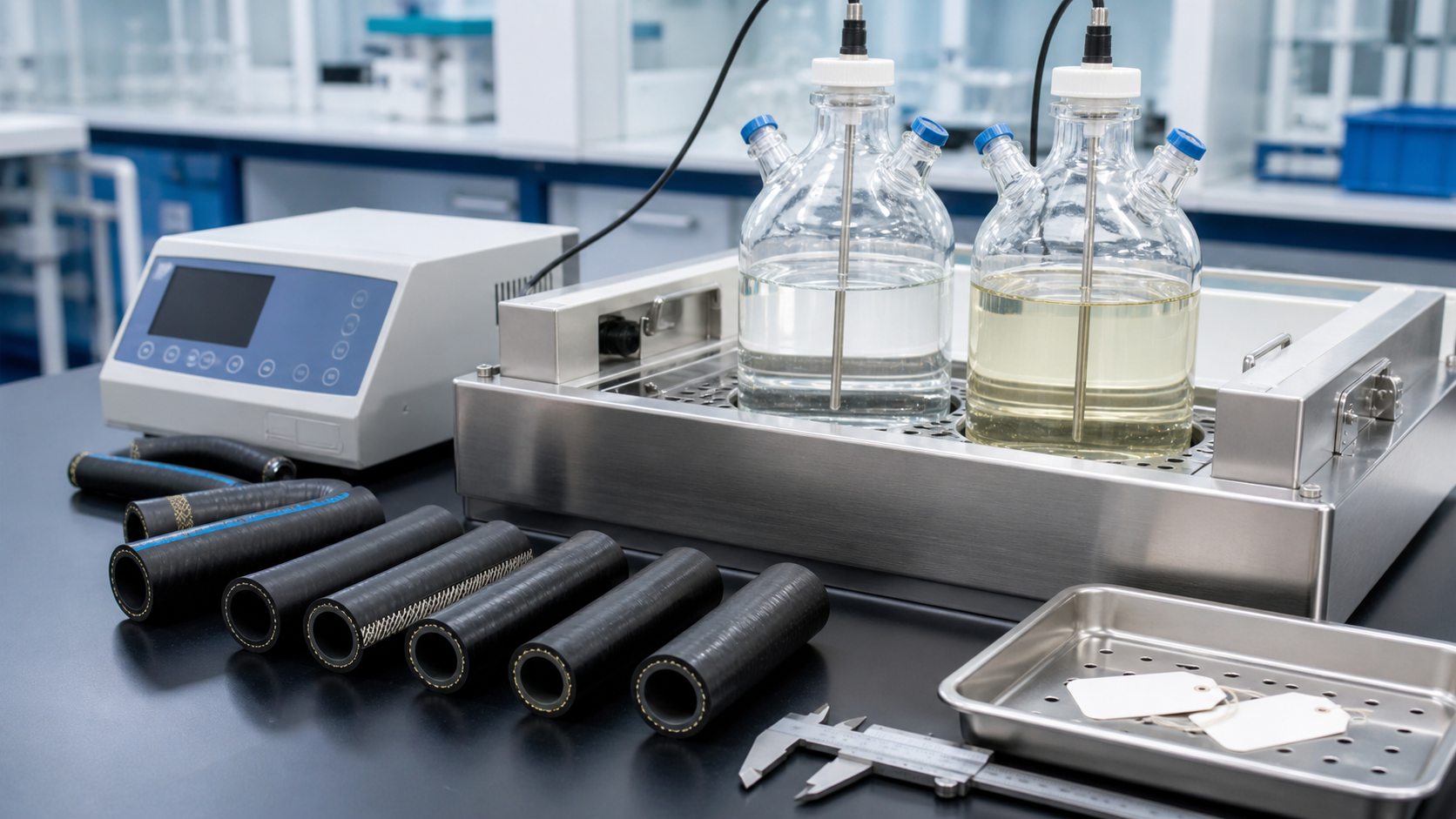
Cross-sectioning can show whether the tube failed, fluid tracked through reinforcement, adhesion was lost, or corrosion developed beneath the cover. Compare hardness, dimensions, odor, color, and layer separation with an unused reference where possible.
If several hoses from the same position or batch show similar damage, review production records and assembly parameters. If hoses from different batches fail only in one machine position, the application is a stronger suspect.
Fluid analysis can identify contamination, mixing, oxidation, water, or a formulation change. Ask whether maintenance recently introduced a new oil, cleaner, additive, or flushing agent.
Prevention Measures
Prevent recurrence by addressing the confirmed cause:
- Verify tube and cover compatibility with all internal and external media.
- Keep fluid and ambient temperatures within approved limits.
- Use validated hose, fitting, ferrule, and crimp combinations.
- Correct abrasion, tight bends, twist, and heat exposure.
- Install protection that allows drainage and inspection.
- Control fluid contamination and mixing.
- Store assemblies capped, dry, and protected from ozone and sunlight.
- Track hose position, batch, installation date, and removal reason.
Review broader hydraulic hose failure causes rather than treating the cover as an isolated component.
When Immediate Replacement Is Required
Remove an assembly from service when blistering is accompanied by leakage, exposed reinforcement, soft or severely swollen material, corrosion, loss of shape, fitting movement, or evidence of internal pressure beneath the cover. For safety-critical circuits, uncertain damage should receive conservative engineering review.
Never attempt a field patch that hides the condition. A repaired-looking cover does not restore reinforcement, adhesion, or pressure qualification.
Information to Give the Supplier
Provide the hose identification, assembly date, machine position, fluid product, pressure, temperature, duty cycle, photographs, blister pattern, external chemicals, guards, cleaning method, service hours, and any recent system change. Retain the failed assembly when safe so it can be examined.
Final Diagnosis Principles
Cover blistering is a symptom, not a complete diagnosis. Permeation, tube leakage, chemical attack, heat, moisture, and assembly problems can produce similar appearances.
A safe investigation combines field evidence with material and assembly examination. Correcting the actual cause prevents repeated failure and improves the reliability of the entire hose program.