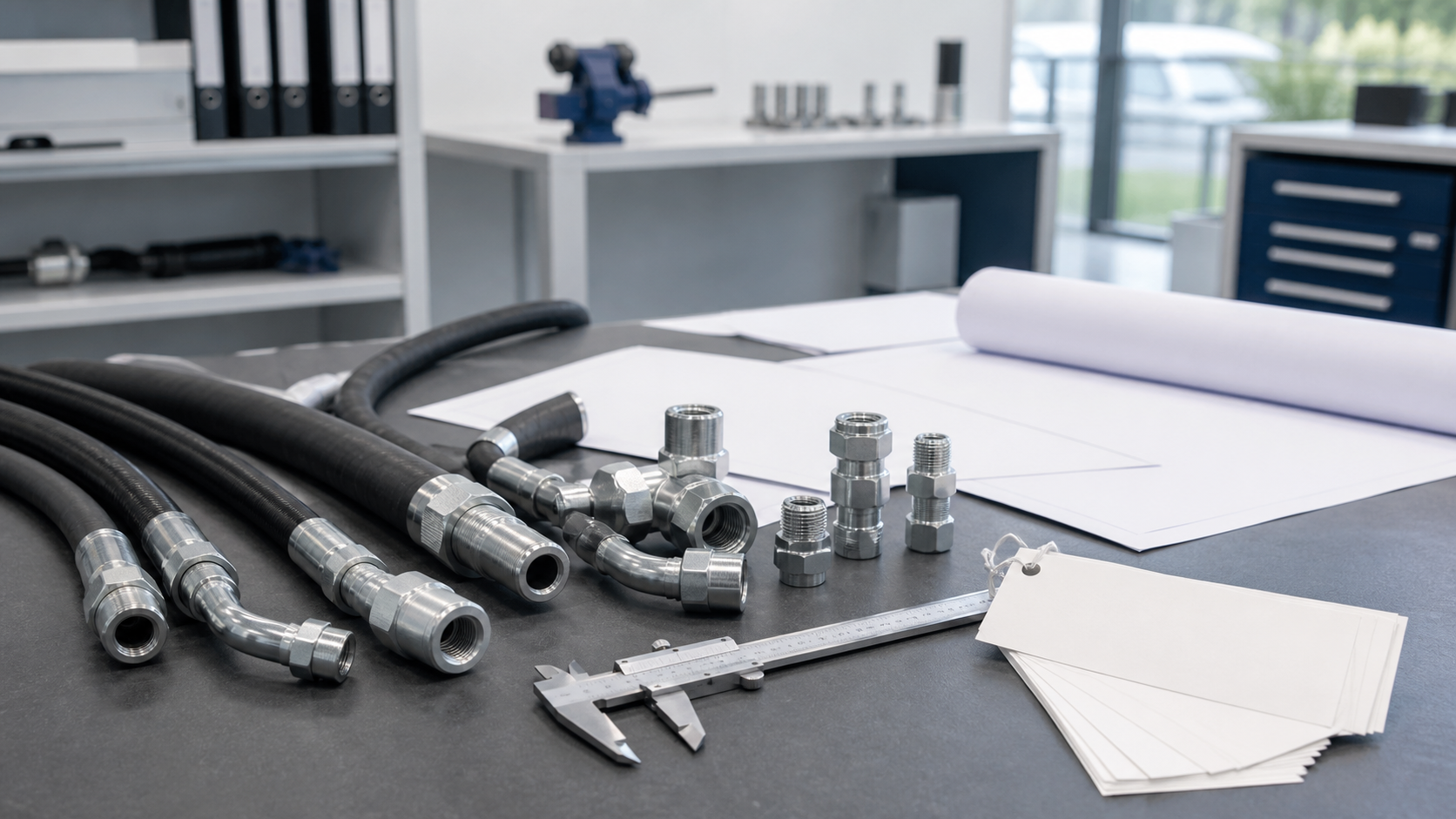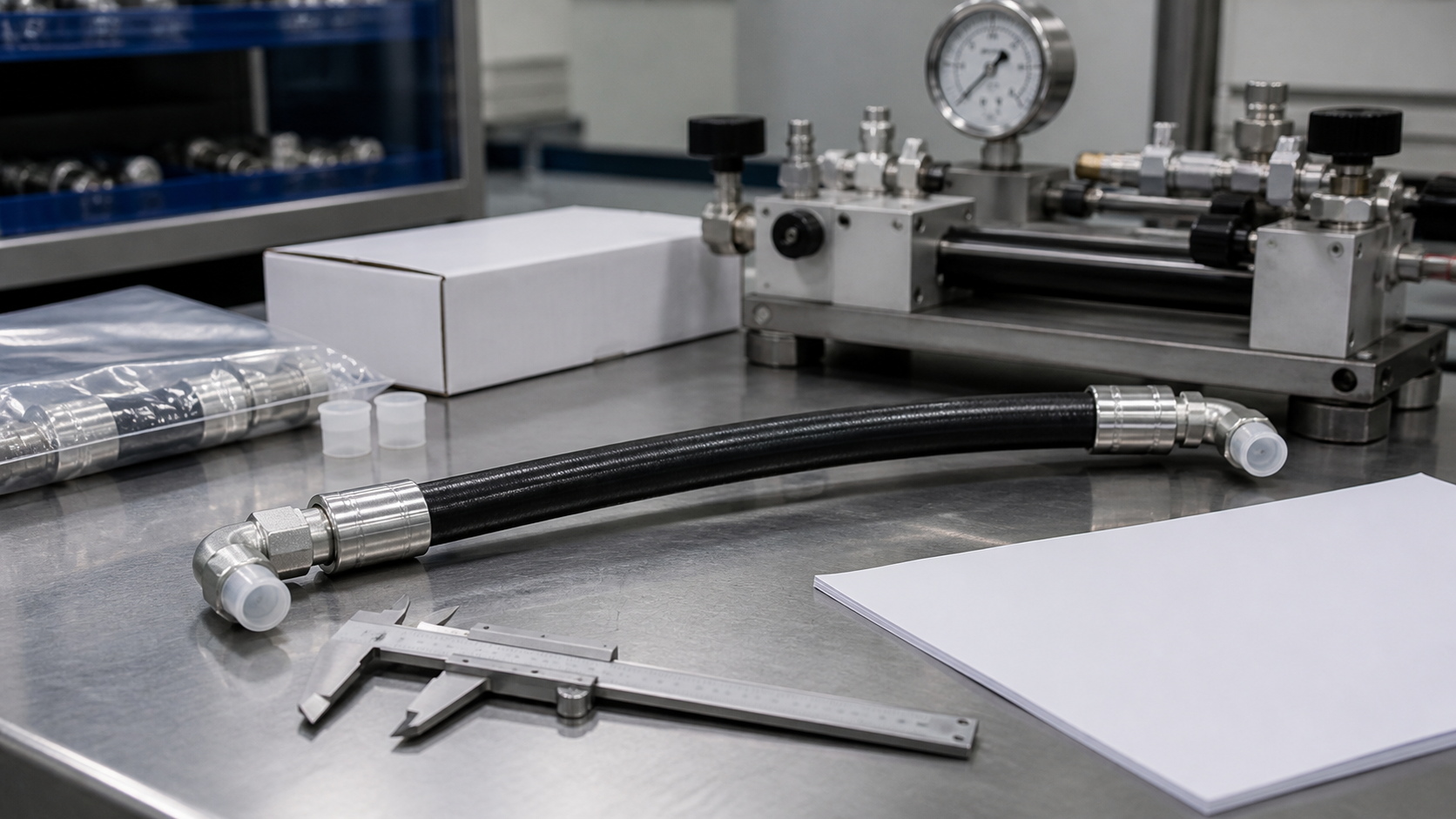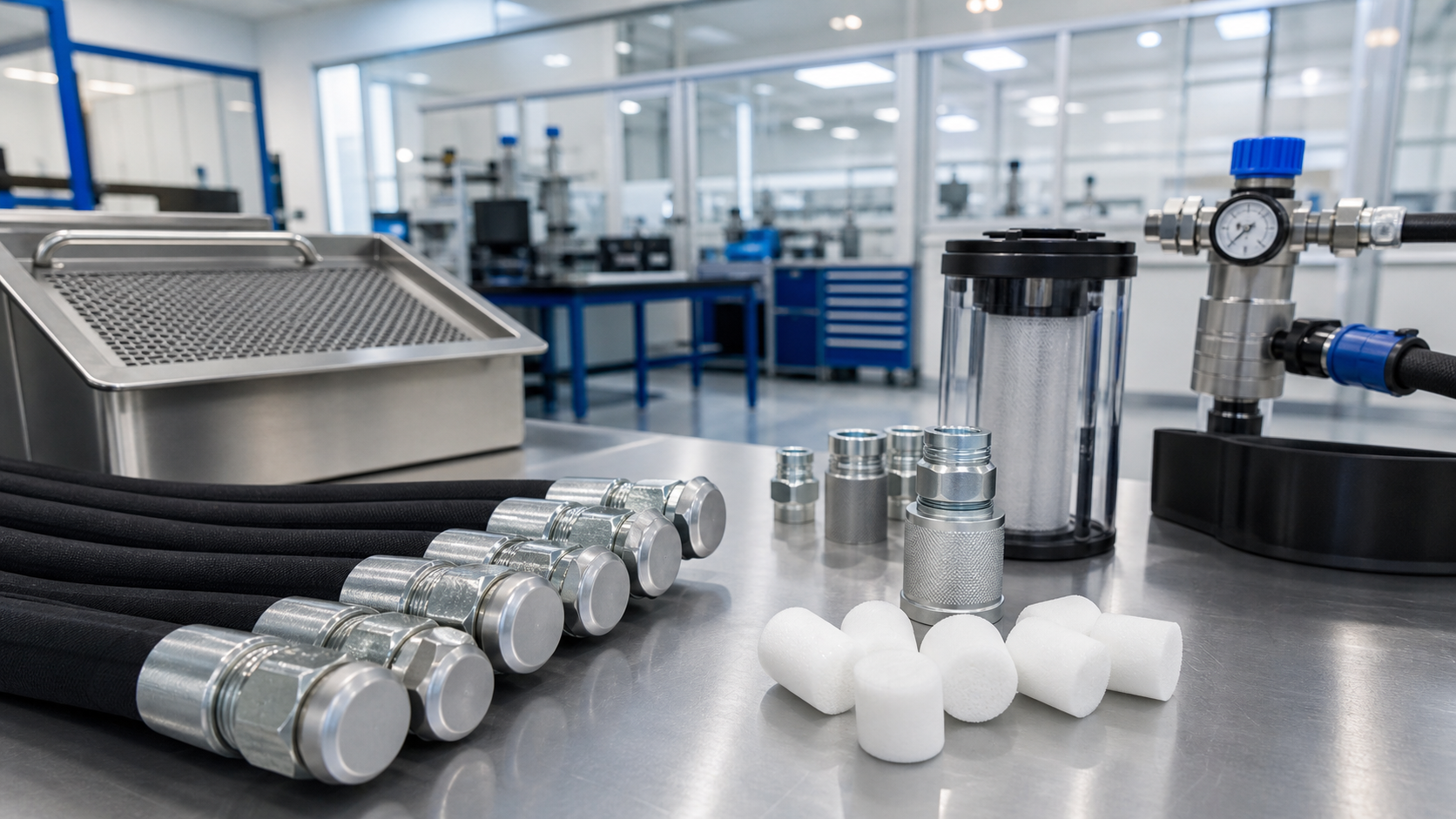
Port cranes and container handling machines depend on hydraulic systems for lifting, steering, braking, spreader control, boom movement, and stabilizing functions. These systems work for long shifts in an environment that combines heavy loads, rapid cycling, salt-laden air, rain, ultraviolet exposure, vibration, and abrasive contamination. A hose failure can stop a critical machine, delay vessel or yard operations, and expose personnel and equipment to pressurized fluid.
Selecting a port crane hydraulic hose is therefore more complex than matching bore size and nominal pressure. OEM engineers, maintenance teams, and hose distributors must consider pressure impulse, corrosion, movement, temperature, routing, fittings, protection, and inspection as one assembly-level specification.
Understand the Machine and Circuit
The term container handling equipment covers several machine types, including ship-to-shore cranes, rubber-tired and rail-mounted gantry cranes, reach stackers, empty container handlers, straddle carriers, mobile harbor cranes, and terminal tractors. Their hydraulic duties are not identical.
A large gantry crane may use hydraulics mainly for spreader functions, brakes, storm pins, or service systems. A reach stacker relies heavily on hydraulic power for boom lift, extension, steering, and attachment control. Mobile harbor equipment can combine high system pressure with frequent articulation and long hose runs.
Begin by identifying each hose function:
- Main pump and actuator pressure lines
- Return and drain lines
- Pilot and control lines
- Brake and steering circuits
- Spreader twist-lock, flipper, and telescoping circuits
- Boom, cylinder, and attachment lines
- Reservoir suction lines
The hose specification should be based on the conditions at its exact location. A short pilot line inside a protected cabinet faces a different duty from a boom hose that flexes during every handling cycle.
Pressure and Impulse Performance
Lifting and positioning containers creates repeated pressure cycles. Sudden deceleration, valve closure, attachment impact, and load movement can generate transient peaks above the normal operating pressure. A pressure gauge with slow response may not reveal every spike.
Select a high-pressure hydraulic hose by its rated working pressure for the required size, not by burst pressure. Confirm the relief setting, measured peaks, impulse frequency, fluid temperature, and applicable equipment or hose standard. Where dynamic loads are severe, impulse endurance can be as important as the static rating.
Wire-braided hose may suit many medium- and high-pressure circuits where flexibility is valuable. A wire spiral hydraulic hose is often considered for main lift, boom, steering, or other severe-duty circuits requiring greater pressure and impulse capacity. The strongest construction is not automatically the best choice: spiral hose can have a larger bend radius and require more routing space.
Marine Exposure and Corrosion Control
Even equipment that does not operate at sea is exposed to coastal moisture and airborne salt. Salt deposits retain moisture on fittings, ferrules, clamps, and damaged hose covers. Corrosion can weaken exposed wire reinforcement and make connections difficult to service.
A suitable marine hydraulic hose specification should address both the fluid inside the tube and the atmosphere around the assembly. Buyers should review cover resistance to weather, ozone, UV, oil, and abrasion. Fitting material or plating must be appropriate for the corrosion exposure and maintenance interval.
Protection measures can include:
- Corrosion-resistant fitting finishes or suitable stainless components
- Correctly sealed hose ends and capped spare assemblies
- Drainage that prevents standing water around hose bundles
- Regular fresh-water cleaning where permitted by the OEM
- Replacement of damaged clamps and cover protection
- Inspection beneath guards where salt and moisture can collect
Do not coat over active corrosion without evaluating the assembly. Rust staining at a ferrule or through a damaged cover may indicate deterioration that is not fully visible.
Movement, Bend Radius, and Torsion
Port machinery contains long moving structures. A boom may raise, telescope, or rotate; a spreader changes length and orientation; a reach stacker attachment tilts and sideshifts. Hose length and routing must accommodate the complete movement envelope.
During design or replacement, move the equipment through all normal positions and verify that the hose does not become taut, kink, flatten, snag, or bend below its stated minimum radius. The first bend should not start directly at the fitting. A suitable straight section reduces stress at the coupling.
Twist is particularly damaging because reinforcement is designed to carry pressure while the hose bends, not while its body is being torqued. Use the layline as a visual reference during installation. Swivel adapters may assist assembly, but they should not be treated as rotating joints unless designed for continuous rotation.
Hose reels, chains, guides, or trays used on telescoping sections must be sized for the hose outside diameter and bending requirement. Check that guide surfaces remain smooth and that rollers turn freely.
Abrasion and External Protection
Container terminals contain steel structures, moving cable systems, dust, and debris. Hose bundles can rub against guide plates, clamps, other hoses, or guards thousands of times during a service interval. Once the cover wears through, the reinforcement becomes vulnerable to corrosion and mechanical damage.
Use abrasion-resistant covers where appropriate and eliminate avoidable contact through better routing. A hydraulic hose sleeve can add a sacrificial layer, organize a bundle, and help contain spray after a failure. Spiral guards may be useful at rubbing points, while fire-resistant sleeves may be required near engines or hot components.
Protection must not force a tighter bend, trap damaging contamination, or make inspection impossible. Secure it so it remains in the intended position without constricting the hose.
Temperature, Fluid, and Cleanliness
Port equipment may operate in tropical sun, freezing winters, or enclosed machinery spaces. Confirm both the internal fluid temperature and the ambient temperature at the hose. Dark metal structures exposed to sunlight can create local heat, while cold oil can increase pressure loss and startup loads.
The tube must be compatible with the exact hydraulic fluid, including biodegradable or fire-resistant formulations. Do not approve compatibility from a broad description such as “hydraulic oil.” Record the manufacturer, product, base chemistry, and expected temperature.
Cleanliness matters during every hose replacement. Contamination introduced through an uncapped assembly can damage valves, pumps, and proportional controls. Specify cleaning, flushing, capping, and packaging requirements for both factory assemblies and field replacements.
Fittings and Assembly Details
The hose, insert, ferrule, and crimp specification should form an approved system. Mixing unvalidated components can lead to leakage, tube damage, or fitting pull-off. Confirm thread or flange standard, sealing method, material, pressure class, and connection size.
For hoses with angled fittings, document rotational orientation. Record cut length rather than estimating installed length from a used assembly that may have stretched, been routed incorrectly, or received an emergency repair. Long assemblies may also require tighter length tolerances to fit chains and guides correctly.
Where adapters are needed, reduce unnecessary joints and avoid fitting arrangements that create leverage at the hose end. A leak at a small control line can still disable a brake, spreader, or safety-related function.
Inspection and Preventive Replacement
Inspection frequency should reflect operating hours, movement cycles, weather exposure, and the consequence of failure. High-movement boom and spreader areas normally deserve more attention than protected cabinet hoses.
Look for:
- Deep abrasion or exposed reinforcement
- Cracks, blisters, hardening, or cover separation
- Corrosion at ferrules, fittings, clamps, or damaged cover
- Leaks, wetness, or fitting movement
- Kinks, crushing, flattened areas, or tight bends
- Twisted laylines and pulled protective sleeves
- Contact with structures throughout machine movement
Never search for a pressurized pinhole leak with a hand. Depressurize and secure the equipment according to the manufacturer’s lockout procedure before touching an assembly.
Record failure location, operating hours, and cause. Repeated damage at the same point usually calls for a routing, clamp, or protection change rather than another identical hose.
What to Include in a Purchasing Specification
An effective RFQ should include the machine model and hose function, inside diameter, length, continuous and peak pressure, fluid, temperature range, required standard, bend radius, movement, external exposure, end connections, fitting orientation, protection, cleanliness level, testing, marking, quantity, and documentation requirements.
For fleet programs, create a controlled hose list linked to machine position. This reduces field measurement errors and enables consistent sourcing across terminals.
Final Selection Principles
A reliable port crane hydraulic hose must survive hydraulic loading and the terminal environment. Pressure capacity, impulse life, salt resistance, bend performance, fittings, routing, and protection are interdependent. Begin with circuit data, validate the complete hose-and-fitting system, and inspect the installation through its full movement.
This approach helps ports and equipment suppliers reduce unplanned downtime, improve replacement consistency, and protect the productivity of cranes and container handling machines.