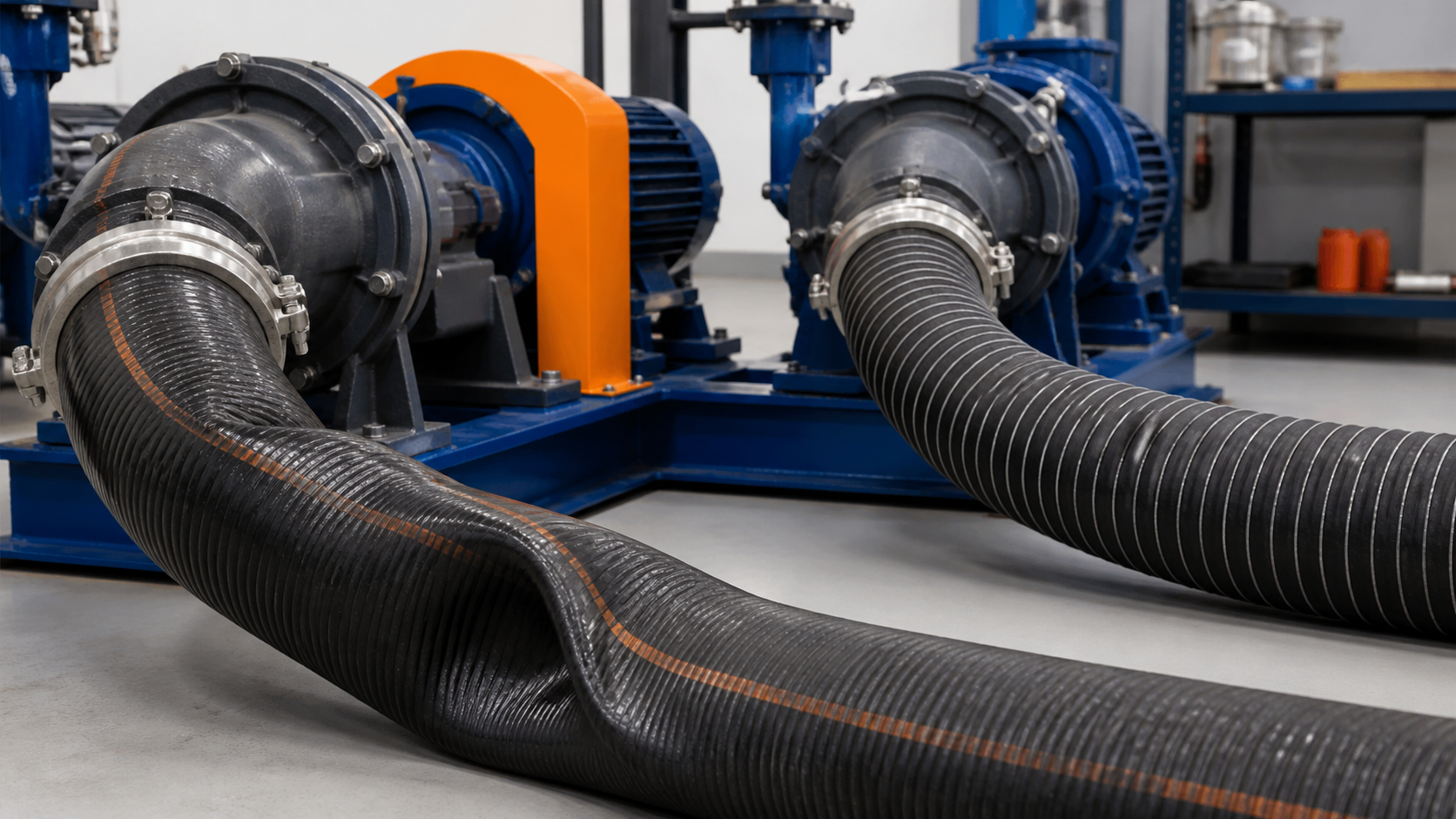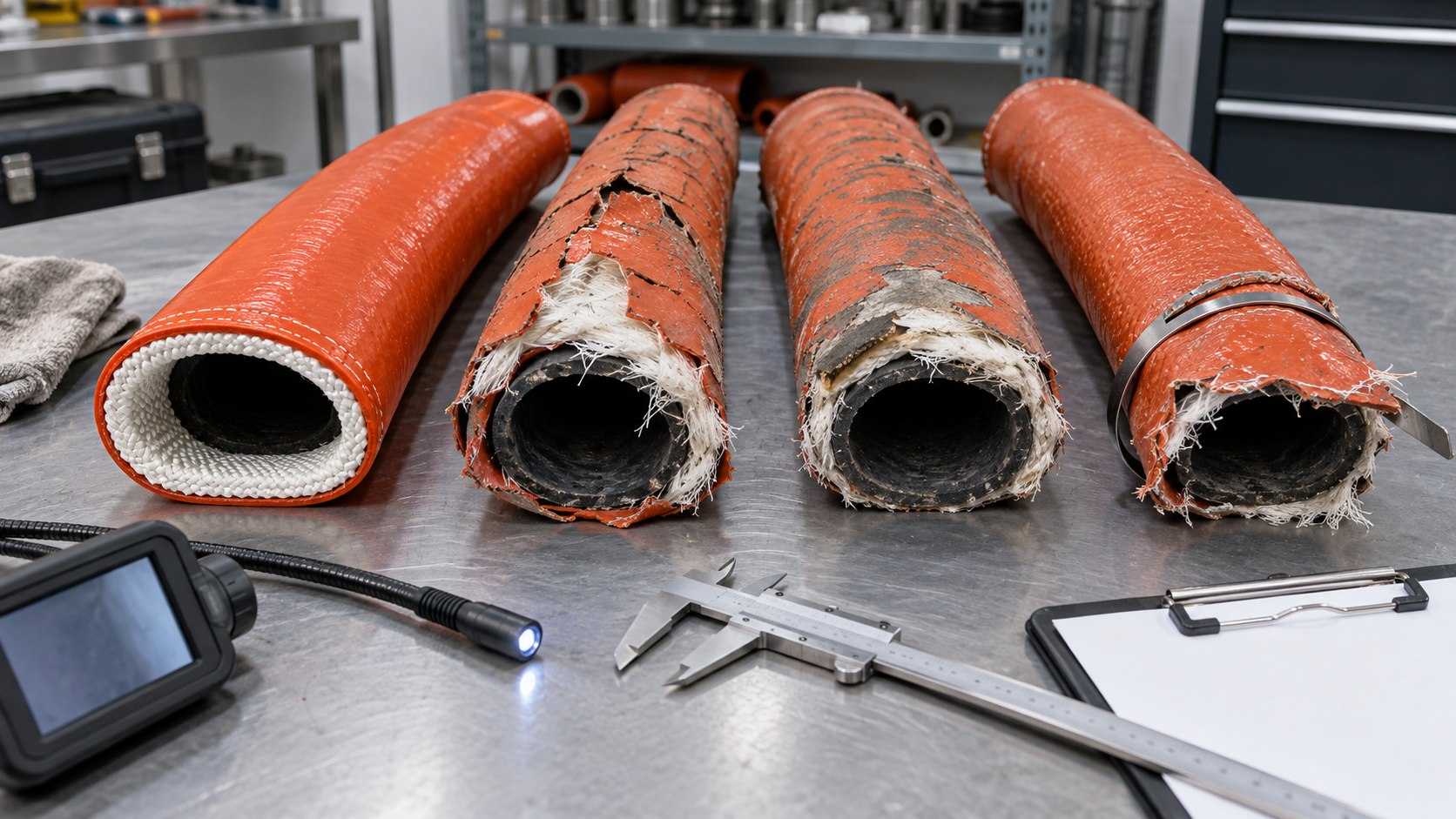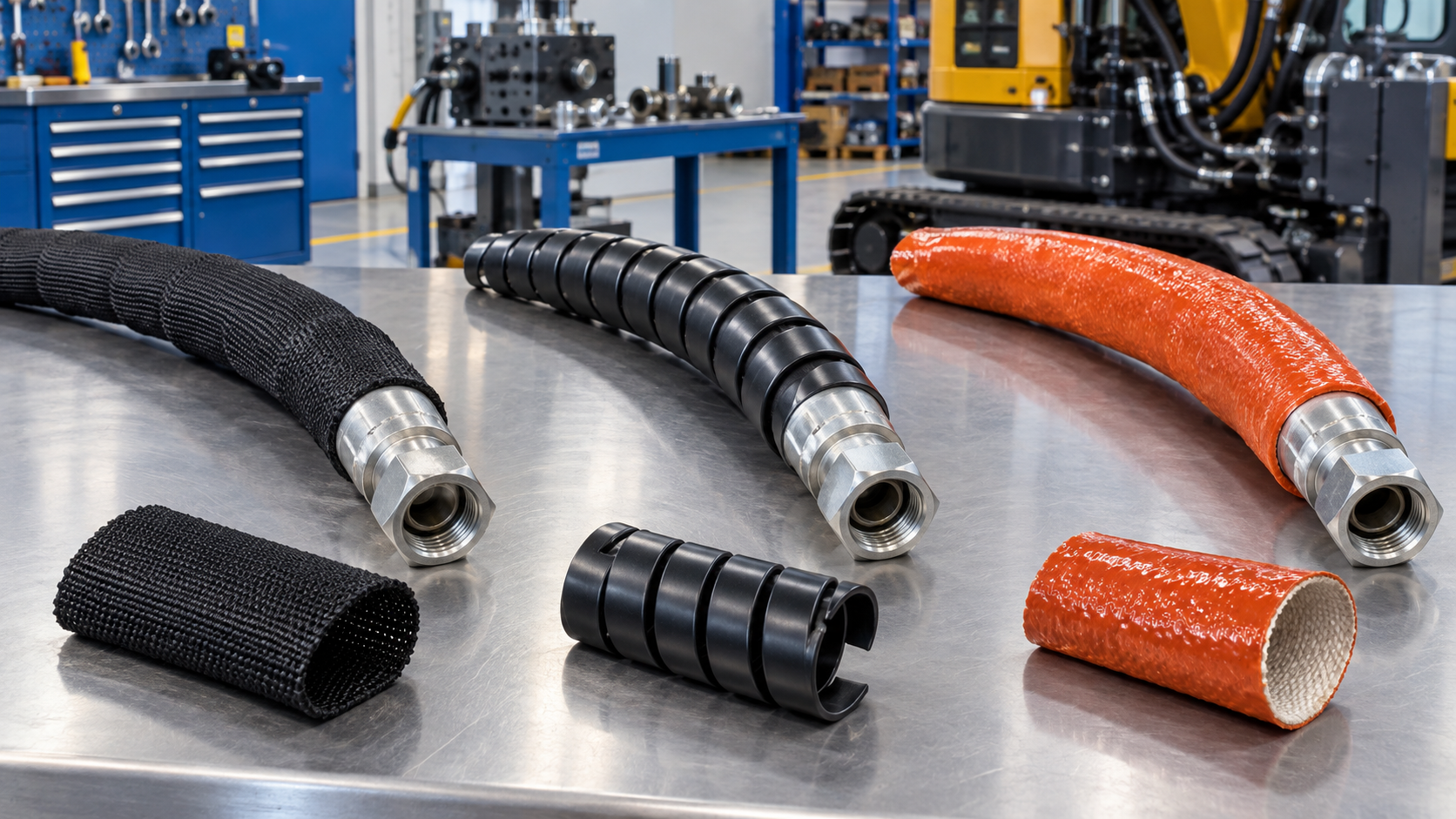
When sourcing industrial rubber hoses for hydraulic systems, the material selection decision often comes down to two synthetic elastomers: EPDM (Ethylene Propylene Diene Monomer) and NBR (Nitrile Butadiene Rubber). While both are synthetic compounds engineered to resist specific chemical environments, they excel in fundamentally different operating conditions. Specifying the wrong material can result in inner-tube swelling, outer-cover cracking, seal degradation, and complete hose failure—often within months of installation.
This guide breaks down the molecular chemistry, real-world performance data, and application-specific requirements that distinguish these two materials. Understanding these differences is essential for procurement engineers, equipment designers, and maintenance managers responsible for selecting hoses that survive their intended service environment.
What Is EPDM?
EPDM (Ethylene Propylene Diene Monomer) is a synthetic rubber synthesized from ethylene, propylene, and diene monomers. The resulting polymer has a saturated backbone—meaning it contains primarily single carbon-carbon bonds with no conjugated double bonds. This saturated molecular structure is the fundamental reason EPDM excels in environmental resistance.
The absence of carbon-carbon double bonds means EPDM resists:
- Ozone attack – Ozone molecules cannot cleave double bonds in the polymer chain, making EPDM ideal for outdoor environments where atmospheric ozone concentration is high
- UV radiation – The polymer does not readily absorb UV energy, preventing photodegradation
- Weathering – Long-term exposure to sun, rain, and temperature cycling causes minimal degradation compared to unsaturated rubbers
- Oxidation – The saturated backbone resists oxidative degradation from oxygen exposure
Because of these properties, EPDM is the material of choice for outdoor water hoses, automotive cooling system hoses, and any application where environmental durability is paramount.
EPDM in Hydraulic Hose Applications
In hydraulic hose applications, EPDM’s use is specialized and limited compared to nitrile. The critical limitation is that EPDM has extremely poor compatibility with petroleum-based hydraulic oils, which make up the vast majority of hydraulic fluid specifications worldwide.
When EPDM inner tube contacts mineral oil, the oil acts as a solvent to the rubber polymer. Over weeks or months of exposure, the EPDM swells 5-15% by volume as oil penetrates and weakens the polymer chains. This swelling reduces the effective bore diameter, increases flow restriction, creates back-pressure, and eventually causes leaks as the inner tube loses structural integrity.
However, EPDM performs excellently with:
- Water-based hydraulic fluids – ISO HFC and HFAS fluids (water-glycol and water-polyol emulsions used in fire-resistant applications)
- Phosphate ester synthetic fluids – ISO HFP fluids (used in aerospace and extreme-temperature systems)
- Biodegradable vegetable-oil hydraulics – Increasingly specified in agricultural equipment and environmentally sensitive industries
For applications using these specialized fluids, EPDM hoses are not merely acceptable—they are often specified because mineral-oil-compatible materials may degrade in contact with the alternative fluid. EPDM’s wide temperature operating range (typically -40°C to +120°C depending on the specific compound) is an additional advantage in extreme-temperature hydraulic systems.
What Is Nitrile (NBR)?
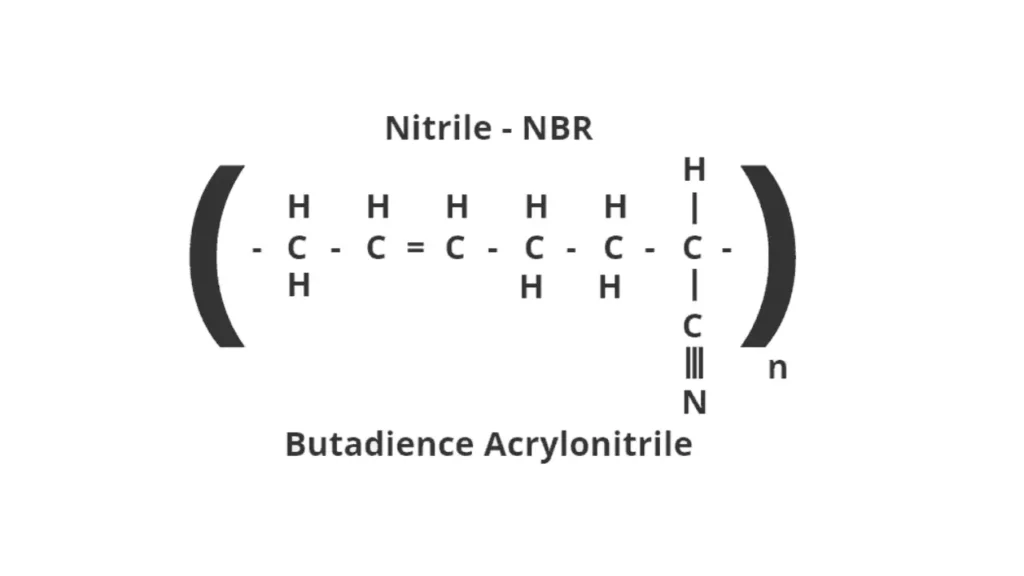
Nitrile rubber is a copolymer synthesized from acrylonitrile and butadiene monomers. The polymer chain contains unsaturated carbon-carbon double bonds (conjugated dienes from the butadiene component). This unsaturation is chemically advantageous for one specific purpose: it makes the rubber lipophilic—meaning it has affinity for non-polar, oil-based compounds.
The nitrile groups (-C≡N) in the acrylonitrile component create polarity within the polymer, allowing the rubber to swell slightly in the presence of mineral oils and hydrocarbons. This controlled swelling creates a dynamic seal between the hose bore and outer cover, and prevents the inner tube from becoming brittle when in contact with oil. The result is that mineral oil hydraulic fluid does not degrade NBR; instead, the rubber maintains flexible, sealed contact with the fluid indefinitely.
Nitrile’s other molecular properties deliver:
- Good tensile strength – Typically 15-25 MPa, sufficient for high-pressure industrial applications
- Decent abrasion resistance – The polymer resists wear from particulate contamination in hydraulic fluids, critical for systems without robust filtration
- Moderate temperature range – Typically -30°C to +100°C for most NBR compounds, covering the majority of industrial hydraulic operating windows
The tradeoff is that NBR’s unsaturated backbone makes it vulnerable to ozone, UV, and oxidative degradation. Outdoor exposure or oxygen-rich environments cause the double bonds to break down, leading to surface cracking, cover hardening, and eventual failure.
Nitrile in Hydraulic Hose Applications
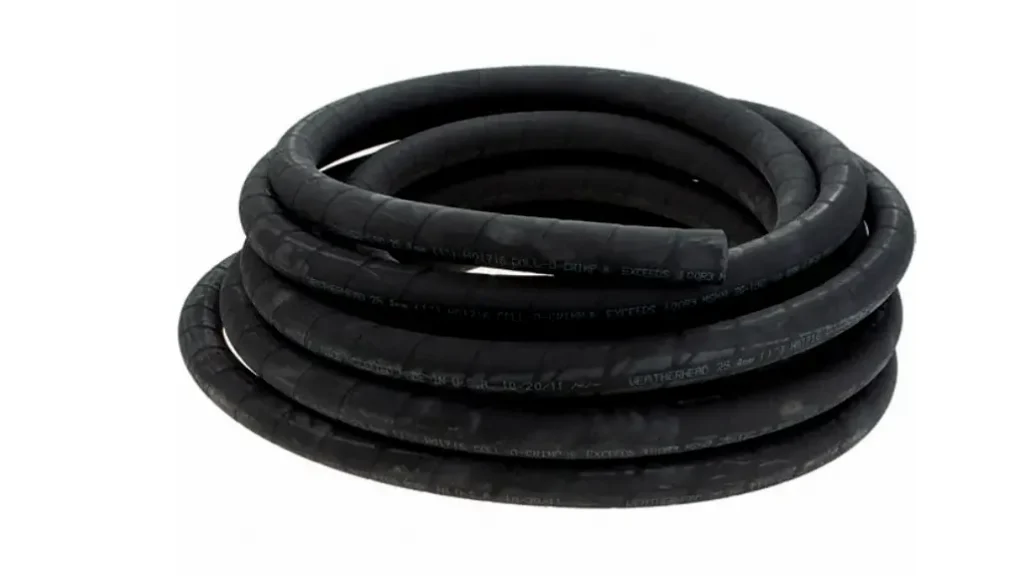
Nitrile is the industry standard inner-tube and outer-cover material for approximately 90% of industrial hydraulic hoses worldwide. This dominance reflects a simple reality: mineral-oil-based ISO VG 46 and VG 68 hydraulic fluids are the global standard, and nitrile is chemically engineered for compatibility with these fluids.
Standard NBR hoses are specified for:
- Mobile equipment – Excavators, loaders, agricultural tractors, and other construction/farming machinery with mineral-oil hydraulic systems
- Industrial stationary systems – Plastic injection molding machines, metal-forming presses, and industrial pumping systems
- Automotive hydraulic systems – Power steering, brake boost, and transmission fluid applications
- Offshore and marine applications – Oil rig equipment, submersible pump systems, and marine propulsion systems
The prevalence of nitrile reflects not marketing dominance but basic chemistry: when the bulk of your customer base uses mineral-oil hydraulics, the material that works best with mineral oil becomes the default specification.
Direct Comparison: EPDM vs. Nitrile
| Property | EPDM | Nitrile (NBR) | Winner for Hydraulics |
|---|---|---|---|
| Mineral Oil Compatibility | Poor (5-15% swell) | Excellent | Nitrile |
| Water-based Fluid Compatibility | Excellent | Poor (degradation) | EPDM |
| Phosphate Ester Compatibility | Excellent | Fair-Good | EPDM |
| Ozone Resistance | Excellent | Poor | EPDM |
| UV Resistance | Excellent | Poor | EPDM |
| Weathering Resistance | Excellent | Poor | EPDM |
| Tensile Strength | 10-15 MPa | 15-25 MPa | Nitrile |
| Abrasion Resistance | Moderate | Good | Nitrile |
| Temperature Range | -40°C to +120°C | -30°C to +100°C | EPDM |
| Cost at 50 units | $18-24/meter | $12-18/meter | Nitrile |
| Cost at 1000+ units | $8-12/meter | $5-10/meter | Nitrile |
Chemical Compatibility: The Critical Selection Factor
Chemical incompatibility is the most common cause of premature hose failure—more common than pressure rating misselection, temperature excursion, or mechanical damage. The failure mechanism is straightforward but often undetected until catastrophic:
Nitrile exposed to water-based hydraulic fluid: The polyol or glycol components of the water-based fluid extract plasticizers and cure agents from the nitrile compound. The rubber hardens, loses flexibility, and begins to crack. Cross-section inspection of a failed hose shows the inner tube has become brittle and lost coherence with the reinforcement layers. Timeline: typically 3-8 months from installation to visible failure.
EPDM exposed to mineral-oil hydraulic fluid: The mineral oil penetrates the EPDM inner tube, swelling the compound 5-15%. The swollen rubber loses structural support and begins to delaminate from the braid. The bore diameter shrinks, creating back-pressure that generates heat. The hose becomes hot to the touch while the system temperature rises abnormally. Timeline: typically 6-18 months before the hose develops slow leaks that progress to failure.
In both cases, the hose appears intact externally. The failure is invisible until internal cross-section inspection reveals the degradation. This is why fluid compatibility must be confirmed before order placement, not discovered after installation.
Temperature Performance & Operating Range
EPDM typically maintains rubber elasticity from -40°C to +120°C depending on the specific compound formulation. This wide range reflects EPDM’s molecular structure—the saturated backbone remains flexible at low temperatures and does not become brittle at high temperatures.
Nitrile’s operating range is typically -30°C to +100°C. At temperatures below -30°C, NBR becomes increasingly brittle. At sustained temperatures above +100°C, the unsaturated backbone begins oxidative degradation, and seal performance degrades. Within the -30°C to +100°C window, nitrile performs reliably, which covers the vast majority of industrial hydraulic applications.
For applications operating outside these standard ranges—deep-well geothermal drilling (135°C+), Arctic exploration (-50°C), or aerospace environments—either material may need to be replaced with more exotic elastomers like fluoroelastomer (Viton/FKM) or specialized PTFE compounds.
Cost Implications & Service Life
In bulk orders (50+ units), nitrile hoses cost 20-40% less than equivalent EPDM hoses due to higher production volume and more efficient supply chains. A DN16 SAE 100R2AT hose in nitrile costs approximately $12-18/meter at 50-unit volume; the same hose in EPDM costs $18-24/meter.
However, the lower purchase price is only one component of total cost of ownership. An EPDM hose specified for the wrong fluid application fails 6-18 months earlier than a correctly specified nitrile hose, creating:
- Emergency replacement labor costs (often 2-3x routine replacement)
- Equipment downtime (lost productivity: $500-$5,000+ per hour for industrial equipment)
- Collateral damage risk (hydraulic fluid contamination, seal damage, pump wear)
For this reason, material selection should be driven by fluid compatibility and application environment, not cost. A $20 hose that survives 5 years is far cheaper than a $12 hose that requires emergency replacement after 8 months plus $10,000 in downtime costs.
How to Select the Right Material
Step 1: Identify the hydraulic fluid type. Review the system specification sheet or fluid data sheet. Look for ISO VG classification and fluid type:
- ISO HM (mineral oil) → Specify nitrile
- ISO HFAS or HFC (water-based) → Specify EPDM
- ISO HFP (phosphate ester) → Specify EPDM (some nitrile compounds tolerate it, but EPDM is safer)
- Biodegradable vegetable oil → Specify EPDM
Step 2: Confirm the operating temperature range. Match the hose material’s rated temperature range to the system’s minimum and maximum operating conditions.
- Below -30°C or above +100°C with mineral oil → Consider EPDM for extended range, or specify low-temperature/high-temperature nitrile compounds
- Water-based fluids at high temperature (>80°C) → Verify EPDM compatibility with the specific fluid formulation
Step 3: Assess outdoor exposure. If the hose will be exposed to sunlight, rain, ozone, or extended UV radiation:
- Yes → Strongly consider EPDM regardless of fluid type, or specify nitrile with protective outer cover (fire sleeve or spiral guard)
- No (indoor/protected) → Nitrile is acceptable
Step 4: Request confirmation from the manufacturer. Provide the hydraulic fluid data sheet and operating conditions. A reputable manufacturer will confirm material suitability in writing, accepting responsibility if material incompatibility causes failure.
Conclusion
EPDM and nitrile are not interchangeable materials. Each is engineered for specific chemical and environmental conditions. Nitrile dominates industrial hydraulic hose applications because mineral-oil-based hydraulic fluids are the global standard. EPDM is the correct choice for water-based systems, phosphate ester fluids, outdoor exposure, and extreme-temperature applications.
The cost of specifying the wrong material is far higher than any price difference between them. Verify fluid compatibility before order placement. When in doubt, consult the hose manufacturer’s chemical compatibility matrix and request written confirmation that the specified material is suitable for your exact fluid type and operating environment.
At Kingdaflex, we maintain detailed chemical compatibility databases for all our standard compounds and specialized elastomers. Our technical team reviews your system specifications and recommends the material that will deliver maximum service life in your specific application. Contact us with your fluid type, operating conditions, and application details, and we’ll specify the hose that’s right for you.