Drilling operations expose hoses to some of the most challenging fluid environments in industrial applications. The combination of crude oil, drilling mud, extreme pressure, and temperature fluctuations creates conditions that will degrade standard hydraulic hoses in a matter of days or weeks. Understanding why drilling hoses require specialized material selection—and how to choose the right elastomer compound for your specific mud system—is essential for any drilling engineer, procurement manager, or operator who wants to minimize equipment failure and costly operational delays.
The Chemistry of Crude Oil and Drilling Mud Compatibility

Crude oil is far more aggressive toward rubber compounds than typical hydraulic fluids. While conventional mineral oil-based hydraulic fluids interact with elastomers in relatively predictable ways, crude oil contains a complex mixture of hydrocarbons, sulfur compounds, and trace metals that can penetrate rubber molecular structures, causing swelling, softening, and loss of tensile strength. This process, called liquid permeation or absorption, happens gradually but relentlessly, weakening the hose tube and reducing its ability to contain pressure.
Drilling mud, depending on its formulation, presents its own set of chemical challenges. Water-based drilling muds contain caustic alkalis, suspended solids, and chemical additives designed to improve lubricity, reduce friction, and prevent fluid loss. Oil-based drilling muds, conversely, are formulated with crude oil or synthetic oil as the continuous phase, making them especially aggressive toward many conventional rubber compounds. Synthetic drilling muds use engineered base fluids like polyalphaolefins or esters, which can be even more chemically demanding than traditional oils.
Beyond chemical compatibility, the abrasive solids suspended in drilling mud—sand, silt, shale cuttings, and barite weighting agent—create a scouring action against the inner surface of the hose. Over time, this abrasion thins the elastomer tube, reducing pressure containment capability and accelerating internal cracking. A hose selected for compatibility with the liquid phase but not engineered to withstand abrasion will still fail prematurely.
Why Standard Hydraulic Hoses Fail in Drilling Applications
Standard industrial hydraulic hoses are engineered for equipment operating with filtered, clean hydraulic fluids at moderate temperatures and pressures. They assume a controlled fluid environment where additives are known and consistent, contamination is minimized through filtration, and the hose encounters fluids only during active operation.
Drilling hoses, by contrast, operate in an uncontrolled fluid environment. Drilling mud is inherently abrasive and unfiltered. The chemical composition of the mud can change between wells or even within the same well as formations change. Temperature swings are dramatic—a hose may be exposed to ambient conditions during surface assembly and then subjected to elevated downhole temperatures as circulation begins. Standard hoses simply cannot tolerate this variability.
When a standard hose tube elastomer encounters crude oil or aggressive drilling mud, swelling occurs. The hose diameter increases, the tube becomes softer and more pliable, and its burst pressure rating drops. If the swelling is severe enough, the hose may lose its seal at threaded connections or ferrule fittings, leading to leaks that can escalate into blowouts or catastrophic failures. Even moderate swelling—undetectable to the naked eye—can reduce a hose’s safety margin to dangerous levels.
Material Selection: Nitrile, Viton, and Synthetic Options

Nitrile Rubber (NBR) remains the industry workhorse for drilling hose applications. It offers excellent resistance to crude oil and petroleum-based drilling muds, maintains good flexibility across a wide temperature range, and provides exceptional value. Nitrile hoses are the default choice for standard water-based and oil-based mud systems where temperatures remain below 100°C and pressure demands are within conventional ranges. The material resists swelling when exposed to crude oil far better than natural rubber or most other basic elastomers, making it the proven solution for deepwater and onshore drilling alike.
Viton (Fluoroelastomer or FKM) is specified when drilling conditions become more extreme. Viton exhibits superior chemical resistance compared to nitrile, particularly in the presence of solvent-based drilling fluids, corrosive hydrogen sulfide environments, and high-temperature wells. Viton hoses maintain their physical properties at temperatures that would degrade nitrile, and they resist a broader range of chemical additives. The trade-off is cost—Viton hoses typically cost 40-60% more than equivalent nitrile products—and slightly reduced flexibility, which can complicate field installation on tight rig layouts.
Synthetic Polyurethane and Polyether Elastomers are increasingly used in specialized applications, particularly for deepwater operations and extended-reach wells where temperature stability and ultra-high abrasion resistance are critical. These materials offer excellent load-carrying capacity and can be formulated to resist aggressive chemical environments. However, they are generally more expensive than both nitrile and Viton, and their performance envelope is narrower—they must be carefully matched to the specific drilling fluid chemistry and operating conditions.
Comparative Performance of Drilling Hose Materials
| Property | Nitrile (NBR) | Viton (FKM) | Polyurethane | Synthetic Ester |
|---|---|---|---|---|
| Crude Oil Resistance | Excellent | Outstanding | Very Good | Outstanding |
| Drilling Mud Compatibility | Excellent (WBM & OBM) | Outstanding | Very Good | Outstanding |
| Temperature Range | -40°C to +100°C | -20°C to +200°C | -30°C to +120°C | -40°C to +130°C |
| Abrasion Resistance | Good | Good | Excellent | Very Good |
| Cost Relative to Nitrile | 1.0x (baseline) | 1.4–1.6x | 1.8–2.2x | 1.6–1.9x |
| Flexibility/Workability | Excellent | Good | Excellent | Very Good |
| Common Applications | Standard drilling | HTHP & sour gas | Deepwater & extended-reach | Synthetic mud systems |
The Role of Hose Cover and Reinforcement in Chemical Resistance

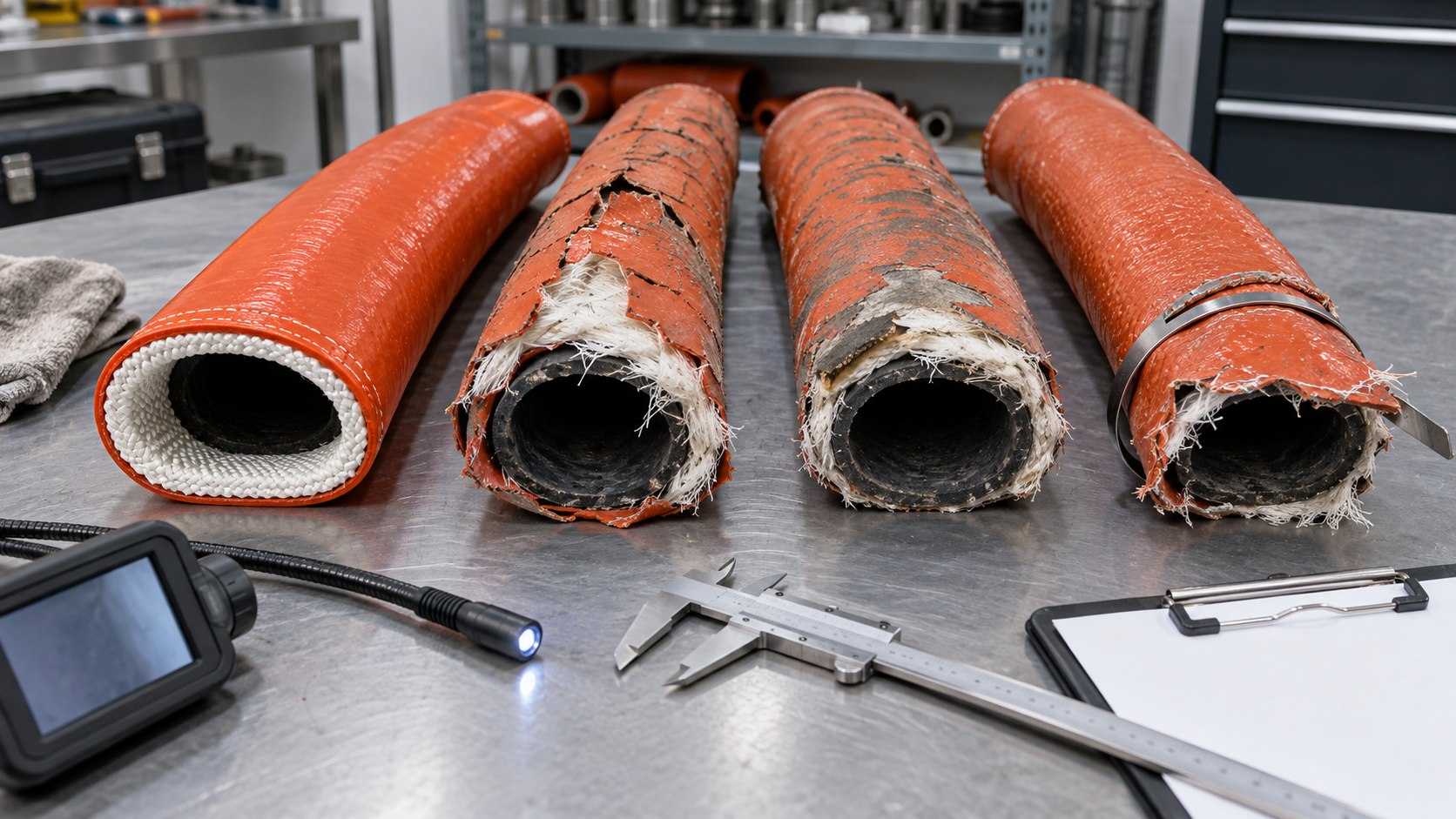
While the inner tube elastomer is critical for resisting crude oil and drilling mud, the hose cover and reinforcement structure also play important roles in overall durability. The outer cover must resist the same chemical attack as the tube—a nitrile-tube hose with a standard neoprene cover may develop cover cracks that expose the wire reinforcement to the corrosive drilling fluid environment.
Drilling-grade hoses typically feature ozone-resistant synthetic rubber covers that provide superior protection against both chemical attack and weathering. The reinforcement wire is galvanized or stainless steel to resist corrosion from drilling mud containing dissolved salts and acidic compounds. Some premium hoses employ epoxy-coated wire reinforcement for extreme corrosion environments, such as those found in sour-gas wells containing hydrogen sulfide.
Factors to Consider When Selecting Drilling Hose Materials
Drilling Fluid Type and Chemistry: The first step in material selection is understanding your mud system. Operators should obtain the mud composition from the mud engineer, including base fluid type, all additives, and anticipated concentration ranges. Water-based muds are generally compatible with nitrile, while synthetic or oil-based muds may demand viton or synthetic compounds. Solvent-based muds almost always require viton or higher-performance materials.
Operating Temperature Profile: Deepwater wells and extended-reach horizontal wells generate higher circulating temperatures due to friction losses and geothermal gradient effects. If your well design predicts circulating temperatures above 90°C, nitrile may reach the upper limit of its performance envelope. Wells with static formation temperatures above 120°C warrant consideration of viton or synthetic materials.
Well Environment: Sour-gas wells containing hydrogen sulfide require special material formulations. Standard nitrile and viton compounds can be embrittled by H₂S exposure, so specialized “sour-service” grades must be specified. Similarly, ultra-deepwater and Arctic operations may demand enhanced low-temperature flexibility or superior pressure ratings.
Pressure Rating and Hose Size: Higher pressure applications require more wire reinforcement, which increases hose cost. However, material selection and pressure rating are independent variables—a high-pressure nitrile hose will cost significantly less than a high-pressure viton hose. Choosing the correct material for your mud system first, then selecting the appropriate pressure rating for your well design, ensures optimal cost-effectiveness.
Best Practices for Material Selection and Procurement
Begin every drilling project by consulting with your hose manufacturer about your specific drilling fluid chemistry. Provide samples of the mud if possible, along with detailed information about mud additives and anticipated circulating temperatures. Reputable manufacturers maintain libraries of elastomer compatibility data specific to common drilling mud systems and can recommend appropriate materials based on your requirements.
Avoid the temptation to over-specify materials. While specifying all viton hoses for a standard water-based mud drilling operation may seem like a conservative approach, it unnecessarily inflates project costs without providing meaningful performance benefits. Conversely, attempting to save money by using standard industrial hoses in demanding drilling applications will almost certainly result in premature failure, unplanned shutdowns, and far greater overall expenses.
Document your material selections in the well program and drilling procedures. This ensures consistent hose procurement across the drilling team and provides a reference point if failure occurs. If a hose failure does happen, investigation of the failure mode—swelling, cracking, cover separation—will reveal whether the material was truly unsuitable or whether installation, maintenance, or storage practices contributed to the problem.
Conclusion
Crude oil and drilling mud are chemically aggressive toward rubber, and standard industrial hoses simply cannot withstand prolonged exposure to these fluids. Selecting the right drilling hose material—based on careful analysis of your mud chemistry, operating temperature, pressure profile, and well environment—is the foundation of a reliable, cost-effective drilling operation. Nitrile remains the proven standard for most applications, while viton and synthetic compounds provide enhanced performance for more demanding scenarios. By matching material selection to actual operational requirements, you ensure both equipment reliability and project profitability.